 2029
2029The biggest winners of the 2026 World Cup may not be the champion team, but a group of sellers in Yiwu and Wenzhou.
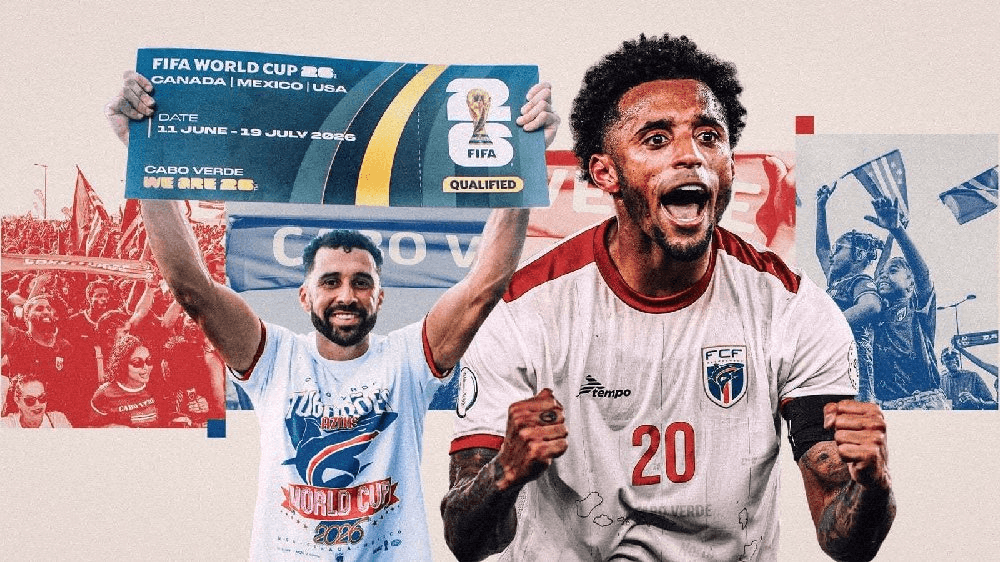
The story begins with a team whose name many couldn't even pronounce before the tournament. Cape Verde, an archipelago nation about 600 kilometers off the west coast of Africa, with a population of less than 600,000.
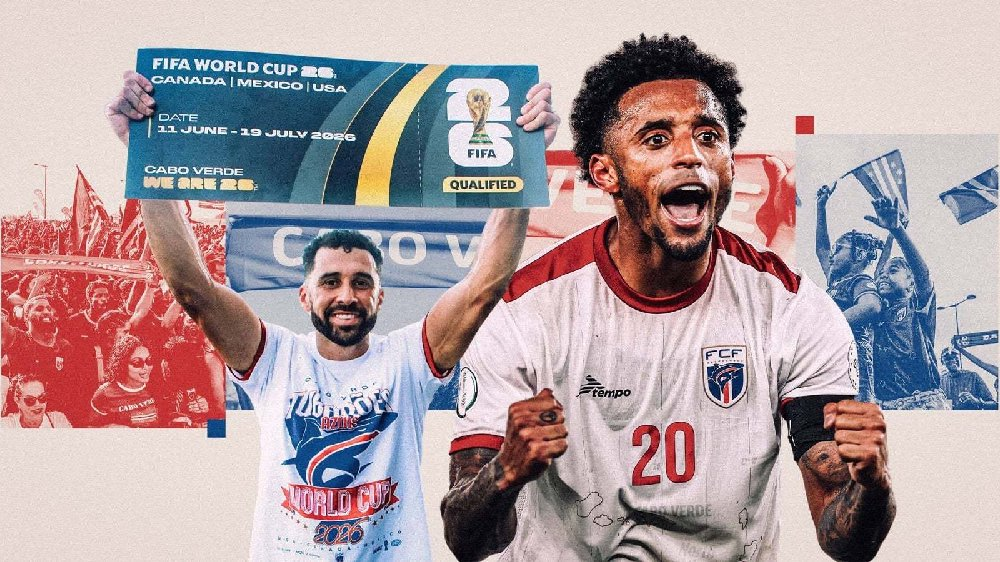
In their first World Cup appearance, they drew all three group matches: 0-0 against tournament favorite Spain, 2-2 against Uruguay, and 0-0 against Saudi Arabia, historically advancing to the round of 32 as group runners-up. In the knockout stage, they fought defending champion Argentina into extra time before losing 2-3.
Source: Internet
The one who brought them to this point was a 40-year-old veteran goalkeeper, Vozinha. He only started playing professional football at 25. Before the World Cup, his club had informed him that his contract was expiring and he would soon be unemployed. His market value was just 50,000 euros, while the total value of Spain's starting lineup was 500 million euros. This man made seven crucial saves in the match, keeping a clean sheet against Spain. After the game, he cried because his grandparents, who raised him, had passed away and couldn't see this moment.
This story was incredibly touching. Overnight, Vozinha's Instagram followers skyrocketed from 50,000 before the tournament to over 14 million. The name 'Cape Verde' went from virtually unknown to a global buzzword.

Source: Internet
The transmission of popularity was faster than many imagined.
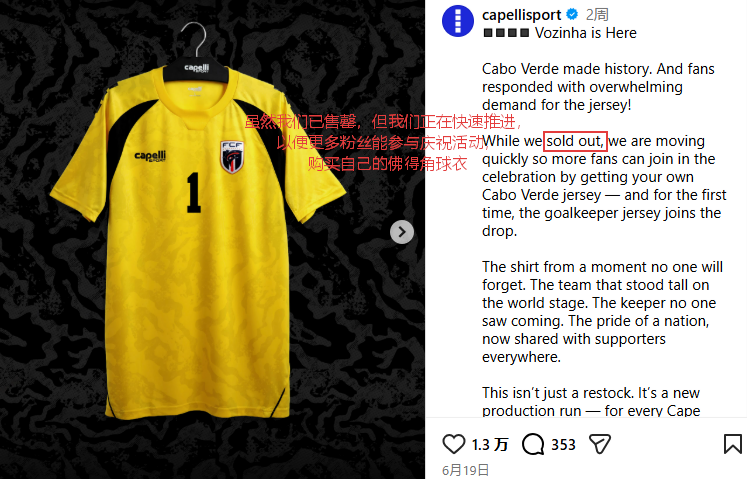
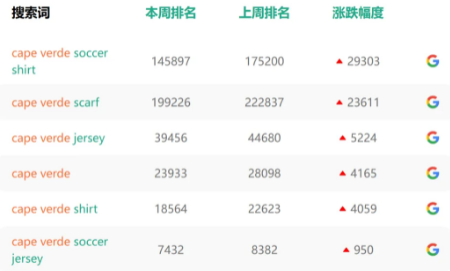
Before the World Cup, almost no one searched for 'Cape Verde jersey' on Amazon. During the group stage, the daily average search volume shot up to 1,700. A jersey priced at $19.99 with Cape Verde flag elements sold nearly 3,000 units in the last 30 days, with sales of about $58,000 (approximately 400,000 RMB), entering the top 20 Best Sellers in multiple apparel subcategories on Amazon. The official goalkeeper jersey sold for $99.99 and was sold out by mid-June.
Currently, over 2,000 stores on Amazon are listing Cape Verde jerseys, scarves, flags, stickers, and other related merchandise.
Source: Instagram
Traffic alone is not enough; someone has to be able to catch it.
The success of this $19.99 jersey was not down to luck. Some sellers launched SP ads early when search volume just started to rise. By the time search volume exploded, the ad model was already optimized, with natural traffic and ad traffic each accounting for half.
More crucial is the supply chain. The World Cup's popularity window is only a few weeks; if you're slow, everything is in vain. The official $99.99 jersey was out of stock at one point, while the $19.99 version could keep selling, thanks to the supply chain backing it up. Both best-selling jerseys were produced in Yiwu and Wenzhou, Zhejiang. Factories in Yiwu keep templates for various flag elements year-round. As soon as a hot trend emerges, they can place additional orders overnight and ship out.
Source: amz123
The explosive sales of Cape Verde jerseys are essentially an 'event-driven traffic window.'
And this kind of thing keeps happening. During this year's World Cup, a stress-relief football toy sold over 400,000 units. During the extreme heatwave in Europe, air conditioner sales on AliExpress and Amazon surged nearly 40-fold. During a protest in Portland, someone was photographed wearing a 'selling baby frog costume' and the video went viral. The frog costume price then rose from $40 to $80, and it still sold out.
The common traits of these events are: fast outbreak, short window, with popularity lasting from a few days to a few weeks.
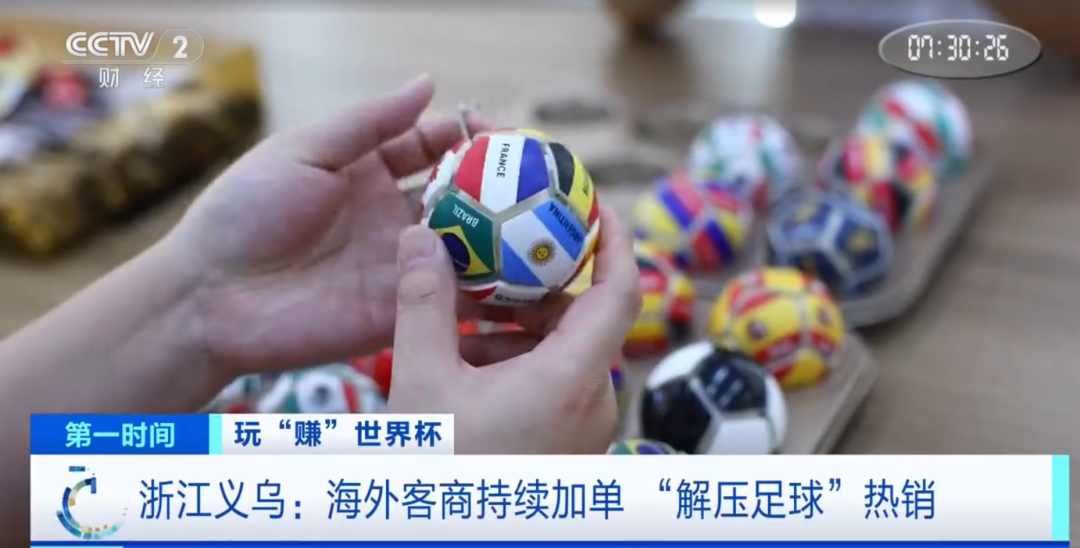
Source: CCTV2
But not all hot trends are the same. One type is predictable—every World Cup has underdog teams, and every summer is hot. This type tests foresight: whoever can stock up and test ads in advance will get the traffic when it comes. Cape Verde belongs to this category, with low pre-tournament attention, but 'which group might produce a dark horse' can be planned ahead.
The other type is completely unexpected—a short video suddenly goes viral, or an accidental event is captured and spreads across the internet. There's no logic to these, and most people can't catch up. Those who can catch it either have good luck or a strong supply chain.
For most sellers, the former is what they can seize. Before windows like the World Cup, holidays, and seasons, stock up in advance and test ads early. Don't wait until the heat is already there to chase it.
As for unexpected events, there's only one thing to do: build a response system. Copywriting, images, and supply chain must be operational in peacetime, rather than setting up a framework when the heat arrives.
However, don't think about long-term operations for such hot-trend businesses. Stock up, catch the wave, ship out—quick and short, take a bite and leave.
Every World Cup has its dark horse teams, and the summer heatwave comes every year. You don't know exactly which team or day it will strike, but you know it will happen. Prepare all possible directions, and when the traffic comes, ride it directly. As for those completely unforeseeable events, most won't catch up, and you don't need to force it. Being able to seize the predictable window is enough.
Dark horses appear every year, but those who catch them are the winners.