 1946
1946In this early spring of April, the debate over Tuke in American politics has heated up once again, only to encounter another unexpected twist.
The "Tuke Act (H.R.7521 Act)" previously passed rapidly by the House of Representatives, aimed at forcing ByteDance to divest its control over Tuke or face a ban in the United States, has now been shelved by the Senate.
Reportedly, neither the official website of the U.S. Congress nor platforms like GovTrack have listed further review plans or a timetable for the bill, suggesting that this legislative action may be paused or ultimately abandoned.
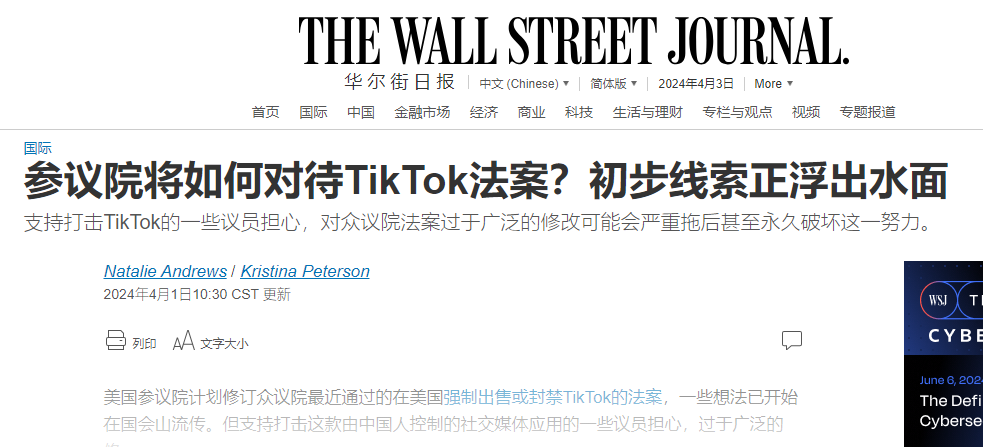
According to further reporting by The Wall Street Journal on April 1, after the Easter recess, Senate Commerce Committee Chair Maria Cantwell may amend the bill, an action that signals the bill may be temporarily set aside or, after a series of revisions, eventually emerge in a completely different form.
Currently, there is a significant divide among the American public over whether Tuke should be banned.
According to a CNBC poll, 31% of respondents believe Tuke should not be banned, while only 20% support an unconditional ban. This data reflects that support for the freedom of speech and the "creator economy" represented by Tuke is not a minority voice.
This also shows that the Senate's concerns about the bill are not unfounded.
On one hand, they worry that such direct restrictions may violate the principle of free speech guaranteed by the First Amendment of the U.S. Constitution.
On the other hand, Tuke has not only fostered a massive "creator economy" but also has millions of loyal users. If a ban is implemented, these users and economic activities could suffer significant losses. Therefore, some senators suggest that the scope of the bill should be expanded to address similar issues present on other social media platforms.
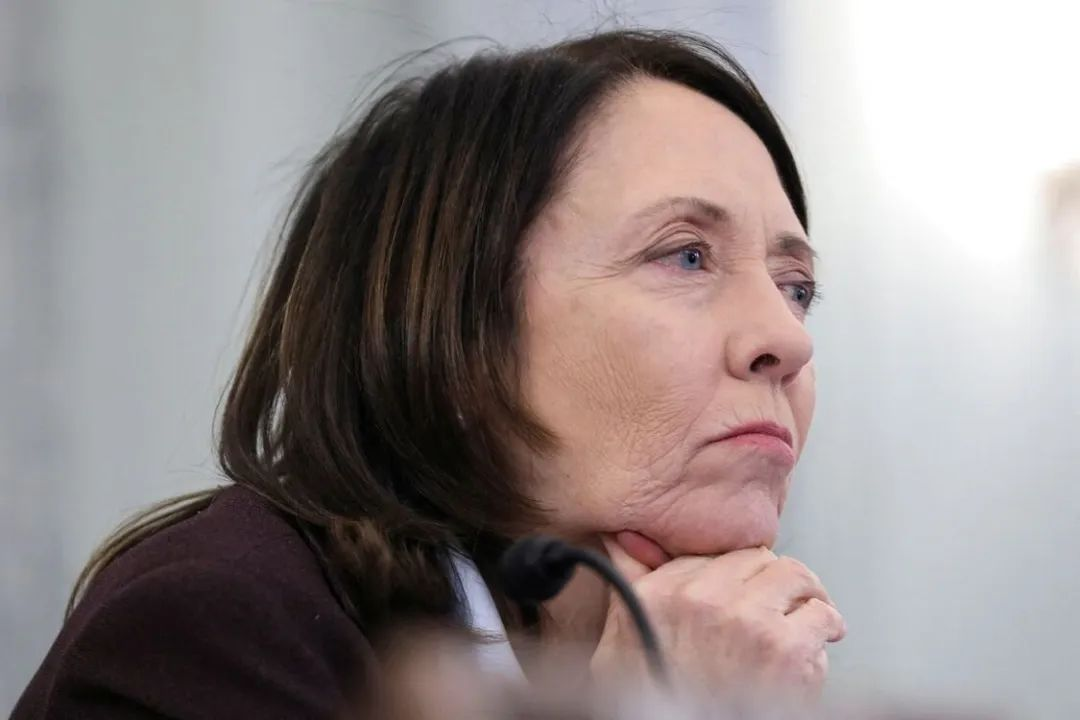
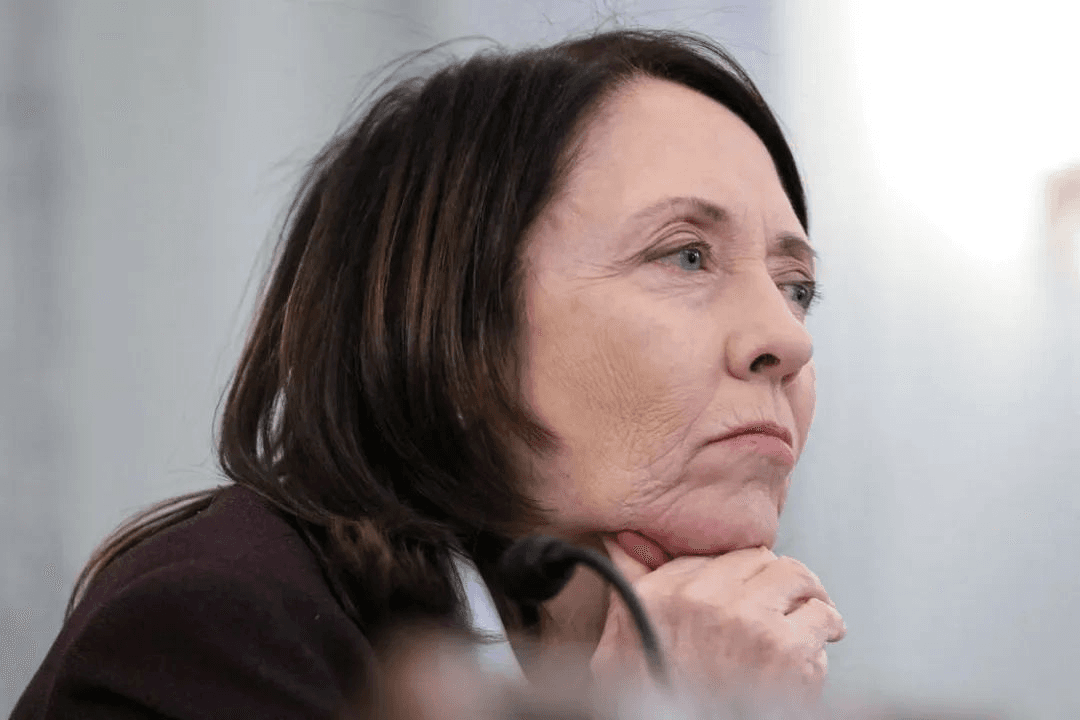
Image: Senate Commerce Committee Chair Cantwell
Senator Marsha Blackburn's views are especially noteworthy; she believes the "Tuke Act" may be too broad and grant too much power to the executive branch. Last year, a version of the "Tuke Act" drafted by Cantwell was more moderate, aiming to give the Commerce Department the authority to address risks posed by apps while complying with the First Amendment.
Within the Senate, there are also considerable differences regarding how to amend the bill and how to bring the revised bill to a full vote.Majority Leader Chuck Schumer has yet to clearly state his support or opposition to the "Tuke Act", and before any amendments are signed into law by President Biden, they must be approved again by the House of Representatives.
This has given Tuke more breathing room regarding its uncertain fate.
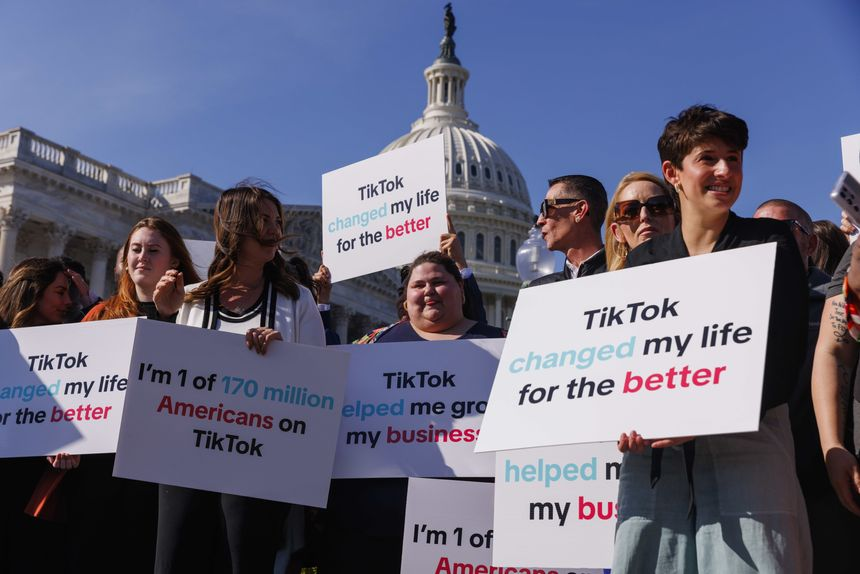
Meanwhile, Tuke has not been quietly awaiting its fate, but has begun to actively fight back. The company is taking advantage of the bill's shelving to launch advertising campaigns in key battleground states, aiming to influence public opinion and policymakers' decisions.
Tuke spokesperson Jodi Seth's remarks are particularly defiant: "We believe the public should know that the government is attempting to trample on the free speech rights of 170 million Americans and harm 7 million small businesses nationwide."
These words make it clear thatbanning Tuke may be politically self-defeating, especially in the context of efforts to win the support of young voters.
Former White House Chief Information Officer Theresa Payton's comments further highlight the technical and legal challenges of banning Tuke: "Internet service providers may be forced to block Tuke traffic, app stores may be forced to remove Tuke, and other social media may need to block sharing of Tuke videos." If implemented, these measures would be unprecedented, exposing a fundamental threat to internet freedom and openness.

In addition, Tuke has adjusted its referral fee strategy for its e-commerce platform Tuke Shop, raising it from 2% to 6%. Although this rate is still far lower than competitors like Amazon's 15%, it is nevertheless a move to strengthen Tuke's competitiveness in e-commerce and pave the way for the company's long-term development in the U.S. market.
In this contest over Tuke's future, what we see is not just the life and death of a social media platform, but also a profound reflection by American society on internet freedom, technology governance, and the relationship between government and the private sector.
The Tuke case reveals a broader topic: in today's era of globalization and technological advancement, how to balance freedom of speech, national security, and economic interests is a question that urgently needs to be answered.
As the story unfolds, every twist shows us that this debate is far more complex than a simple ban; it concerns the intricate and subtle power struggle between global tech companies and national governments in the internet age.