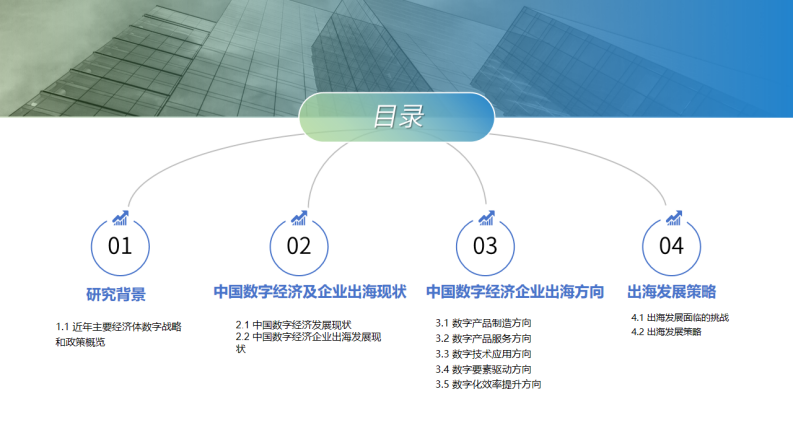
This report focuses on the overseas development of Chinese digital economy enterprises, analyzing the development history and strategic policies of the digital economy at home and abroad. It elaborates on the current situation, directions, challenges, and coping strategies of Chinese digital economy enterprises going global, providing comprehensive references for enterprises expanding overseas.
Core Points
- China's digital economy is developing rapidly, and the scale of enterprises going global is increasing, but they face challenges such as data security and business environment.
- The directions for enterprises going global include digital product manufacturing, services, technology applications, factor-driven, and efficiency improvement. Different industries have different cooperation directions in various regions.
- Overseas strategies include the "encircling the cities from the countryside" and "Belt and Road" initiatives. Recommendations for coping with challenges cover compliance, technology, operations, culture, trade policy, and geopolitics.
Overview of China's Digital Economy Development
1. Development History and International Comparison
- China's digital economy began with internet access in the 1990s, experienced multi-stage development, and has penetrated widely across industries. Overseas, countries such as the US, Europe, Japan, and South Korea each have their own advantages in different digital economy fields.
2. Overview of Strategic Policies
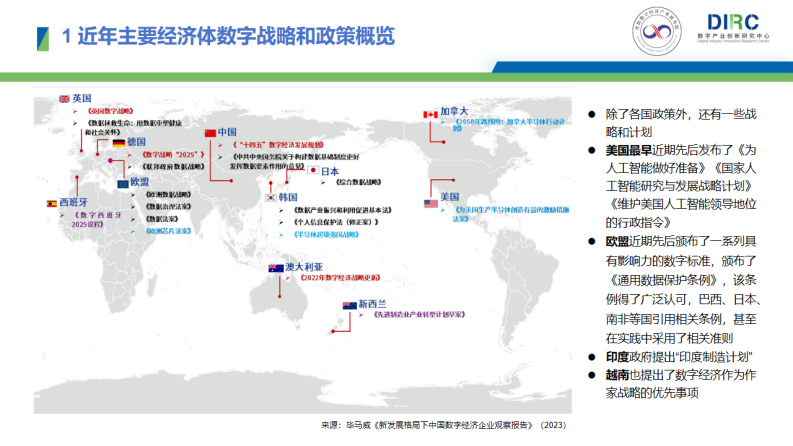
- Various countries have introduced numerous digital strategies and policies, such as the US, EU, and China releasing relevant plans and regulations to promote the development of the digital economy.
3. Current Situation of China's Development
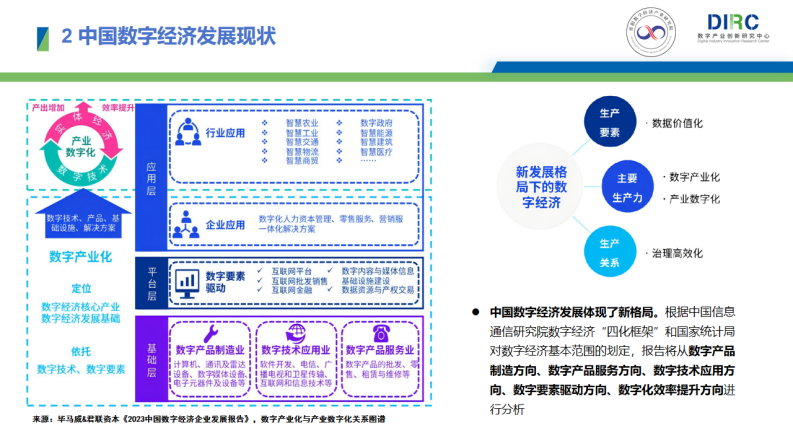
- The scale of China's digital economy continues to grow, developing in multiple directions such as digital product manufacturing, services, and technology applications. The entire industry chain covers data elements, basic telecommunications, electronic information manufacturing, and other fields.
Current Situation of Chinese Digital Economy Enterprises Going Global
1. Overall Scale and Trends
- The scale of China's digital economy is growing, enterprises have a strong willingness to go global, and the directions for going global are diverse, but global outbound investment is declining.
2. Regional Distribution of Overseas Expansion
- In 2023, China invested the most in Asia, investment in Africa grew rapidly, while investment in Europe and America declined but still accounted for a significant proportion.
3. Industry Overseas Expansion Situation
- The proportion of enterprises going global varies across industries. The number of enterprises going global in electronic components and equipment, computers, etc., is relatively high, and some industries show an increasing trend in overseas expansion.
Directions for Chinese Digital Economy Enterprises Going Global
1. Digital Product Manufacturing Direction
- Industries such as computers, communications and radar equipment, digital media equipment, electronic components and equipment have different cooperation directions in various overseas regions. Strategies should be formulated according to the digital economy situation of the target country.
2. Digital Product Service Direction
- Including wholesale, retail, leasing, maintenance, etc., each sub-sector has different cooperation directions in different overseas countries. For example, digital product wholesale is in Singapore, Malaysia, etc., and retail is in Singapore, Vietnam, India, and other countries.
3. Digital Technology Application Direction
- Covers software development, telecommunications, broadcasting and satellite transmission, internet and information technology, etc. China has different performances in related technology investment and market scale, and can cooperate with different countries in multiple fields when going global.
4. Digital Factor-Driven Direction
- Involves internet platforms, internet wholesale and retail, internet finance, digital content and media, information infrastructure construction, data resources and property rights transactions, etc. There are different development situations and cooperation directions in various overseas regions.
5. Digital Efficiency Improvement Direction
- Includes industrial internet, intelligent manufacturing, internet of vehicles, platform economy, etc. China is developing rapidly in some fields and has different development levels and cooperation directions in various overseas countries and regions.
Challenges Facing Overseas Development
1. Data Security and Compliance
- Different countries and regions have different data regulations, and enterprises are prone to legal risks. For example, the EU, California in the US, Singapore, Australia, etc., have strict regulations.
2. Local Business Environment
- Includes infrastructure, administrative efficiency, labor quality, etc., which affect the operational efficiency and effectiveness of enterprises. For example, some African countries have weak infrastructure.
3. Cultural Integration
- Cultural differences may lead to the failure of enterprise marketing strategies, such as different understandings of the meaning of colors and patterns in different cultures.
4. Local Trade Policies
- Policies such as tariffs, quotas, and trade bans affect enterprise costs and market access. For example, the Sino-US trade friction and increased tariffs impact export enterprises.
5. Geopolitics
- Regional instability increases operational risks and uncertainties for enterprises.
6. Technical Barriers
- High-standard technical certifications and patent protections abroad make it difficult for enterprise products to enter the market.
Overseas Development Strategies and Recommendations
1. Overseas Strategies
- "Encircling the cities from the countryside" strategy: Small and medium-sized enterprises can first expand to developing countries and then to developed country markets.
- "Belt and Road" leadership: Policy support and guidance, promotion through cooperation projects, strengthening infrastructure construction and trade liberalization and facilitation.
2. Recommendations for Coping with Challenges
- Data security and compliance: Establish compliance mechanisms and take corresponding measures for different regulations.
- Technical certification and patent protection: Study target market standards, strengthen own capabilities and patent protection.
- Localized operation model: Build according to the local business environment, start with suitable businesses, and gradually improve the level of cooperation.
- Cultural integration: Research cultural differences, adjust marketing strategies, recruit local employees, and select local partners.
- Trade policy: Study policy changes, optimize the supply chain, and develop multiple overseas markets.
- Geopolitical risks: Assess and monitor risks, develop diversified markets, build a resilient supply chain, use insurance tools, and ensure personnel safety.