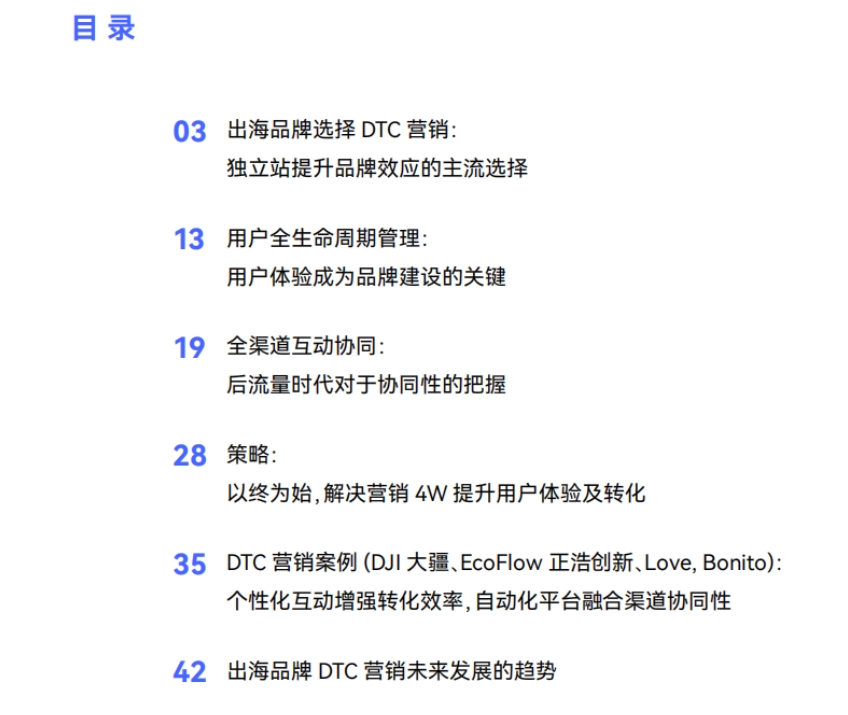
Le « Livre blanc sur les tendances du marketing DTC pour les marques internationales 2024 de SAP Emarsys » explore principalement les tendances du marketing DTC pour les marques à l'international, y compris l'évolution du modèle DTC, ses avantages, les stratégies marketing et des études de cas connexes, offrant ainsi un guide marketing complet pour ces marques.
1. Aperçu du modèle marketing DTC
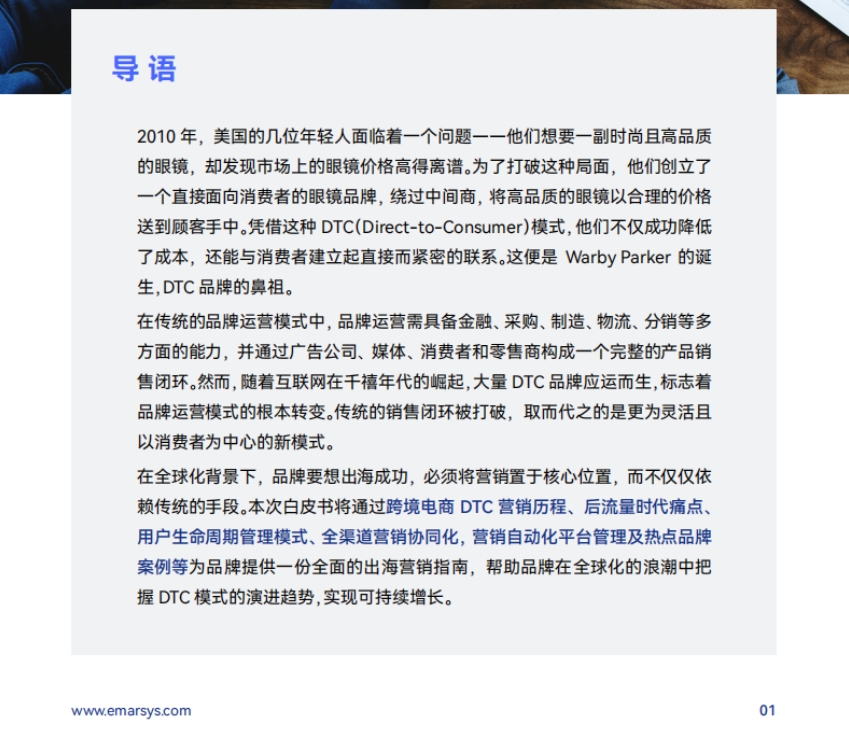
- Origine et développement : Le modèle DTC est né aux États-Unis, avec Warby Parker comme représentant emblématique, et a émergé avec le développement d'Internet. Son évolution a traversé plusieurs phases, passant des premières formes de commerce électronique vertical et d'abonnement à une étape axée sur l'innovation et le marketing omnicanal.
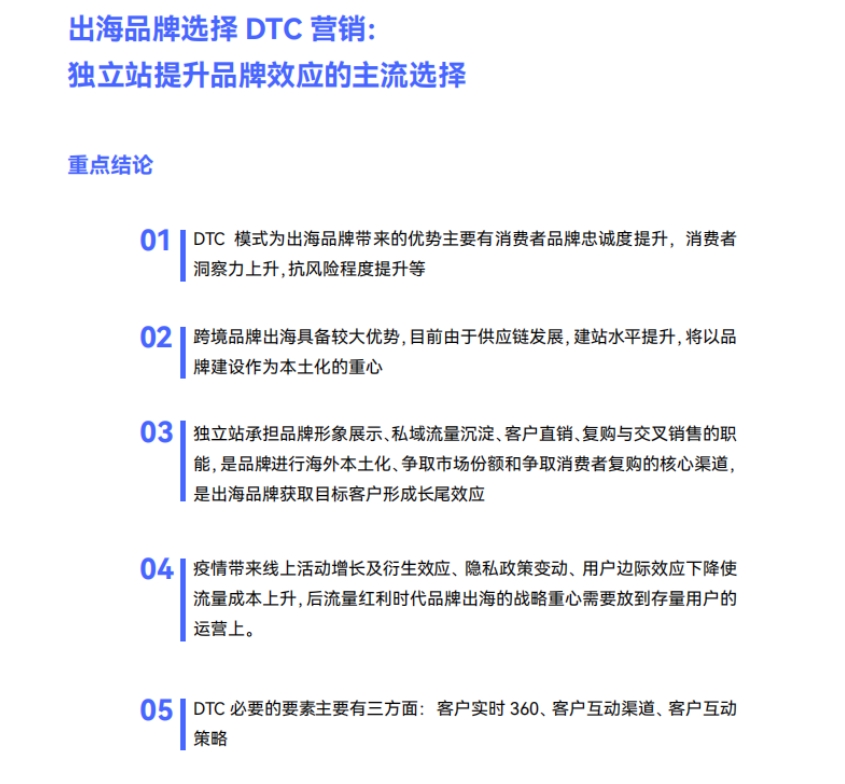
- Avantages du modèle : Le modèle DTC apporte aux marques internationales des avantages tels qu'une fidélité accrue des consommateurs, une meilleure compréhension du marché et une résilience renforcée face aux risques. Il permet une interaction directe avec les consommateurs, renforce la fidélité à la marque, se concentre sur l'analyse des données utilisateur, améliore l'efficacité de la localisation et augmente la capacité à résister aux risques.
2. Raisons du choix du marketing DTC par les marques internationales
- Évolution du marché : La pandémie a entraîné une augmentation des activités en ligne et des effets dérivés, des changements dans les politiques de confidentialité, une baisse des rendements marginaux des utilisateurs et une hausse des coûts d'acquisition de trafic. Dans l'ère post-redistribution des bénéfices du trafic, les marques internationales doivent recentrer leur stratégie sur la gestion des utilisateurs existants.
- Importance des sites indépendants : Les sites indépendants jouent un rôle clé dans la présentation de l'image de marque, la consolidation du trafic privé, la vente directe aux clients, les achats répétés et les ventes croisées. Ils constituent un canal essentiel pour la localisation à l'étranger, la conquête de parts de marché et l'incitation aux achats répétés.
3. Éléments clés du marketing DTC
- Vue client 360 en temps réel : En intégrant des données provenant de diverses sources, elle offre une vue complète et unifiée de chaque client, permettant une gestion des utilisateurs existants et une personnalisation du cycle de vie.
- Canaux d'interaction client : Incluent l'email, les réseaux sociaux, les sites web, etc., permettant une interaction avec les consommateurs via un marketing omnicanal.
- Stratégies d'interaction client : Élaborer des stratégies marketing personnalisées en fonction des comportements et préférences des consommateurs pour améliorer l'expérience utilisateur et les conversions.
4. Gestion du cycle de vie complet de l'utilisateur
- Centré sur l'utilisateur : La meilleure pratique du marketing DTC consiste à placer l'utilisateur au cœur des préoccupations, à déployer un marketing omnicanal autour de ses besoins et à gérer efficacement le cycle de vie client grâce à une compréhension approfondie.
- Vue utilisateur 360 en temps réel : Grâce à la collecte et à l'analyse des données, et à l'utilisation de modèles comme RFM, les utilisateurs sont automatiquement segmentés. Lorsque les objectifs marketing sont clairs, la personnalisation du temps, du canal, du rôle et du contenu est réalisée.
5. Coordination omnicanale interactive
- Stratégie marketing omnicanal : En intégrant les données et en automatisant la segmentation, elle renforce la fidélité et la synergie entre la marque et les consommateurs, améliore la cohérence entre les canaux et crée une expérience de marque fluide.
- Avantages des canaux : Sur les principaux marchés occidentaux, les communautés, les sites web et les emails sont généralement les canaux les plus accessibles aux consommateurs. L'email est particulièrement plus direct, et les KPI sont faciles à mesurer.
6. Stratégies marketing et plateformes d'automatisation
- Stratégie orientée vers les objectifs : Une stratégie DTC mature est pilotée par des objectifs, combinant la gestion du cycle de vie complet de l'utilisateur et des plateformes d'automatisation pour améliorer l'expérience utilisateur et les conversions.
- Rôle des plateformes d'automatisation : Les plateformes d'automatisation utilisent les 4W (public, contenu, temps, canal) pour une approche intelligente et personnalisée, favorisant ainsi les taux de conversion.
7. Études de cas
- DJI : Grâce à des stratégies marketing personnalisées, DJI a amélioré l'interaction avec les utilisateurs. En utilisant des plateformes d'automatisation et des fonctionnalités stratégiques, elle a considérablement augmenté les revenus des utilisateurs actifs et la valeur moyenne des commandes.
- EcoFlow : En exploitant l'automatisation marketing pour cibler des segments de marché à plus forte valeur ajoutée, EcoFlow a poursuivi la valeur de la marque. L'utilisation de modèles d'IA a permis de toucher les utilisateurs plus précisément, de réduire les coûts marketing et d'augmenter les taux de réachat et l'activité des utilisateurs.
- Love, Bonito : Grâce à l'intégration des systèmes techniques et à la fourniture de contenus marketing personnalisés via SAP Emarsys, Love, Bonito a efficacement amélioré les achats répétés et les dépenses des consommateurs, tout en renforçant la perception de la marque.
8. Tendances futures
- Maîtrise des données privées : Le modèle DTC nécessite une meilleure gestion des données privées globales, en accélérant l'efficacité des campagnes marketing grâce à la fusion omnicanale, à la personnalisation des contacts et à l'IA.
- Gestion du cycle de vie complet de l'utilisateur : Grâce à la vue client 360 en temps réel et aux plateformes d'automatisation, une gestion personnalisée du cycle de vie complet de l'utilisateur est possible, prolongeant sa durée et augmentant la valeur moyenne des dépenses.
- Coordination marketing omnicanale : L'automatisation marketing omnicanal est déjà une norme, permettant d'améliorer les services personnalisés et l'expérience utilisateur via une plateforme de données unifiée.
- Adoption généralisée de l'IA : La génération de contenu et la fourniture de stratégies par l'IA sont les deux principaux axes d'autonomisation du marketing, permettant d'améliorer l'efficacité, de réduire les coûts et d'augmenter l'adaptation locale.