 2096
2096En tant que plateforme comptant plus de 1,56 milliard d'utilisateurs actifs mensuels, TikTok n'est pas seulement un centre de divertissement, mais aussi un "champ de bataille" pour la promotion de marques et la présentation de produits. Régulièrement, de nouveaux grands vendeurs TikTok émergent soudainement, occupant la moitié des classements. Comment ces grands vendeurs ont-ils émergé ? Quelle est leur logique de sélection de produits ?
Aujourd'hui, Tuke vous emmène décortiquer tout cela en détail.

1. Partir des besoins du marché : le produit doit non seulement être nouveau, mais aussi utile
Le premier principe de la sélection de produits est : n'innovez pas pour innover. Le produit doit répondre aux besoins réels des utilisateurs, voire résoudre certains de leurs "points de douleur cachés".
Tuke a observé que de nombreux vendeurs, en poursuivant le "trafic" sur TikTok, négligent le fait que ce qui peut vraiment toucher les consommateurs, c'est si le produit lui-même résout leurs problèmes. Bien que le trafic soit important, si le produit ne répond pas aux besoins fondamentaux des utilisateurs, toute promotion est vaine.
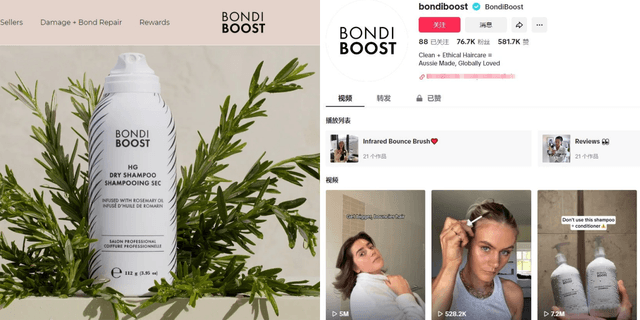
Par exemple, vous pouvez voir certaines marques de soins de la peau devenir virales sur TikTok, mais la raison sous-jacente n'est pas seulement leur esthétique ou leur bonne communication, mais le fait que le produit a une réelle efficacité. Si le produit lui-même n'a pas de valeur, les utilisateurs ne l'achèteront que par impulsion passagère, sans créer d'effet de marque durable.

The Ordinary, viral sur TikTok Source : Google
2. Localisation, la véritable clé pour pénétrer le marché
Quand on parle de localisation dans la sélection de produits, de nombreux vendeurs peuvent simplement comprendre "s'adapter aux habitudes culturelles". Mais Tuke pense que la véritable localisation ne consiste pas seulement à s'adapter à la culture, mais surtout à comprendre le mode de vie des consommateurs. Les besoins de consommation des différents marchés reflètent leurs modes de vie.
Par exemple, sur le marché de l'Asie du Sud-Est, le climat tropical fait des produits solaires un besoin essentiel. Pourtant, de nombreuses marques restent en surface, proposant des crèmes solaires ordinaires, mais négligent le besoin profond des utilisateurs pour des produits "légers et non collants".
Les marques vraiment prospères, elles, ont gagné la faveur des utilisateurs en répondant à la double demande locale de "respirabilité et protection solaire".
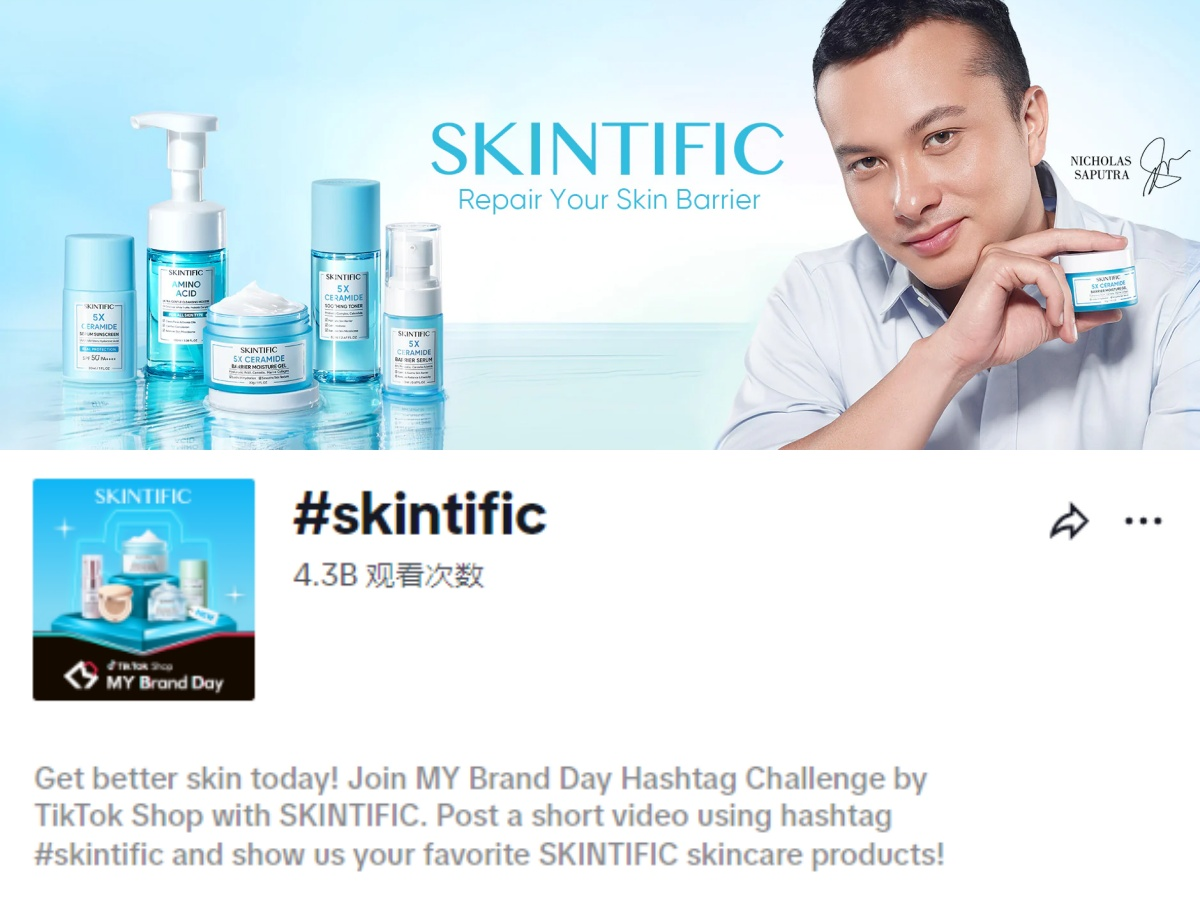
La marque de cosmétiques SKINTIFIC connaît un grand succès sur TikTok en Asie du Sud-Est
3. Données et intuition coexistent : comment équilibrer science et art
De nombreux vendeurs transfrontaliers s'appuient sur des outils d'analyse de données pour la sélection de produits. Oui, les données sont une base très importante. Cependant, se fier uniquement aux données est aussi une erreur, car elles ne peuvent vous dire que ce qui s'est passé dans le passé et le présent, sans prédire précisément les tendances futures. C'est là que la sensibilité au marché et l'intuition du vendeur deviennent cruciales.
Par exemple, de nombreux vendeurs aiment utiliser des outils comme Kalodata pour filtrer les produits potentiels à croissance rapide, ce qui est effectivement une très bonne méthode. Mais les données n'ont pas de créativité ni de vision prospective.
Les vendeurs à succès combinent données et intuition du marché pour trouver des catégories encore peu exploitées mais au potentiel énorme. Par exemple, les petits gadgets technologiques originaux ne montrent souvent pas beaucoup d'avantages dans les données, mais une fois sur TikTok, grâce à leur côté ludique et à leur démonstration visuelle, ils attirent souvent un grand nombre d'utilisateurs.
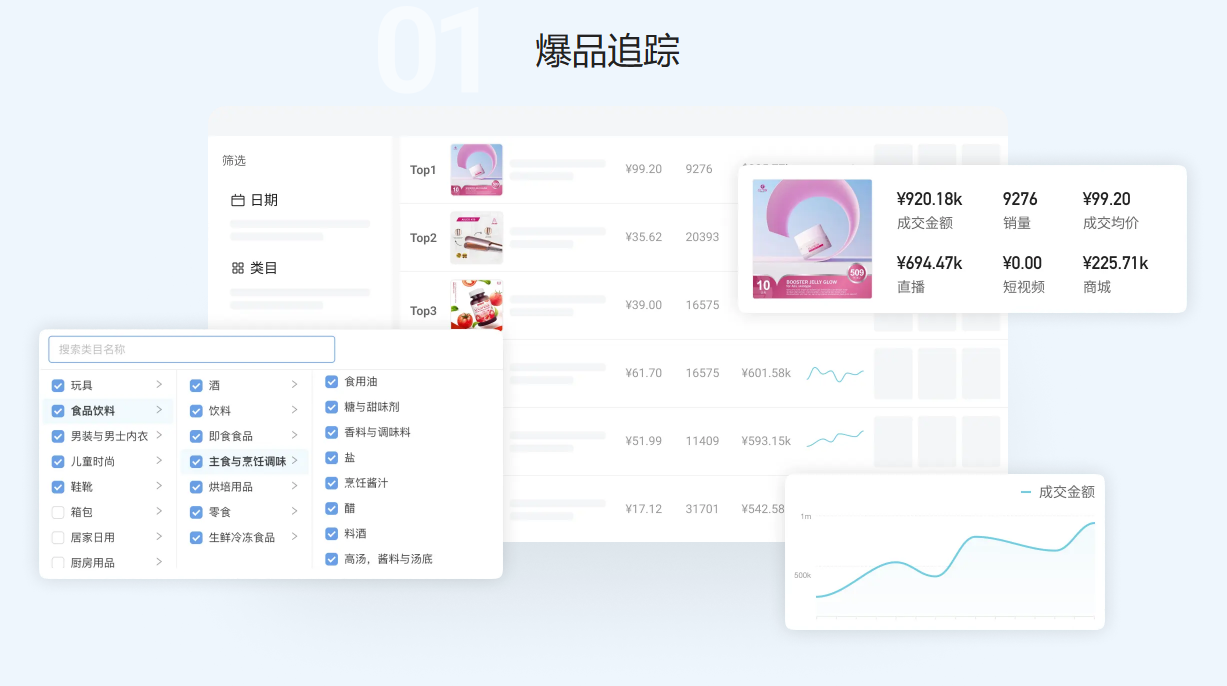
Source : Kalodata
4. Produits originaux et insolites, créer un effet "d'achat impulsif"
Le format des vidéos courtes sur TikTok rend l'attention des utilisateurs extrêmement limitée ; ils décident souvent en quelques secondes si un contenu les intéresse. Par conséquent, choisir des produits "originaux et insolites" qui attirent rapidement l'œil est un secret pour réussir sur cette plateforme.
Tuke a vu de nombreux cas de succès, et leur point commun est que le produit est non seulement créatif, mais aussi capable de montrer clairement ses fonctions uniques via la vidéo courte.
Par exemple, dans la catégorie des produits de beauté féminins, il existe de nombreux "petits gadgets" originaux, comme les rasoirs de visage ou les kits de soins de la peau. Ces produits novateurs et visuels déclenchent facilement des achats impulsifs, surtout lorsqu'ils montrent des "comparaisons avant/après" en vidéo, convainquant les utilisateurs en quelques secondes.
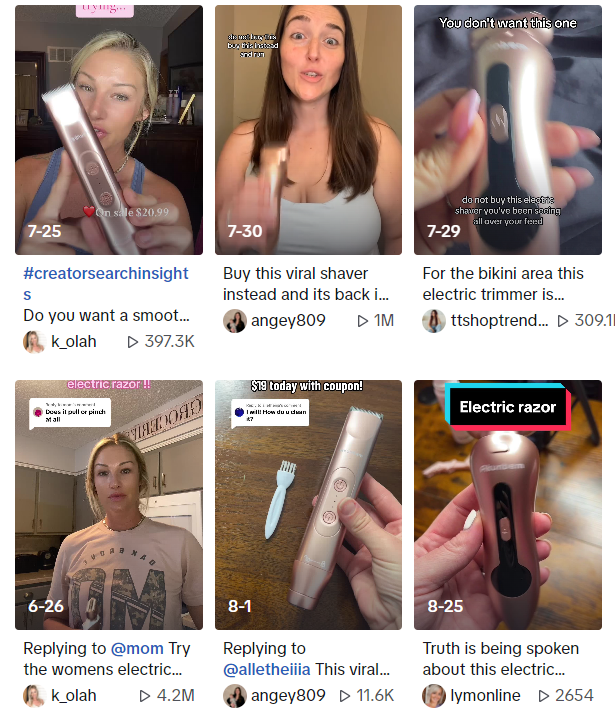
Rasoir féminin Akunbem Source : TikTok
5. S'appuyer sur les tendances, capter des vagues de trafic successives
Lorsqu'un événement tendance éclate, les vendeurs réactifs saisissent toujours la fenêtre d'opportunité précieuse pour propulser leurs produits. Cependant, il faut noter que la sélection de produits basée sur les tendances ne consiste pas à suivre aveuglément chaque tendance, mais à choisir des événements en adéquation avec l'identité de la marque.
Par exemple, l'essor des produits écologiques est largement dû à l'attention mondiale portée au développement durable. Et lorsque l'Union européenne a annoncé en 2024 l'interdiction des couverts et pailles en plastique, la marque écologique Biotrem a vu ses couverts comestibles devenir viraux sur tout le web.
De nombreuses marques ont rapidement lancé des pailles écologiques, des couverts en bambou et d'autres produits conformes aux tendances environnementales. Cette approche adaptée aux besoins du marché a non seulement permis aux marques de gagner des parts de marché, mais aussi d'améliorer leur image.

Assiettes en matériau comestible Biotrem Source : Google
Donc, dans l'ensemble, la stratégie de sélection de produits sur TikTok ne repose pas sur la chance, mais nécessite une combinaison de données, de sensibilité au marché, de créativité et de rapidité.
De la satisfaction des besoins des utilisateurs à la localisation des produits, en passant par l'exploitation des tendances et la planification saisonnière, les vendeurs doivent ajuster leurs stratégies en fonction des différentes approches pour augmenter leurs chances de succès.
Avec les bonnes méthodes, cet océan bleu qu'est TikTok reste plein d'opportunités.