 3050
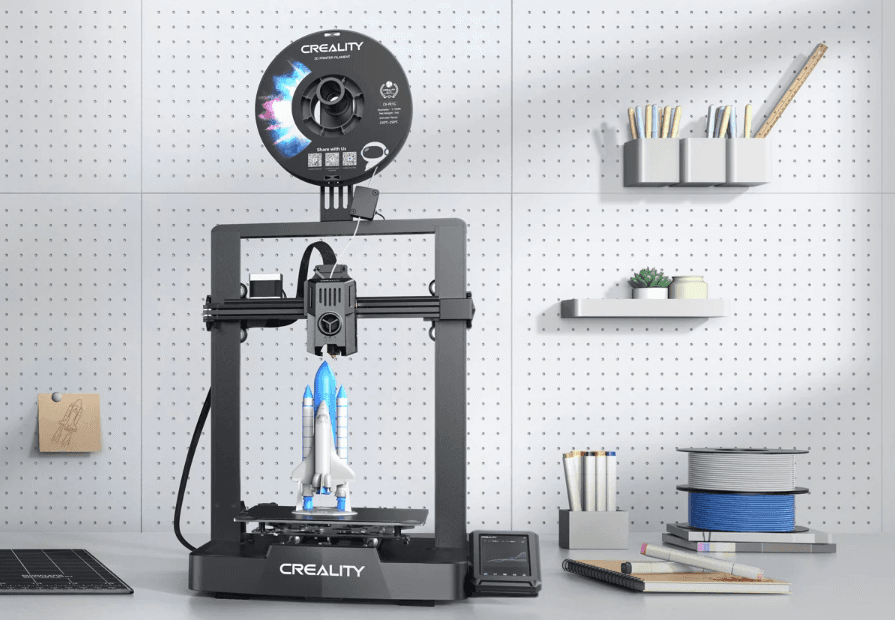
3050Vous pensez encore que l'imprimante 3D est réservée aux geeks amateurs ? En réalité, elle est déjà devenue un outil du quotidien. Vous pouvez désormais imprimer un vase unique, un abat-jour sur mesure, voire certaines pièces automobiles.
Le principal moteur de cette évolution est une marque chinoise partie de Shenzhen — Creality.
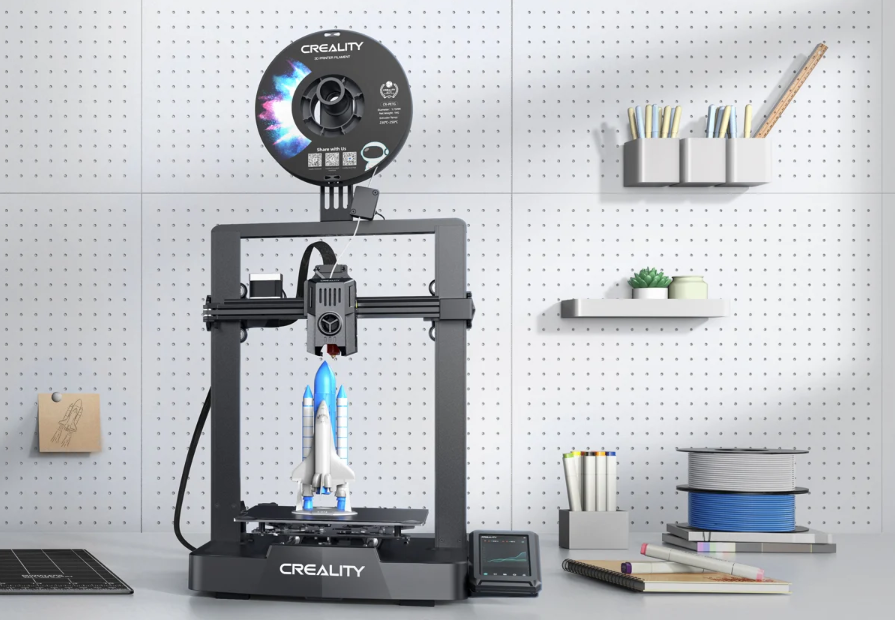
D'un petit bureau à plus de 5,5 millions d'unités expédiées dans le monde, la marque Creality a transformé en moins de 10 ans l'imprimante 3D grand public de « jouet de geek » en « outil pratique ».
Source : Internet
D'une équipe de 4 personnes à un champion invisible du secteur
L'histoire de la marque Creality commence en 2014 à Shenzhen. Quatre jeunes se rencontrent lors d'un salon de l'impression 3D et constatent que le marché des imprimantes 3D grand public est quasiment vierge. Ils décident alors de se lancer avec un capital de 300 000 yuans.
Les débuts sont modestes : un bureau de 20 mètres carrés, une carte de crédit pour gérer la trésorerie. Pourtant, en un an seulement, ils lancent leur première machine complète, la CR-i3. Ce produit abaisse non seulement la barrière technique, mais grâce à son excellent rapport qualité-prix, il connaît un « succès fulgurant » sur le marché de Hong Kong. Les séries CR-10 et Ender qui suivent consolident progressivement leur position sur le marché mondial de l'impression 3D grand public.
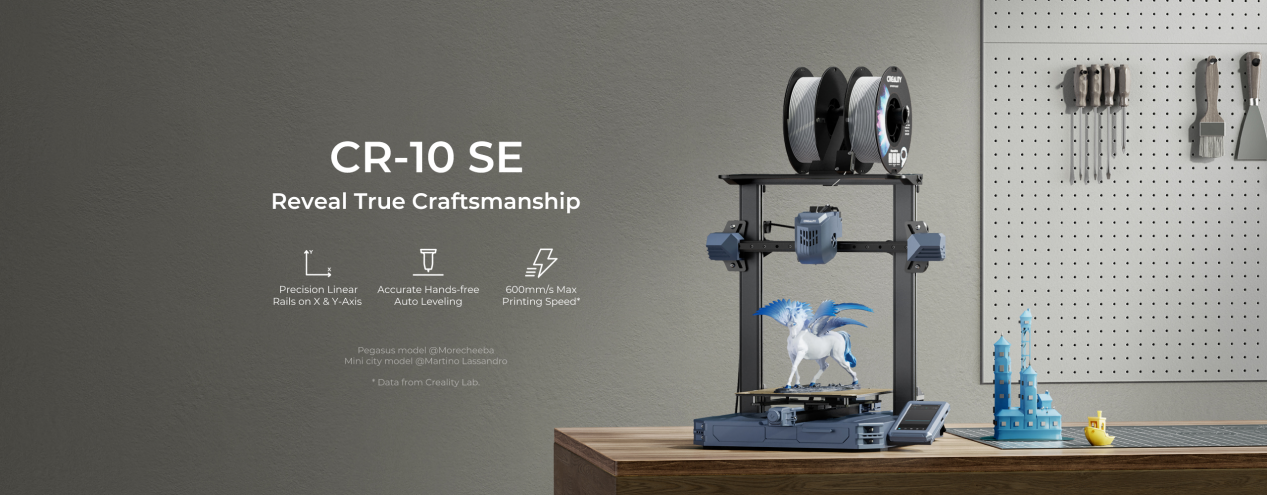
Produit Creality CR-10 SE Source : Internet
Comment la stratégie de rapport qualité-prix a-t-elle percé ?
Si l'imprimante 3D grand public était considérée comme un « produit de niche », c'est à cause des barrières techniques et du prix. Le point de rupture de la marque Creality repose sur deux éléments : le prix et l'expérience.
Avant le lancement de la CR-10, la plupart des imprimantes 3D sur le marché coûtaient plus de mille dollars. La CR-10, elle, n'en coûtait que 600. Grâce à cette stratégie de « prix abordable et hautes performances », Creality a rapidement conquis les marchés américain et européen.
De plus, ils n'ont cessé d'optimiser l'expérience utilisateur. Par exemple, ils ont lancé la plateforme mondiale de créateurs Creality Cloud, permettant aux utilisateurs de partager facilement leurs designs. Ces actions les ont aidés à dépasser le « cercle des geeks » et à attirer l'attention d'un plus grand nombre de consommateurs ordinaires.
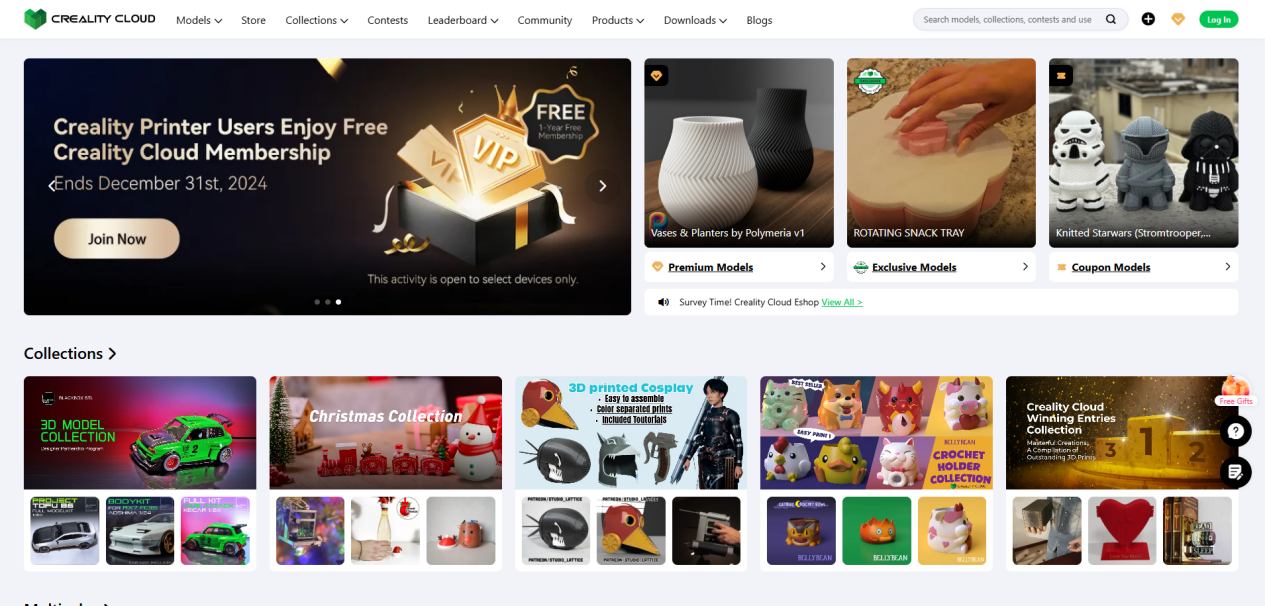
Plateforme de créateurs Creality Cloud
Expansion internationale multicanal : réseaux sociaux, e-commerce et site indépendant, « trois flèches tirées de front »
Pour s'implanter durablement à l'étranger, au-delà du prix gagnant, le point crucial réside dans les canaux et la promotion. Creality a intégré trois canaux majeurs d'expansion internationale — les réseaux sociaux, les plateformes e-commerce et le site indépendant — pour toucher différents groupes d'utilisateurs avec une approche systématique.
Sur les réseaux sociaux, Creality a suscité beaucoup d'intérêt, notamment sur TikTok. Le compte officiel de la marque @Crealityofficial a cumulé 2 031 800 fans sur TikTok, avec un total de 43 813 600 vues.
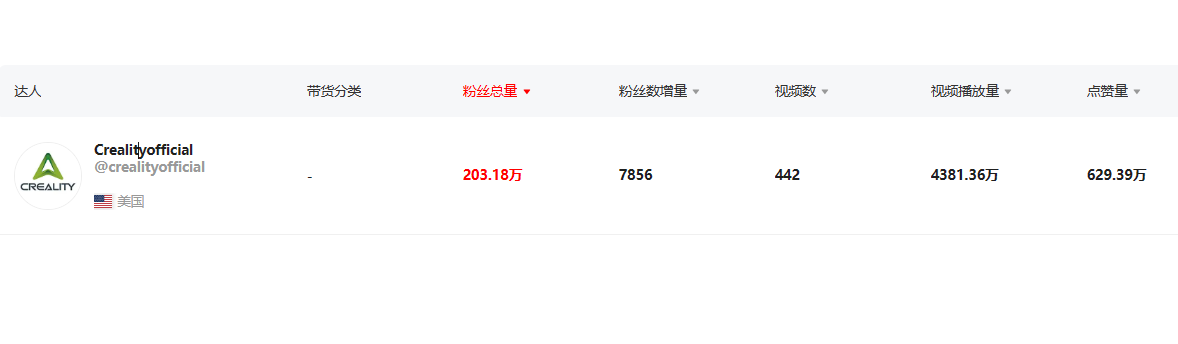
Données du compte TikTok de Creality Source : Tabcut
Bien que le public de cette plateforme soit plutôt jeune, en partageant des projets créatifs réalisés par les utilisateurs et des scénarios d'utilisation réels, la marque a réussi à attirer de nombreux clients potentiels. Le hashtag #creality sur TikTok cumule actuellement 103 100 publications, contribuant à une bonne diffusion de la marque.
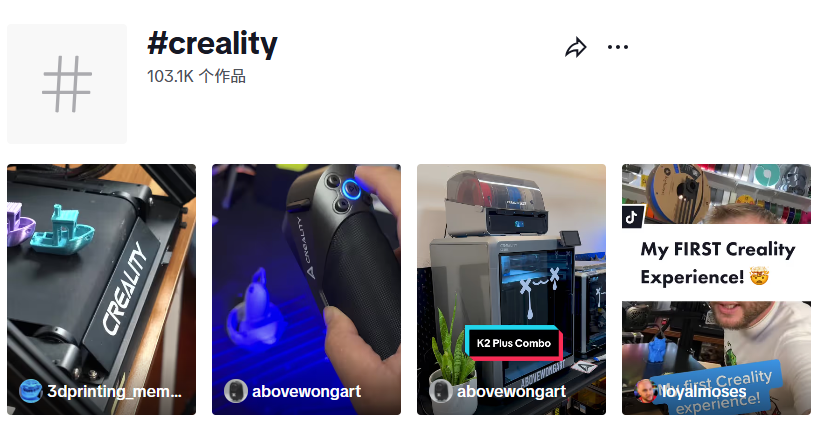
Hashtag TikTok #creality Source : TikTok
Outre les réseaux sociaux, les plateformes e-commerce sont également un terrain majeur pour Creality, notamment sur Amazon aux États-Unis.
Sa boutique officielle réalise un chiffre d'affaires mensuel de 5 millions de dollars (environ 36 millions de yuans) et a obtenu des performances de vente remarquables lors des périodes promotionnelles clés comme le Black Friday et le Cyber Monday.
En décembre 2023, les ventes mensuelles de l'imprimante Ender 3 V3 SE ont atteint 2 567 unités, pour un chiffre d'affaires de 560 000 dollars (environ 4 millions de yuans), consolidant solidement sa position de leader sur le marché. Les ventes estimées de ce produit en décembre de cette année se sont également stabilisées à 2 018 unités.
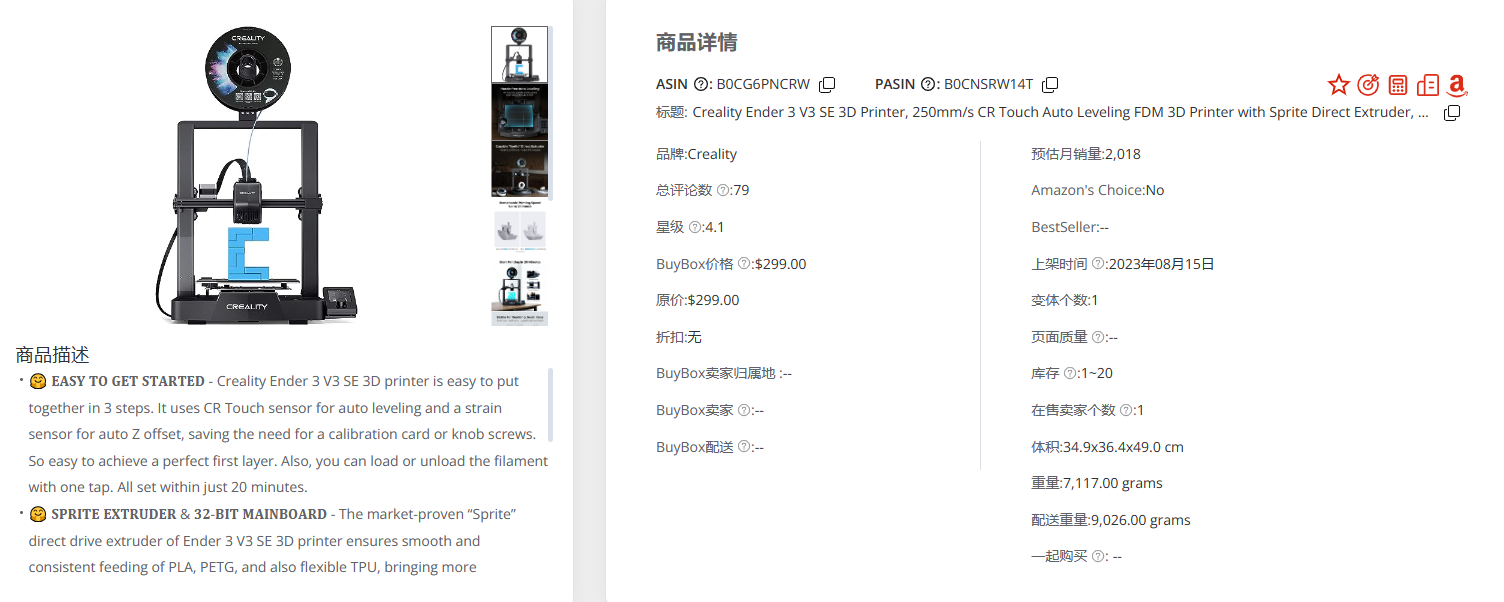
Situation des ventes Amazon de la Creality Ender 3 V3 SE Source : amzchart
Côté site indépendant, Creality a adopté une approche de localisation plus fine.
Ils présentent l'image de marque via un site web mondial, tout en mettant en place des sites locaux pour les marchés américain et européen, axés sur la vente directe. En seulement 5 mois, le site indépendant de Creality a dépassé le million de visites, avec un chiffre d'affaires total de plus de 20 millions de yuans. Actuellement, le trafic mensuel moyen du site indépendant se maintient au-dessus de 2 millions. Selon des statistiques tierces, le trafic direct représente 41,38 % du trafic du site officiel, la recherche organique 36,84 %, tandis que le trafic de référence et celui des réseaux sociaux représentent respectivement 8,31 % et 3,72 %, soulignant l'effet de synergie entre les réseaux sociaux et les partenariats promotionnels.
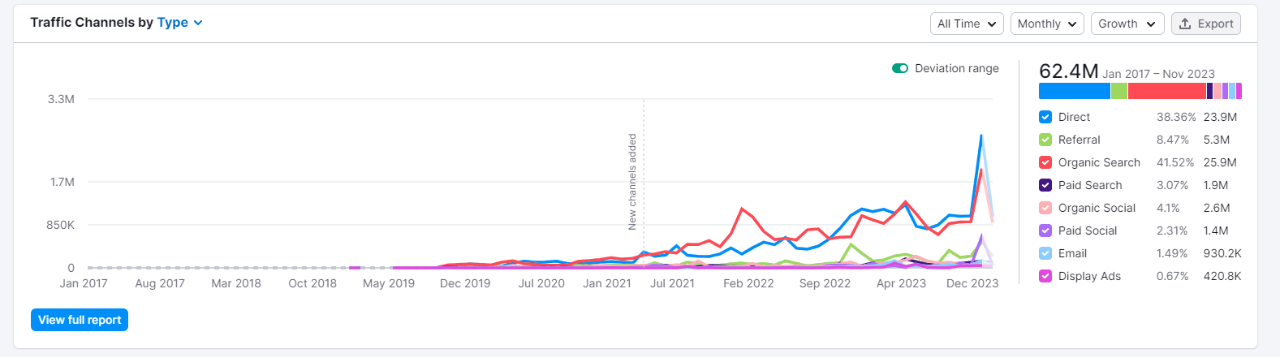
Source : Internet
Des réseaux sociaux à l'e-commerce, en passant par le site indépendant, Creality a pavé la voie de son expansion internationale avec une stratégie de canaux complète.
En conclusion : connecter le monde par la technologie
L'histoire de Creality est un microcosme de l'expansion internationale des marques chinoises. Du petit rêve de quatre jeunes à une entreprise mondiale générant plus d'un milliard de yuans de revenus annuels, ils ont connecté le monde avec leurs imprimantes 3D. Des produits au rapport qualité-prix imbattable, une stratégie de canaux solide et une stratégie d'écosystème innovante leur ont permis de se démarquer sur un marché mondial très concurrentiel.
Avec le recul, la voie de l'expansion internationale ne se résume pas à « vendre à l'étranger ». Comment choisir ses canaux ? Comment attirer les utilisateurs ? Ce sont des questions incontournables pour toute marque qui se lance à l'international. L'expérience de Creality nous montre aussi que, tant que la direction est bonne, qui dit que la prochaine marque chinoise à percer ne pourrait pas être la vôtre ?