 2481
2481En juillet 2024, une entreprise chinoise particulière est apparue dans l'émission « Dialogue » de CCTV.
Ce n'est ni un géant des infrastructures ferroviaires, ni une nouvelle star technologique vendant des véhicules à énergie nouvelle, mais une marque qui a réussi à s'implanter en Asie du Sud-Est en vendant des glaces — 艾雪(Aice).
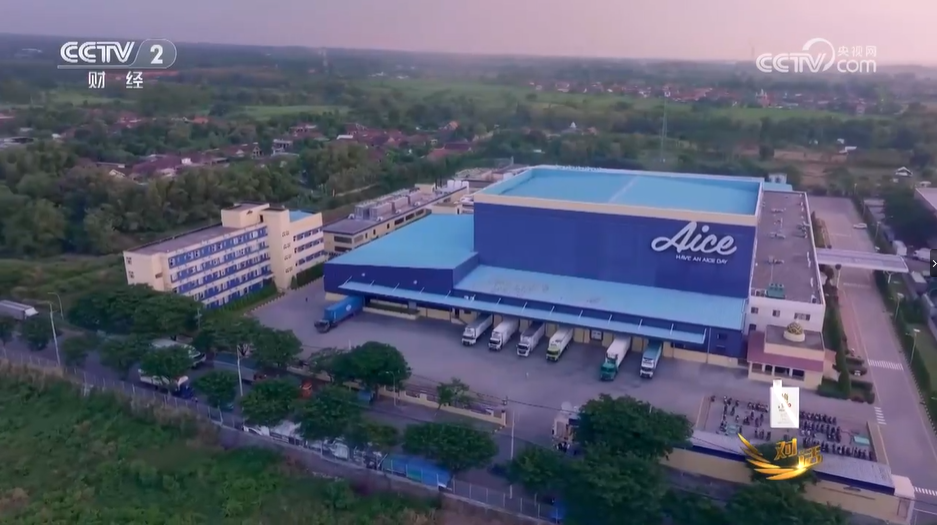
艾雪 apparaît dans l'émission « Dialogue » de CCTV Source : CCTV.com
Fondée il y a dix ans, 艾雪 est numéro un des parts de marché dans les canaux traditionnels en Indonésie, avec un chiffre d'affaires annuel dépassant 3 milliards de yuans, et a même installé des congélateurs dans les petites boutiques rurales.
Cette stratégie de « encercler les villes à partir des campagnes » pourrait offrir de nouvelles inspirations aux entreprises chinoises pour explorer les marchés étrangers.

Source : 艾雪
Un cadre de Mengniu se reconvertit dans la vente de glaces
L'histoire d'艾雪 commence à l'été 2014.
On apprend qu'à l'époque, Niu Gensheng, fondateur de Mengniu, parcourait les campagnes indonésiennes avec son équipe. Ils ont découvert un paradoxe : dans ce pays tropical avec une température moyenne de 28°C, le marché de la glace était monopolisé par des marques étrangères comme Unilever et Nestlé, avec des prix généralement trop élevés, tandis que 70 % de la population indonésienne à faible revenu ne pouvait pas se permettre d'en acheter.
C'est cette découverte qui a poussé Niu Gensheng à se lancer à l'international.
Source : XINHUA news
En 2015, une ancienne équipe clé de Mengniu, forte de la technologie mature chinoise de production de glaces, est retournée en Indonésie pour fonder la marque 艾雪. Ils ont reproduit la tactique que Mengniu avait utilisée contre Yili : « Priorité aux zones vierges, d'abord les espaces vides » : éviter les supérettes où les géants sont concentrés, et cibler les petites boutiques rurales.
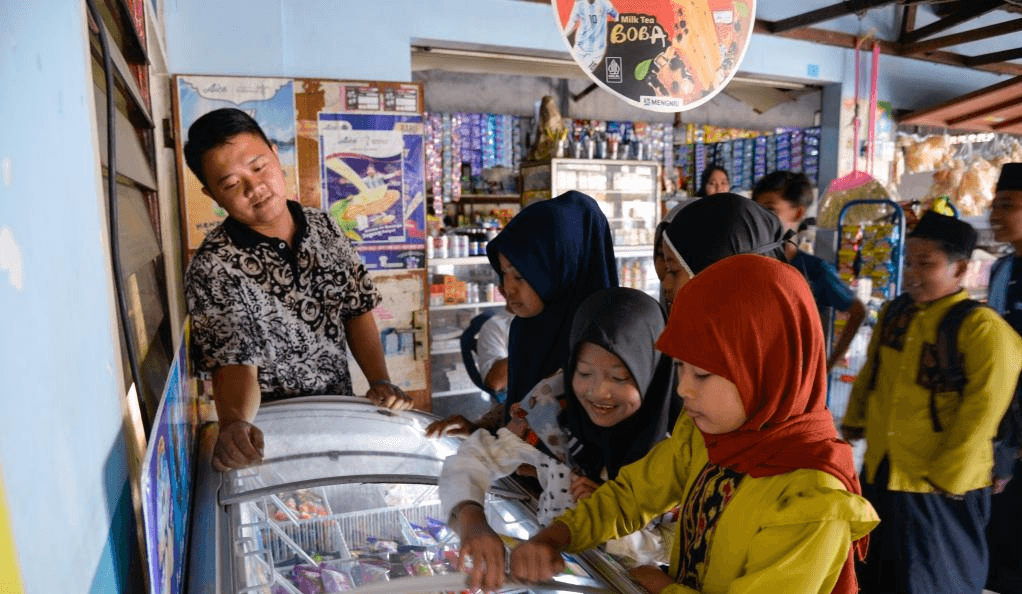
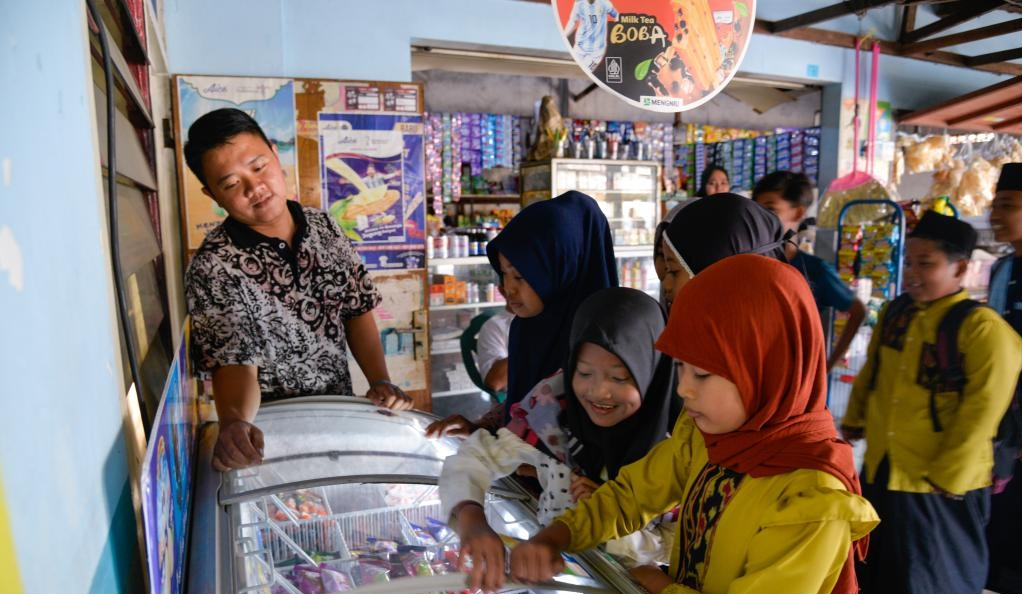
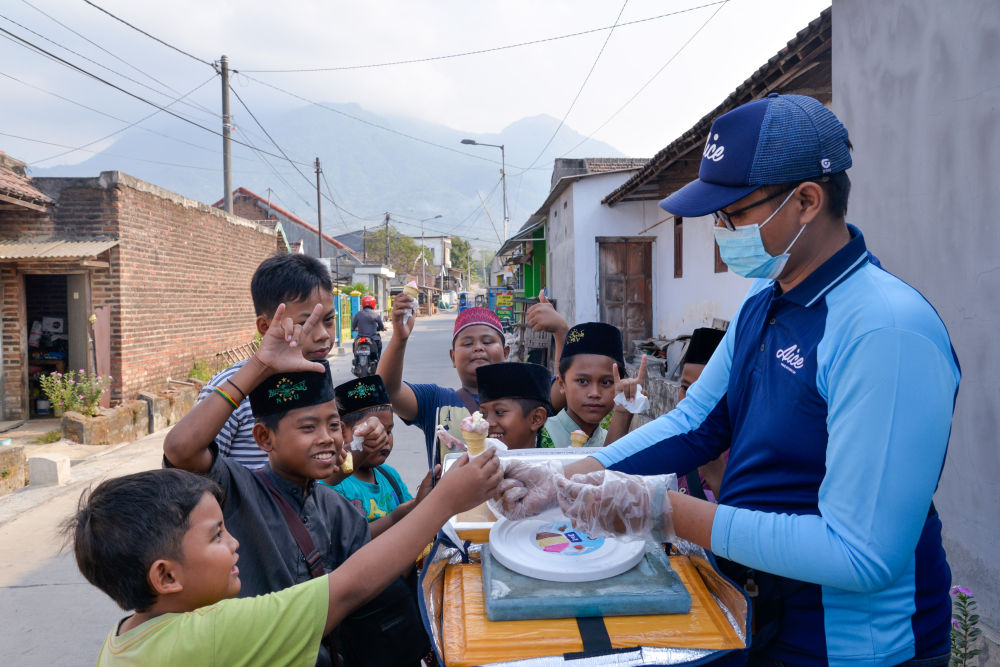
L'équipe, avec des caisses en polystyrène sur le dos, parcourait les rues et les ruelles, offrant gratuitement des congélateurs aux commerçants, subventionnant l'électricité, et apprenant aux propriétaires à disposer les marchandises. En 2017, ce réseau « capillaire » de distribution avait pénétré 79 villes en Indonésie, couvrant 70 000 petites boutiques rurales.
Source : 艾雪
Avec la réputation qui se répandait que « même avec 9 mao, on peut manger une bonne glace », le chiffre d'affaires d'艾雪 est passé de 20 millions à 1,2 milliard de yuans en trois ans, créant une brèche sur le territoire des nombreux géants.
En 2021, 艾雪 a été officiellement rachetée par Mengniu. Grâce à la chaîne d'approvisionnement mondiale de Mengniu, ses produits se sont rapidement étendus au Vietnam et aux Philippines. En 2024, le chiffre d'affaires total a dépassé les 10 milliards, représentant 70 % des revenus internationaux de Mengniu, devenant ainsi la première marque de glace en Indonésie en termes de parts de marché.
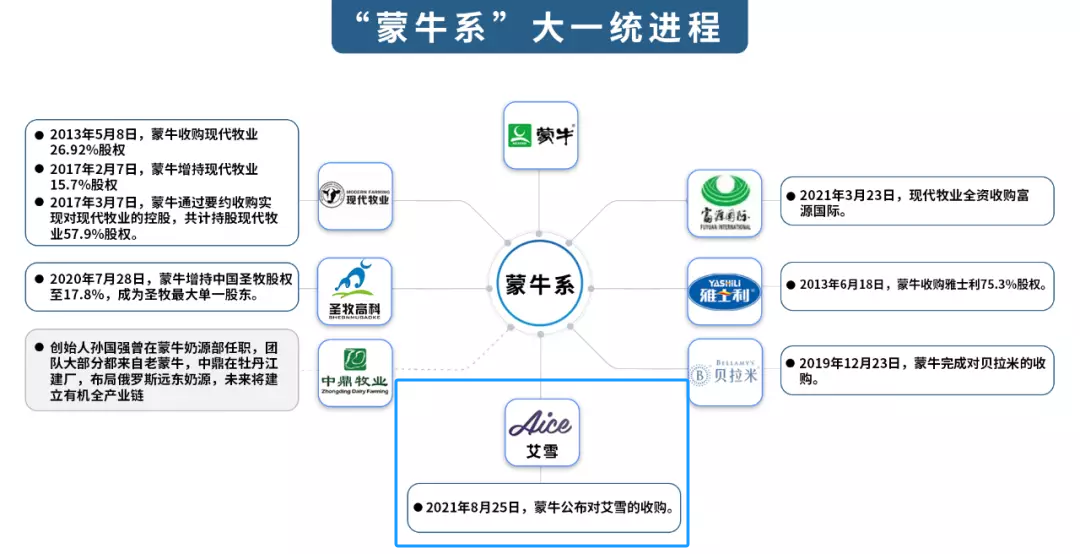
Mengniu rachète officiellement 艾雪 Source : Sohu
Construire des écoles, signer avec Messi : l'« économie de la confiance » de la glace chinoise
La stratégie de bas prix n'est qu'une porte d'entrée ; la clé de l'enracinement d'艾雪 est la « localisation profonde ».
Les Indonésiens se souviennent encore que, pendant la pandémie de COVID-19, 艾雪 a construit sa propre usine de masques pour distribuer gratuitement du matériel ; dans les petites boutiques des zones pauvres, des dizaines de milliers de familles ont gagné leur vie grâce aux congélateurs gratuits d'艾雪.
Cette stratégie de « gagner la confiance avec de l'argent réel » a duré dix ans.
艾雪 a construit 12 écoles primaires d'espoir en Indonésie, et a reçu pendant trois ans consécutifs le label « Entreprise socialement responsable de premier plan » du gouvernement. Mais l'action caritative n'était que la première étape. Pendant l'Aïd el-Fitr, 艾雪 organisait la distribution gratuite de glaces dans toute une rue, et lors des journées portes ouvertes de l'usine, de nombreux étudiants étaient invités à visiter les chaînes de production.
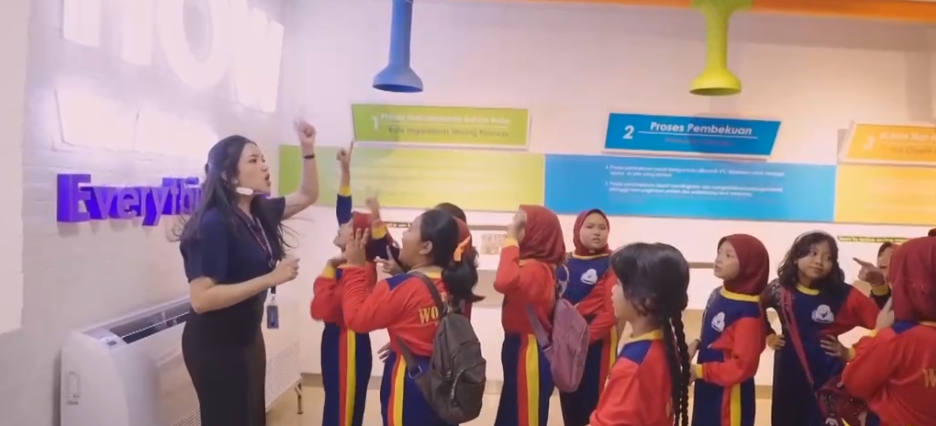
Des étudiants indonésiens visitent l'usine d'艾雪 Source : Internet
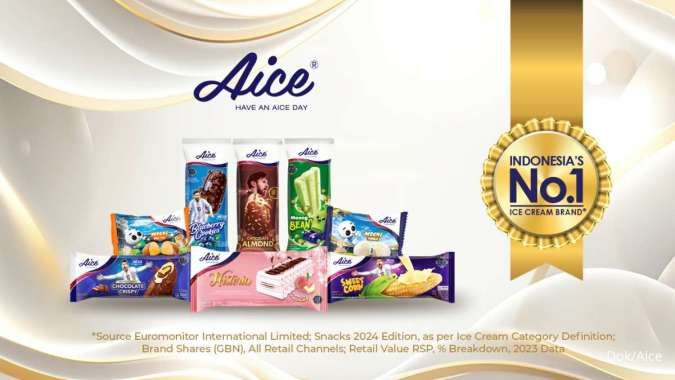
Ce qui a vraiment fait sortir 艾雪 de son cercle, c'est son marketing sportif. En 2018, la marque 艾雪 est devenue le fournisseur exclusif de glaces des Jeux asiatiques de Jakarta.
En 2022, 艾雪 a sponsorisé la Coupe du monde au Qatar, et a obtenu la licence « Glace préemballée officielle de la FIFA pour l'Asie du Sud-Est », collaborant avec des stars comme Messi et Mbappé. En ligne, ils ont lancé le hashtag #AiceStarlympic, encourageant les consommateurs à publier des vidéos sur le thème du sport, liant profondément la consommation de glaces à l'esprit sportif.

艾雪 collabore avec Messi et Mbappé Source : Mengniu
Derrière ces actions se trouve une logique claire : établir la hauteur de la marque à travers des événements de premier plan, et pénétrer les jeunes cercles grâce à l'effet de célébrité.
Mais l'équipe d'艾雪 sait bien que la ferveur sur le terrain finira par s'estomper ; la véritable localisation doit se concrétiser au quotidien. Cette prise de conscience a directement conduit à une implantation profonde d'艾雪 sur les plateformes de médias sociaux à l'étranger.
Source : 艾雪
Conquérir l'Asie du Sud-Est avec une stratégie de « combinaison » sur les réseaux sociaux
On apprend que, pour intégrer véritablement la marque dans la vie quotidienne des Asiatiques du Sud-Est, 艾雪 a lancé une « offensive éclair de contenu » simultanément sur quatre plateformes : TikTok, Instagram, YouTube et Facebook, avec une stratégie sur mesure pour chaque plateforme.
--TikTok
La stratégie d'艾雪 sur TikTok est très claire : utiliser le contenu le plus accessible pour capter le trafic.
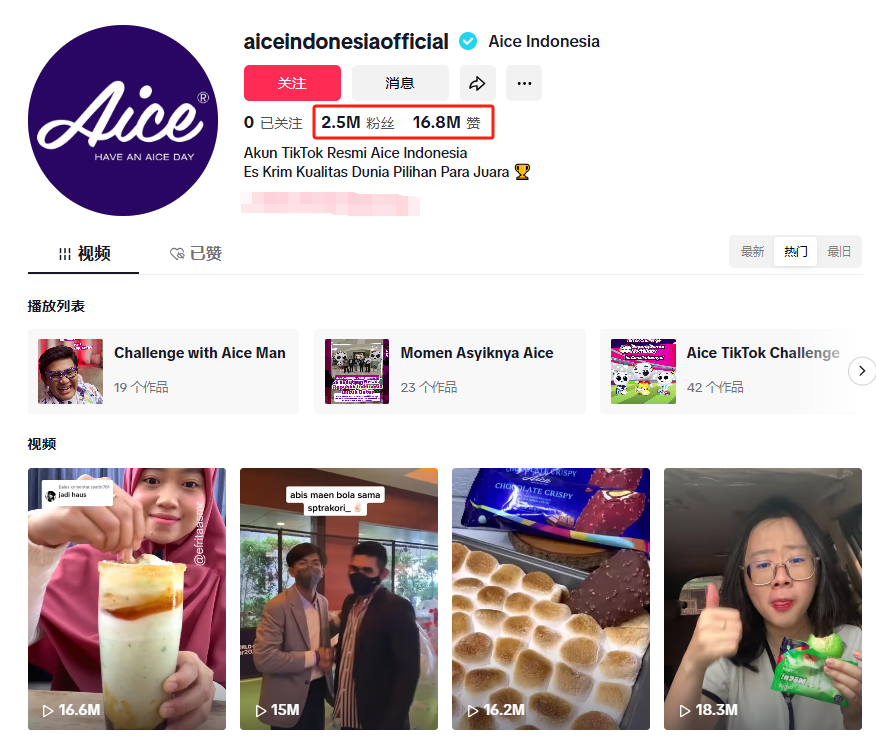
À ce jour, son compte officiel @aiceindonesiaofficial a attiré 2,5 millions de fans, avec plus de 16,8 millions de likes, publiant principalement trois types de vidéos : des publicités présentant directement les produits, des sketches humoristiques scénarisés, et des dégustations aléatoires dans la rue.
Le simple hashtag de la marque #aice a atteint 1,4 milliard de vues, avec un effet de diffusion assez remarquable.
Source : TikTok
Ils ont également collaboré avec de nombreux influenceurs TikTok. Par exemple, avec le blogueur indonésien @tamarajessica (9,3 millions de fans), qui a publié un vlog de pique-nique ; dans la seconde moitié, la mascotte d'艾雪 est soudainement apparue avec un nouveau produit. Cette vidéo de « placement subtil » a obtenu 4,2 millions de vues, et a été très appréciée par de nombreux utilisateurs indonésiens.

Source : TikTok
Il y a aussi l'influenceur philippin @reinitsu..02 (2,7 millions de fans), qui a participé à l'activité liée aux Jeux olympiques de Paris lancée par 艾雪, #EmbrAICEyourWinningSpirit, pour soutenir les athlètes philippins qu'il encourage.
Dans la vidéo, il mangeait une glace 艾雪 tout en regardant les Jeux olympiques en direct, un contenu très accessible. Cette vidéo a finalement atteint 1,9 million de vues, et dans les commentaires, de nombreux utilisateurs encourageaient également leurs athlètes favoris, augmentant efficacement le trafic de la marque.

Source : TikTok
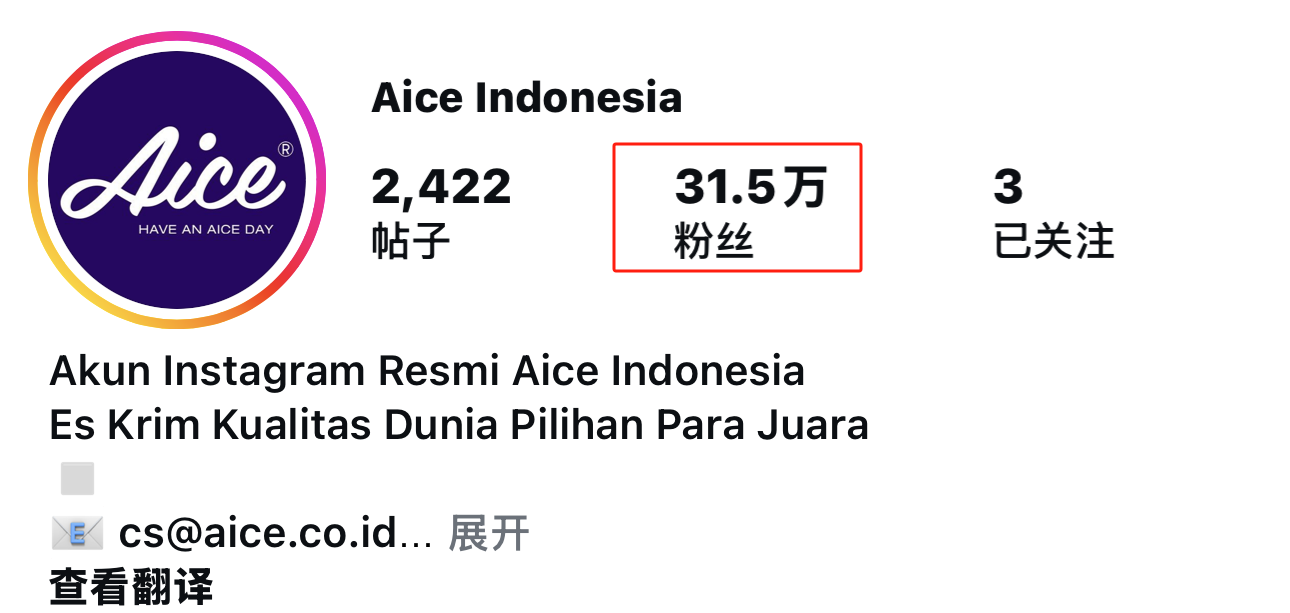
Sur Instagram, le compte officiel d'艾雪 @Aice Indonesia a attiré 315 000 fans.
Source : Instagram
Le contenu publié est varié. Par exemple, pendant le récent Ramadan, 艾雪 a organisé un tirage au sort de vœux, offrant 25 millions de roupies indonésiennes comme prix, invitant les utilisateurs à publier avec le hashtag #harapanramadan, avec un effet maximal. L'activité a attiré plus de 100 000 participants, ce qui est un niveau plutôt bon dans la gestion des médias sociaux pour les biens de consommation courante.

Source : Instagram
--YouTube
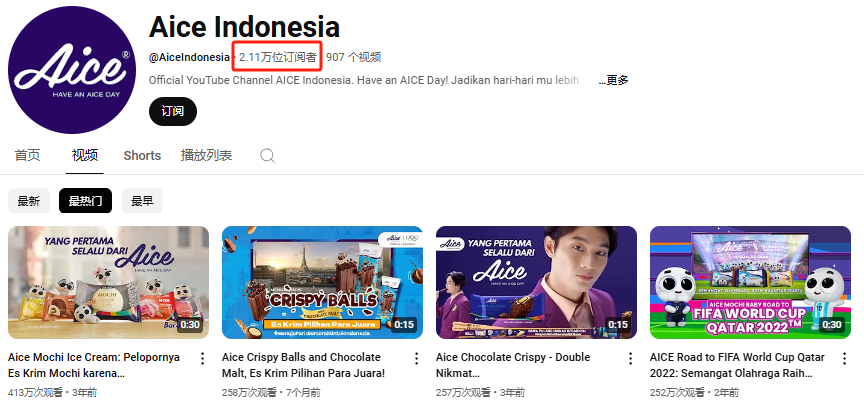
Sur YouTube, le compte officiel d'艾雪 @Aice Indonesia n'a que 21 100 abonnés, mais la conception du contenu est très intelligente.
Ils filment des scènes quotidiennes de gens ordinaires achetant des glaces dans la rue et les mangeant en marchant. Ce style « sans publicité forcée » a plutôt établi un sentiment de confiance envers la marque auprès de la classe moyenne indonésienne.
Source : YouTube
Facebook est le terrain de jeu principal pour jouer la carte de l'émotion.
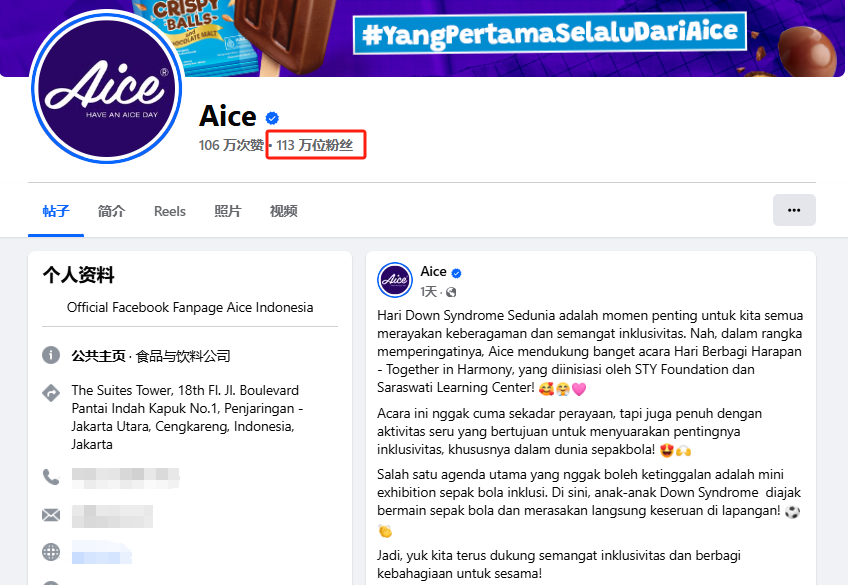
Parmi les 1,13 million de fans du compte officiel d'艾雪 @Aice, beaucoup sont des utilisateurs familiaux. Une récente vidéo caritative dans des zones pauvres a suscité de nombreuses réactions dans les commentaires.
Cela montre aussi, dans une certaine mesure, que sur un marché comme l'Indonésie, où la famille est importante, le contenu chaleureux est effectivement plus efficace que la publicité dure.
Source : Facebook
En conclusion
Comme le montre le cas d'艾雪, les marques chinoises qui explorent les marchés étrangers ont surtout besoin d'une attitude pragmatique de s'engager pleinement.
Pour les entreprises chinoises actuelles, plutôt que de courir aveuglément après les tendances du marché, il vaut mieux s'appuyer sur la solide expérience de l'industrie manufacturière, prendre la recherche et le développement technologique comme point d'ancrage, utiliser l'héritage culturel comme lien de valeur, et construire des barrières concurrentielles dans un positionnement de marché différencié.
Cet océan d'étoiles appartient en fin de compte à ceux qui sont prêts à se baisser pour comprendre le monde.