 1839
1839En parlant du marché du commerce électronique en Europe, on pense généralement d'abord aux grandes nations traditionnelles comme le Royaume-Uni et l'Allemagne, tandis que l'image de la Pologne est souvent moins marquée.
Cependant, les données récentes de la Pologne sont particulièrement remarquables : malgré un déclin global du commerce de détail, le commerce électronique polonais continue de croître à contre-courant, et ce marché émerge rapidement.

Comment cette croissance à contre-courant dans un contexte de ralentissement du commerce de détail a-t-elle été réalisée ?
Les données montrent qu'en septembre de cette année, les ventes au détail globales en Pologne ont chuté de 5,7 % par rapport au mois précédent et de 3 % sur un an. Pourtant, les ventes en ligne ont augmenté à contre-courant, avec une hausse de 4,6 % sur un an. Parallèlement, la part du commerce électronique dans les ventes au détail totales est passée de 8,3 % en août à 8,9 %.
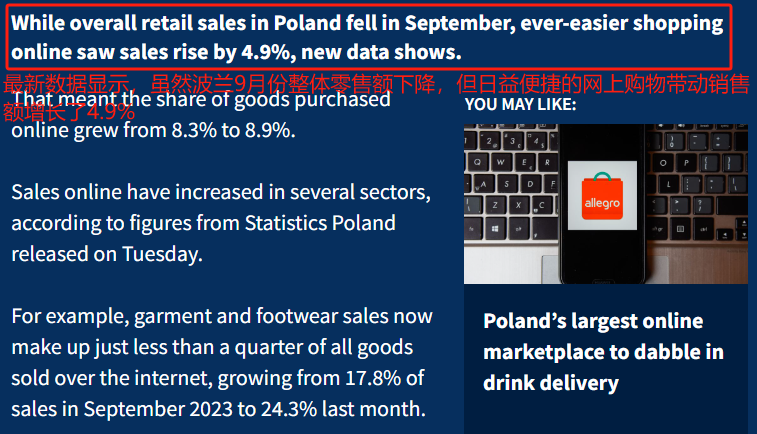
Croissance à contre-courant des ventes du commerce électronique polonais Source : TVP WORLD
Derrière cette croissance, d'une part, les consommateurs sont de plus en plus attirés par les achats en ligne, et d'autre part, cela bénéficie de l'amélioration progressive des systèmes de paiement et de logistique. Les ventes en ligne de vêtements et d'articles pour la maison sont particulièrement remarquables : les ventes de vêtements en ligne ont augmenté de 6,5 % sur un an, tandis que celles des articles pour la maison ont bondi de 24,3 %. Les données de ces deux catégories sont particulièrement frappantes, reflétant une augmentation stable de la demande des consommateurs pour les achats en ligne.
Les données du géant polonais du commerce électronique Allegro confirment également cette tendance.

Le rapport financier du deuxième trimestre d'Allegro montre que sa valeur brute des marchandises (GMV) a atteint 15 milliards de zlotys, soit une augmentation de 11,6 % sur un an, tandis que ses revenus ont atteint 2,3 milliards de zlotys, soit une hausse de 23,8 %. À la fin du deuxième trimestre, le nombre d'acheteurs actifs d'Allegro a atteint 14,9 millions, injectant une dynamique forte dans le marché polonais du commerce électronique. On prévoit qu'au troisième trimestre, le taux de croissance de la GMV de cette plateforme se maintiendra entre 10 % et 11 %, et le taux de croissance des revenus entre 16 % et 18 %. Tous ces signes indiquent qu'Allegro est devenu le "moteur" de la croissance stable du commerce électronique en Pologne, insufflant de la vitalité à l'ensemble de l'écosystème du commerce en ligne.
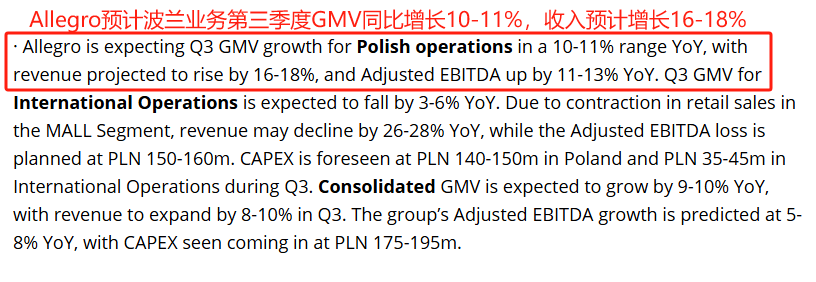
Allegro prévoit que les performances du commerce électronique polonais continueront d'augmenter Source : en.media.allegro.pl
Le commerce électronique européen est en plein essor, les transactions transfrontalières se réchauffent
La croissance du commerce électronique en Pologne n'est pas un cas isolé ; à l'échelle de l'Europe, le marché du commerce en ligne est également dynamique.
Selon le "Rapport sur le commerce électronique en Europe 2024" publié conjointement par l'Association européenne du commerce électronique et le Conseil européen du commerce, les ventes du commerce électronique en Europe atteindront 958 milliards d'euros cette année, soit une augmentation de 8 % sur un an. L'essor du commerce électronique transfrontalier sur le marché européen est particulièrement notable.
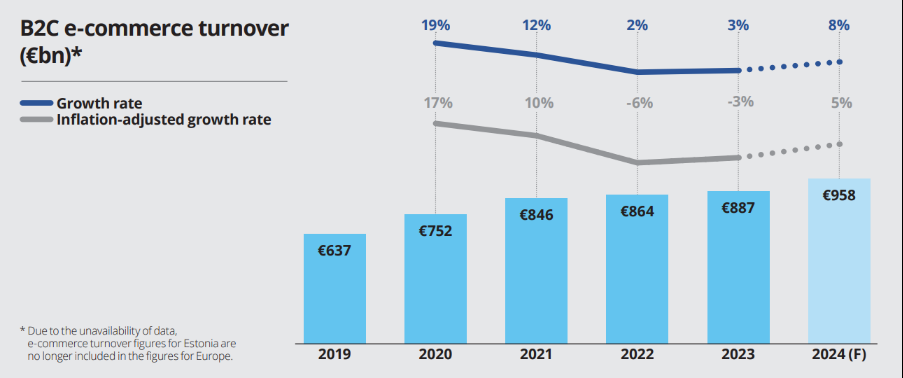
L'échelle du commerce électronique européen atteindra 958 milliards d'euros Source : eurocommerce.eu
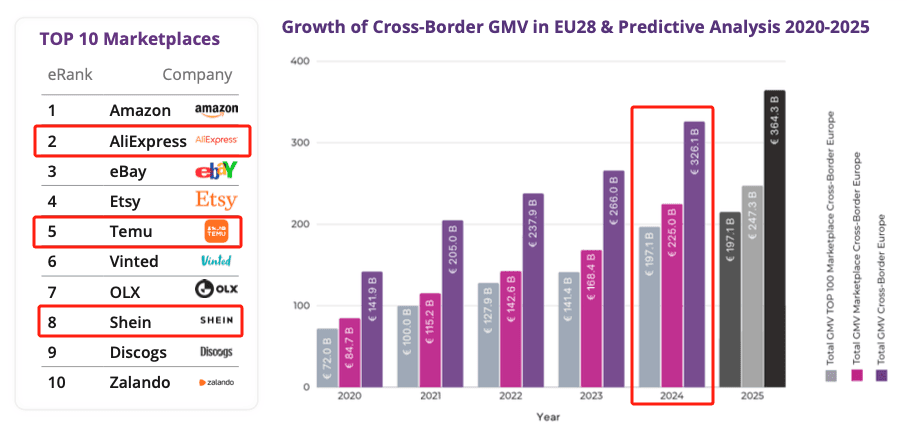
Dans le rapport "Top 100 des marchés transfrontaliers en Europe" publié par l'institut de recherche CBCommerce.eu, il est mentionné que d'ici la fin de l'année, le marché européen du commerce électronique transfrontalier devrait atteindre 326 milliards d'euros, dont environ 225 milliards d'euros proviendront des plateformes de commerce électronique transfrontalier, soit une proportion de 69 %.
Parmi ces plateformes, la part de marché des plateformes chinoises de commerce électronique transfrontalier en Europe n'est pas négligeable.
Dans le top dix des plateformes de commerce électronique transfrontalier en Europe, les chinoises AliExpress, Temu et Shein occupent respectivement les deuxième, cinquième et huitième places, très appréciées des consommateurs européens, injectant une nouvelle vitalité sur le marché européen.
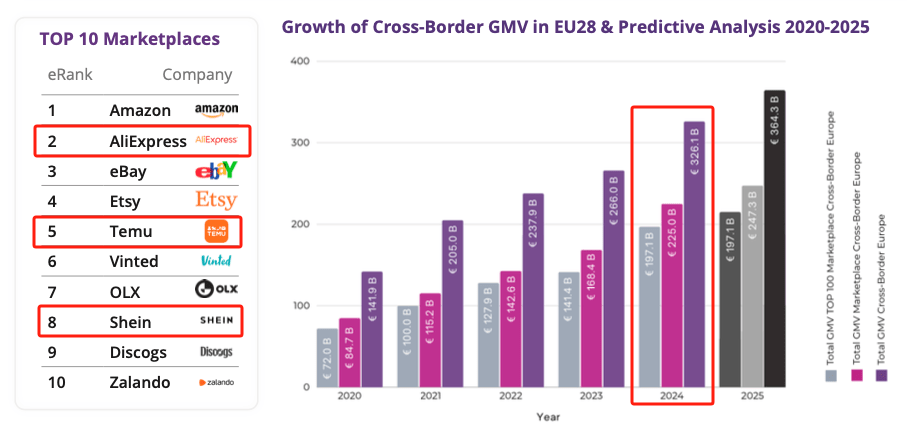
Source : CBCommerce.eu
Saisir les tendances du commerce électronique polonais pour explorer de nouvelles possibilités sur le marché européen
Pour les vendeurs, que ce soit en entrant via une plateforme locale ou en développant des activités sur un site indépendant, ils peuvent tirer parti des opportunités de croissance du marché polonais pour créer de nouvelles possibilités d'expansion de leurs produits sur le marché européen.
Le marché européen est déjà entré dans une voie rapide de développement diversifié.
L'essor du commerce électronique polonais est un signal : la diversification du marché européen est en train de se former. De l'attention aux besoins des consommateurs à l'optimisation de l'expérience locale, en passant par la fourniture d'un soutien flexible en matière de paiement et de logistique, le développement du commerce électronique polonais ouvre sans aucun doute la porte à davantage de vendeurs.