 2238
2238Avec le développement rapide d'Internet et la généralisation des appareils intelligents, les habitudes d'achat des consommateurs ont connu des changements radicaux. En particulier en Allemagne, l'expansion continue du marché du commerce électronique est remarquable.
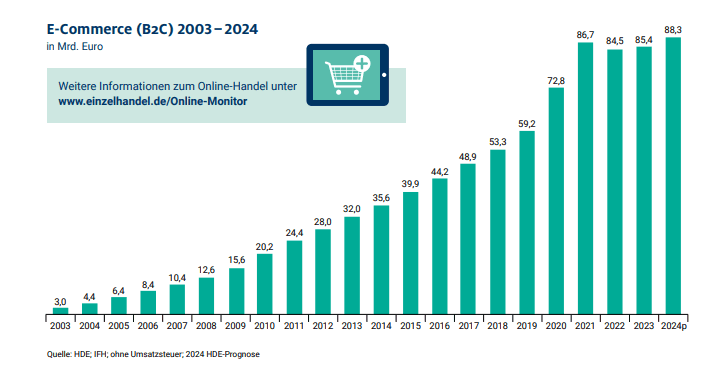
Selon les données de l'Association allemande du commerce (HDE), en 2024, le volume des transactions en ligne en Allemagne devrait dépasser 88,3 milliards d'euros. Ce chiffre dépasse non seulement le record de 86,7 milliards d'euros établi en 2021, mais marque également un nouveau sommet pour le marché du commerce électronique allemand.
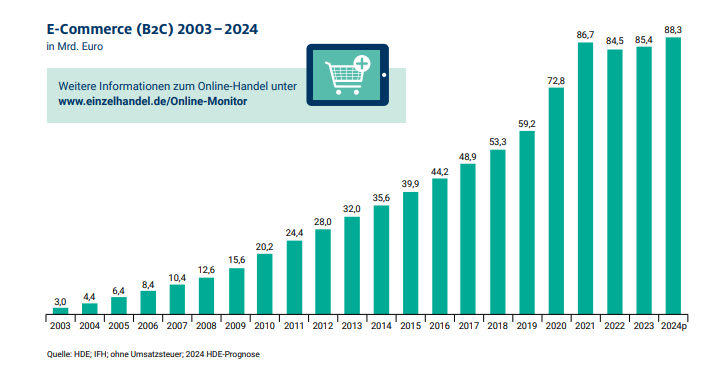
Source : Association allemande du commerce (HDE)
Plus impressionnant encore, l'enquête de la HDE montre que presque tous les adultes allemands participent aux achats en ligne. Plus précisément, 99 % des consommateurs adultes allemands sont désormais habitués à faire leurs achats en ligne. Ce mode d'achat en ligne est complètement intégré dans la vie quotidienne des Allemands, que ce soit pour acheter des produits de première nécessité ou pour choisir des cadeaux de fête, les plateformes de commerce électronique sont devenues le choix principal.
01
Croissance continue des ventes en ligne : les achats en ligne deviennent la norme
Ces dernières années, le marché du commerce électronique en Allemagne a montré une forte dynamique de croissance, en partie grâce aux changements dans les habitudes d'achat des consommateurs et à la commodité des moyens de paiement en ligne. Alors que de plus en plus de consommateurs s'habituent à acheter des produits en ligne, le marché allemand du commerce électronique connaît des opportunités sans précédent.
Malgré les défis économiques mondiaux, en particulier la pression inflationniste, l'enthousiasme des consommateurs allemands pour les achats en ligne ne s'est pas estompé. Surtout à l'approche de la saison des fêtes, le désir d'achat des consommateurs reste fort. De nombreux Allemands ont fait des achats en ligne leur premier choix pour les achats de fête, en particulier pendant la saison des promotions du Black Friday (29 novembre) et du Cyber Monday (2 décembre), où les offres promotionnelles sur les plateformes de commerce électronique attirent un grand nombre de consommateurs.

Saison des achats de fêtes : le Black Friday et le Cyber Monday continuent de stimuler la consommation
Le Black Friday et le Cyber Monday sont des journées promotionnelles importantes pour l'industrie mondiale du commerce électronique. En Allemagne, on estime que les ventes totales de ces deux jours en 2024 atteindront 5,9 milliards d'euros. Bien que la situation économique ne soit pas optimiste, l'attrait des réductions et des promotions parvient toujours à stimuler l'enthousiasme des consommateurs pour les achats. Cela prouve également que, malgré l'incertitude du macro-environnement économique, le désir des consommateurs pour les bonnes affaires reste toujours présent.
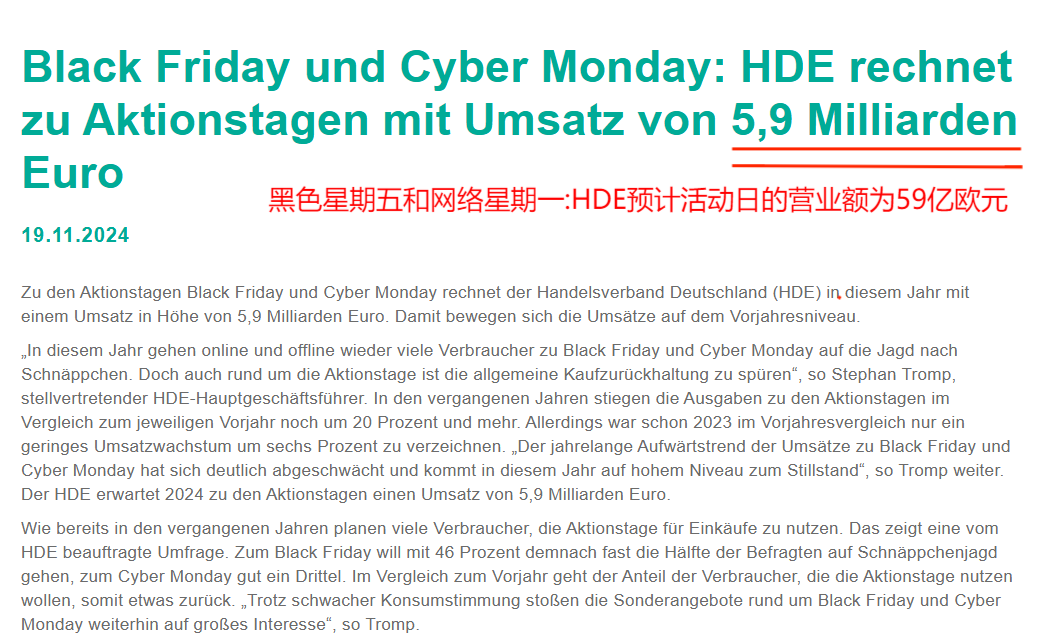
Source : Association allemande du commerce (HDE)
En particulier pendant les périodes de fêtes, les consommateurs ont tendance à acheter des produits lors de ces moments d'achat spécifiques. Ce n'est pas seulement une question de prix attractifs, mais aussi un phénomène culturel lié aux achats de fête. Pendant les grandes promotions du Black Friday et du Cyber Monday, les différentes plateformes lancent des offres ciblées, ce qui stimule encore davantage la croissance des ventes.
02
Expansion du marché du commerce électronique en Allemagne : concurrence mondiale accrue
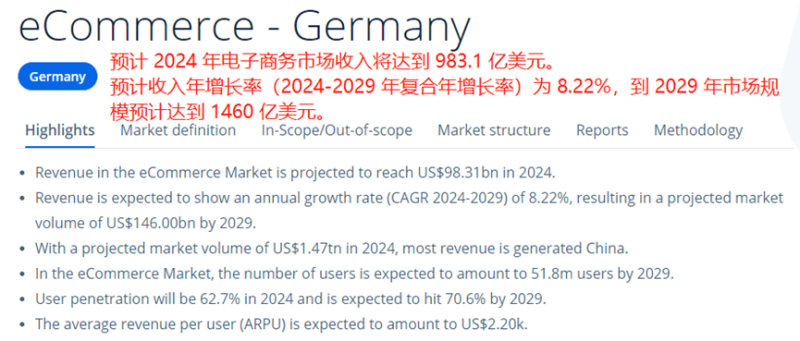
Avec la croissance continue du marché du commerce électronique en Allemagne, non seulement les plateformes locales se renforcent, mais les plateformes mondiales de commerce électronique transfrontalier affluent également pour conquérir des parts de marché auprès des consommateurs allemands. Les données montrent que la taille du marché du commerce électronique en Allemagne devrait dépasser 98,3 milliards de dollars en 2024, et ce chiffre devrait encore augmenter pour atteindre 146 milliards de dollars d'ici 2029, avec un taux de croissance annuel composé (TCAC) de 8,22 %. Cette tendance indique que le potentiel de croissance du marché du commerce électronique allemand reste énorme.
Source : Statista
Expansion des plateformes locales de commerce électronique sur le marché international
Les géants allemands du commerce électronique, comme Otto et Kaufland, ont déjà commencé à étendre leurs activités de commerce électronique vers d'autres pays. En avril 2024, Otto a annoncé l'ouverture de son modèle de plateforme à davantage de vendeurs de l'Union européenne, élargissant ainsi sa part de marché et ouvrant davantage de canaux pour le commerce électronique transfrontalier. Parallèlement, Kaufland étend également son marché international ; cet été, il a étendu ses activités de commerce électronique à la Pologne et à l'Autriche, renforçant ainsi sa compétitivité sur le marché de l'Europe centrale et orientale.
L'expansion de ces plateformes locales de commerce électronique non seulement intensifie la concurrence sur le marché, mais offre également davantage d'opportunités de coopération et de compétition pour d'autres plateformes. Pour les entreprises de commerce électronique transfrontalier, le marché allemand est sans aucun doute un "champ de bataille" plein de potentiel.
03
Conclusion
Pour les vendeurs de commerce électronique transfrontalier, le potentiel du marché allemand ne peut être ignoré. Que ce soit en optimisant les services de localisation, ou en renforçant les systèmes logistiques et en améliorant l'efficacité de la livraison, le marché du commerce électronique allemand offre aux marques diverses voies d'expansion. Parallèlement, les besoins des consommateurs deviendront plus diversifiés et personnalisés, obligeant les commerçants à s'adapter en permanence aux changements et à proposer des produits et services plus précis.
Dans un contexte de concurrence mondiale de plus en plus intense dans le commerce électronique, le marché allemand reste un marché important à surveiller. Les entreprises et les marques de commerce électronique transfrontalier peuvent y déployer des efforts considérables, en s'appuyant sur le fort pouvoir d'achat des consommateurs allemands et un environnement d'achat hautement numérisé, pour saisir les nouvelles opportunités qui se présenteront dans les années à venir.