 1773
1773Avec le développement continu du commerce électronique mondial, l'économie sud-coréenne brille de plus en plus sur la scène du commerce électronique en Asie. Les dernières données publiées montrent que le marché de la vente au détail en ligne en Corée du Sud a réalisé une performance remarquable cette année, les ventes en ligne ayant dépassé les ventes au détail traditionnelles pour devenir le principal moteur du marché. Ce changement reflète non seulement une profonde évolution des habitudes d'achat des consommateurs, mais révèle également l'essor rapide du commerce électronique transfrontalier, en particulier des produits chinois, sur le marché sud-coréen.

Les ventes en ligne dépassent pour la première fois les ventes physiques
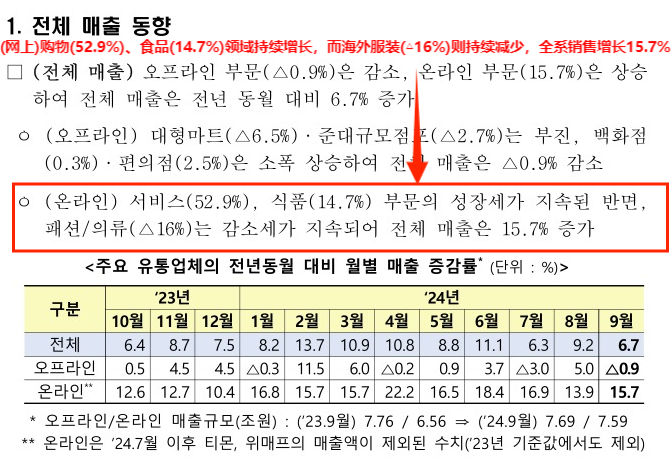
Selon les dernières données publiées le 29 octobre 2024 par le ministère du Commerce, de l'Industrie et de l'Énergie de Corée du Sud, la part des ventes au détail en ligne sur le marché sud-coréen a dépassé 52,9 %. Ce changement marque une nouvelle étape de développement pour le marché du commerce électronique sud-coréen, où les achats en ligne deviennent progressivement la norme.
Source : Site officiel du ministère du Commerce, de l'Industrie et de l'Énergie de Corée du Sud
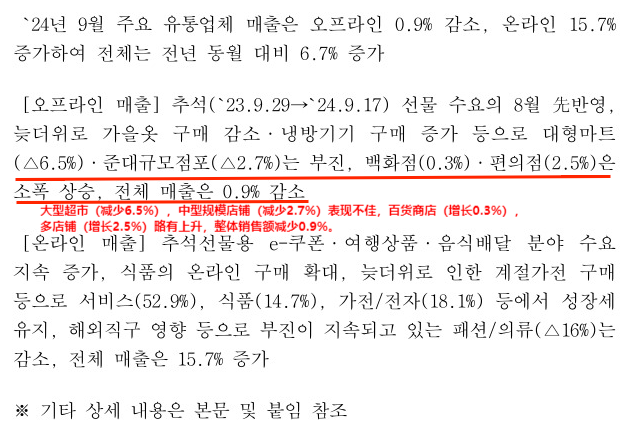
Plus précisément, la croissance des ventes en ligne est principalement due à la demande d'achats électroniques pendant la saison des fêtes, en particulier pour les produits féminins et l'alimentation et les boissons. En revanche, la baisse des ventes physiques reflète une réduction des achats de vêtements d'automne et une stagnation des ventes d'appareils électroménagers. Les ventes des hypermarchés et des magasins de taille moyenne ont chuté respectivement de 6,5 % et 2,7 %, tandis que les grands magasins et les magasins multi-enseignes ont enregistré une légère croissance de 0,3 % et 2,5 %.
Dans l'ensemble, bien que le commerce de détail physique subisse certaines pressions, les achats en ligne continuent de montrer une forte croissance, en particulier pendant les périodes promotionnelles, où les plateformes de commerce électronique attirent un grand nombre de consommateurs. En particulier, sous l'effet des pressions de la reprise économique post-pandémie, les performances des magasins de détail traditionnels sont décevantes, ce qui constitue sans aucun doute un facteur important favorisant la popularité des achats en ligne.
Source : Site officiel du ministère du Commerce, de l'Industrie et de l'Énergie de Corée du Sud
Les défis du commerce de détail traditionnel et les raisons de l'essor du commerce électronique
La faiblesse du commerce de détail traditionnel ne se limite pas à une simple baisse des températures ; le changement des comportements des consommateurs est également un facteur clé. Avec l'accélération du rythme de vie,de plus en plus de consommateurs préfèrent faire leurs achats en ligne, profitant d'une expérience d'achat plus pratique et efficace. En particulier, le large choix, la flexibilité des horaires d'achat et les services de livraison rapide offerts par les plateformes en ligne rendent les consommateurs plus enclins à utiliser les canaux de commerce électronique.
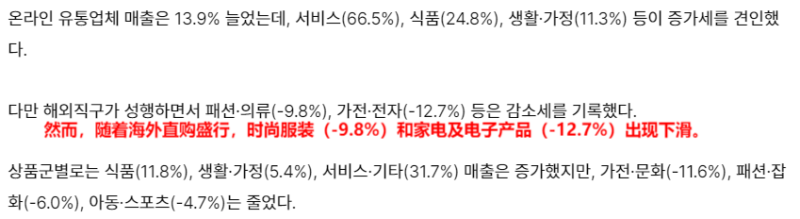
Parallèlement, les besoins d'achat des consommateurs sud-coréens évoluent également. Les ventes de produits dans les secteurs traditionnels du commerce de détail, tels que les vêtements de mode, les appareils électroménagers et les produits électroniques, ont connu une baisse significative, respectivement de 9,8 % et 12,7 %. Derrière ce changement se cache la vague des achats directs à l'étranger. De plus en plus de consommateurs achètent des produits du monde entier, en particulier des produits fabriqués en Chine, via des plateformes de commerce électronique transfrontalier, notamment AliExpress, Temu et d'autres plateformes internationales.
Source : Donga
Commerce électronique transfrontalier : un nouveau moteur pour le marché sud-coréen
Bien que le marché du commerce électronique sud-coréen soit relativement petit en termes de superficie et de population, son fort pouvoir d'achat et son taux de pénétration élevé d'Internet rendent ce marché extrêmement attractif pour le commerce électronique transfrontalier.
Dans ce contexte, les achats directs à l'étranger, en particulier ceux en provenance de Chine, continueront à occuper une place importante. Selon les informations de Tuke, le taux de pénétration des utilisateurs du marché du commerce électronique sud-coréen devrait atteindre 64,1 % en 2024 et pourrait atteindre 76,7 % d'ici 2029. Cela signifie que la pénétration du commerce électronique sur le marché sud-coréen augmentera encore, et le potentiel des plateformes de commerce électronique est énorme.
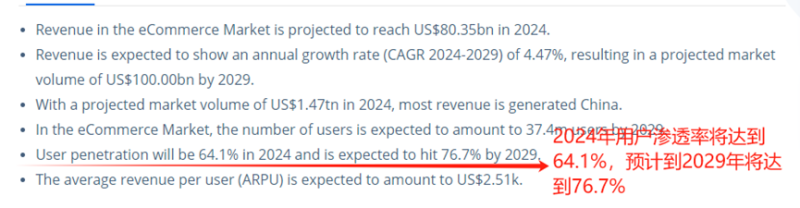
Source : Statista
Cependant, pour les vendeurs de commerce électronique transfrontalier, le marché sud-coréen présente à la fois des opportunités et des défis. Bien que la similitude culturelle, la proximité géographique et la forte capacité de consommation fassent de la Corée du Sud un marché cible idéal,l'afflux massif de produits chinois entraînera inévitablement un renforcement de la réglementation du marché. Les vendeurs qui souhaitent se développer sur le marché sud-coréen doivent non seulement prêter attention à la demande du marché, mais aussi suivre de près les changements politiques et réglementaires pour assurer le bon déroulement de leurs activités.

Conclusion : L'avenir du marché du commerce électronique sud-coréen
Le développement rapide du marché du commerce électronique sud-coréen n'est pas un hasard, mais le résultat de multiples facteurs agissant ensemble. L'essor des ventes en ligne, la popularité du commerce électronique transfrontalier et la forte capacité de consommation font du marché sud-coréen un champ de bataille important pour les vendeurs de commerce électronique mondiaux. En particulier, les vendeurs chinois, grâce à leurs avantages produits et au soutien des plateformes de commerce électronique transfrontalier, ont trouvé une part de marché considérable en Corée du Sud.
À l'avenir, avec le développement continu du marché du commerce électronique, les tendances de consommation en Corée du Sud pourraient dépendre davantage des achats en ligne, et la part du commerce électronique transfrontalier continuera de croître. Pour les vendeurs de commerce électronique, saisir cette opportunité, mettre en œuvre un marketing localisé et une exploitation conforme aux réglementations seront les clés pour réussir à pénétrer le marché sud-coréen.