 1848
1848Le géant du commerce électronique Amazon a récemment lancé une nouvelle initiative majeure : tester une fonctionnalité intitulée « Affichage des produits hors site », qui envoie directement le trafic de sa propre plateforme vers les sites indépendants des marques. Dès l'annonce, de nombreux vendeurs de marques se sont exclamés « c'est du jamais-vu », car Amazon était auparavant réputé pour être un « gardien de trafic ». Alors, pourquoi ce soudain changement d'attitude ? Quelles sont les intentions cachées derrière cette décision ?
Image provenant d'Internet
I. Révélation de la nouvelle fonctionnalité : Amazon « envoie » activement les clients vers les sites indépendants
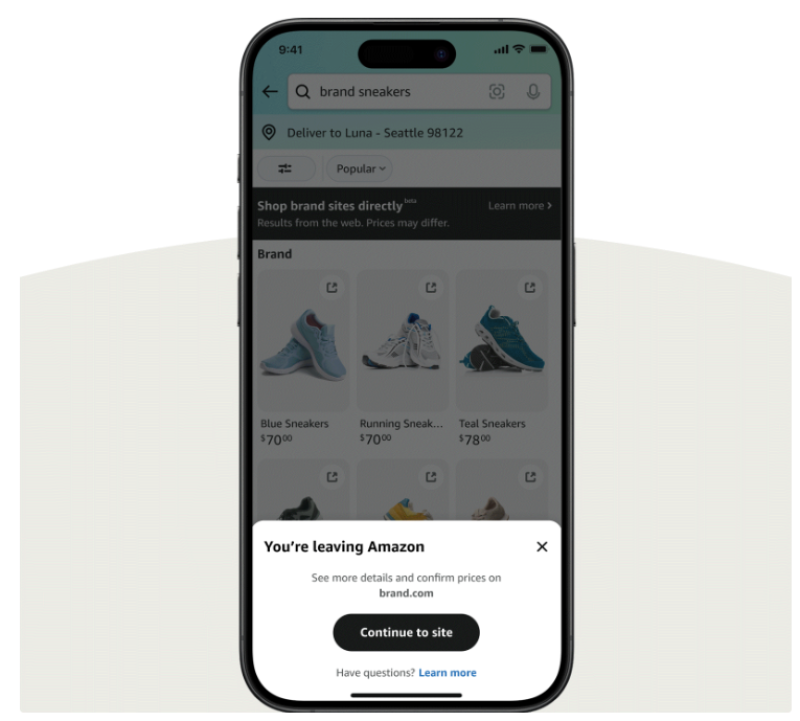
Selon les informations officielles d'Amazon, lorsqu'un utilisateur recherche une marque ou un produit spécifique dans l'application Amazon, les résultats de recherche seront divisés en deux catégories : d'une part, les produits disponibles à l'achat sur la plateforme Amazon, et d'autre part, les produits non vendus sur Amazon mais disponibles à l'achat sur le site officiel de la marque. Après avoir cliqué sur « Voir plus », l'utilisateur recevra une notification pour être redirigé vers le site indépendant de la marque, et après confirmation, l'achat hors site pourra être effectué.
Actuellement, cette fonctionnalité est testée uniquement auprès d'une partie des utilisateurs américains, et exclusivement sur les clients iOS et Android. Cependant, des détails tels que les marques pouvant y participer et la facturation du trafic n'ont pas encore été clarifiés.
Amélioration de l'expérience utilisateur
Pour les consommateurs, cette fonctionnalité équivaut à obtenir des informations plus complètes sur les produits en un seul endroit sur Amazon. Par exemple, en recherchant « Oura Smart Ring », ils pourront voir à la fois les produits vendus par Amazon ou des vendeurs tiers, ainsi que les modèles exclusifs ou les prix plus bas (le cas échéant) du site officiel de la marque. De plus, les membres Prime qui sont redirigés vers le site officiel de la marque participant au programme « Prime Shopping » peuvent bénéficier de services exclusifs tels que la livraison gratuite et la livraison rapide.
Source : aboutamazon
II. Le calcul d'Amazon : contrer les concurrents et renforcer ses défenses
Amazon a toujours été connu pour son « cycle fermé de trafic ». Pourquoi devient-il soudainement « généreux » en aidant les autres ? La réponse réside peut-être dans la pression concurrentielle.
Contrer les nouvelles plateformes comme Temu
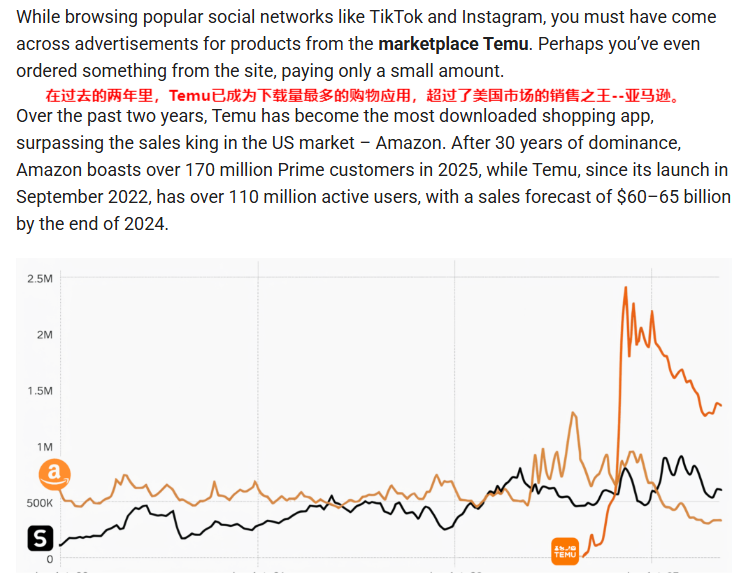
Ces dernières années, des plateformes comme Temu, SHEIN et TikTok Shop ont rapidement conquis des parts de marché grâce à des stratégies de prix bas. Par exemple, Temu a réduit les prix des produits à un niveau très bas grâce à son modèle de gestion complète, et en 2024, son nombre d'utilisateurs actifs mensuels aux États-Unis a même dépassé celui d'Amazon. Bien qu'Amazon ait lancé la plateforme discount « Amazon Haul » pour riposter, la notoriété et le taux d'utilisation restent inférieurs aux attentes (seulement 8 % des consommateurs ont déjà effectué un achat).
Cette nouvelle fonctionnalité adopte une approche différente : elle permet aux marques de vendre à des prix plus bas sur leurs sites indépendants (en économisant les commissions de la plateforme et les coûts publicitaires), ce qui abaisse indirectement les prix des produits similaires sur la plateforme Amazon, créant ainsi un « encerclement des prix bas » contre Temu.
Source : webycorp
Se positionner face à Google Shopping
Dès 2020, Google permettait aux commerçants d'afficher gratuitement des liens vers leurs produits, et les utilisateurs pouvaient être redirigés vers les sites des détaillants pour comparer les prix et effectuer des achats après une recherche. Ce test d'Amazon est perçu par les observateurs comme une étape clé dans sa transition vers un « moteur de recherche shopping complet », visant à rivaliser avec Google pour capter le trafic.
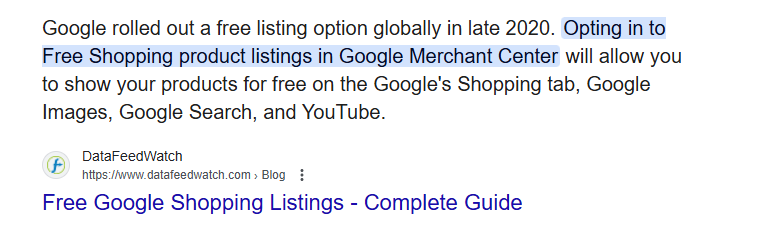
Source : google
III. Opportunités et inquiétudes pour les vendeurs de marques
Avantages : de la « dépendance à la plateforme » à une « double stratégie »
Auparavant, les marques devaient payer des commissions, étaient soumises aux règles de la plateforme et avaient du mal à accumuler des données utilisateur sur Amazon. Bien que les sites indépendants offrent une autonomie de gestion, ils sont confrontés à des problèmes de trafic. Cette nouvelle fonctionnalité offre aux marques une « troisième voie » :
Génération de trafic à faible coût : en exploitant le trafic ciblé d'Amazon (les utilisateurs sont souvent des acheteurs potentiels), les marques peuvent rapidement augmenter la visibilité de leur site indépendant.
Renforcement de la marque : les sites indépendants permettent de présenter plus complètement l'histoire de la marque et les détails des produits, renforçant ainsi la confiance des utilisateurs. Par exemple, la marque de maison Aosom, grâce à son modèle double « Amazon + site indépendant », a réalisé un chiffre d'affaires annuel de plus de 3,4 milliards de yuans, construisant avec succès une influence de marque.
Risques : répartition du trafic et incertitudes politiques
Biais de trafic : Amazon pourrait privilégier les liens externes des grandes marques ou des vendeurs payants, laissant peu de place aux petits et moyens vendeurs.
Changements de politique : si Amazon décide à l'avenir de facturer le trafic ou de modifier les règles, les marques devront réévaluer le rapport coût-bénéfice.

Image provenant d'Internet
Conclusion
Cette expérience de « partage de trafic » d'Amazon est à la fois une réponse à la pression concurrentielle et une tentative audacieuse d'évolution de l'écosystème du commerce électronique. Pour les marques, les opportunités et les risques coexistent ; pour l'industrie, cela pourrait déclencher une nouvelle vague d'intégration « plateforme + site indépendant ». Quant à savoir si cette expérience pourra remodeler le paysage du commerce électronique, seul le temps nous le dira.
(Note : Les informations de cet article sont compilées à partir des déclarations officielles d'Amazon et d'analyses sectorielles. Certains détails sont encore en phase de test, et les résultats réels dépendront de la version finale déployée.)