
 2041
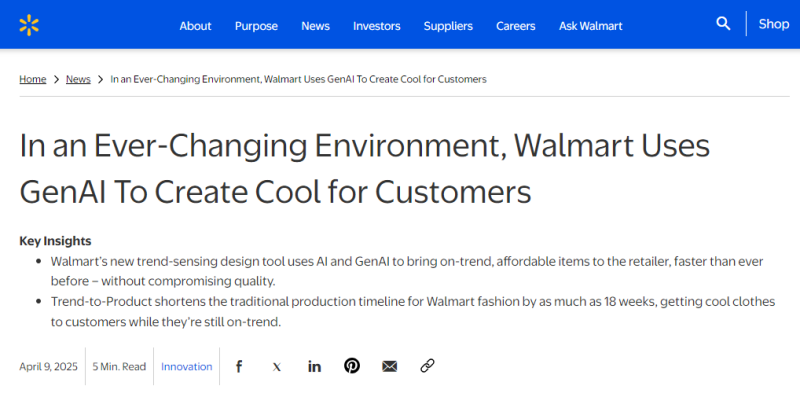
2041Récemment, le géant mondial de la vente au détail Walmart a dévoilé une innovation technologique révolutionnaire : son outil d'IA générative développé en interne pendant 18 mois, baptisé « Trend-to-Product » (de la tendance au produit), est officiellement mis en service.
Cet outil technologique, axé sur l'industrie du vêtement, capture en temps réel les données des tendances sur les réseaux sociaux et Internet, réduisant ainsi le cycle traditionnel de développement vestimentaire de six mois à six semaines. Dans le meilleur des cas, il peut raccourcir l'ensemble du cycle de production de 18 semaines, atteignant un mode de production « à la vitesse de la lumière », de l'analyse des données à la mise en œuvre du produit.

Source de l'image : Internet
I. Développement de la mode piloté par l'IA : accélération globale de la capture d'inspiration aux décisions de production
Au siège de Walmart aux États-Unis, dans l'Arkansas, l'équipe technique a présenté aux médias le processus de fonctionnement de ce système révolutionnaire. Le système capture automatiquement chaque jour plus de 500 millions de publications sur les réseaux sociaux, de contenus de blogueurs de mode et de données de plateformes de commerce électronique. Grâce à des algorithmes d'apprentissage profond, il identifie les tendances de plus de 120 éléments de mode, tels que les couleurs, les motifs et les styles. Par rapport aux études de marché traditionnelles qui nécessitent 2 à 3 semaines, le système d'IA peut générer en 15 minutes un tableau d'inspiration complet comprenant des suggestions de matériaux, des estimations de coûts et une analyse de faisabilité de production.
« Autrefois, les designers devaient parcourir des centaines de magazines de mode ; aujourd'hui, l'IA peut automatiquement pousser les 200 éléments de design les plus populaires de la saison », a révélé Andrea Albright, vice-présidente exécutive des achats de Walmart. Ce système a déjà permis à la marque No Boundaries d'augmenter son efficacité de développement de nouveaux produits de 400 %, certains processus étant réduits de plusieurs semaines à moins de 24 heures. Pour la collection d'hiver 2023, 30 % des articles les plus vendus provenaient directement de solutions d'inspiration générées par l'IA.
Source de l'image : Site officiel de Walmart
II. Une chaîne d'approvisionnement allégée : le gouffre temporel de 18 semaines comblé
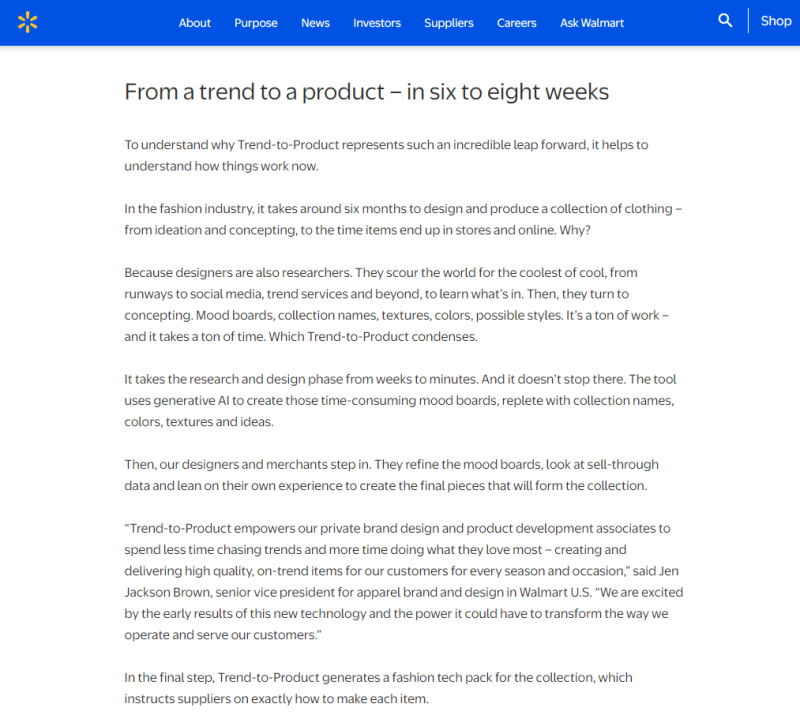
L'industrie du vêtement est depuis longtemps entravée par le cycle long de « conception-production-mise en rayon ». Dans le modèle traditionnel, il faut en moyenne 26 semaines entre la détection d'une tendance et la mise en rayon en magasin. Grâce à l'outil d'IA, Walmart a réduit ce cycle à moins de 8 semaines. Le responsable de l'équipe technique explique que le système peut prédire les caractéristiques des articles à succès 12 semaines à l'avance et lancer simultanément les négociations d'achat de tissus, ce qui permet d'économiser 45 jours rien que pour la réservation des tissus.
Plus crucial encore est l'optimisation des décisions de production par l'IA. Le système intègre les données de capacité de production en temps réel de plus de 2000 fournisseurs mondiaux de Walmart et recommande automatiquement le plan de production optimal en fonction de la popularité des tendances.
Source de l'image : Site officiel de Walmart
III. L'IA en action pour une marque de 2 milliards de dollars : le modèle de la fast fashion redéfini
En tant que premier utilisateur, la marque de vêtements jeunes No Boundaries, propriété de Walmart, est déjà devenue un bénéficiaire du modèle piloté par l'IA. Lancée en février 2023, cette marque s'appuie sur le système Trend-to-Product pour maintenir un rythme de « nouveautés chaque semaine », avec un nombre annuel de SKU augmenté de 170 % par rapport au modèle traditionnel. Il est à noter que son taux de précision des prévisions de produits à succès est passé de 35 % (moyenne du secteur) à 68 %, et que les stocks excédentaires en fin de saison ont été réduits de 40 %.

Source de l'image : Site officiel de Walmart
IV. Les ambitions de l'IA pour un empire de produits de mille milliards de dollars
Vinod Bidarkoppa, directeur technique international de Walmart, a révélé que cette technologie sera progressivement déployée dans plus de 200 catégories, notamment l'électroménager et les articles de première nécessité. Le premier domaine d'extension cible les produits saisonniers : le développement des décorations d'Halloween 2024 a déjà commencé à utiliser le module de prévision des tendances. Le système montre que les recherches de décorations sur le thème de Spider-Man ont bondi de 300 % par rapport à l'année précédente. L'IA a donc recommandé de doubler le volume de mise en rayon de ces produits et de lancer l'achat de matières premières auprès des fournisseurs chinois deux mois plus tôt.
Lorsque ce géant, dont le volume d'achat annuel dépasse 350 milliards de dollars, lie profondément sa chaîne d'approvisionnement mondiale aux données de tendances en temps réel, le cycle traditionnel de développement de produits de 6 à 12 mois pourrait bien être complètement bouleversé. Comme le dit Bidarkoppa : « La concurrence dans le commerce de détail de demain est essentiellement une course à la vitesse de transformation des données en produits. »