
 2034
2034Les dernières données du Département du Commerce américain montrent qu'au premier trimestre 2025, les ventes en ligne n'ont augmenté que de 6,1 % en glissement annuel, le taux de croissance le plus bas depuis plus de deux ans. Ce chiffre a non seulement mis fin à la tendance de deux années consécutives où la croissance du e-commerce était deux fois supérieure à celle du commerce de détail global, mais est également devenu « le trimestre le plus faible » de ces dernières années.
Bien que les canaux en ligne continuent de grignoter des parts du marché physique, représentant 16,2 % du total des ventes au détail, le taux de croissance à un chiffre contraste fortement avec le sommet de 13,9 % enregistré au deuxième trimestre 2021.
L'incertitude économique, les fluctuations tarifaires et la faiblesse de la consommation exercent un impact profond sur le secteur.


Source : Internet
L'incertitude économique est devenue l'ombre principale qui plane sur le marché. Sous la pression de l'inflation, les consommateurs américains serrent la ceinture : 49 % d'entre eux citent l'inflation comme le premier facteur influençant leurs décisions d'achat, dépassant même l'attention portée aux réductions promotionnelles.
Les comportements de consommation deviennent prudents, la mentalité « n'acheter que le nécessaire » se répand, et les dépenses en produits non essentiels sont fortement réduites.
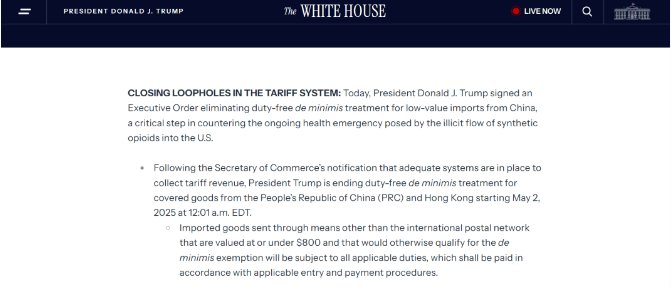
Dans ce contexte, les bouleversements des politiques tarifaires ont directement augmenté le coût des marchandises transfrontalières. En mai 2025, les États-Unis ont officiellement supprimé l'exemption de droits pour les petits colis en provenance de Chine, ce qui a fait grimper le taux de taxation des produits chinois à 54 %, en plus du tarif de base mondial de 10 %.
Les petits et moyens vendeurs transfrontaliers se retrouvent dans un dilemme : « augmenter les prix et perdre des clients, ou ne pas augmenter et subir des pertes ». Les plateformes comme Temu, qui reposent sur la vente directe à bas prix, sont contraintes d'accélérer leur transition vers un stock local.

Source : Internet
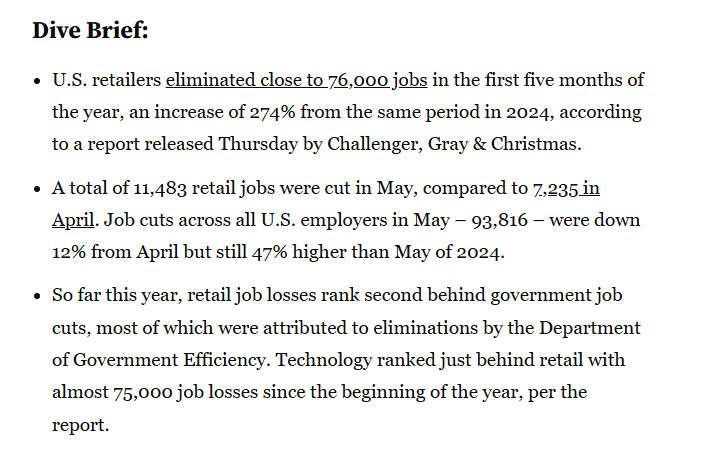
De plus, le marché de la vente au détail local est également assombri. Au cours des cinq premiers mois de 2025, le secteur du commerce de détail américain a supprimé environ 76 000 emplois, soit une augmentation vertigineuse de 274 % par rapport à l'année précédente, marquant la pire vague de licenciements depuis la pandémie.
Cette vague de licenciements reflète les difficultés du modèle de vente au détail traditionnel et annonce que le centre de gravité de la concurrence se déplacera davantage vers le canal en ligne.

Source : Retail Dive
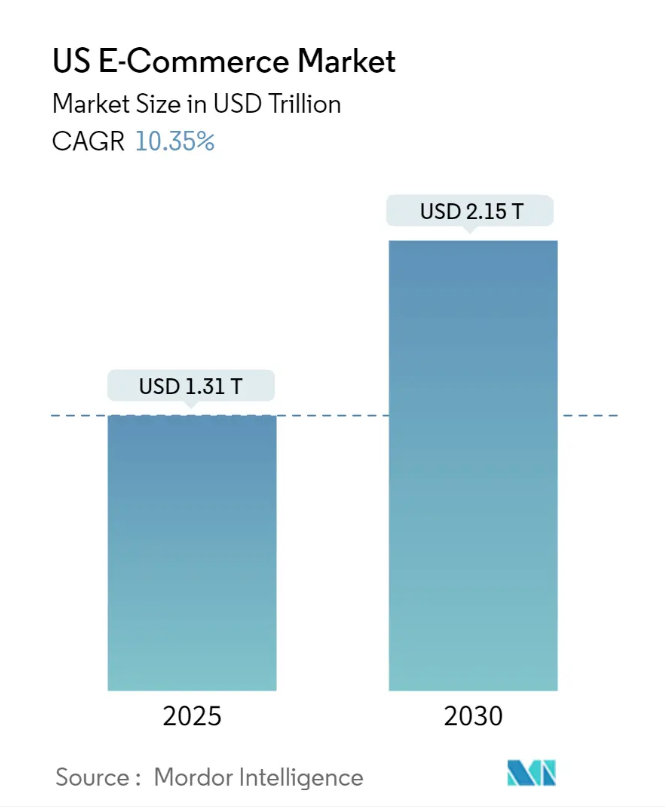
Bien que le marché global soit sous pression, la structure concurrentielle des plateformes de premier plan subit des changements radicaux. Selon les données, le marché du commerce électronique américain devrait atteindre 1 310 milliards de dollars en 2025, et franchir 2 150 milliards de dollars d'ici 2030, laissant une marge de croissance considérable.
Source : Mordor Intelligence
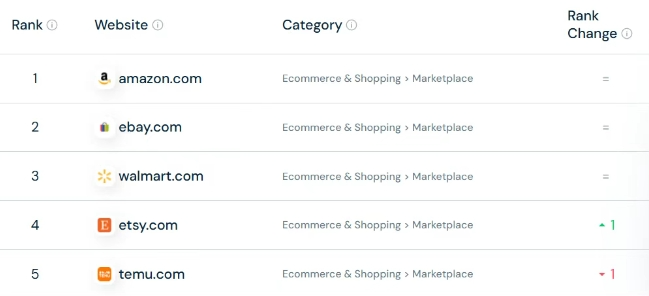
Amazon domine le classement avec une part de marché de 40 %, totalisant 2,5 milliards de visites jusqu'en avril 2025, dont 80 % provenant d'utilisateurs américains. Dans ce cadre, l'expansion continue de l'écosystème des vendeurs tiers est particulièrement cruciale, notamment en s'appuyant sur les chaînes d'approvisionnement chinoises pour soutenir la croissance, formant ainsi une douve difficile à ébranler.
Quant à Temu, grâce à ses prix extrêmement bas et sa chaîne d'approvisionnement flexible, elle a réalisé une expansion éclair. Au cours de la même période, son trafic a atteint 1,3 milliard de visites, dépassant Walmart et se hissant parmi les cinq premières plateformes. Son modèle de gestion totale, en contrôlant le pouvoir de fixation des prix et en organisant des enchères hebdomadaires sur les produits, accorde un trafic préférentiel aux moins chers, réussissant à créer un état d'esprit de consommation « faire ses courses comme un milliardaire ».

Source : SimilarWeb
Le creux actuel du taux de croissance, vu sous un autre angle, est en réalité un test de résistance obligatoire pour le marché.
Il oblige tous les acteurs à répondre à une question fondamentale : dans un environnement où les « bas prix » deviennent la nouvelle norme, où les risques politiques sont élevés et la fidélité des consommateurs se dilue, quelle est la véritable douve d'une entreprise ? Est-ce le coût de la chaîne d'approvisionnement extrêmement comprimé ? Est-ce la capacité à capter précisément les catégories anticycliques ? Est-ce la construction d'une barrière de livraison locale ? Ou la création d'une valeur émotionnelle ou expérientielle qui ne peut être simplement comparée sur les prix ?
Les réponses peuvent être multiples, mais une chose est sûre : se fier aux anciennes cartes ne permet plus de trouver de nouveaux continents. La seconde moitié du jeu du commerce électronique américain appartient inévitablement à ceux qui savent restructurer la chaîne de valeur, creuser en profondeur les opportunités structurelles et construire une résilience unique pour survivre.