 2943
2943En 2025, l’e-commerce à l’international est passé d’une « tendance » à un « choix concret ».
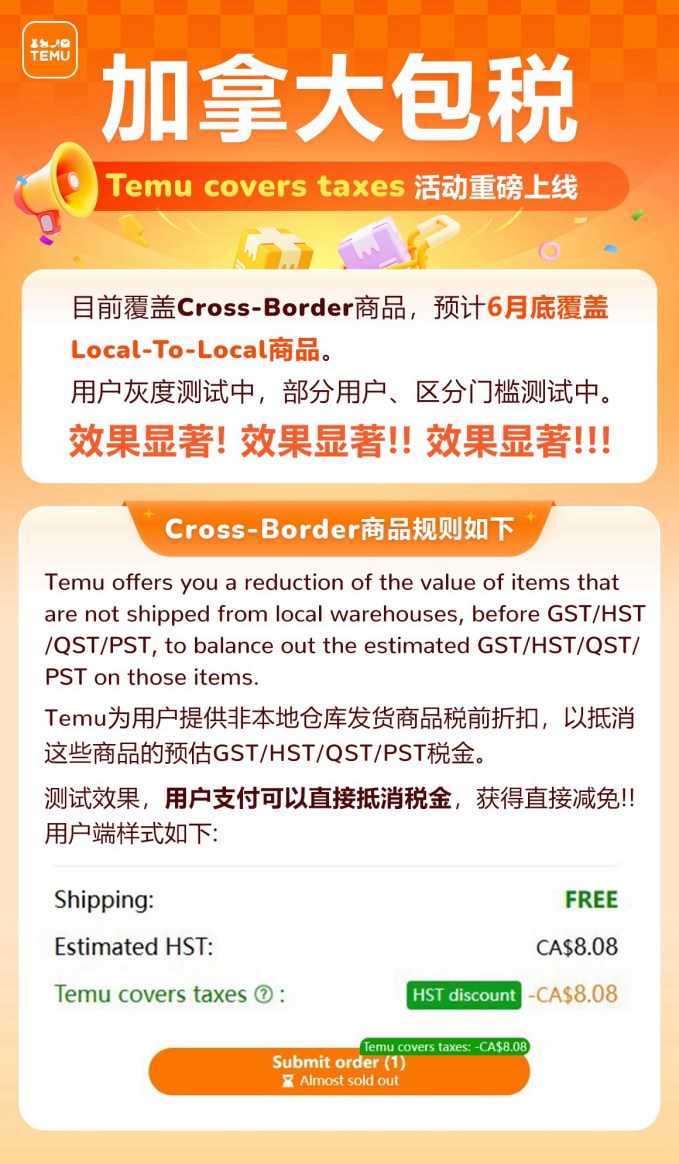
Quiconque parvient à saisir le rythme des marchés étrangers peut sortir du lot dans une concurrence de stock. Et sur cette route de plus en plus encombrée, TEMU continue d’intensifier ses efforts. Cette fois, la plateforme a jeté son dévolu sur un voisin de l’Amérique du Nord —le Canada, et a dévoilé une politique de poids : une subvention de« prise en charge des taxes » pleinement ouverte.
Contrairement aux tests à petite échelle précédents, cette fois-ci, presque tous les commerçants participant au modèle semi-géré de TEMU peuvent bénéficier de cette politique. Sans restriction de catégorie, sans seuil d’entrée, la plateforme prend directement en charge les taxes que les consommateurs doivent payer, tandis que les commerçants reçoivent toujours le prix avant taxes — simple, direct et sincère.
Derrière cela, il n’y a pas seulement un jeu de trafic de la plateforme, mais aussi un réajustement clair des priorités de marché par TEMU.
Source de l’image : Internet
Pourquoi le Canada est-il devenu le nouveau point focal ?
Comparé aux marchés animés d’Asie du Sud-Est et du Moyen-Orient, le Canada a toujours été relativement « discret ». Mais pour les acteurs réellement attentifs à la croissance à long terme, ce marché nord-américain cache en réalité de nombreuses opportunités.
D’une part, le Canada dépend fortement des importations dans plusieurs catégories. Des produits électroniques aux articles ménagers en passant par les accessoires vestimentaires, la chaîne d’approvisionnement locale est insuffisante, ce que la fabrication chinoise peut parfaitement combler.
D’autre part, avec l’évolution des habitudes de consommation, l’acceptation des achats en ligne par les Canadiens augmente rapidement. Non seulement les utilisateurs des grandes villes commandent fréquemment en ligne, mais le pouvoir d’achat dans les régions éloignées est également progressivement activé par les plateformes de e-commerce.
Selon les prévisions de Statista, d’ici 2025, la taille du marché du e-commerce au Canada dépassera72 milliards de dollars américains, avec un taux de croissance annuel composé de plus de 8 %, et devrait franchir la barre des100 milliards de dollars américains avant 2029.
Un an seulement après son entrée sur le marché, TEMU a déjà conquis12,7 % de parts de marché, se hissant à latroisième place parmi les plateformes locales de e-commerce, formant un trio de tête avec Amazon et Shein.
De toute évidence, il ne s’agit pas d’un simple « essai fait au passage », mais d’une implantation approfondie, préméditée et rythmée.

Source de l’image : Internet
Quelle subvention ? Analyse du mécanisme de « prise en charge des taxes » de TEMU
Pour comprendre l’importance de la « prise en charge des taxes » de TEMU, il faut d’abord voir à quel point la pression fiscale est forte dans le e-commerce local au Canada.
Dans ce pays doté d’un système national unifié mais avec des « libertés » au niveau provincial, les taxes courantes incluent :
La TPS (taxe fédérale sur les produits et services), au taux fixe de 5 % ;
La TVH (taxe fédérale + provinciale harmonisée), appliquée dans certaines provinces, avec des taux allant de 13 % à 15 % ;
La TVP (taxe de vente provinciale), par exemple dans les provinces qui ne perçoivent pas la TVH, généralement de 6 % à 7 % ;
Le système fiscal personnalisé du Québec, avec un taux proche de 10 %, non interchangeable avec celui des autres provinces.
Pour les vendeurs, ces taxes sont non seulement nombreuses et complexes à calculer, mais aussi ajoutées au prix des produits, ce qui influence directement la décision d’achat des utilisateurs.
La politique de « prise en charge des taxes » de TEMU consiste à couvrir toutes ces taxes, la plateforme paie, les consommateurs voient leurs charges réduites, les commerçants ne sont pas affectés. Une prise en charge en un clic, sans modification de prix, et même la réglementation locale complexe du Québec est incluse dans le périmètre de la subvention.
Derrière cela, il y a le pari de la plateforme sur le marché canadien, et surtout un amplificateur de la confiance des commerçants dans leur croissance.
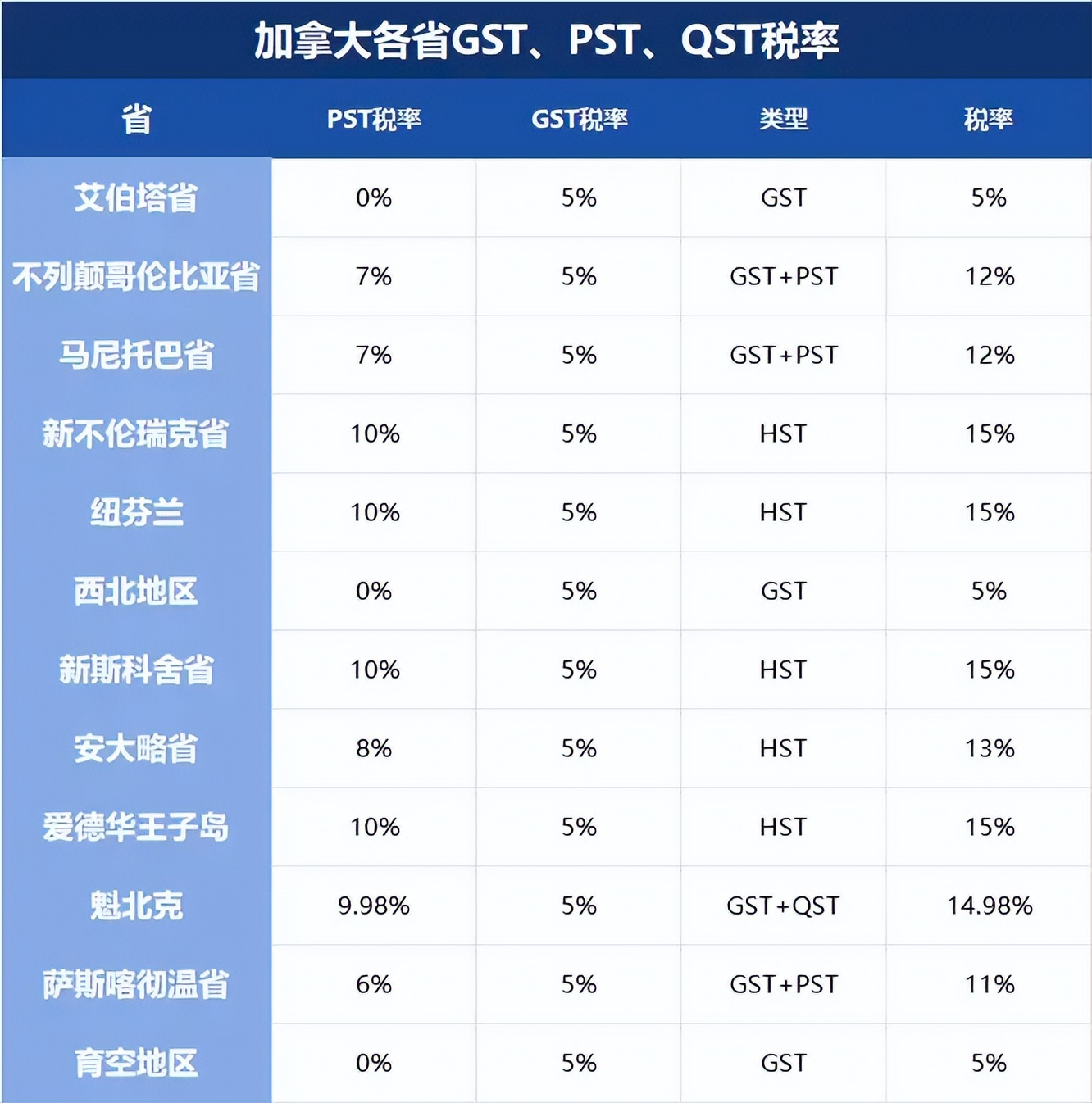
Graphique des taux de TPS et TVP dans certaines régions du Canada
Comment les commerçants peuvent-ils participer ? Deux voies d’expédition, au choix
Pour profiter de cette vague d’opportunités et pénétrer le marché canadien, les commerçants doivent choisir un modèle d’expédition adapté. Selon le modèle opérationnel actuel de TEMU, deux approches principales sont possibles :
① Expédition depuis un entrepôt local (Local Fulfillment)
Avantages :
Traitement plus rapide, meilleure rapidité, satisfaction client accrue ;
Moins de restrictions d’agrément/réglementaires ;
Les produits obtiennent plus facilement un poids dans les recommandations de la plateforme.
Mais le seuil est élevé : coûts de mise en place de l’entrepôt importants, besoin de préparation précise des stocks, risque non négligeable en cas de rotation lente ou de difficultés de vente.
② Expédition via un entrepôt américain (US to Canada)
Soit le modèle « expédié des États-Unis vers le Canada » : les marchandises sont stockées dans un entrepôt américain, puis expédiées au Canada après commande.
Idéal pour les commerçants encore en phase de test, pas encore familiarisés avec le marché canadien. Flexibilité élevée, stocks mutualisés, couverture des deux pays. Mais les délais de livraison sont plus longs, ce qui a un impact plus important sur les produits de consommation rapide ou sensibles au rythme.
Quelle que soit la méthode choisie, la plateforme applique désormais de manière uniforme lasubvention de « prise en charge des taxes », offrant une opportunité d’essai rare.

Source de l’image : Internet
Pour amplifier cette dynamique favorable, que peuvent faire les commerçants ?
1. Étendre les catégories et cibler des niches.
C’est le bon moment pour entrer dans des secteurs océans bleus, surtout avec le soutien du trafic de TEMU, même les catégories peu fréquentées peuvent exploser. On peut partir des best-sellers existants pour créer une gamme de produits et occuper le terrain via une approche combinée.
2. Tester des produits à prix élevé.
Les produits haut de gamme, autrefois limités par les taxes, bénéficient désormais de la « prise en charge des taxes », ce qui peut ouvrir de nouvelles fourchettes de prix auparavant « difficiles à vendre ». L’électronique grand public, les gros meubles, les outils de jardinage, etc., sont en situation de déséquilibre entre l’offre et la demande au Canada, avec un fort potentiel.
Par exemple, les écouteurs Bluetooth, les tondeuses à gazon, les climatiseurs portables, les projecteurs domestiques, etc., sont des catégories à forte croissance sur TEMU dans la région canadienne, adaptées aux commerçants de prix moyens à élevés pour se positionner à l’avance.

Source de l’image : Internet
En conclusion
Le marché canadien n’est pas « brûlant », mais c’est justement pour cela que les opportunités y sont rares.
Pour les vendeurs chinois familiers avec les règles du e-commerce national, le Canada présente des atouts évidents :
Pouvoir d’achat par habitant élevé ; concurrence relativement modérée ; marché encore non « saturé ».
Actuellement, le nombre d’utilisateurs actifs quotidiens de TEMU au Canada a déjà dépassé les 3,2 millions, et continue de croître régulièrement. Plus important encore, alors que les politiques, les ressources et le soutien de la plateforme sont tous mobilisés en même temps, c’est le moment idéal pour les PME et les petits commerçants de pénétrer ce nouveau marché.
Cette vague de « prise en charge des taxes » n’est pas une simple concession, mais le début d’un effort conjoint entre la plateforme et les commerçants pour stimuler davantage de croissance.