« Guide professionnel du marketing d'influence à l'étranger » rédigé par Meltwater, présente principalement les connaissances et stratégies liées au marketing d'influence à l'étranger, visant à aider les spécialistes du marketing à mieux comprendre et utiliser le marketing d'influence, afin d'améliorer l'impact de la marque et l'efficacité marketing.
1. Avantages du marketing d'influence à l'étranger
- Attirer le public cible : Les influenceurs disposent d'un public spécifique, permettant de présenter la marque et les produits à des personnes intéressées, d'atteindre de nouveaux publics fortement pertinents et d'accroître la notoriété de la marque. Par exemple, Chobani Australia a collaboré avec 500 influenceurs dans le monde pour étendre son influence sur Instagram et renforcer son positionnement auprès des amateurs de santé et de fitness.
- Renforcer l'interaction avec le public : En plus d'attirer de nouveaux fans, cela permet d'interagir avec le public existant, de raviver leur passion pour la marque et de favoriser les achats répétés. Par exemple, des influenceurs pertinents peuvent amener les consommateurs à voir la marque sous un nouveau jour, augmentant ainsi leur propension à acheter.
- Établir la confiance et la crédibilité : Les évaluations positives des influenceurs sur la marque aident à établir la confiance et la crédibilité, augmentant la probabilité que les fans achètent les produits.
- Améliorer l'authenticité de la marque : Collaborer avec des influenceurs permet de diffuser des informations, de changer les perceptions ou de souligner l'engagement envers des causes importantes, de montrer le côté humain de la marque, d'améliorer son authenticité, en phase avec l'importance que les consommateurs de la génération Z et les millennials accordent à l'authenticité marketing.
- Saisir les tendances : Les influenceurs aident la marque à capter l'esprit du temps et les moments de culture populaire, renforçant ainsi la pertinence et l'attrait de la stratégie marketing.
- Favoriser la génération de contenu généré par les utilisateurs (UGC) : Inspiré par le marketing, le contenu généré par les utilisateurs peut augmenter, et la marque peut continuer à se mettre en avant en commentant et en partageant l'UGC.
- Accroître la part de marché : Utiliser la promotion par les influenceurs peut permettre d'occuper une plus grande part de marché, d'apporter plus de ventes et de consolider les relations avec les influenceurs.
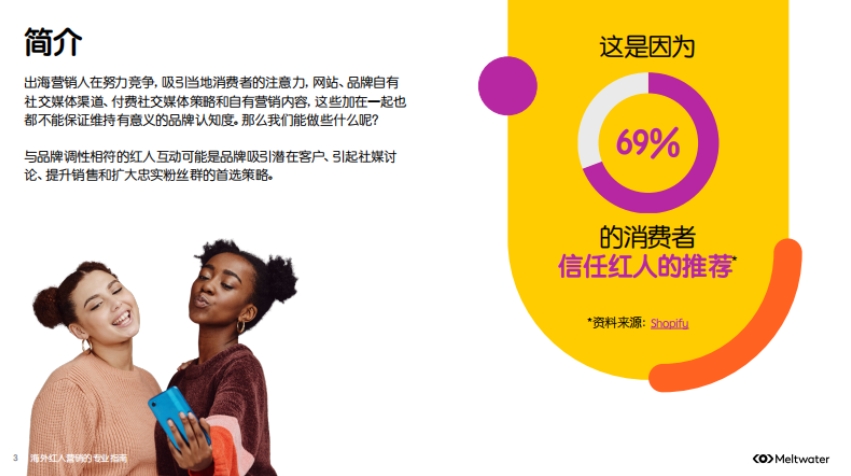
- Stimuler la conversion des ventes : Le marketing d'influence peut optimiser les résultats qualitatifs et quantitatifs, améliorer la conversion et les ventes. Par exemple, 32 % des consommateurs de la génération Z déclarent avoir acheté un produit à partir d'un post d'influenceur, et 43 % aiment découvrir des produits via des recommandations d'influenceurs.
- Économiser les coûts marketing : Même avec un budget limité, les marques peuvent tirer profit du marketing d'influence, avec un retour estimé à 5,78 dollars pour chaque dollar dépensé.
2. Types d'influenceurs à l'étranger
- Classification par taille d'audience
- Micro-influenceurs (500 à 5 000 abonnés) : Nombre d'abonnés relativement faible, mais interaction étroite avec les fans, grande liberté de création de contenu, coûts réduits, et une confiance facile à gagner grâce à des collaborations répétées. Idéal pour les marques avec un budget serré cherchant des avantages à long terme en matière de marque. Par exemple, l'influenceuse beauté Janine C. publie des routines de soins, des tutoriels de maquillage, etc., en taguant les produits et en fournissant des codes promo.
- Influenceurs de taille moyenne (5 000 à 30 000 abonnés) : Public fidèle, expérience de collaboration plus riche, tarifs abordables, capables d'atteindre des niches ou des publics spécifiques. Idéal pour les marques avec un budget adapté souhaitant tester ou prouver la valeur du marketing d'influence. Par exemple, l'influenceuse décoration intérieure Ann Vallotton, dont les vidéos au style rustique, ancien et campagnard sont appréciées des fans, partage les sources des objets et ses idées de design.
- Macro-influenceurs (30 000 à 500 000 abonnés) : Public plus large, tarifs plus élevés mais expérience solide, capables de fournir plus de contenu sponsorisé sur une période plus longue, attentifs aux attentes du public, explorant davantage de modes de collaboration. Idéal pour les marques avec un budget conséquent souhaitant lancer des campagnes marketing à grande échelle. Par exemple, l'influenceur tech Michael Soledad, avec un certain nombre d'abonnés sur Instagram et YouTube, dont le contenu inclut des critiques de produits, des démonstrations, etc., attirant des fans intéressés par ses vidéos précises et de qualité.
- Célébrités et méga-influenceurs (plus de 500 000 abonnés) : Comme Jennifer Aniston faisant la promotion d'Aveeno, Michael Jordan comme ambassadeur de Nike, ou encore MrBeast sur YouTube, Kai Cenat sur Twitch, etc. Leur notoriété est élevée, ils bénéficient de la confiance des fans, avec des objectifs marketing différents. Bien que la pertinence de l'audience soit plus difficile à évaluer, le pouvoir des célébrités ne peut être ignoré. Idéal pour les marques avec un budget important cherchant des ambassadeurs renommés pour de grandes campagnes.
- Classification par canal marketing et mode de communication
- Influenceurs sur les réseaux sociaux : Actifs sur les réseaux sociaux, contactables via la plateforme Meltwater ou des kits média. Inclut divers formats de contenu et caractéristiques de plateformes, comme YouTube adapté aux vidéos longues, aux lives et aux critiques de produits, Instagram avec plusieurs formats de contenu et options de campagnes, TikTok principalement axé sur les vidéos courtes et les lives, etc.
- Influenceurs des médias traditionnels : Inclut les journalistes de presse écrite, les présentateurs TV, les publications sectorielles et les éditeurs numériques. Les marques établissent des partenariats via des méthodes standard pour obtenir une couverture médiatique.
- Bloggeurs : Les blogs étaient autrefois le principal canal des influenceurs, et des opportunités de collaboration existent encore. Les taux d'interaction par e-mail des blogueurs sont élevés, et les marques peuvent envisager de sponsoriser des e-mails publicitaires ou des articles invités.
- Experts et analystes sectoriels : À la pointe du B2B technologique, les marques doivent cultiver des relations d'influence avec eux, en les invitant à rencontrer les dirigeants de l'entreprise et en leur fournissant des démonstrations de produits.
3. Stratégies de marketing d'influence à l'étranger
- Définir les objectifs de la campagne marketing
- Notoriété de la marque : Collaborer avec des influenceurs touchant un large public pour accroître la notoriété. Les indicateurs clés de performance (KPI) incluent la portée, les vues, les partages, etc.
- Fidélité à la marque : Choisir des influenceurs aux valeurs similaires à celles de la marque pour transmettre ces valeurs et attirer les fans comme clients fidèles. Les KPI incluent le nombre de nouveaux abonnés, le contenu généré par les utilisateurs (UGC), les commentaires, les inscriptions par e-mail, etc.
- Ventes : Utiliser les recommandations des influenceurs pour stimuler les ventes, les consommateurs étant plus enclins à faire confiance aux recommandations de personnes liées. Les KPI incluent le nombre de visites sur le site web, les achats, etc.
- Déterminer le public cible : Comprendre en profondeur les intérêts, les hobbies et le mode de vie du public cible. Utiliser l'outil d'analyse des consommateurs de Meltwater pour découvrir et cibler les contenus pertinents, puis appliquer ces attributs à la recherche d'influenceurs pour trouver des partenaires appropriés.
- Trouver des influenceurs à l'étranger
- Utiliser les filtres de la plateforme : Via la plateforme de marketing d'influence Meltwater, filtrer les influenceurs par sexe, tranche d'âge, localisation, etc. Utiliser également la fonction de recherche visuelle, basée sur l'intelligence artificielle pour trouver des influenceurs en fonction de visuels correspondants. Par exemple, une marque de beauté peut rechercher « femme aux cheveux bouclés » pour trouver des influenceurs pertinents.
- Évaluer les profils des influenceurs : Vérifier le taux d'engagement, les informations démographiques, les activités récentes et les marques partenaires des influenceurs. Évaluer sous l'angle de la pertinence du contenu et de l'authenticité. La plateforme Meltwater peut fournir ces informations, comme vérifier si le contenu passé de l'influenceur contient des paramètres négatifs tels que des gros mots.
- Définir l'influence de l'influenceur
- Taux d'engagement : Privilégier le taux d'engagement plutôt que le simple nombre de vues. Les micro et moyens influenceurs ont généralement des taux d'engagement plus élevés, avec un plus grand potentiel pour cultiver des relations avec les fans et encourager l'interaction.
- Qualité de l'audience : S'assurer que les abonnés de l'influenceur sont actifs et authentiques, et non faux ou de mauvaise qualité. Par exemple, ne pas collaborer avec des influenceurs dont les commentaires ressemblent à des robots ou qui achètent des abonnés. Des abonnés de haute qualité améliorent la visibilité et la portée du contenu.
- Pertinence de l'audience : Analyser la cohérence entre les abonnés de l'influenceur et le public cible, y compris les profils d'utilisateurs et les plateformes de médias sociaux préférées. S'assurer que l'influenceur peut atteindre le public cible. Si la plateforme active de l'influenceur ne correspond pas à celle utilisée par le public cible, il pourrait ne pas être le meilleur choix.
- Portée authentique : La plateforme Meltwater peut calculer la « portée authentique » d'un compte Instagram, en excluant l'impact des faux robots et des comptes spam, reflétant plus précisément l'influence de l'utilisateur.
4. Gérer les relations avec les influenceurs à l'étranger
- Signer des contrats détaillés
- Définir la période de la campagne : Déterminer les dates de début et de fin de la campagne marketing, ainsi que la fenêtre de mise en ligne du contenu sponsorisé.
- Préciser le périmètre de travail : Éviter les formulations vagues, définir clairement le travail spécifique de l'influenceur, comme la création d'un type et d'une quantité particuliers de contenu.
- Spécifier les livrables : Inclure le format et la quantité du contenu, comme le nombre de mots pour un article de blog, le nombre de posts sur les réseaux sociaux, etc. La plateforme Meltwater facilite la gestion des livrables pour les collaborations multi-partenaires.
- Déterminer les droits de propriété : Préciser les droits de propriété de la marque sur les œuvres issues de la collaboration marketing avec l'influenceur, ainsi que les droits d'utilisation ultérieure de l'influenceur.
- Encadrer la promotion de la marque : S'assurer que l'influenceur représente fidèlement l'image et le message de la marque, en respectant les exigences relatives aux couleurs, au logo, au langage, etc.
- Préciser les exigences de format : Définir le format de livraison du contenu marketing par l'influenceur, comme le format du document, les dimensions des images, etc.
- Établir un processus de feedback : Déterminer le nombre, le moment et la méthode de gestion des retours, en évitant une édition excessive pour préserver l'authenticité du style de contenu de l'influenceur.
- Envisager le contenu dérivé : Préciser si des contenus dérivés peuvent être créés à partir des œuvres de l'influenceur et les droits associés.
- Inclure les dispositions publicitaires : Si la promotion du contenu de l'influenceur est prévue, mentionner les règles publicitaires dans le contrat.
- Planifier les canaux de distribution : Décrire en détail les canaux et la fréquence de promotion du contenu sponsorisé par l'influenceur, en s'assurant que l'équipe marketing connaît le calendrier pour éviter des publications inattendues.
- Déterminer les indicateurs d'évaluation : Définir les critères de succès de la collaboration marketing, comme le nombre de prospects, les partages sur les réseaux sociaux, le nombre de nouveaux abonnés, le volume des ventes, etc.
- Préciser les obligations légales : S'assurer que l'influenceur connaît les exigences de la plateforme concernant les posts sponsorisés et le guider pour afficher correctement le contenu sponsorisé.
- Définir les conditions de paiement : Préciser le montant et le mode de paiement, garantir un paiement équitable et ponctuel pour éviter d'affecter la relation de collaboration.
- Lancer la campagne en douceur : S'assurer que l'accord avec l'influenceur est clair et que les livrables sont bien définis, facilitant ainsi la révision du contenu et le lancement de l'activité. Maintenir la communication et résoudre rapidement les problèmes. Meltwater peut aider à contacter régulièrement les influenceurs, et en s'intégrant à la solution de gestion des réseaux sociaux Engage, suivre les progrès, partager l'UGC et rendre compte des résultats.
5. Évaluer les résultats du marketing d'influence à l'étranger
- Méthodes de mesure du succès
- Valeur médiatique gagnée : La portée supplémentaire générée par les posts des influenceurs partagés par le public cible et les hashtags populaires, relevant des résultats médiatiques gagnés.
- Croissance des abonnés : L'augmentation du nombre de nouveaux abonnés ou abonnés pendant et après la campagne. Il est nécessaire de connaître les données de base à l'avance pour suivre la croissance.
- Données de vente : Attribuer des codes promotionnels aux influenceurs, associer les ventes via ces codes, et mesurer l'impact de la campagne d'influence sur les ventes.
- Trafic du site web : Utiliser des codes UTM pour compter le nombre de clics sur les liens, mesurer l'atteinte des objectifs de trafic du site. Les codes UTM incluent des champs tels que la source, le support, le nom et le contenu de la campagne, permettant d'identifier la source du trafic et le type de lien.
- Obtenir des insights marketing : La plateforme de marketing d'influence Meltwater peut fournir des insights sur les résultats des campagnes. Grâce à l'intégration avec la gestion des réseaux sociaux Engage, il est possible de créer des tableaux de bord personnalisés et dynamiques, présentant des résultats et des insights approfondis, et de démontrer la valeur du marketing d'influence aux parties prenantes.