Ce document est le « Livre bleu 2025 sur l’expansion internationale des PME chinoises », publié conjointement par CIC灼识咨询 et Standard Chartered Bank. Il traite principalement de la situation des PME chinoises à l’international, aidant à comprendre leur développement sur les marchés étrangers, ainsi que les opportunités et défis auxquels elles sont confrontées.
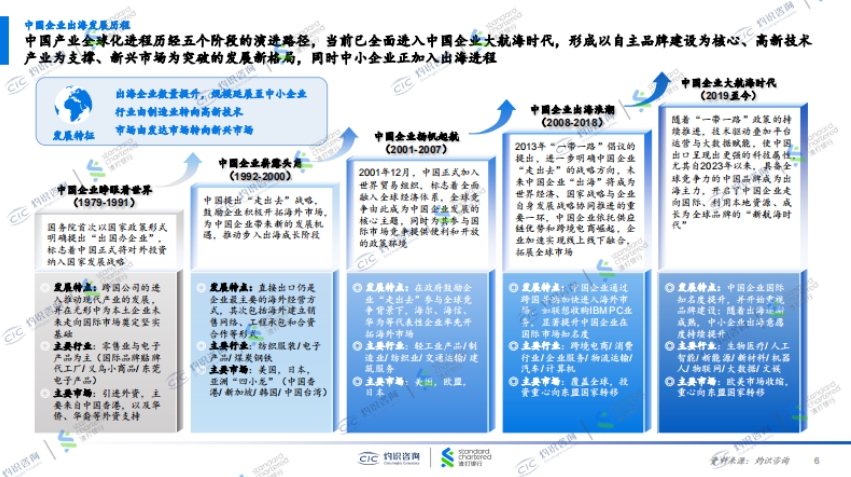
1. Aperçu de l’expansion internationale des PME chinoises : Il retrace l’évolution de l’internationalisation des entreprises chinoises, depuis la stratégie « Aller à l’international » proposée entre 1992 et 2000, jusqu’à l’augmentation des fusions-acquisitions transfrontalières entre 2008 et 2018, et aujourd’hui la volonté accrue des PME de s’étendre à l’étranger. Il présente également les modes d’entrée sur le marché pour les entreprises chinoises, tels que les fusions-acquisitions transfrontalières et la création de réseaux de vente à l’étranger, chaque entreprise pouvant choisir selon sa situation.
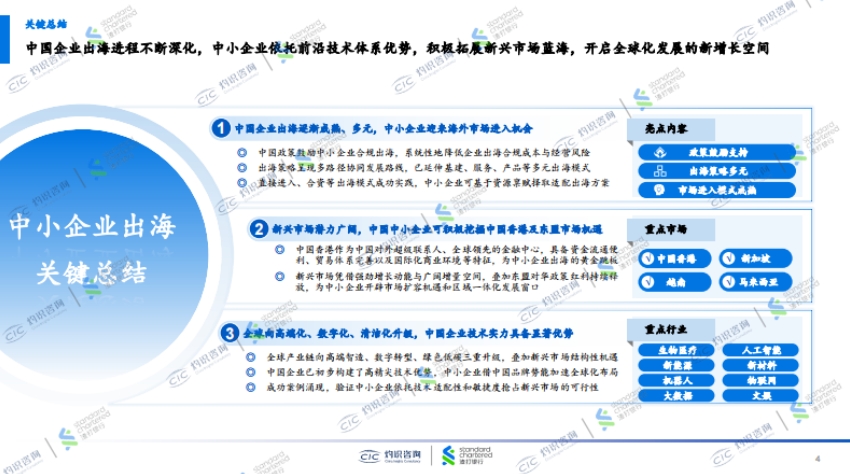
2. Analyse de l’environnement des marchés étrangers : Il analyse l’environnement macroéconomique des principales économies mondiales, comme la croissance économique, la démographie et les entrées nettes d’investissements directs étrangers dans des régions telles que l’Asie de l’Est et l’Afrique. Il met l’accent sur les caractéristiques, avantages et défis de marchés comme Hong Kong (Chine), Singapour, le Vietnam et la Malaisie. Par exemple, Hong Kong est un pôle commercial important mais fortement influencé par l’environnement extérieur ; Singapour a un environnement financier ouvert, mais la concurrence y est rude.
3. Analyse de huit secteurs clés : Il étudie l’expansion internationale des PME dans huit secteurs, tels que la biomédecine, l’intelligence artificielle et les nouvelles énergies. Chaque secteur a des facteurs moteurs et des stratégies de développement différents. Par exemple, les entreprises biomédicales s’internationalisent en raison de pressions sur les marges bénéficiaires, tandis que les entreprises d’IA exploitent les opportunités de transformation numérique dans les économies émergentes pour étendre leurs marchés à l’étranger.
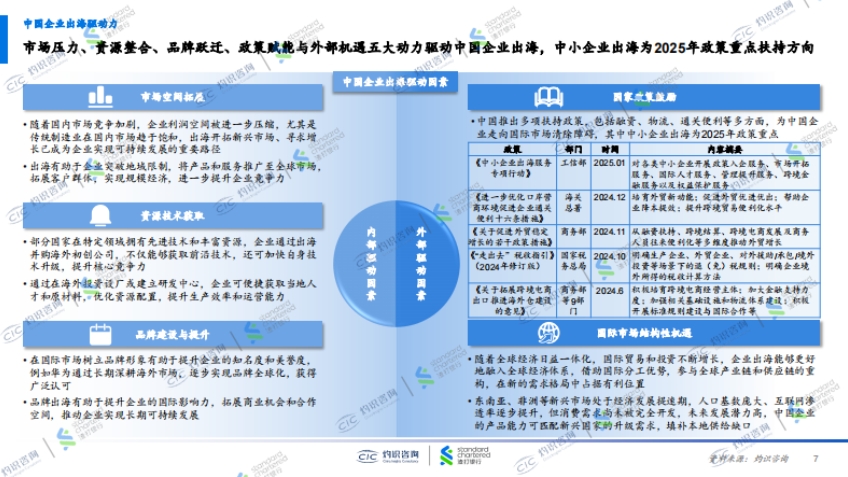
4. Opportunités et capacités pour l’expansion internationale des PME chinoises : Il souligne que la période actuelle est une fenêtre stratégique pour l’internationalisation des PME, mais qu’elles sont confrontées à des défis tels que les risques politiques et les problèmes de liquidité. Les entreprises doivent posséder des capacités de déploiement international, de gestion des risques et d’adaptation au marché, et développer des stratégies comme la collaboration locale et la création de produits uniques pour réussir sur les marchés étrangers.