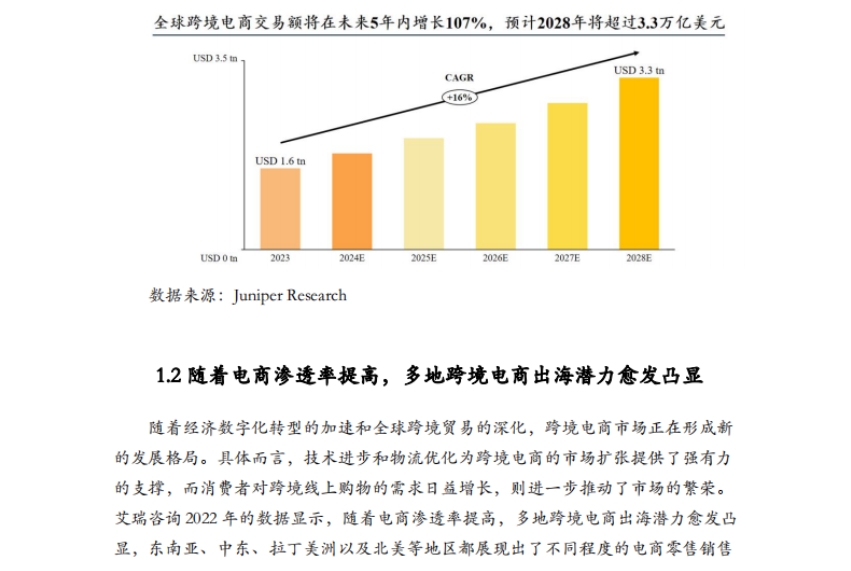
Nell'ondata di digitalizzazione economica globale, il mercato globale del commercio elettronico transfrontaliero sta vivendo un nuovo periodo di prosperità, con una crescita prevista stabile e significativa nei prossimi cinque anni. Secondo l'analisi e le previsioni di JunipcrRcscarc, dal 2023 al 2028, il valore delle transazioni globali del commercio elettronico transfrontaliero passerà da 1,6 trilioni di dollari a 3,3 trilioni di dollari, con un aumento previsto del 107%. La crescita stabile del mercato del commercio elettronico transfrontaliero non solo offre ai consumatori maggiori scelte e comodità negli acquisti, ma offre anche nuove opportunità commerciali e punti di crescita per i venditori globali. Con l'espansione continua del mercato, si prevede che un numero crescente di aziende e marchi si unirà al settore del commercio elettronico transfrontaliero, promuovendo insieme la prosperità sostenuta di questo mercato. Di conseguenza, il mercato del commercio elettronico transfrontaliero potrebbe diventare una forza importante per la crescita economica globale, iniettando nuova vitalità nel commercio globale e nello sviluppo economico.
Con l'accelerazione della trasformazione digitale dell'economia e l'approfondimento del commercio transfrontaliero globale, il mercato del commercio elettronico transfrontaliero sta formando un nuovo panorama di sviluppo. In particolare, i progressi tecnologici e l'ottimizzazione logistica forniscono un forte supporto per l'espansione del mercato del commercio elettronico transfrontaliero, mentre la crescente domanda dei consumatori per gli acquisti online transfrontalieri stimola ulteriormente la prosperità del mercato. Secondo i dati di iResearch del 2022, con l'aumento della penetrazione dell'e-commerce, il potenziale del commercio elettronico transfrontaliero in molte regioni sta diventando sempre più evidente. Regioni come il Sud-est asiatico, il Medio Oriente, l'America Latina e il Nord America mostrano diverse prospettive di crescita delle vendite al dettaglio nel commercio elettronico. Aree come Asia, Europa e Nord America, grazie alla loro vasta base di consumatori e a un ecosistema di e-commerce maturo, sono diventate i principali motori della crescita del mercato del commercio elettronico transfrontaliero.
In particolare, il mercato nordamericano, con le sue dimensioni enormi e l'alto tasso di crescita, è diventato una delle regioni più calde per l'espansione internazionale del commercio elettronico transfrontaliero. Secondo i dati di Smatista, nel 2022, il mercato dell'e-commerce nordamericano ha raggiunto 944 miliardi di dollari, con una previsione di crescita a 1,7 trilioni di dollari entro il 2027, con un tasso di crescita annuale composto del 14,3%. Questa crescita offre enormi opportunità di mercato per il commercio elettronico transfrontaliero. Anche il mercato latinoamericano mostra una rapida ascesa. Secondo il rapporto PCMI, si prevede che nel 2023 il valore delle transazioni di e-commerce in America Latina supererà i 509 miliardi di dollari, con la possibilità di raddoppiare a 923 miliardi di dollari entro il 2026. Questa tendenza di crescita offre solide prospettive di crescita per il commercio elettronico transfrontaliero nella regione latinoamericana. Al di fuori delle Americhe, il Sud-est asiatico è stato una delle regioni a più rapida crescita dell'e-commerce globale negli ultimi cinque anni. Secondo le previsioni di Bain, entro il 2025, le dimensioni del mercato dell'e-commerce del Sud-est asiatico raggiungeranno 234 miliardi di dollari, con un enorme potenziale di mercato. Inoltre, le piccole e medie imprese in Africa stanno attivamente cogliendo le opportunità del mercato digitale per espandere l'influenza del marchio e la base di consumatori, migliorando la redditività. Si prevede che entro il 2025, l'e-commerce contribuirà all'economia del continente africano per oltre 180 miliardi di dollari.
Nel complesso, con l'aumento della penetrazione dell'e-commerce, il potenziale del commercio elettronico transfrontaliero in varie regioni emerge costantemente, offrendo ampi spazi di mercato e infinite opportunità di sviluppo per i numerosi attori coinvolti nel commercio elettronico transfrontaliero.