Hello everyone, I am Tuke.
As the old saying goes: People should go out, go up, and go inward.
This saying is still applicable today.
The most classic three-step process for Chinese enterprises Tuke is “going out, going in, going up.”
These three steps may seem far apart, but in today’s digital era, the gap between them is not as wide as it seems—there’s a sense that love can cross mountains and seas, and mountains and seas can be flattened.
So, under the new circumstances, how should B2B enterprises Tuke?
The rise of cross-border e-commerce has changed the path for enterprises to enter international markets. With strong support from these emerging industries, many traditional Chinese manufacturing companies have begun to boldly showcase their brands online, starting a new trend of “brand Tuke.”
Among these, the most widely used approach is Tuke with TikTok short videos.
Whether for the B-end or C-end, TikTok’s short video ads can achieve impressive conversion rates, greatly increasing the chances of inquiries for B2B enterprises.
For B2B enterprises, the TikTok short video platform is not just an advertising tool, but also a channel for deep interaction and brand communication.
Enterprises can attract potential customers by creating interesting and educational content, and optimize marketing strategies by analyzing user interaction data. This approach not only increases brand visibility but also strengthens the connection with consumers.
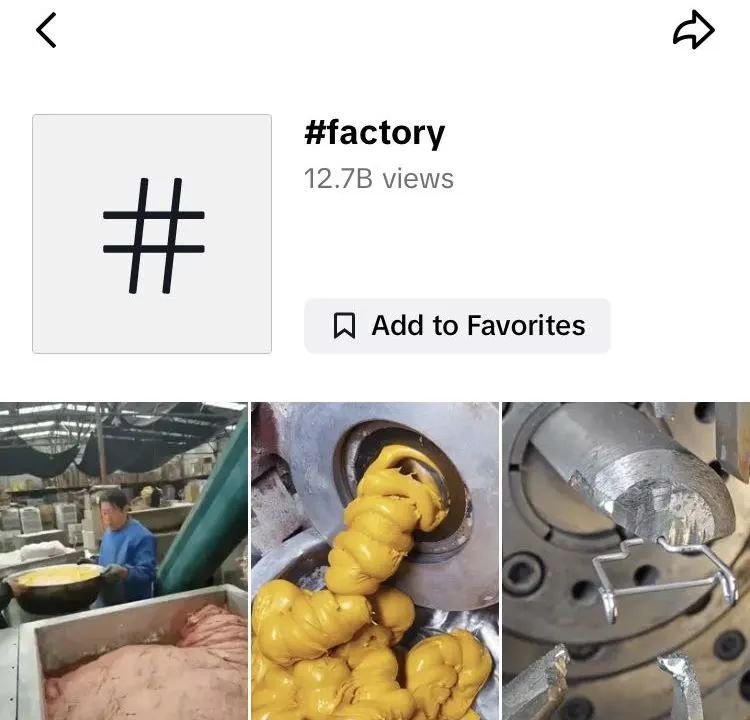
Take videos related to "factory#factory" as an example, the exposure of related topics on TikTok has exceeded 10 billion times this year.
With such huge traffic, whether it’s small commodity factories like phone cases and power cables, or large factories like LED tubes and energy storage batteries, all can gain a large number of customer acquisition opportunities.
So it’s not an exaggeration to call TikTok the new blue ocean for B2B enterprises Tuke.
However, simply rushing into TikTok with an idea, hoping to expand your business territory, is not feasible.
Although TikTok is mainly a short video social media platform, it cannot escape the essence of social platforms—entertainment.
Whether it’s B2B or B2C enterprises, they must follow data-driven guidance, focus on content innovation and attractiveness, in order to achieve precise customer acquisition and inquiries.
If TikTok helps overseas enterprises achieve the “going out” step, then the “going in” step requires the enterprise’s own efforts.
B2B enterprises can attract target customer groups by showcasing production processes, sharing industry knowledge, and providing solutions. This not only helps companies demonstrate their professionalism and technical strength, but also increases brand affinity, making it easier for potential customers to remember and trust the brand.
In addition, the overseas strategy in the digital era also includes establishing partnerships with local partners. Cooperating with local distributors, agents, or even other manufacturing companies can help Chinese enterprises better adapt to the characteristics of the target market, while providing localized services and support. This cooperation strategy not only accelerates market penetration, but also enhances the company’s market competitiveness in the long term.
This is also one of the paths to achieve “going up.”
Today is the digital era, and the emergence of TikTok has broadened the path for Chinese B2B enterprises Tuke. By leveraging new digital tools and platforms, combined with traditional market development methods, enterprises can more flexibly adapt to the needs of different markets, thus gaining an advantage in international competition.
This is the correct three-step process for Chinese enterprises Tuke: “going out, going in, going up.”