 2029
2029Auf TikTok kämpfen täglich Millionen von Videos um die Aufmerksamkeit der Nutzer. Warum werden manche Produktvideos über Nacht zu Verkaufsschlagern, während andere in der Versenkung verschwinden? Die Antwort liegt im Detail!
Vom Cover-Design über die Kommentar-Interaktion bis hin zum Conversion-Pfad – jeder Schritt birgt seine eigenen „ungeschriebenen Regeln“.
Heute entschlüsselt Tuke für euch die Kernstrategien, die die Verkaufszahlen in die Höhe treiben.

Quelle: Internet
1. Die „3-Sekunden-Goldene-Regel“ für das Cover-Design
Das Cover ist die „Visitenkarte“ eines Videos. Auf TikTok wischen Nutzer extrem schnell, und das Cover ist die erste Hürde, die entscheidet, ob sie verweilen. Laut Daten von Drittanbieter-Plattformen führt eine Steigerung der Abschlussrate der ersten 3 Sekunden um 1 % zu einer signifikanten Erhöhung der Gesamt-Conversion-Rate um 5 % bis 10 %. Das bedeutet, dass ein ansprechendes Cover und ein packender Anfang die Wahrscheinlichkeit, dass Nutzer bleiben und interagieren, enorm steigern können.
Fallbeispiel: TEE BLOSSOMs Küchenhelfer wird zum Verkaufsschlager
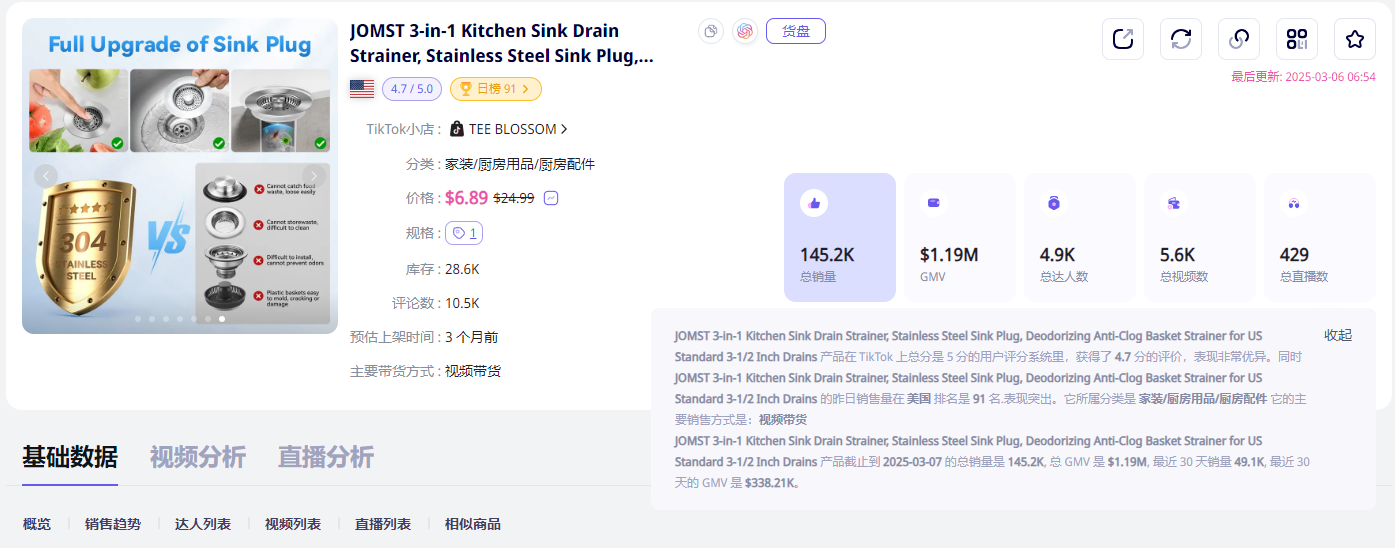
Die US-Haushaltsmarke TEE BLOSSOM brachte einen 3-in-1-Küchenspülenfilter auf den Markt. Das Cover zeigte Produktdetails und die Wirkung bei der Rohrreinigung, was direkt die Schmerzpunkte der Nutzer traf. Durch präzise Ansprache der Schmerzpunkte und anschauliche Wirkungsdemonstration formte TEE BLOSSOM erfolgreich ein Markenimage der „effizienten Lösung von Haushaltsproblemen“ und legte damit eine solide Grundlage für die spätere Produktwerbung und den Aufbau von Kundentreue.

Quelle: TikTok
Daten zufolge hat der Spülenfilter insgesamt über 145.200 Einheiten verkauft, mit einem Gesamt-GMV von 1,19 Millionen US-Dollar – ein beachtliches Ergebnis für eine kleine Produktkategorie.
Quelle: Echotik
2. „Haken-Design“ für Kommentar-Interaktionen
Der TikTok-Algorithmus spült Videos mit hoher Interaktion in größere Traffic-Pools, und Kommentare sind der Schlüssel zur Förderung von Interaktionen.
Durch die Interaktion mit Nutzern im Kommentarbereich kann nicht nur die Bindung und die Sympathie für die Marke gestärkt werden, sondern es können auch interaktive Themen gestartet werden, die Nutzer zur Diskussion anregen.
Fallbeispiel: Fenty Beauty
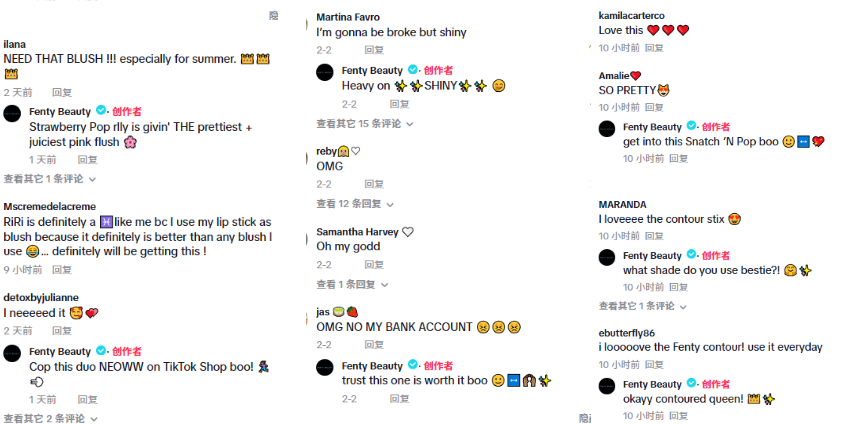
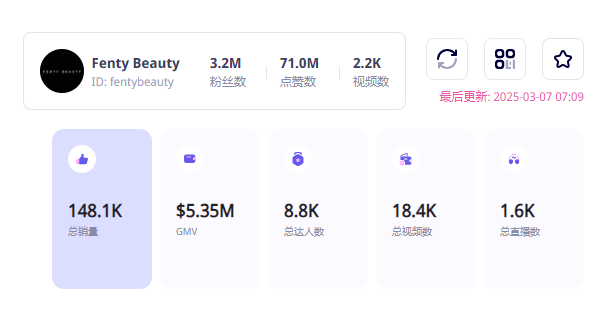
Fenty Beauty ist eine von Rihanna gegründete Beauty-Marke, deren TikTok-Kommentarbereich sehr aktiv ist.
Die Marke antwortet zeitnah auf Fragen der Nutzer zu Produktanwendung, Farbauswahl usw. und startet zudem Aktionen wie „Zeig dein Fenty-Make-up“, um Nutzer zu ermutigen, ihre Ergebnisse zu teilen.
Quelle: TikTok
Diese positive Interaktion lässt die Nutzer die Aufmerksamkeit der Marke spüren, was die Markentreue erhöht und die Produktverkäufe steigert. Bis heute hat der TikTok-Shop der Marke einen Umsatz von fast 5,35 Millionen US-Dollar erzielt.
Quelle: Echotik
3. „Minimalismus“ im Conversion-Pfad
Auf TikTok lässt sich das Nutzerverhalten mit „sofortiger Befriedigung“ zusammenfassen. Sie wollen schnell Informationen erhalten, schnell Entscheidungen treffen und sogar schnell Käufe abschließen.
Vom Anziehen durch das Video bis zur endgültigen Bestellung kann jeder Schritt zu einem Abbruchpunkt werden. Je komplexer der Conversion-Pfad, desto schneller schwindet die Geduld der Nutzer.
Fallbeispiel: Xiaomis AR-Effekte + geschlossener Conversion-Pfad
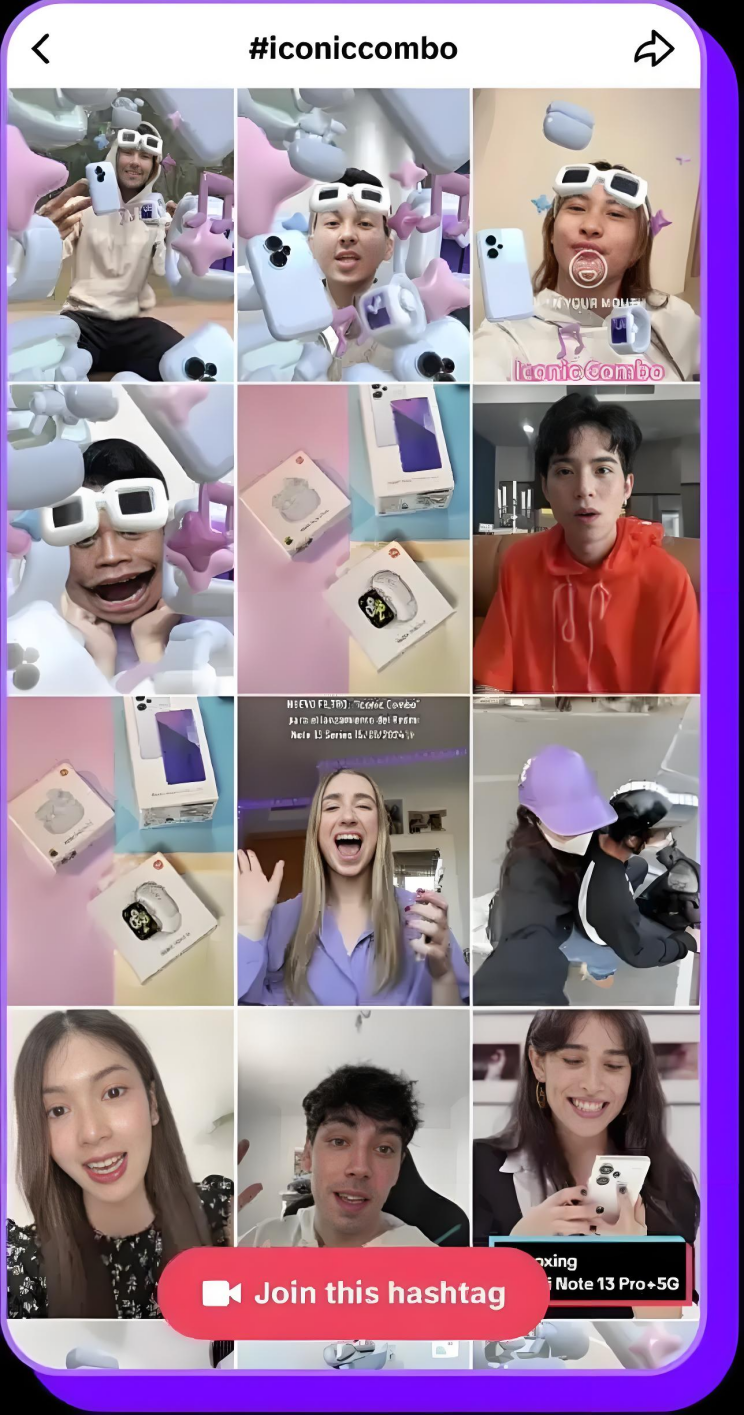
Anfang 2024 kombinierte Xiaomi bei der Vermarktung des neuen Redmi-Modells AR-Effekt-Sticker mit einer „Splash-Ad + Brand-Task“-Kombination. Nutzer konnten durch Klicken auf den Effekt direkt zur Kaufseite gelangen. Dieser minimalistische Conversion-Pfad verbesserte nicht nur die Nutzererfahrung, sondern steigerte auch die Conversion-Rate erheblich. Letztendlich erzielten die AR-Sticker über 110 Millionen Aufrufe, und die Videoaufrufe zum neuen Produkt überstiegen 59 Millionen, was direkt den schnellen Anstieg der Verkaufszahlen ankurbelte.
Quelle: Internet
Diese „Minimal-Conversion“-Strategie kann nicht nur die Abschlussrate einzelner Aktionen deutlich verbessern, sondern auch langfristiges Nutzervertrauen für die Marke aufbauen.
4. Der „Long-Tail-Effekt“ von Creator-Matrizen
Top-Creator auf TikTok haben zwar viele Follower, aber Creator in der mittleren Nische sind oft kosteneffizienter. Ihre Fangemeinde ist präziser und die Interaktionsrate relativ höher, sodass sie mit geringeren Kosten beachtliche Conversion-Ergebnisse für die Marke erzielen können.
Zudem sind die Kooperationskosten für mittlere Creator in der Regel viel niedriger als für Top-Creator, sodass Marken mit dem gleichen Budget mehr Creator abdecken und einen Matrix-Effekt erzielen können.
Fallbeispiel: Little Moons Mochi-Eiscreme – „Virale Verbreitung“
Die Marke Little Moons, gegründet von den Geschwistern Vivien und Howard Wong, ist eine einzigartige Mochi-Eiscreme-Marke. Durch die Zusammenarbeit mit kleinen und mittleren Food-Creatorn, die Videos zu Themen wie „Unboxing & Test“ oder „Geschmacksranking“ veröffentlichten, nutzte die Marke die Fangemeinde der Creator, um ihre Bekanntheit zu steigern.
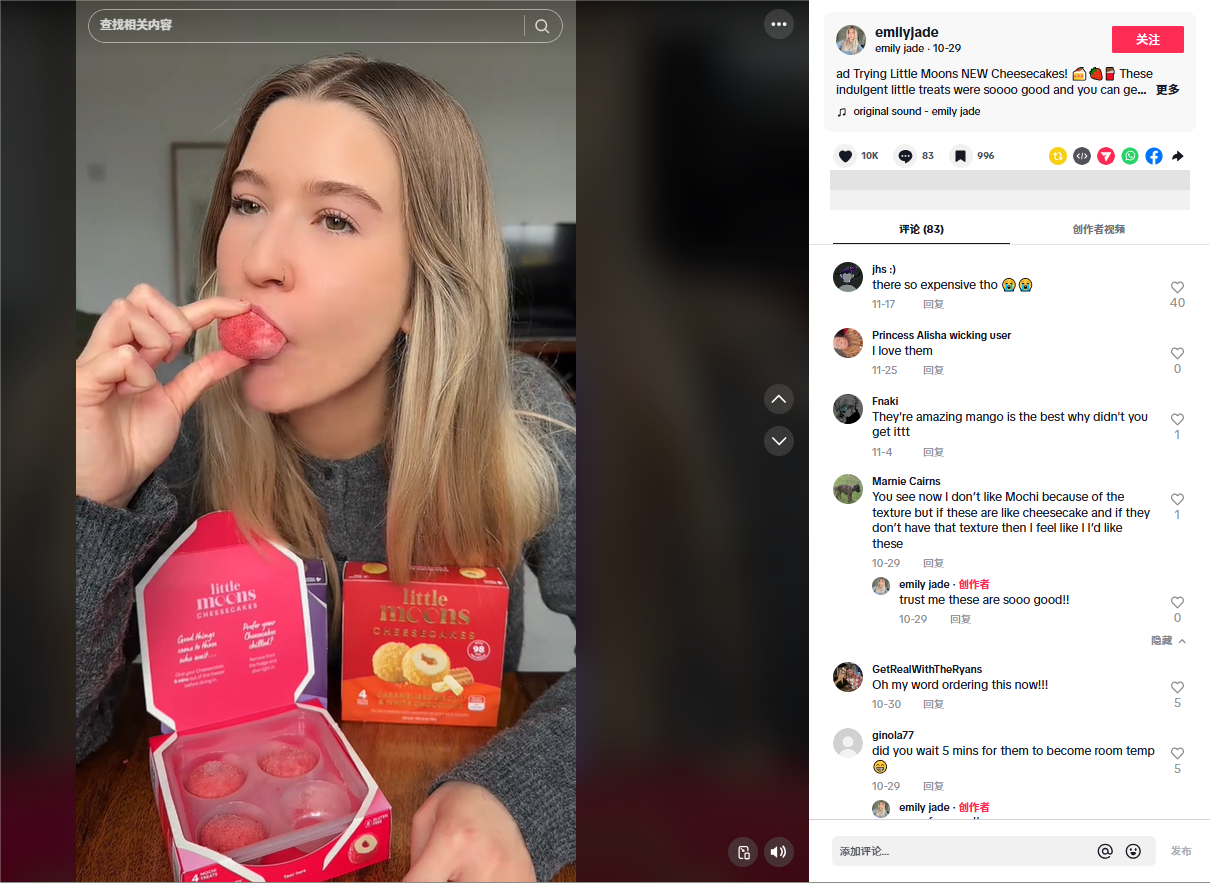
Am Beispiel des TikTok-Creators @emiiyjade, einem Food-Blogger mit 452.600 Followern, zog dieser durch authentische Verkostungserlebnisse und unterhaltsame Inhalte schnell die Aufmerksamkeit vieler Nutzer auf sich.
Letztendlich erreichte dieses Video über 3,5 Millionen Aufrufe und brachte Little Moons einen erheblichen Traffic-Schub und Nutzerinteresse.
Quelle: TikTok
Fazit: Hinter dem Verkaufsschlager steckt „Nutzerdenken“
Der Erfolg von viralen Verkaufsvideos auf TikTok beruht letztlich auf einem tiefen Verständnis und einer präzisen Reaktion auf die Psychologie und das Verhalten der Nutzer.
Vom Cover bis zur Conversion dreht sich jeder Schritt darum, die Bedürfnisse der Nutzer besser zu erfüllen, die Entscheidungskosten zu senken und das Gefühl der Teilhabe zu stärken. Nur wenn man wirklich von den Nutzerbedürfnissen ausgeht und den Produktwert eng mit ihren Schmerzpunkten verknüpft, kann man Traffic in konkrete Handlungen umwandeln.
In Zukunft, mit der ständigen Weiterentwicklung des TikTok-Ökosystems, müssen Marken kontinuierlich die Veränderungen im Nutzerverhalten beobachten und ihre Strategien flexibel anpassen, um im harten Wettbewerb die Nase vorn zu behalten.
Das Geheimnis des Verkaufsschlagers liegt immer im „Nutzerdenken“.