 2238
2238Im hart umkämpften Lautsprechermarkt tauchen Marken wie Wellen auf und verschwinden wieder. Von den HiFi-Lautsprechern der CD-Ära über die Desktop-Lautsprecher der Computer-Ära und die tragbaren Lautsprecher der Bluetooth-Ära bis hin zu den intelligenten Lautsprechern der heutigen AIoT-Ära – jeder technologische Wandel führt zu einer Neuordnung der Branche.
Doch in dieser Welle hat es die Marke Sonos geschafft, seit ihrer Gründung im Jahr 2002 unerschütterlich zu bestehen. Mit über 49,28 Millionen verkauften Produkten, die in 16 Millionen Haushalte weltweit Einzug gehalten haben, und einem Umsatz von über 1,52 Milliarden US-Dollar im Geschäftsjahr 2024. Selbst unter dem Druck der intelligenten Lautsprecher von Amazon und Apple erzielte ihr Starprodukt Era 100 einen monatlichen Umsatz von 1,1 Millionen US-Dollar.
Wie schafft es diese Marke, über Jahre hinweg erfolgreich zu bleiben?

Quelle: Sonos
01
Widerständiger Start: Eine Nische im „Unmöglichen" schaffen
Laut Angaben stammen die vier Gründer von Sonos (John MacFarlane, Tom Cullen, Trung Mai und Craig Shelburne) nicht aus der Audiobranche, sondern waren auf die Internetbranche spezialisiert. Mit zunehmender Erfahrung erkannten sie das Potenzial des Internets zur Förderung neuer Industrien und richteten ihr unternehmerisches Vorhaben auf den Bereich der Heimmusik aus.
Zu dieser Zeit waren Streaming noch nicht weit verbreitet und Smartphones noch nicht im Aufschwung, doch sie hatten bereits die Vision einer synchronen Wiedergabe in mehreren Räumen über WLAN.
„Diese Leute sind etwas verrückt", wurde ihnen einmal nachgesagt.

Frühe Sonos-Werbung Quelle: Sonos
Doch bereits im dritten Jahr nach der Gründung (2005) kam das erste drahtlose Audiosystem ZP100 auf den Markt und eroberte mit seinem innovativen Erlebnis schnell den Markt.
In den folgenden zwanzig Jahren hat Sonos über 4.000 Patente angemeldet, die Bereiche wie Akustikstruktur und Vibrationsdämpfung abdecken. Diese Fokussierung zahlte sich aus: Das Starprodukt Era 100 erzielte bei Amazon einen monatlichen Höchstumsatz von 1,1 Millionen US-Dollar und wurde zum „Phänomenprodukt der Lautsprecherbranche".

Tom Cullen demonstriert Bill Gates die Sonos ZP100 und CR100
02
Trendnutzung: Der Wind im Audiomarkt
Natürlich ist der anhaltende Erfolg von Sonos über zwei Jahrzehnte auch auf die Unterstützung des Marktumfelds zurückzuführen.
Laut Daten wird der globale Markt für Audiogeräte im Jahr 2024 auf 80,12 Milliarden US-Dollar geschätzt und soll bis 2031 auf 151,98 Milliarden US-Dollar anwachsen, mit einer durchschnittlichen jährlichen Wachstumsrate von 13,8 %.
Mit der Expansion des Marktes reicht es den Verbrauchern jedoch nicht mehr, dass Lautsprecher nur „hörbar" sind. Neben High-Fidelity und verlustfreier Wiedergabe als grundlegende Leistungsmerkmale rückt auch personalisierter Klang in den Fokus der Verbraucher.
Von der Einladung von Oscar- und Grammy-prämierten Meistern für die Klangabstimmung bis zur Entwicklung der Trueplay™-Auto-Tuning-Technologie – die Entwicklung von Sonos hat genau diesen sich ständig weiterentwickelnden Markt begleitet und den Grundstein für die stabile Marktposition der Marke gelegt.
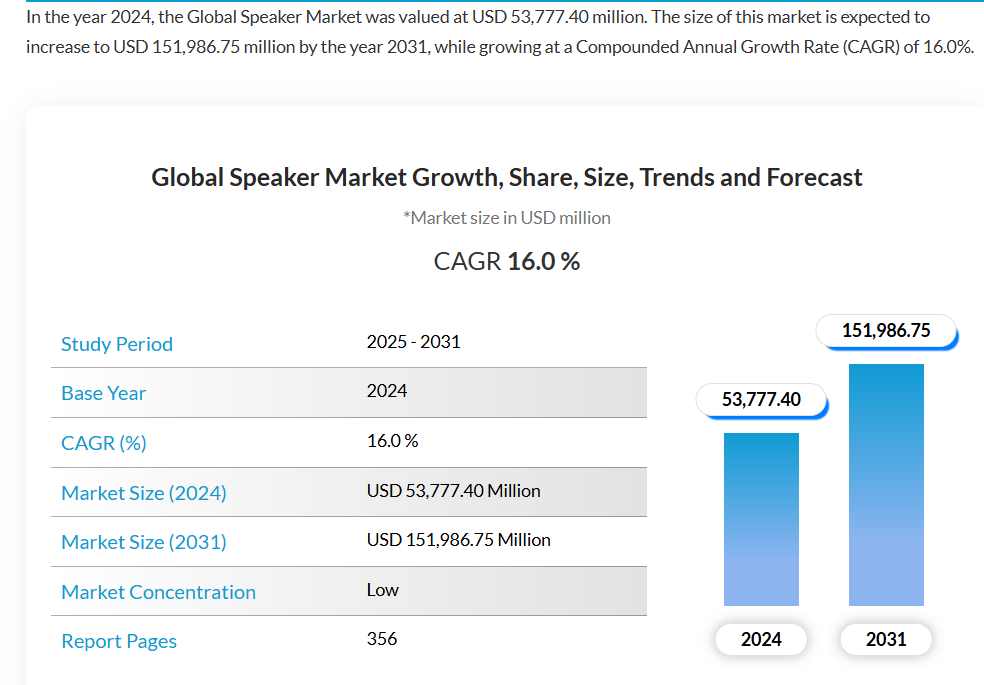
Quelle: Global Speaker Market
03
Omnichannel-Strategie: Zweigleisiger Antrieb durch Online-Erlebnis und Offline-Immersion
Neben den Produkten zeigt die Vertriebsstrategie von Sonos eine andere Form der Balancekunst.
Laut Drittanbieter-Plattformen trägt die eigene Website grob geschätzt 33 % zum Umsatz bei, ein Wert, der deutlich über dem Branchendurchschnitt liegt.
Gleichzeitig erreicht Sonos über wichtige E-Commerce-Plattformen wie Amazon und Best Buy mehrere Touchpoints und deckt die Einkaufsgewohnheiten verschiedener Verbrauchergruppen ab.
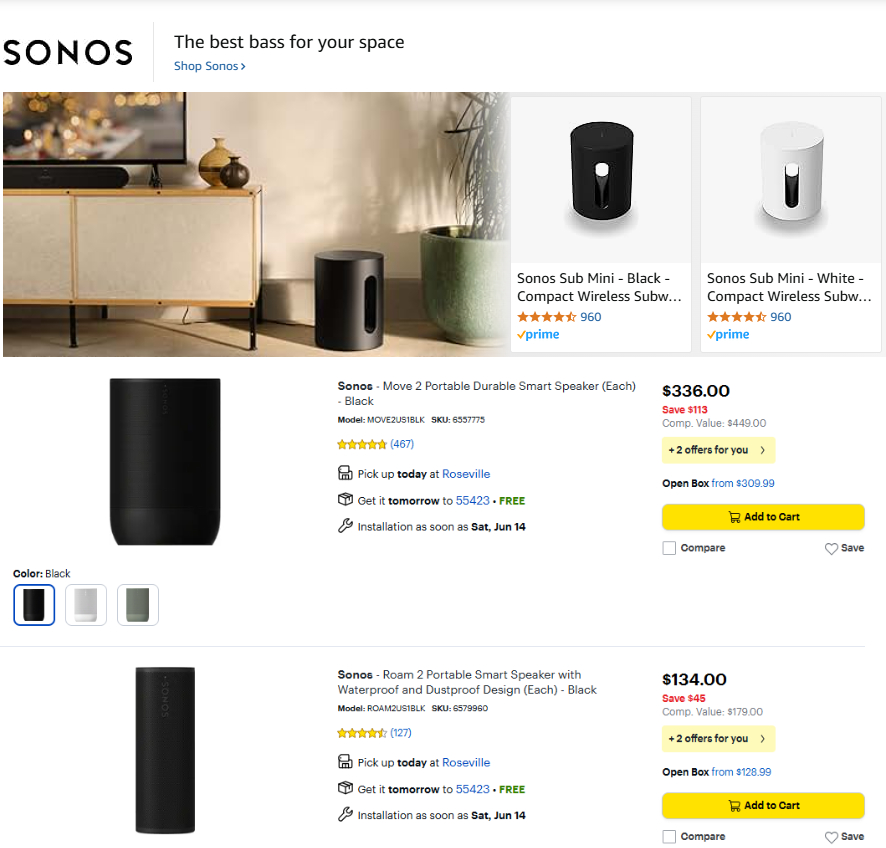
Amazon (oben) Best Buy (unten)
Parallel zur breiten Online-Abdeckung legt Sonos auch großen Wert auf ein immersives Offline-Erlebnis. In globalen Metropolen wie New York und London betreibt die Marke Flagship-Erlebnisgeschäfte mit speziell eingerichteten Hörräumen, in denen Kunden die Klangunterschiede verschiedener Raumtypen und Lautsprecherkombinationen hautnah erleben können.

Quelle: Target
04
Social-Media-Durchdringung: Markenwärme im fragmentierten Zeitalter aufbauen
Kommen wir nun zur Social-Media-Strategie von Sonos, insbesondere zur differenzierten Präsenz auf den beiden Schlüsselplattformen TikTok und YouTube.
-TikTok
TikTok ist ein Treffpunkt für junge Nutzer. Sonos nutzt auf dieser Plattform Kurzvideos, um lebensnahe Szenarien zu schaffen, in denen die Nutzer intuitiv erleben können, wie Musik den Alltag bereichert, und so den Gedanken „Das brauche ich" weckt.
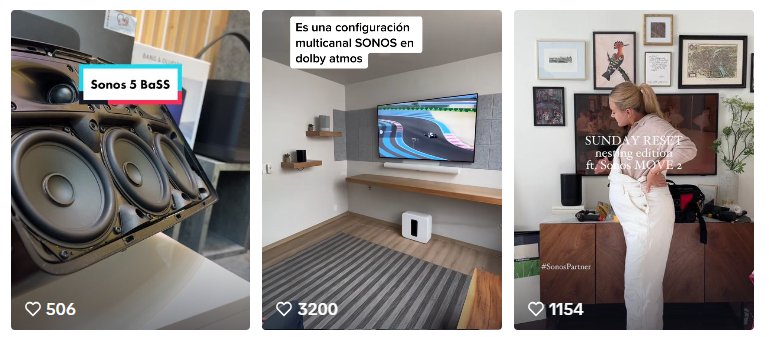
Quelle: TikTok
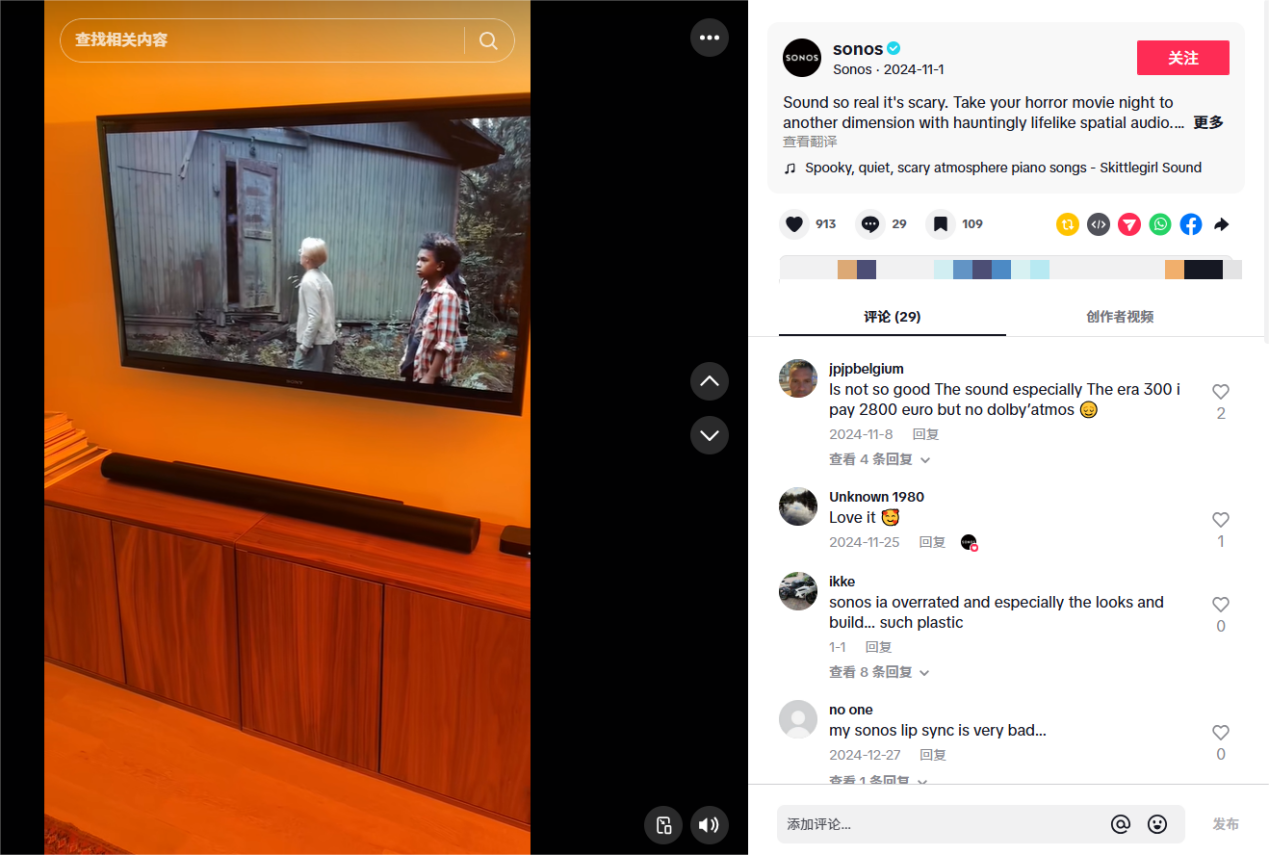
Ein Beispiel: Der offizielle Sonos-Account @sonos veröffentlichte im November 2024 ein Video, das die Klangqualität der Lautsprecher mit einem immersiven Horrorfilmerlebnis kombinierte. Durch den Kontrast der Atmosphäre wurden die Klangdetails der Lautsprecher hervorgehoben. Das Video erzielte schließlich 68.900 Aufrufe.
Quelle: TikTok
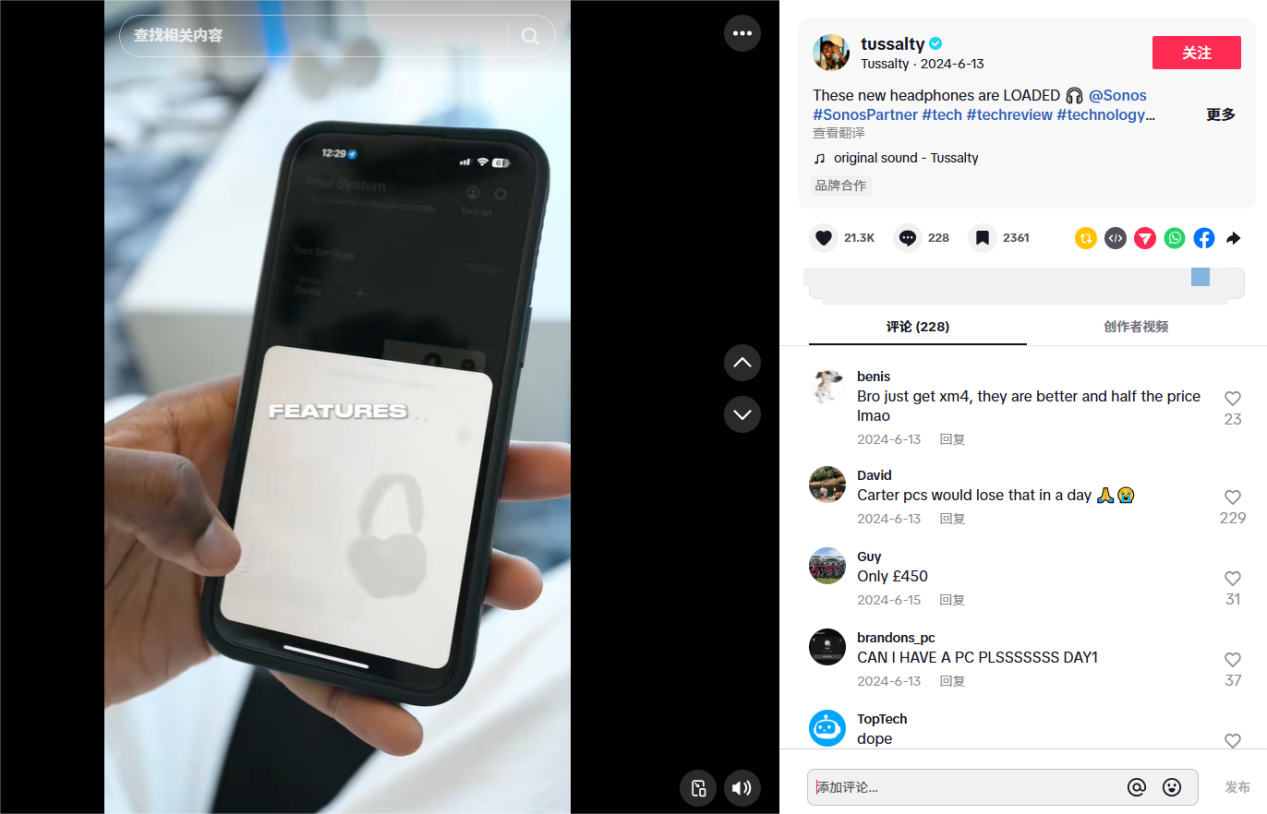
Um die Reichweite zu vergrößern und Nischenzielgruppen zu durchdringen, arbeitet Sonos auch mit vielen TikTok-Influencern zusammen. Besonders typisch ist die Kooperation mit dem Tech- und Lifestyle-Influencer @tussalty.
Im Juni 2024 veröffentlichte @tussalty ein Testvideo zu neuen Bluetooth-Kopfhörern in verschiedenen Räumen seines Zuhauses. Aus der Ich-Perspektive wurden die Leistungsvorteile des neuen Produkts immersiv präsentiert. Das Video erreichte 335.700 Aufrufe und weckte das Interesse vieler echter Nutzer.
Quelle: TikTok
-YouTube
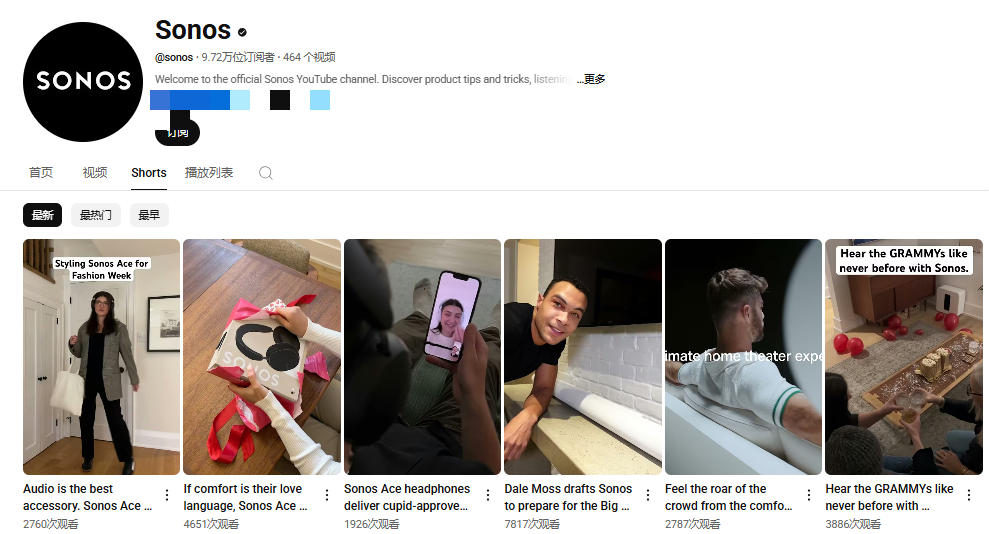
Auf YouTube setzt Sonos hingegen auf die „Stimme der Nutzer". Auf dem offiziellen Kanal (97.200 Abonnenten) findet man selten harte Produktwerbung, sondern vielmehr Erfahrungsberichte von echten Nutzern und Kurzfilme, die die Produktvorteile direkt zeigen.
Darüber hinaus sammelt und zeigt Sonos Feedback-Videos von Nutzern in verschiedenen Wohnumgebungen. Wenn potenzielle Kunden Rückmeldungen von Nutzern sehen, deren Umgebung ihrer eigenen ähnelt, können sie sich leichter hineinversetzen, Vertrauen in das Produkt aufbauen und so die Conversion fördern.
Quelle: YouTube
05
Der Anfang: Mit der Lösung eines Problems beginnen
Von dem anfänglichen Wunsch, Musik frei in jedem Raum fließen zu lassen, bis zur heutigen Wahl von Millionen Haushalten – die Geschichte von Sonos dreht sich stets um die Frage: „Wie können Menschen Klang besser genießen?"
Vielleicht ist der Weg nicht eins zu eins kopierbar, aber der gezeigte „Verbrauchergeist" ist dennoch eine Referenz wert: die unerschütterliche Fokussierung auf den Nutzer, bei der alle Produkte dem Kunden dienen.
Wenn man dieses Ziel unbeirrt verfolgt, wird der eigene Weg zur Internationalisierung sicherlich noch offener und erfolgreicher sein.