
 1970
1970Die grenzüberschreitende E-Commerce-Branche erlebt eine neue Welle politischer Veränderungen. Japan, der viertgrößte E-Commerce-Markt der Welt, plant Berichten zufolge die Abschaffung der seit Jahren geltenden Einfuhrsteuerbefreiung.
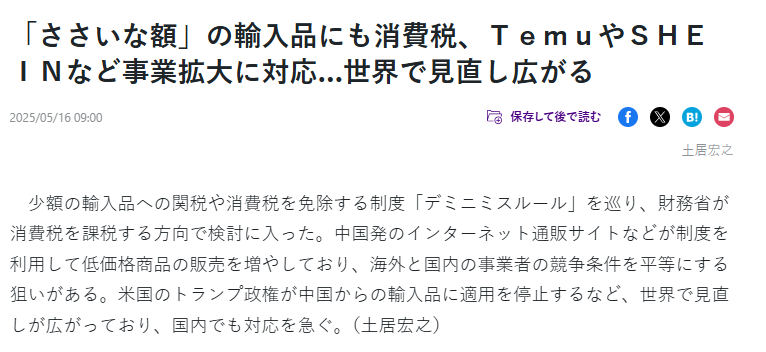
Quelle: Yomiuri Shimbun
Laut dem vom japanischen Finanzministerium veröffentlichten Steuerreform-Fahrplan sollen die derzeitigen Zoll- und Verbrauchsteuerbefreiungen für Importe unter 10.000 Yen (ca. 495 RMB) voraussichtlich 2026 endgültig abgeschafft werden. Daten zeigen, dass die Zahl der steuerfreien Kleinpaketimporte in Japan im Jahr 2023 auf 169,66 Millionen Stück anstieg – ein Anstieg um das Fünffache im Vergleich zur Zeit vor der Pandemie – bei einem Gesamtwert von über 425,8 Milliarden Yen.
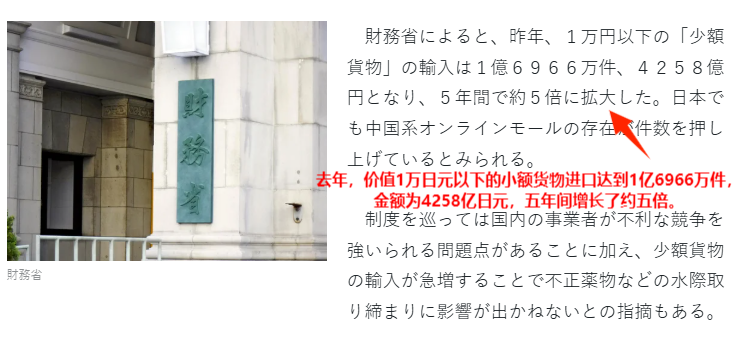
Quelle: Yomiuri Shimbun
Hinter diesem politischen Wandel stehen chinesische grenzüberschreitende E-Commerce-Plattformen als treibende Kraft. Der neueste Bericht von Sensor Tower zeigt, dass Temu mit der weltweit höchsten Downloadzahl bei E-Commerce-Apps weiter expandiert, während Shein auf Platz zwei der Download-Charts bleibt. Zusammen mit der überwältigenden Dominanz von Amazon im japanischen Markt mit 67 Millionen monatlich aktiven Nutzern treiben diese drei Kräfte das exponentielle Wachstum der grenzüberschreitenden Paketmengen in Japan voran. Eine Umfrage des japanischen Einzelhandelsverbands ergab, dass 83 % der einheimischen Unternehmen der Meinung sind, dass die Steuerbefreiung zu einem "Preisverfall" führt und die Wettbewerbsfähigkeit lokaler Produkte untergräbt.
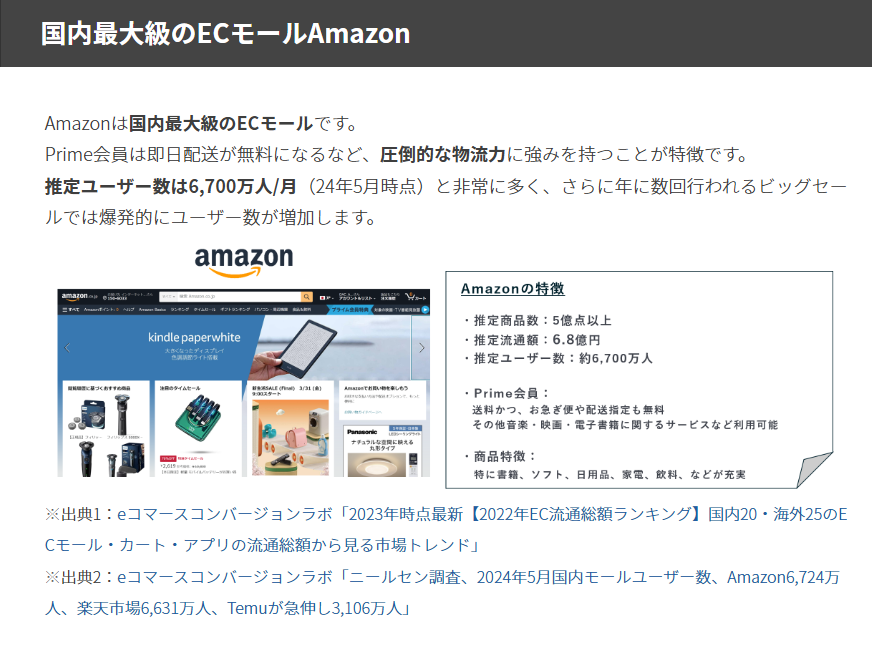
Quelle: CROSS COMMERCE Studio
Auch der europäische Markt auf der anderen Seite des Atlantiks ist von Spannungen geprägt. Die von der Europäischen Kommission im Februar veröffentlichten Daten sind atemberaubend: Im Jahr 2024 strömten 4,6 Milliarden Kleinpakete mit einem Wert unter 22 Euro in die EU, was einer täglichen Bearbeitungsmenge von 12 Millionen Stück entspricht.
Laut einer Stichprobenuntersuchung des Europäischen Amtes für Betrugsbekämpfung wiesen etwa 18,7 % der steuerfreien Pakete Probleme wie unterbewertete Waren, falsche Warenklassifizierung oder fehlende Sicherheitszertifikate auf, was zu jährlichen Steuerausfällen von rund 2,9 Milliarden Euro führt.
Um dieser "Paketflut" zu begegnen, hat die EU drei entscheidende Reformen auf den Weg gebracht: Erstens soll eine pauschale Zollabfertigungsgebühr für jedes grenzüberschreitende Paket erhoben werden, die direkt von den E-Commerce-Plattformen oder Importeuren zu tragen ist; zweitens ist die vollständige Abschaffung der seit Jahren geltenden 150-Euro-Freigrenze geplant; und drittens, noch entscheidender, die Einrichtung einer zentralen EU-Zollbehörde (EUCA), die durch ein "Produktsicherheits-Scan"-System eine Echtzeit-Datenvernetzung der Zollbehörden aller 27 Mitgliedstaaten ermöglichen soll.
Frankreich hat als erstes Land einen Zeitplan für die Reform vorgelegt. Haushaltsministerin Amélie de Montchalin kündigte bei einer Inspektion des Pariser Logistikzentrums an, dass ab 2026 eine pauschale Bearbeitungsgebühr für jedes importierte Paket erhoben wird.
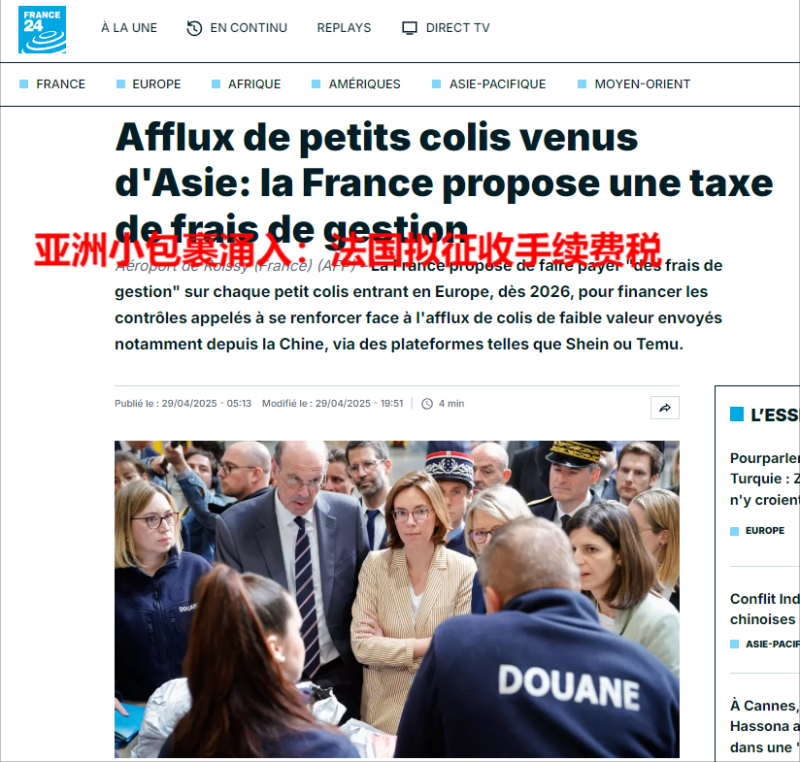
Quelle: france24
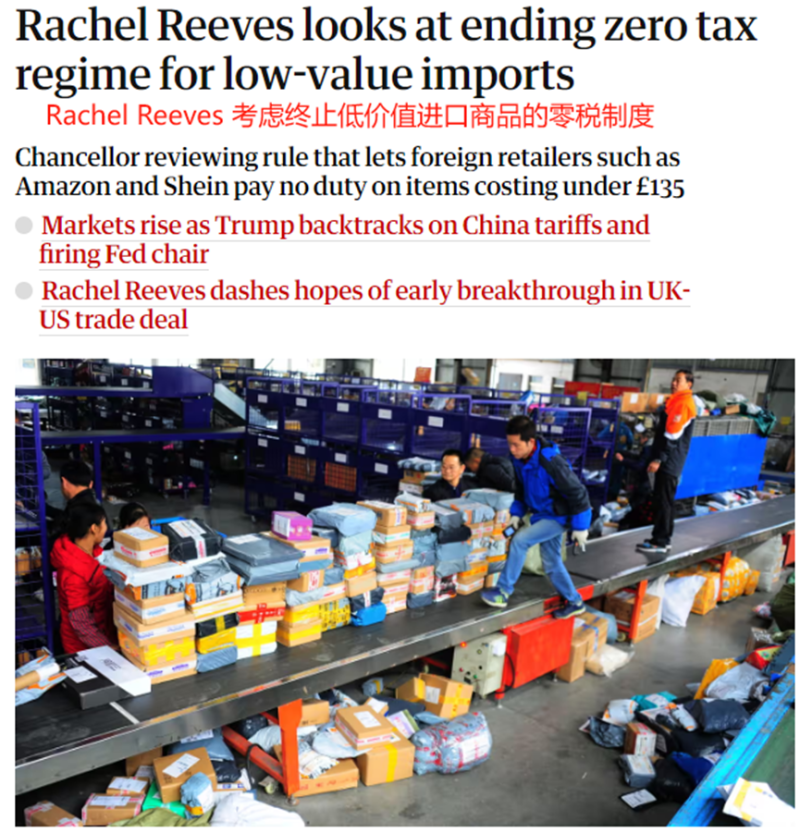
Das britische Finanzministerium hat unmittelbar danach eine Steuerprüfung eingeleitet, und die derzeitige Freigrenze von 135 Pfund steht auf der Kippe. Schätzungen zufolge würden die Gesamtkosten für importierte Waren bei einer Abschaffung der Steuerbefreiung im Vereinigten Königreich um 20-30 % steigen, wobei der doppelte Effekt eines Mehrwertsteuersatzes von 20 % und eines Höchstzolls von 25 % nicht zu unterschätzen ist.
Angesichts der bevorstehenden Branchenveränderungen beginnen die führenden Plattformen bereits mit Vorsorgemaßnahmen. Temu hat kürzlich die Versandkostenzuschüsse für den japanischen Markt um 30 % erhöht, während Shein den Aufbau lokaler Lager in Europa beschleunigt. Amazon Japan hat zudem ein "Compliance-Beschleunigungsprogramm" gestartet, um Verkäufern bei der frühzeitigen Anpassung an die neuen Zollvorschriften zu helfen.
Dieser weltweite Steuersturm ist im Kern eine Neugestaltung der internationalen Handelsregeln im Zeitalter der digitalen Wirtschaft. Für Millionen von grenzüberschreitenden Verkäufern ist der Wandel vom "schnellen Geldverdienen" zum "Markenaufbau" keine Option mehr, sondern eine Überlebensnotwendigkeit.


