 719
719Another way to monetize: YouTube Shopping affiliate program integrates with Amazon
At the end of August 2026, YouTube announced news that excited many creators—Amazon has officially joined YouTube's Shopping affiliate program in the United States. In simple terms, eligible US creators can now tag Amazon products directly in their videos; viewers can click the tag to jump to purchase, and creators earn a commission from it.
This change may not sound big, but for creators who often recommend products, it's actually a fairly substantial upgrade.
Image source: affiversemedia
From “description links” to “in-video tags”
In the past, when creators wanted to recommend Amazon products in videos, the usual approach was to paste the Amazon affiliate link in the video description, then hope viewers would remember to scroll back and click it after watching. This path isn't long, but there are several steps in between—viewers have to pause the video, find the description, scroll to the link, and then open it. With every extra step, a portion of people can't be bothered to actually do it.
Now it's different. Creators can directly add product tags in videos, viewers can see product information while watching, and click to jump to Amazon to complete the purchase. This tag works for three content formats: Shorts, long-form videos, and live streams. The entire flow has gone from “watch video → find link → jump” to “watch video → click tag → jump”, eliminating the “find” step in between.
YouTube itself conducted an internal experiment in July 2026, and the results showed that videos using only product tags had product clicks more than 110% higher than videos that only included description links. This data rather speaks for itself—the shorter the path, the better the conversion indeed.
Image source: indiantelevision
What's the specific process?
For eligible creators, the process is not complicated.
First, several prerequisites must be met: join the YouTube Partner Program, join the YouTube Shopping affiliate program in the US, have an Amazon Influencer Program or Amazon Associates account in good standing, and then link the Amazon account to the YouTube channel. All four conditions are required. Also note that each Amazon account can only be linked to one YouTube channel. If the account was linked before September 2024, you need to link it again.
After linking and obtaining permission, creators can use the product selection tool in YouTube Studio to choose Amazon products that can be tagged. However, there is a limitation—creators cannot tag the entire Amazon catalog. Amazon provides YouTube with a curated product catalog, mainly consisting of popular products and items with high user demand. If a creator wants to recommend a product that isn't in the catalog, they can contact the YouTube support team to request that it be added.
The platform also offers an auto-tagging feature. Once creators enable it, YouTube's system will automatically scan recently uploaded videos, identify eligible Amazon products, and add tags automatically. This should save quite a bit of effort for creators with a high volume of content output.
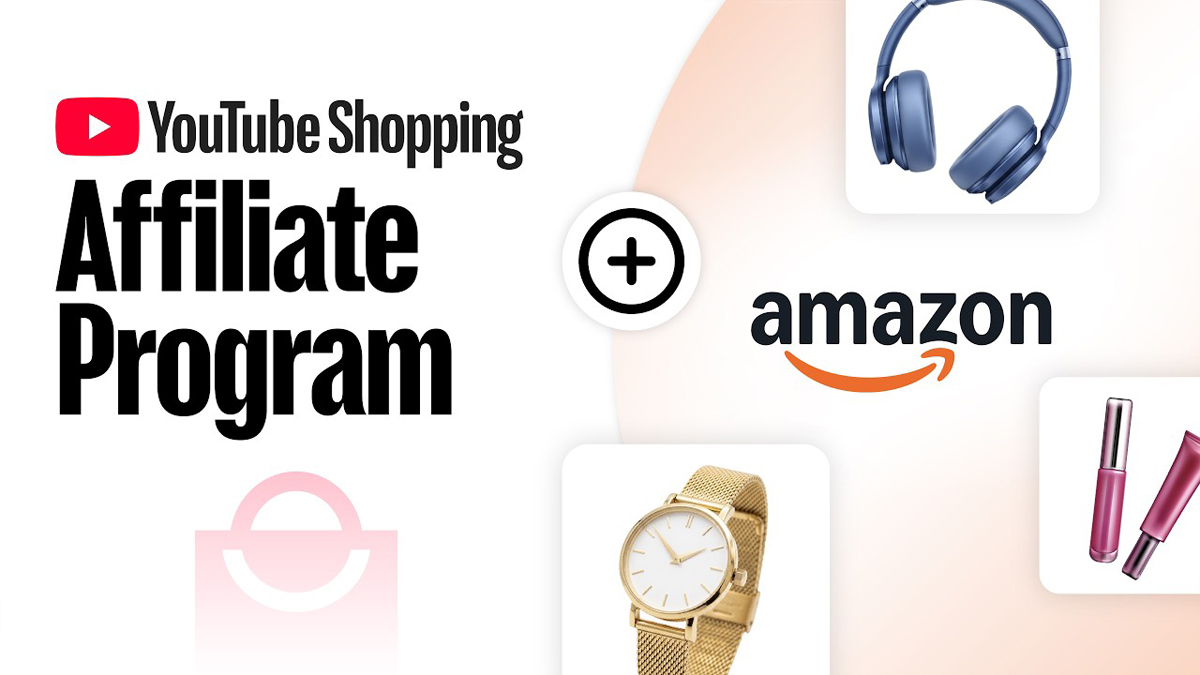
Image source: indiantelevision
What this means for creators
YouTube's Shopping affiliate program was first launched for US creators in 2022, then gradually expanded to Thailand and India, and in August 2026 opened to UK creators. Bringing in Amazon this time adds substantial weight to the program.
For creators, Amazon's entry means the range of available products has expanded dramatically. Previously, the YouTube Shopping affiliate program already had partnerships with retailers like Wayfair, Currys, Boots, and Etsy, but Amazon's product coverage is clearly much broader. Whether doing unboxing reviews, product recommendations, or everyday sharing, the types of products that can be tagged are now richer.
From another angle, this feature also makes creators' monetization path shorter and more direct. There's no longer a need to rely on viewers to scroll through the description section to find links; the connection between product recommendation and purchase has been brought closer. For content creators who already frequently do product recommendations, this should be a new income stream worth paying attention to.