 1229
1229Backed by the Xiaomi ecosystem chain, it is the 'starting line' for many Chinese manufacturing companies, but how to step out of the comfort zone of the supply chain and build a recognizable consumer brand in overseas markets is another, harder question.
Hannto Technology, a company founded in Pudong, Shanghai in 2017, was initially known as the actual manufacturer of Xiaomi printers. But it did not remain in an OEM role; in 2021, it incubated Liene, a brand for overseas markets.
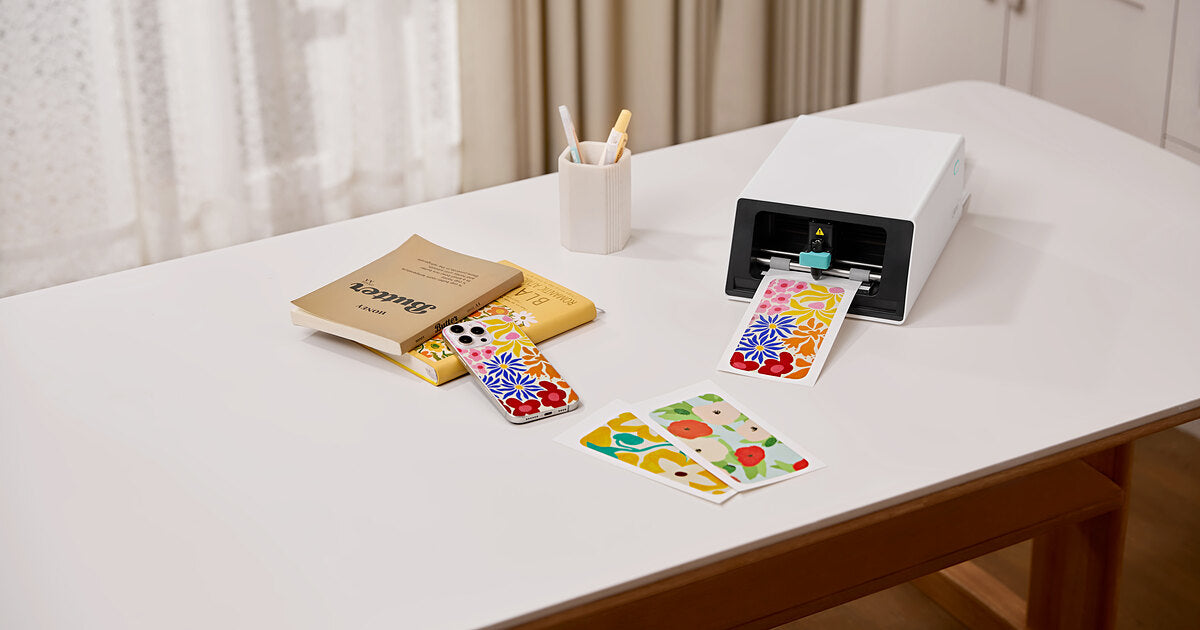
Image source: Liene
In just a few years, Liene has delivered a very impressive report card.
Official Liene data shows that since 2020, the brand's cumulative sales have reached $50,419,716.43, approximately $50.42 million, with more than 500,000 users worldwide.
For a brand that started from China and entered the niche photo printer track, this scale means it has already crossed the stage from 0 to 1.
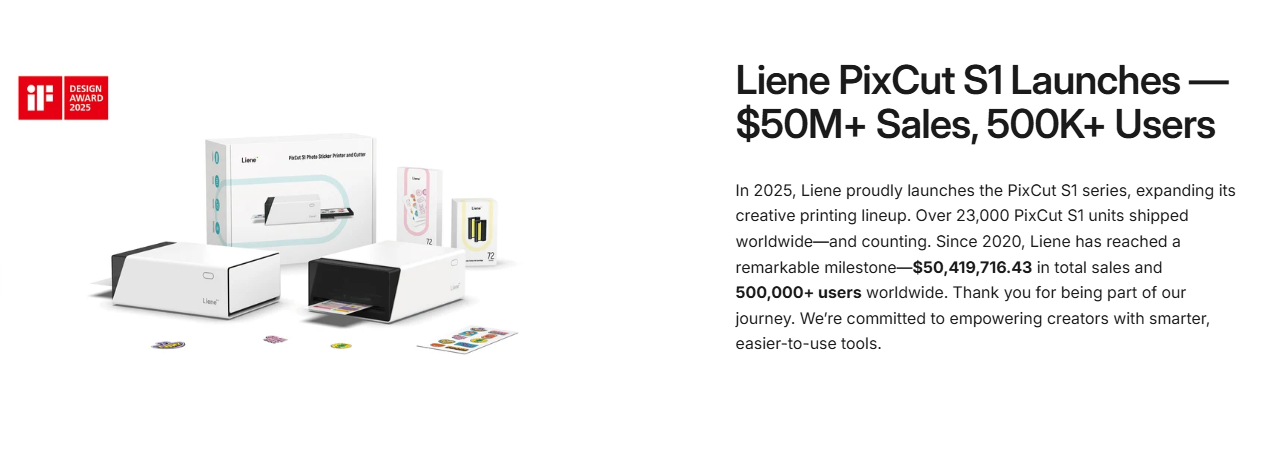
Image source: Liene
From supply chain capability to an independent brand
According to the company's official website, Hannto initially focused on the design, R&D, production, and sales of smart devices, IoT applications, and image output products, and had cooperated with Xiaomi, FUJIFILM, and others to develop products. The company also says it currently has independent R&D capabilities for photo printers, inkjet printers, and laser printers.
This experience actually explains why Liene was later able to enter overseas markets from a relatively niche product.
Because it did not start from zero by finding a supply chain to build a brand; rather, it itself already had printing device R&D and product development capabilities.
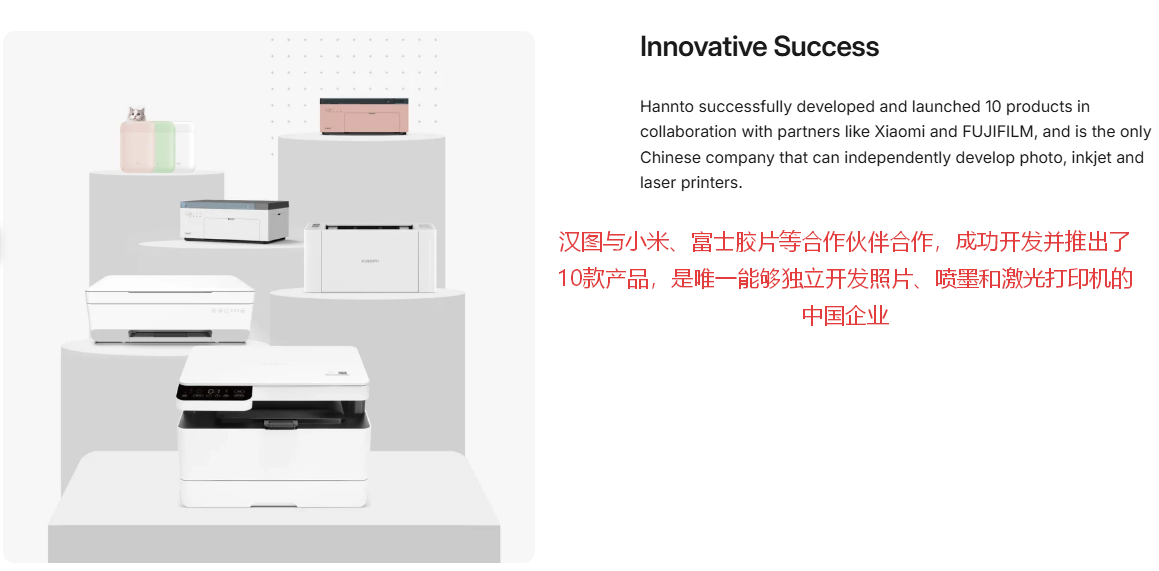
Image source: Liene
In 2021, the Liene brand was officially established and launched two product lines, Amber and Pearl. Among them, Amber is positioned for 4×6-inch photo printing, while Pearl is more portable and mainly targets 2×3-inch photo printing.
After the brand was established, Liene first validated product demand on mature e-commerce channels such as Amazon. According to official data, the Amber 4×6 Instant Photo Printer and Pearl 2×3 Portable Photo Printer have cumulatively sold more than 200,000 units on Amazon, and Amber once entered the top rankings of Amazon's photo printer category sales.
This also became an important milestone in Liene's early overseas expansion.
Compared with investing a large budget in brand advertising from the start, first validating products through mature e-commerce platforms and then gradually expanding brand influence is obviously lower-risk for a consumer electronics company.
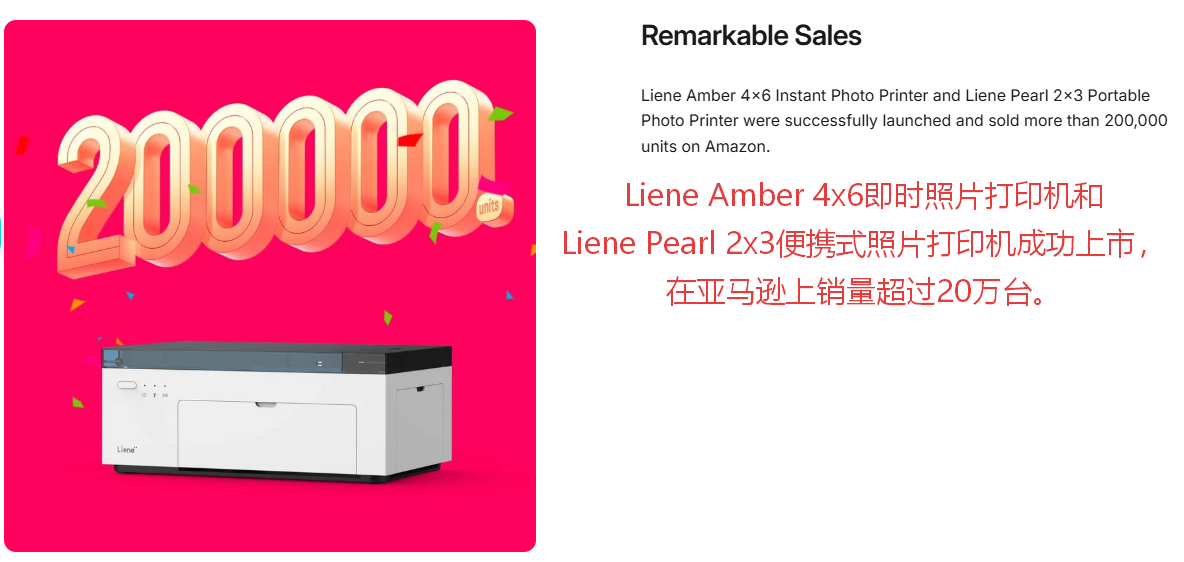
Image source: Liene
TikTok: Not just selling goods, but more importantly creating content
Currently, Liene Life is no longer a new store that has just tested TikTok Shop. From official store data, Pearl N200 Pro has sold 7000+ units, and PixCut S1 has also reached a sales scale of several thousand units.
According to third-party store monitoring data, Liene US TikTok Shop had a transaction amount of approximately $522,100 in August, with cumulative sales of approximately $3,777,400. In other words, TikTok has become a sales entry point that cannot be ignored among the brand's overseas channels.
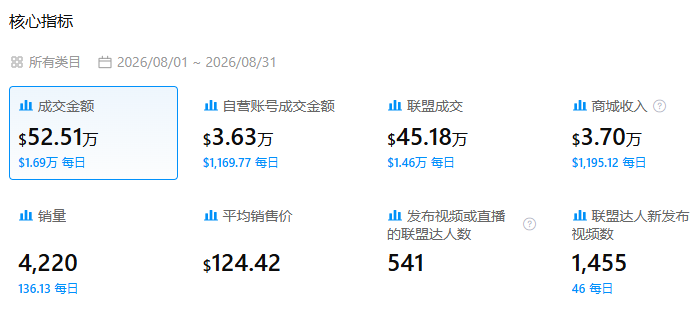
Image source: kalodata
But if Liene's TikTok is understood only as 'opening a store + livestream selling goods,' that actually underestimates it.
A more important thing for Liene is to continuously find content scenarios suitable for product communication on TikTok.
Its content does not stop at the product introduction of 'this is a photo printer'; instead, it largely revolves around scenarios such as journals, scrapbooks, dorm decoration, gift unboxing, and parent-child life.
This kind of content has a natural advantage: printing itself is a process very well suited to short-video presentation.
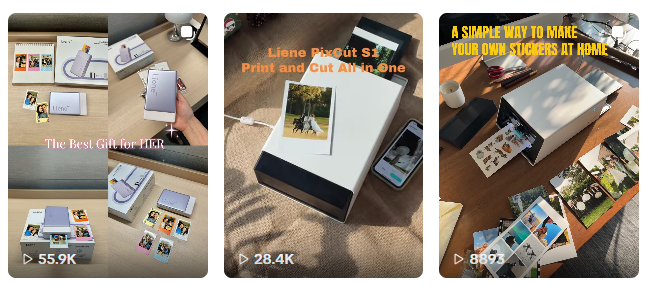
Image source: TikTok
At the same time, Liene is also doing creator content.
The brand's official website has a dedicated 'Influencers Love Liene' section and displays reviews from creators on TikTok and other social platforms. Meanwhile, the TikTok Shop page has now accumulated a large number of product videos.
This means Liene has not placed all content production on its official account; instead, it lets the product enter different creators' life scenarios.
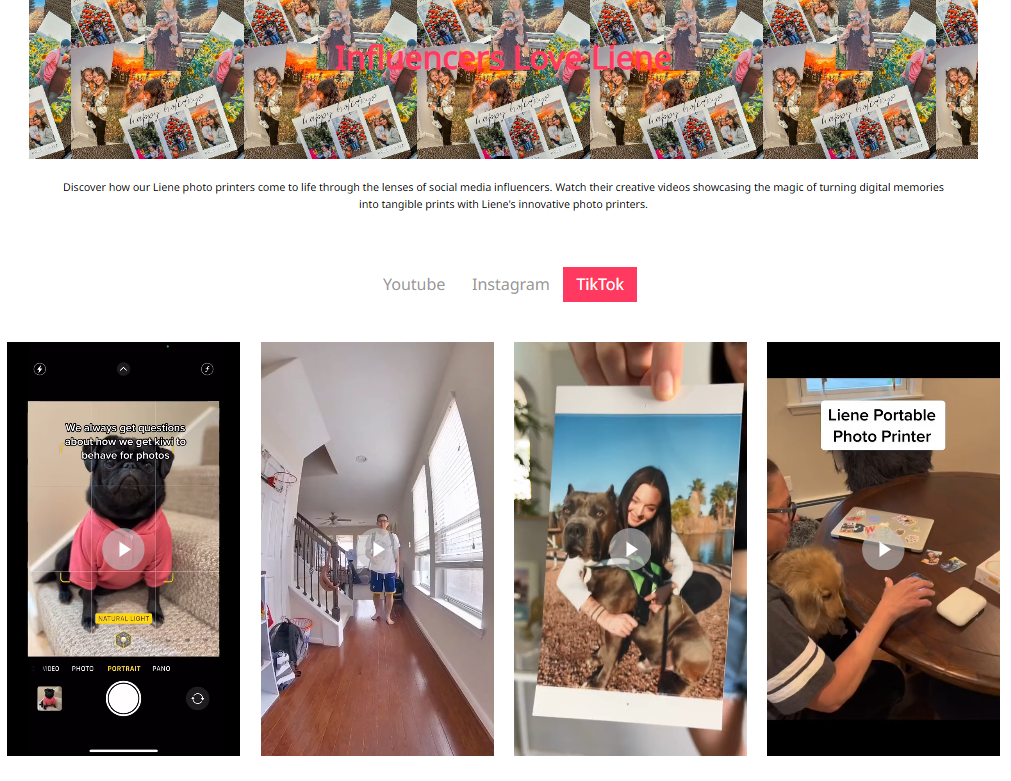
Image source: Liene
Some people use it for journaling, some use it for dorm decorations, and others use it as a birthday gift or Mother's Day gift. For this kind of lifestyle-oriented product, what different creators provide is not simply exposure, but different reasons to buy.
A fairly typical case is a piece of content posted by journaling blogger @crafticarli.
The video does not directly introduce product specifications. Instead, it starts from the daily scene of organizing and decorating a journal, places the Liene printer nearby, and as the journaling content progresses, prints photos and stickers on the spot, then adds the printed materials to the journal pages.
The whole process is basically a continuous display of 'make—print—paste,' with the product naturally integrated into the content rather than a standalone hard ad.
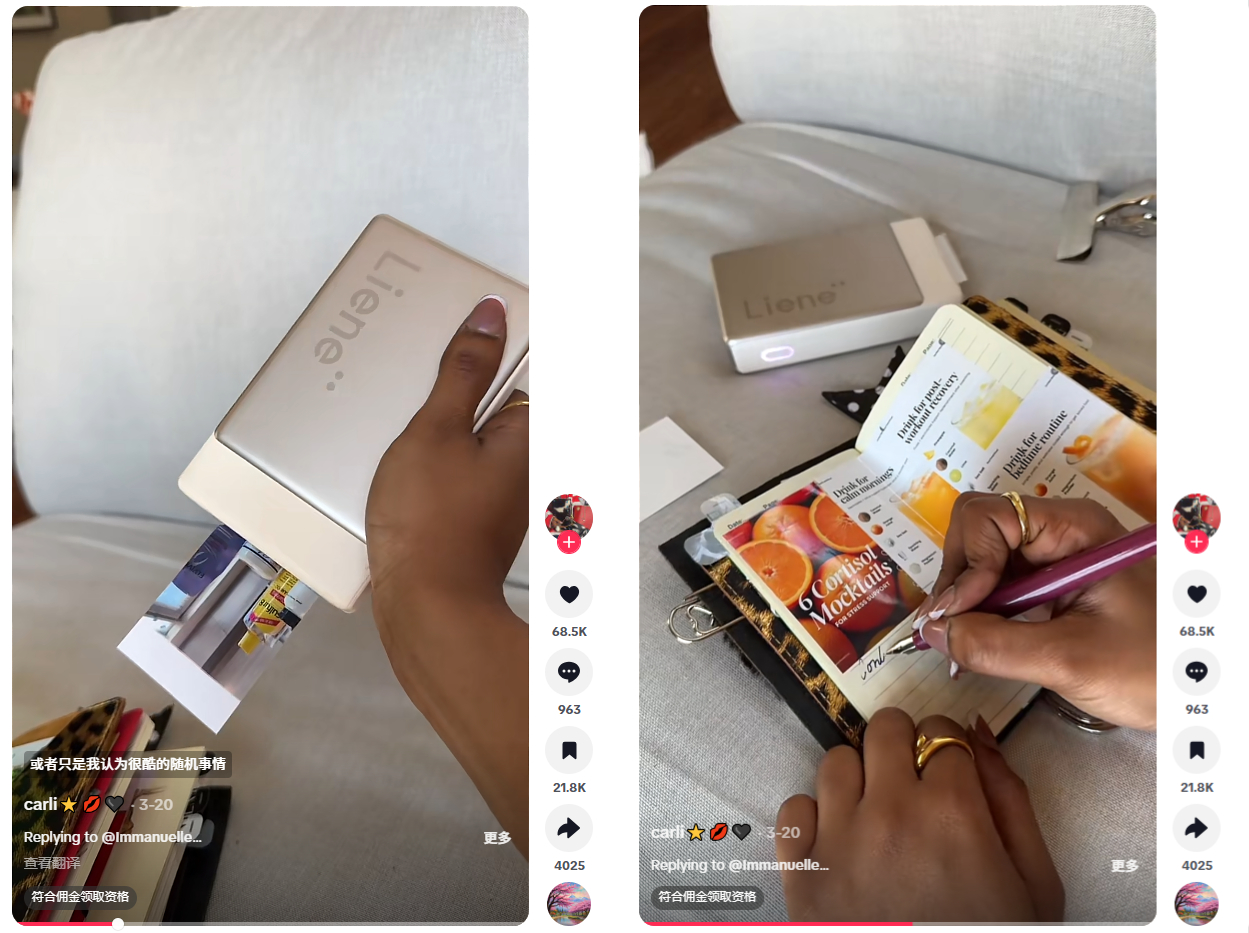
Image source: TikTok
Looking at the data, this piece of content has accumulated about 2.6154 million views over the past year, bringing 624 sales and $63,900 in transaction value.
For Liene, the value of this kind of content lies in the fact that consumers are not just seeing 'a printer'; they can directly understand how it can be used, which also makes it easier for the product to transform from a functional hardware device into a creative tool in lifestyle scenarios such as journaling and DIY.
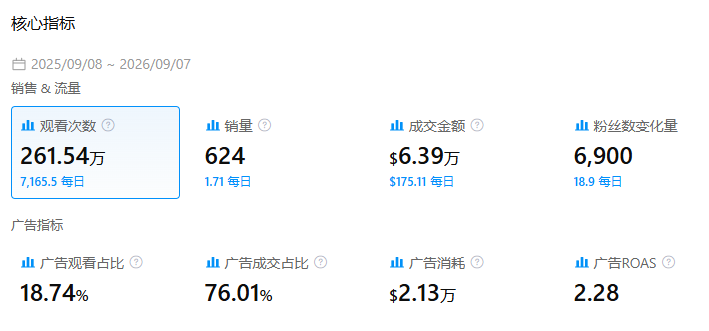
Image source: Kalodata
And from the overall creator data, this is not a case Liene happened to bet on by chance.
In the past 30 days, of the $516,300 in transaction value Liene generated on TikTok Shop, $452,700 came from affiliate creators, accounting for 87.68%. During the same period, a total of 555 creators posted related videos or participated in livestreams, and 1,487 related videos were newly added.
In other words, Liene currently seems to be using a large number of niche creators to continually place its product into different life scenarios.
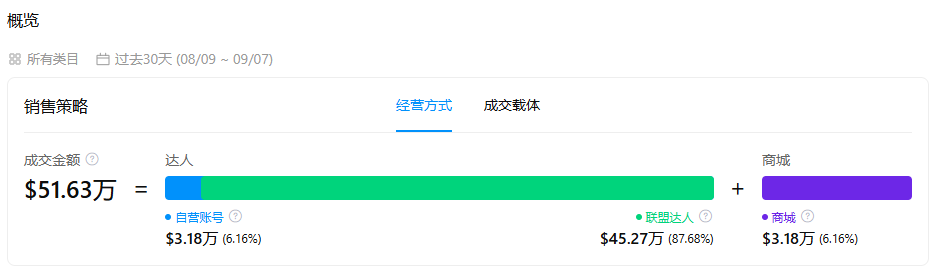
Image source: Kalodata
This approach can also be seen from the creator composition. For example, @crafticarli is itself a journaling, stationery, and DIY content creator, and the highly ranked @rosesoma has likewise long focused on content such as journaling, stationery, and creative living.
For Liene, these creators do not necessarily need to have the largest follower counts; as long as their own content matches the product's usage scenarios well enough, the printer can naturally appear in content familiar to consumers.
This also makes it easier to continuously accumulate real use cases than simply finding one big creator for a single exposure.
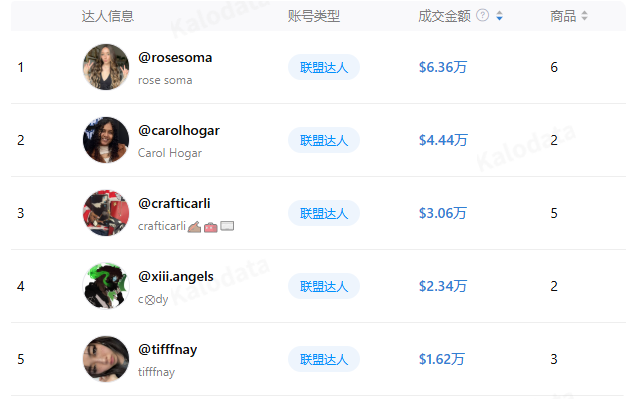
Image source: Kalodata
Conclusion
The Liene case actually reflects an increasingly obvious trend.
For Chinese companies entering overseas markets, supply chain, R&D, and cost advantages remain important, but these advantages mainly determine whether a company can produce the product, while whether a brand can truly enter the lives of overseas consumers requires a different set of capabilities.
For domestic companies, going overseas cannot be understood merely as “moving domestic hit products overseas,” nor can overseas markets simply be treated as a new sales channel.
What truly deserves attention is re-understanding consumers, redesigning content, and getting products into the real-life scenarios of local users.