
 705
Cross-border e-commerce sellers have probably all felt the same way: worrying about content every day. Hiring a scriptwriter/director is too expensive, shooting it yourself gives you no ideas, and when you finally get a video with decent views, it goes stale within a few days. You want to repost and mash up clips, but then it gets flagged as “duplicate listing,” and your account weight is wiped out.
Have you ever considered this idea: why can parts in a factory be produced on an assembly line, but viral short videos cannot?
Today let’s talk about the “industrialized production” system for overseas short-video content, a playbook that can truly turn content into “standard parts.”

Image source: Internet
What is “industrialized production”? Simply put, it means making content into an assembly line.
The so-called industrialized production has two core things: first, break viral hits down into reusable “parts”; second, standardize the process of assembling those “parts” into new videos.
You can understand it this way: previously your team was a line where the scriptwriter/director wrote scripts, shot, edited, produced the final video, and ran ads—every time you made a video, every step started over from scratch. After industrialization, every high-quality shot, every selling-point copy segment, and every viral structure in your hands gets tagged and placed into a material library. Next time you make a new video, the scriptwriter/director only needs to write a storyboard script, and the editor can search the library to pull out the relevant materials and combine them directly.
In the e-commerce content space, this means precipitating finished videos, storyboards, scripts, tags, and ad feedback into reusable content assets. The fuller your library, the higher your production efficiency.
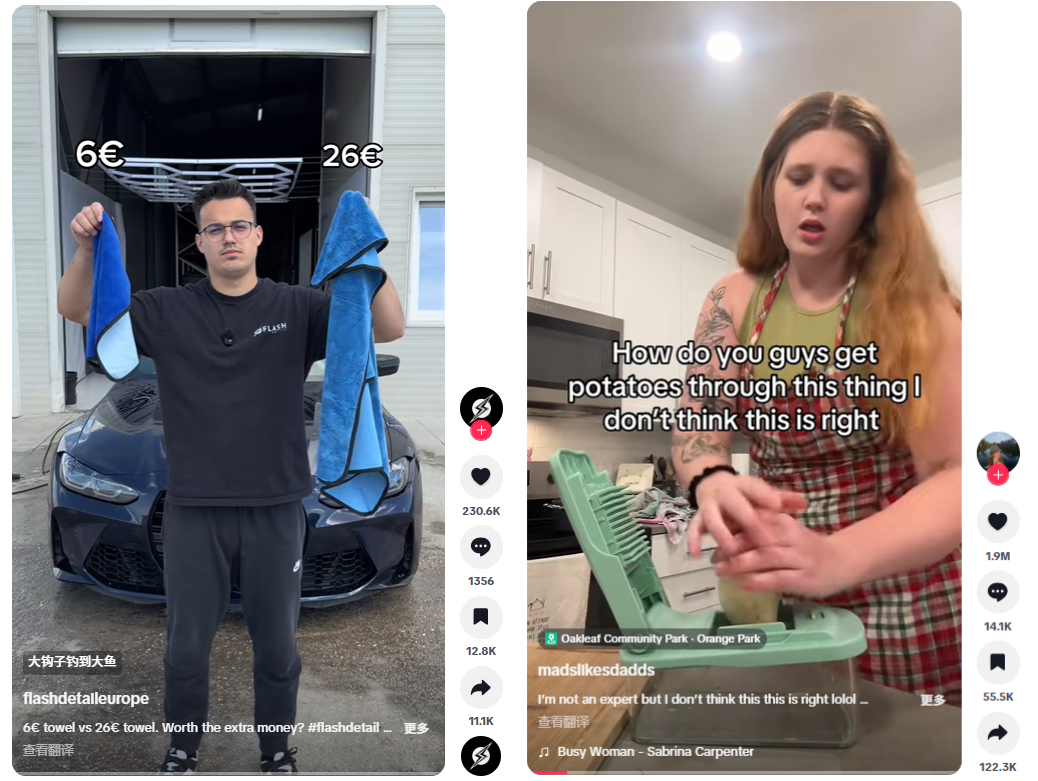
Image source: TikTok
Okay, so how exactly do you build this assembly line?
To build this “content factory,” you can break it into three key steps—of course, if you are still in the startup stage, you can also start with the first step, and after you have basic data, slowly add the latter two steps. Don’t rush; take it step by step. This system gets smoother the more you run it.
Step one: precipitate “content assets” by breaking parts out of viral videos
You don’t need to start writing scripts from zero. First do the simplest thing: find viral videos in your category on the platform and break them down frame by frame using a standardized formula.
Here is a proven universal formula: golden 3 seconds + product display + usage scenario + call-to-action copy.
Tag every “part” you break down—pain-point copy templates, product display shots, scenario-based shots, call-to-action copy—and store them in your material asset library. When your library has thousands of usable “parts,” assembling a new video may be a five-minute job.
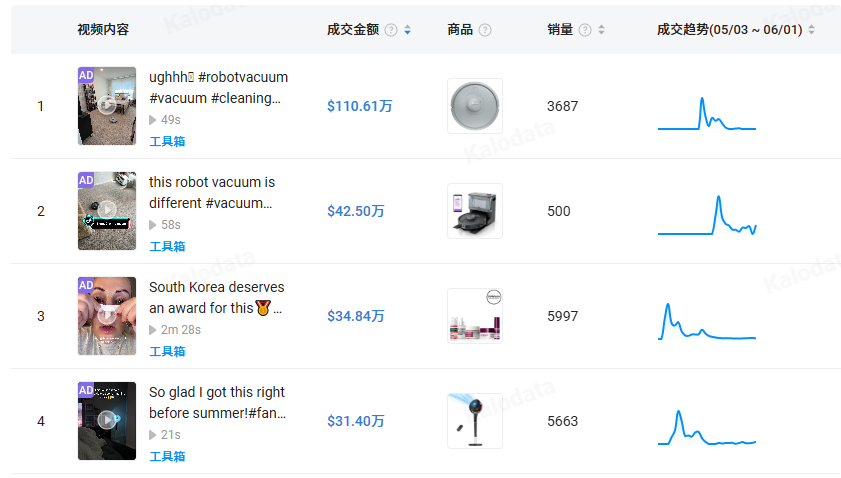
Image source: kalodata
Step two: use AI tools to turn “one piece of material” into dozens
Breaking down parts relies on human insight, but true scale relies on AI. The purpose of using AI is not to let you make videos with your eyes closed, but to let existing good materials be reused infinitely.
There is a very intuitive practical method: first shoot one source video (for example, a 30-second Chinese talking-head product video), then use AI to do four things—intelligent erasure (remove all logos and watermarks from domestic platforms), speech recognition to extract copy, large-model translation into multiple languages, AI voiceover, and burn in new subtitles.
In this way, one source video can be expanded within 24 hours into 10 languages and 50 ad materials, covering core channels such as TikTok, Meta, and YouTube Shorts. Practical data shows that after using AI to generate materials in batches, one person can produce more than 200 de-duplicated short videos per week, efficiency increases 10 times, and content cost drops to one tenth of the original.

Image source: Internet
Step three: build a content matrix so the “fan feeling” keeps being output
AI helps you solve output volume, but true penetration comes from a content matrix. The so-called matrix means using different accounts for different content divisions of labor, forming a content network that covers different audiences.
The approach of leading brand SHEIN can serve as a benchmark—it deployed a three-layer account system on TikTok: “official account + review account + regional account.” The main account communicates brand tone, review accounts such as @SHEIN_hauls let users truly hear, see, and feel, and regional accounts create customized content for different markets, forming a mutually coordinated content network.
SHEIN's “blind box unboxing” video series, shot with a phone's native camera, deliberately preserving “rough” details like shaky hands and ambient noise, instead had a single video exceed 32 million views. Why? Because the algorithm judged it to be content genuinely shared by users and gave it a higher recommendation weight.
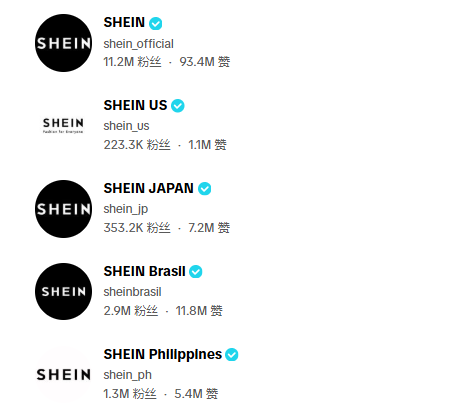
Image source: TikTok
Looking back now at what we've discussed: break viral hits into components → use AI to scale production capacity → use a matrix to build a content network — this chain is essentially an upgrade from “handmaking content” to “factory-producing content.” It's not mysterious, nor is it mysticism; it simply locks down the underlying logic of viral hits, then uses tools and processes to run it through and fully master it.
The key isn't how big your team is or how much budget you have, but whether your first video is solid enough and strong enough to compete.