 1451
The footsteps of Double 11 are getting closer, and Taobao's layout in overseas markets is also quietly accelerating.
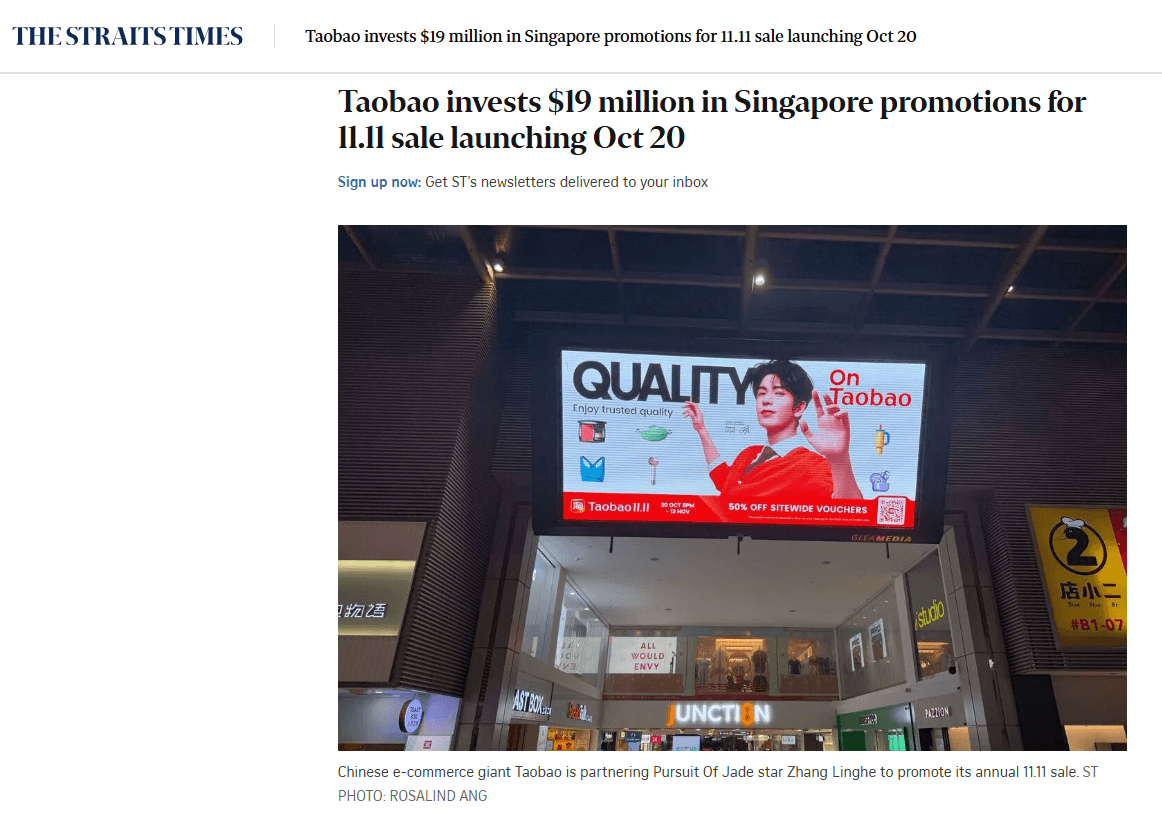
According to foreign media reports, Taobao invested US$19 million (about RMB 120 million) during Double 11 2026, specifically for consumer discounts, free-shipping logistics, and offline advertising in the Singapore market.
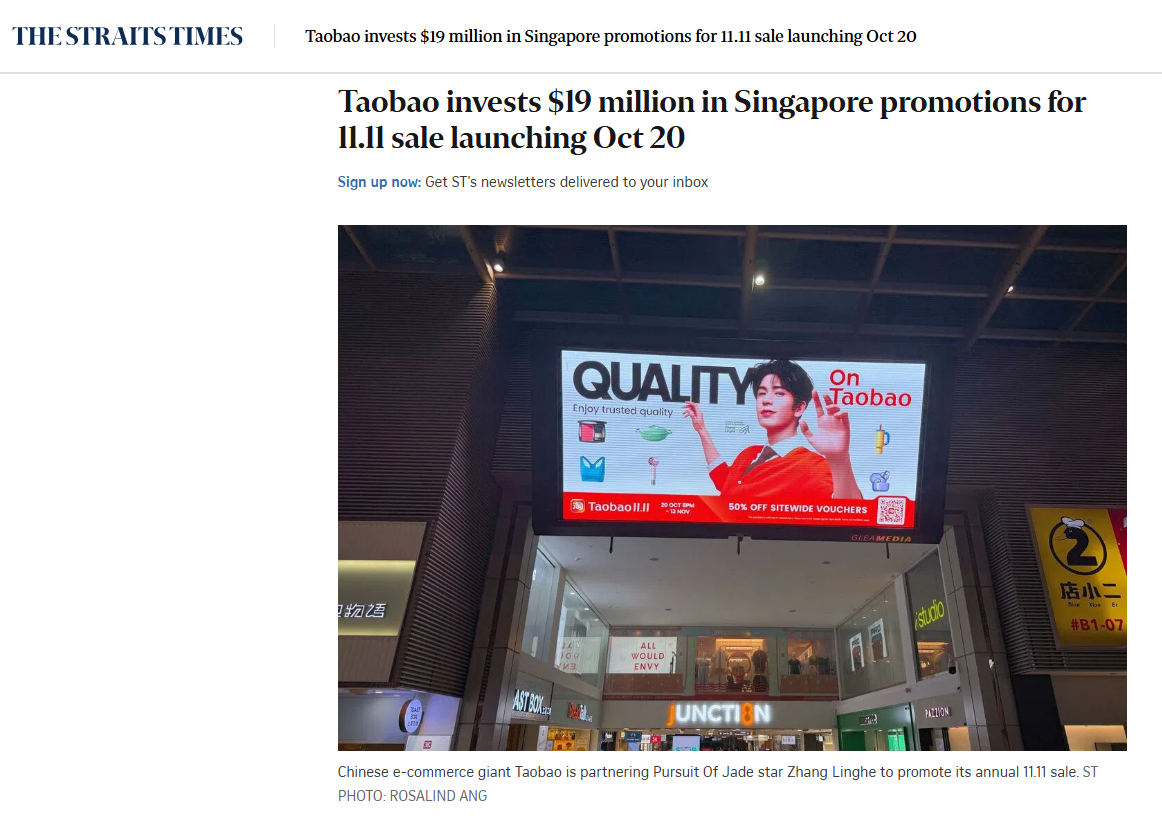
Image source: straitstimes
Compared with last year's Double 11, Taobao directly doubled its offline advertising investment in Singapore while continuing to upgrade cross-border delivery, returns, and AI shopping services.
At the same time, Taobao Overseas officially announced Zhang Linghe as its ambassador, adding fuel from the celebrity effect to this overseas push.

Image source: Google
Currently, Taobao's overseas user base is close to 100 million, with Southeast Asia being its main source of overseas users. Behind this series of moves, the strategic weight of the Singapore market is self-evident.
Why has Singapore become a must-win market?
Taobao's heavy investment in Singapore this time is by no means a whim.
From the perspective of user structure, Southeast Asia is already the largest source of Taobao's overseas users, while Singapore, as a mature consumer market in the region with high e-commerce penetration, strong spending power, and well-developed logistics infrastructure, is naturally suited to hosting large-scale promotional activities.
Of the RMB 100 million investment, consumer discounts directly stimulate purchase conversion, free-shipping logistics lowers the decision threshold, and doubled offline advertising aims to capture mindshare. These three form a complete path from seeing to buying.
More noteworthy is that Taobao simultaneously upgraded cross-border delivery, returns, and AI shopping services, meaning the platform is no longer just exchanging price for traffic but retaining users with service experience.
For sellers who have long watched overseas markets, the platform's real-money investment sends a clear signal: Singapore is not a test-the-waters market but one for deep cultivation.
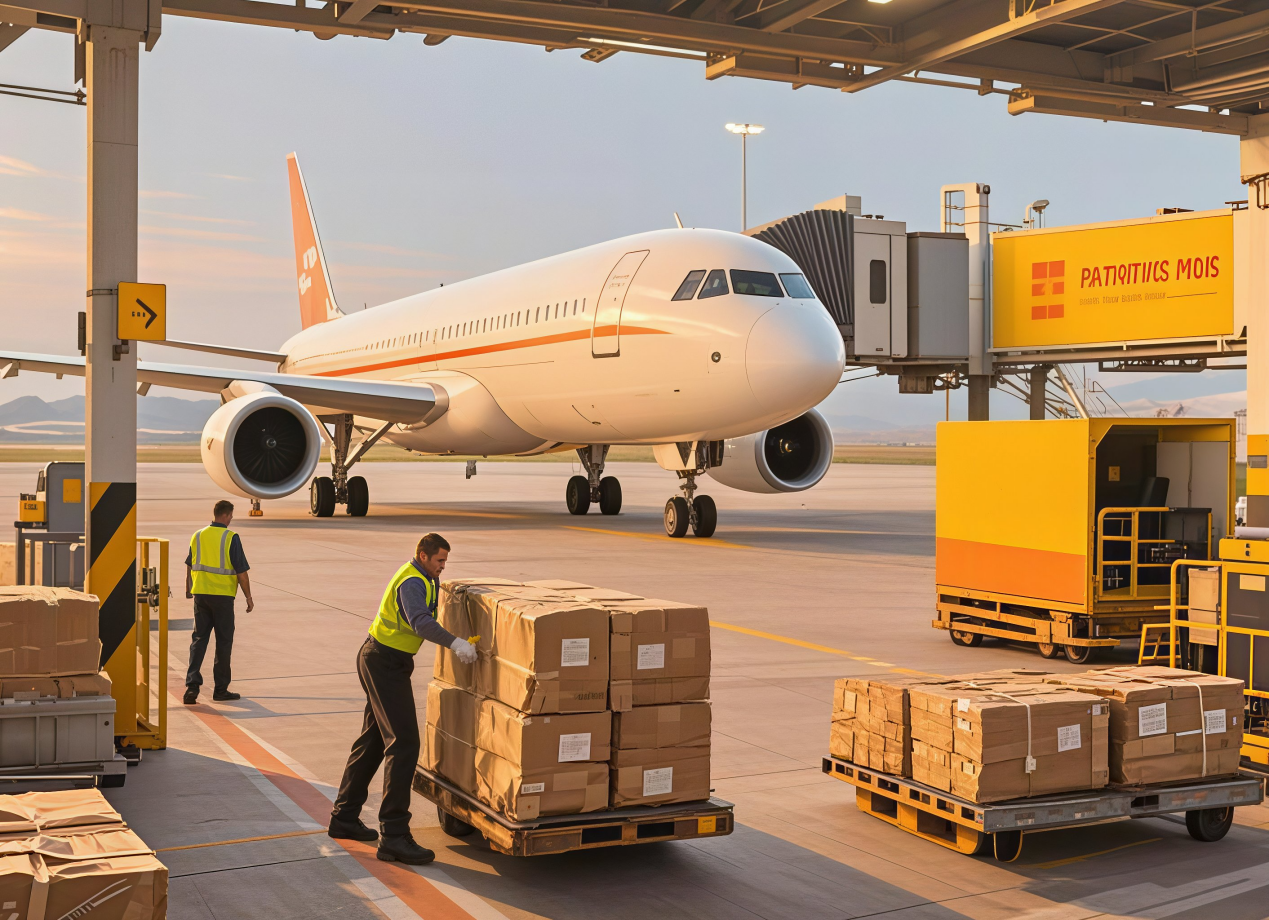
Image source: Google
Traffic has arrived, and the threshold has changed
When the platform increases investment, the most direct beneficiaries are of course sellers. Doubled offline advertising means brand exposure increases by orders of magnitude; free shipping and consumer discounts will raise conversion rates; and the upgrade of AI shopping services may bring more precise recommendation traffic.
But dividends are never without thresholds. When the platform uses logistics and returns experience as competitive chips, sellers' fulfillment capabilities will be scrutinized under a magnifying glass. Whether delivery timeliness keeps up, whether returns and exchanges are handled smoothly, and whether product descriptions can withstand the scrutiny of cross-border consumers have all become hidden assessment items.
In other words, the traffic the platform buys with RMB 100 million will ultimately flow to stores with strong service capabilities. At the same time, increased offline advertising also means competition density in the Singapore market will rise; the space for profiting from information asymmetry in the early days is narrowing, and sellers need to rethink their differentiated position.
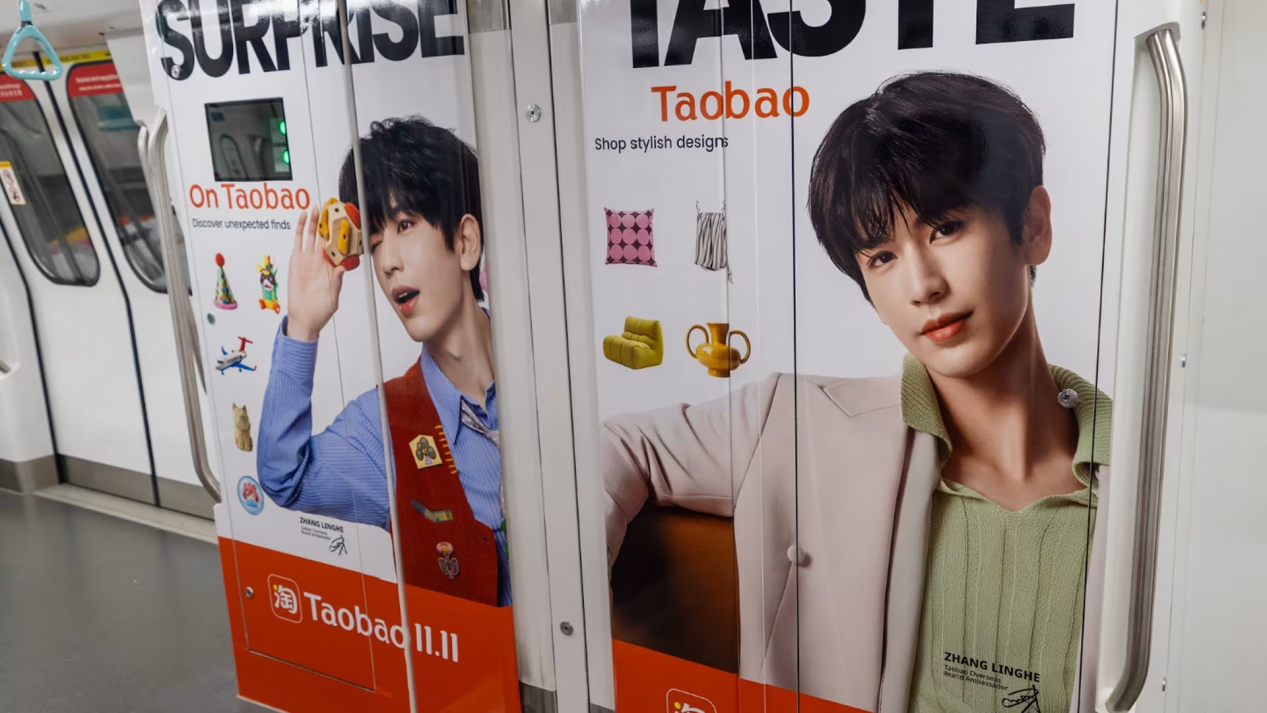
Image source: Google
From piggybacking on traffic to building capabilities
Facing this wave of platform dividends, sellers should not passively wait for traffic but actively capture it.
The first action is to sort out the product selection logic for the Singapore market. With the free-shipping policy, light and small items and high-repurchase products are more likely to scale; with consumer discounts, pricing strategies need to calculate profit margins in advance to avoid losing money and just making noise during the promotion period.
Second, logistics and returns experience must be polished in advance. The upgrade of cross-border delivery means consumer expectations are raised; sellers should confirm the timeliness commitments of partner logistics providers in advance and prepare contingency plans for high-frequency return and exchange categories.
Finally, brand exposure from offline advertising will spill over to social media and search; sellers can simultaneously deploy localized content to convert the momentum of platform advertising into their own store's attention. In short, the platform builds the stage, and sellers need to practice the skills on stage.

Image source: Google
Conclusion
A 100 million yuan investment, doubled offline advertising, upgraded service experience, and the official announcement of a spokesperson—this set of combined moves by Taobao for Double 11 in Singapore is both an activation of existing users and a declaration to incremental markets.
Going global has never been a one-sided sprint by the platform; rather, it is every role in the ecosystem taking its proper place. This battle in Singapore is worth close attention from everyone focused on going global.