 48
Entering November, Black Friday and the Christmas shopping season arrive one after another, and the overseas consumer market is gradually becoming lively.
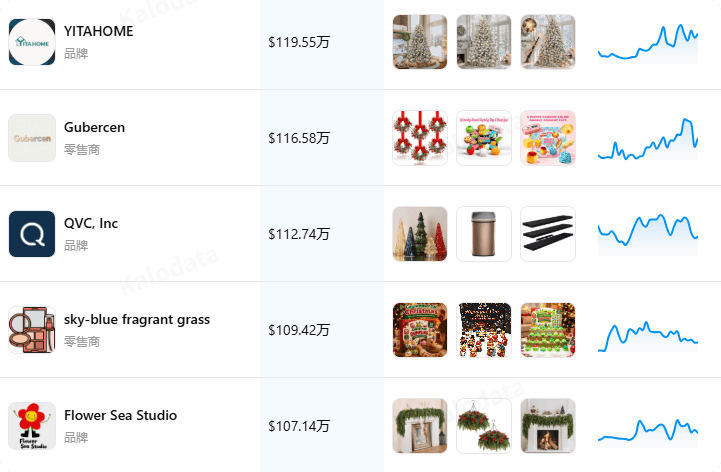
Judging from the recent TikTok Shop US bestseller list, many brands/sellers have already begun promoting Christmas-season-related products. From Christmas trees and holiday lights to various home decorations, products with a strong festive atmosphere are gradually entering their peak sales season.
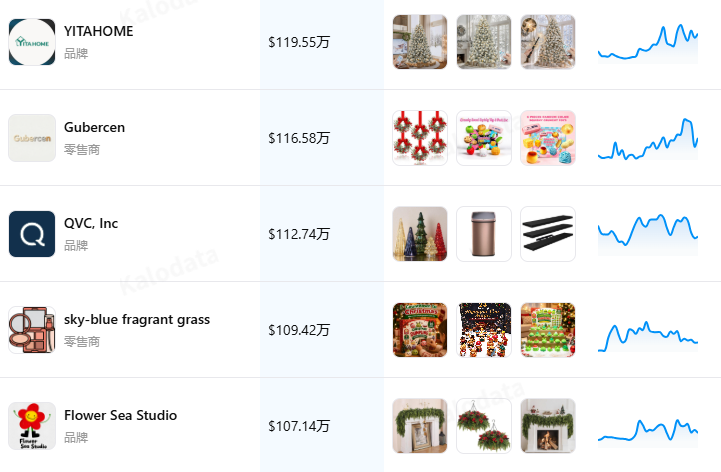
Image source: kalodata
Among them, an artificial Christmas tree from home brand YITAHOME stands out in particular.
According to kalodata statistics, as of November 18, 2026, the product's estimated GMV over the past 30 days reached $650,400, with sales volume approaching 20,300 units and sales revenue growing by 208.2%.
Why can a Christmas tree achieve such sales on TikTok? With Black Friday and Christmas consumer demand being released in a concentrated way, let's take a closer look.
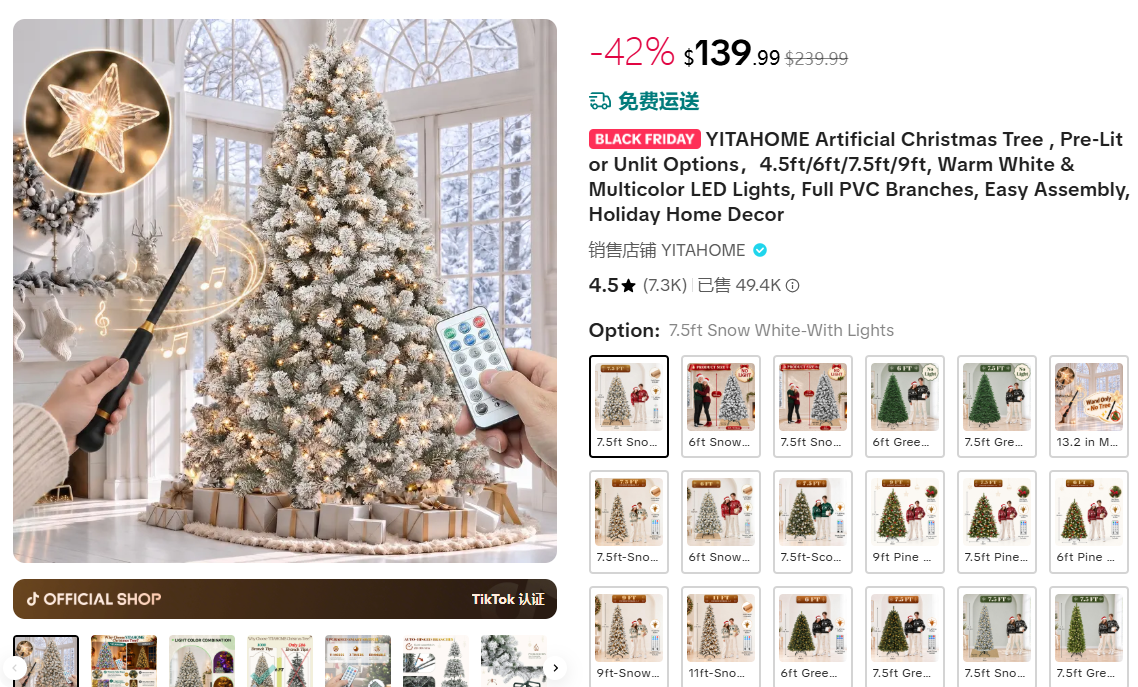
Image source: TikTok Shop
Christmas spending heats up, holiday products usher in a sales window
In European and American markets, Christmas is not only a traditional holiday but also a period when household consumption and social activities are highly concentrated.
From preparing gifts and decorating rooms to hosting family gatherings and decorating courtyards, holiday spending often extends to many aspects of life. Especially for Christmas decorations, consumers are buying more than a single product; they are creating a festive atmosphere for the whole family.
This demand is also corroborated by this year's consumer surveys.
A consumer survey released by National Tree Company in 2026 shows that among respondents planning to celebrate Christmas, 80% intend to use an artificial Christmas tree. The main reasons consumers choose artificial trees include easy setup and disassembly, realistic appearance, easy cleaning, and reusability.
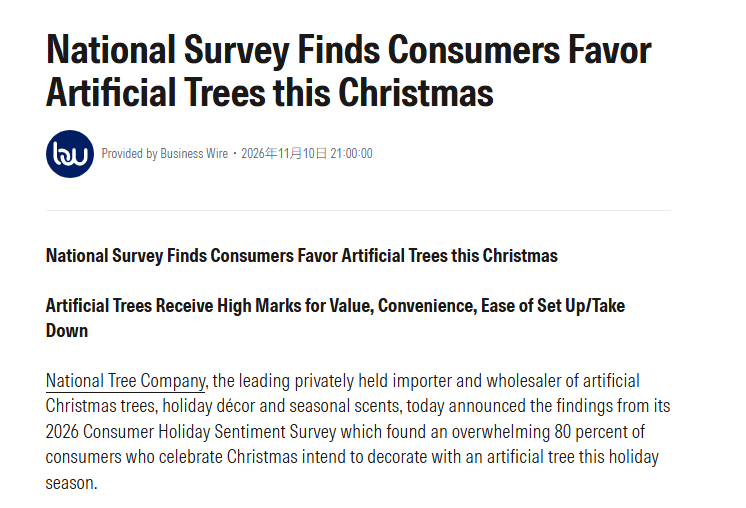
Image source: TikTok Shop
Another 2026 U.S. holiday shopping survey released by Circana shows that more than half of consumers plan to start holiday shopping before Thanksgiving, and 57% of consumers say they may buy a product after seeing it on social media.
This means Christmas spending does not start only in December. For sellers, November is an important period for capturing holiday demand and using Black Friday promotions to drive conversions.
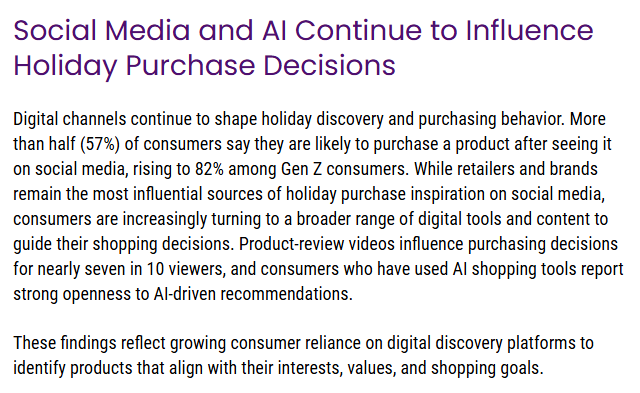
Image source: Circana
Starting in home furniture, broadening growth space with holiday products
In fact, YITAHOME is not a brand specializing in Christmas decorations.
According to the brand's official website, its products mainly revolve around home life scenarios, covering multiple categories such as indoor furniture, outdoor furniture, storage products, and holiday decorations.
According to relevant press releases, YITAHOME joined TikTok Shop US in March 2024. After joining, the brand's growth on the platform was quite significant; its TikTok Shop daily GMV grew from about $3,000 in March 2024 to about $57,000 in August of the same year, and its full-year GMV in 2024 exceeded $10 million.
In March 2025, the brand was awarded the title of TikTok Shop US 2024 Influential Brand of the Year.
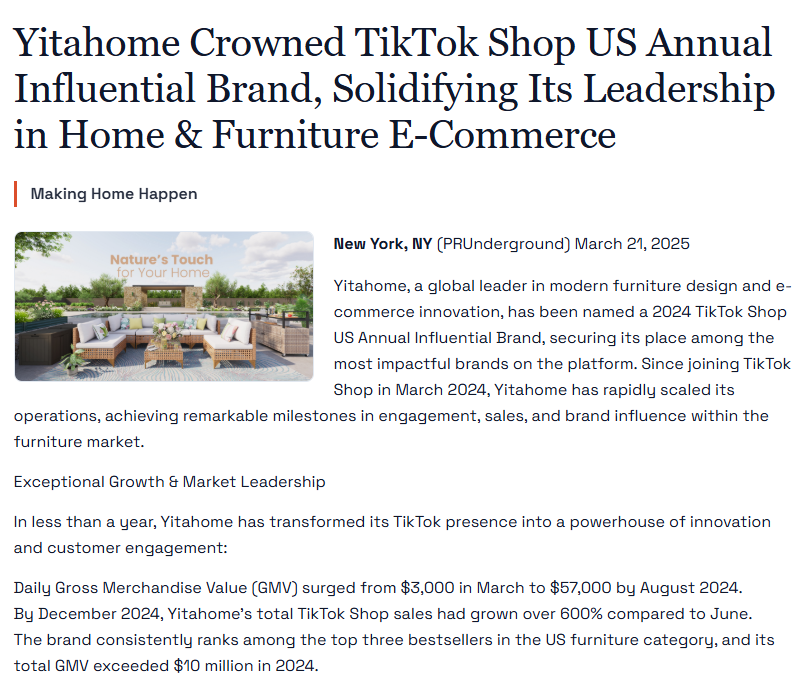
Image source: prunderground
From this information, TikTok is not a sales channel that YITAHOME tried temporarily, but a platform on which it has continued to operate and achieved certain results.
And in this year's Christmas shopping season, the artificial Christmas tree has become a new growth highlight for the brand.
From product showcases to holiday seeding, TikTokThis is how it should be done
YITAHOME's holiday marketing on TikTok mainly relies on creator distribution. The brand did not limit itself to content output from its own account; instead, through extensive creator collaborations, it pushed Christmas trees to consumers in different interest circles.
Looking at recent creator promotion data, both its content layout and marketing rhythm are worth breaking down.
1. Expand creator coverage and get products into more home scenarios
Kalodata statistics show that YITAHOME's US store in the last 30 days (10/20 ~ 11/18) had a GMV of USD 1.1955 million, with 3,272 affiliated creators, and the share of GMV through creators reached 98.17%.
For the best-selling Christmas tree we mentioned, its creator order rate also reached 51.28%.
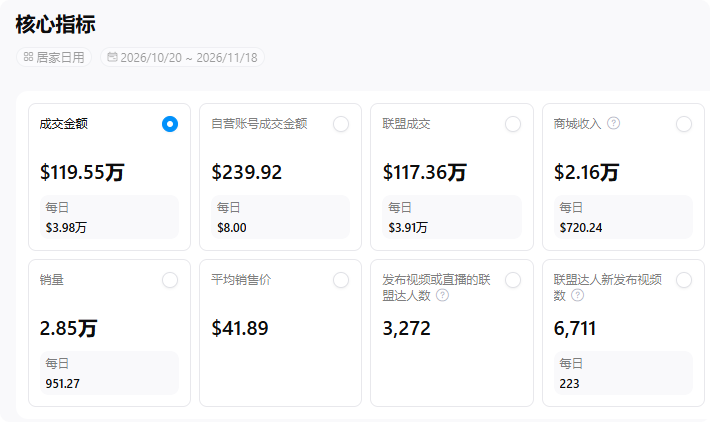
Image source: Kalodata
It can be seen that YITAHOME's sales on TikTok Shop rely heavily on creator distribution.
By collaborating with creators of different sizes, the brand extends product promotion to more creators' accounts and audiences, rather than concentrating traffic on its own account.
In addition, from the creator collaboration situation, among the creators participating in promotion, there are both top creators with a certain fan base and a large number of small and medium-sized creators. Among them, creators such as Andrea and Dani brought relatively high GMV to the store in the last 30 days.
For Christmas trees that are in peak sales season, this creator distribution model can help the brand reach more potential consumers in a short time and win more exposure and sales opportunities for holiday products.
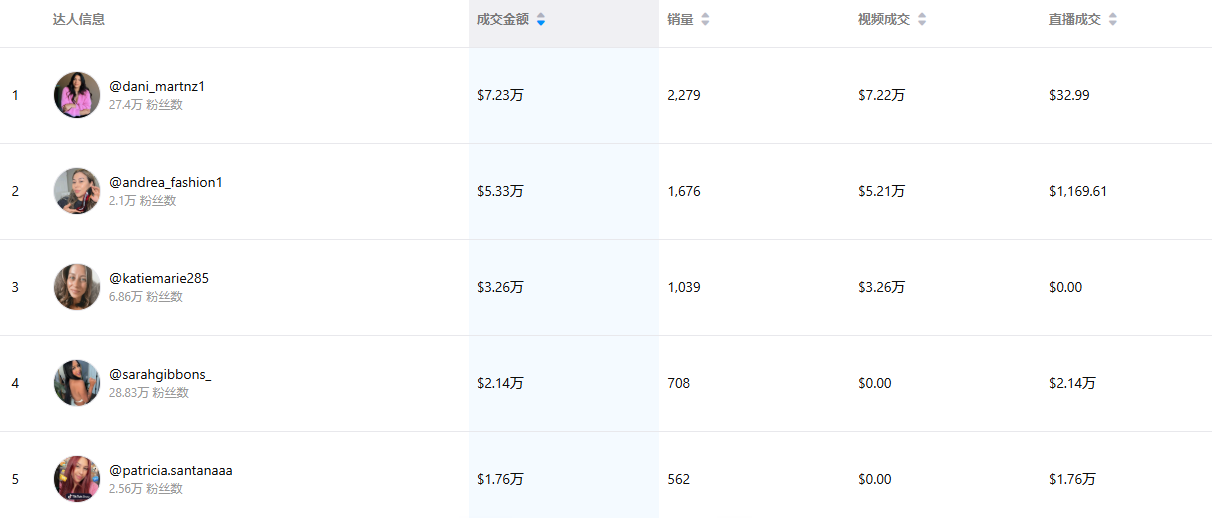
Image source: Kalodata
2. Turn holiday timing into video openings to reduce consumers' decision distance
Compared with simply introducing products, there is another noteworthy idea in YITAHOME's creator videos: starting directly from the specific scenario of Christmas decorating.
There is a video from creator @tamica_simone_, you can take a look here. The video went live on October 4 and currently has 3.6 million views and about 96,200 likes.
The video opens with 'I know you haven't started decorating your Christmas tree yet, right?' and then shows the Christmas tree installation process, light switching, and final decoration effect, integrating product selling points into the holiday scene.
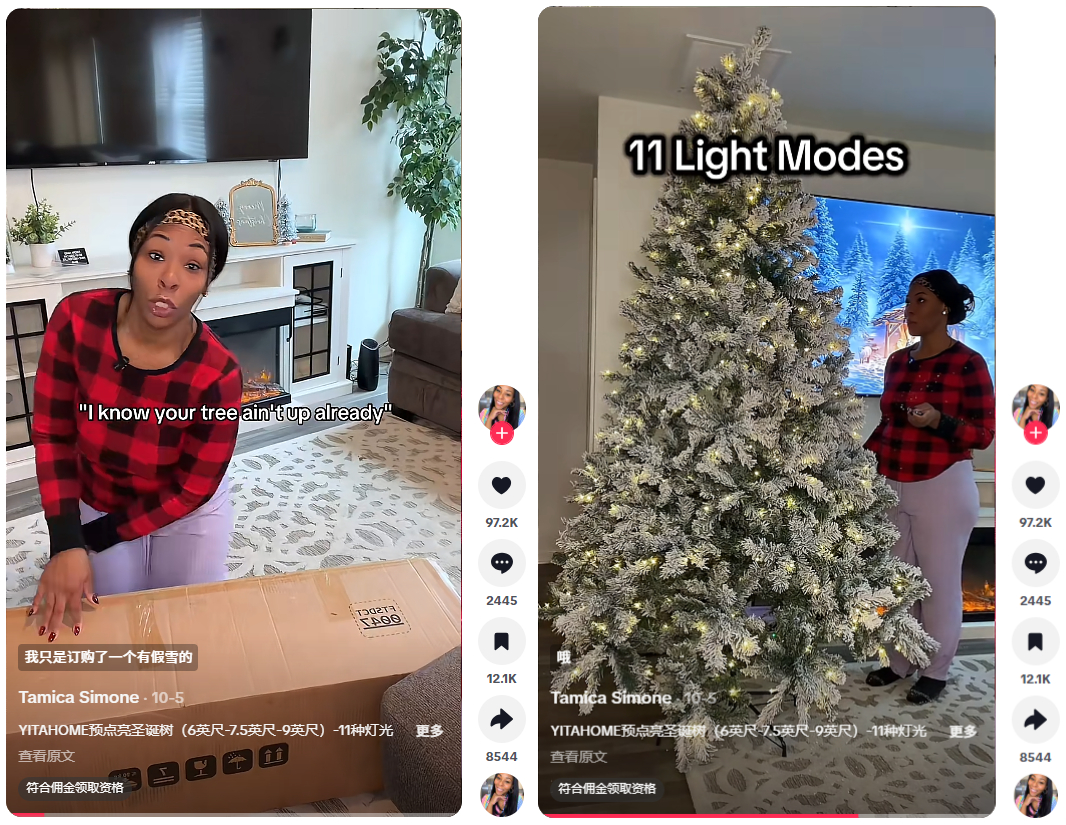
Image source: TikTok
The content design of this video is worth studying:
1. Use holiday timing to create topics.
2. It does not stop at a simple product introduction, but directly puts the questions consumers care about into the video.
3. Through a complete usage demonstration, reduce the information gap before purchase.
Moreover, this is not an accidental performance of a single video.
Judging from other high-performing videos in the last 30 days, YITAHOME's creator content also basically continues this approach.
Whether showing the process of setting up and decorating a Christmas tree or presenting the overall effect after it is lit, the core is to let consumers intuitively see what the product looks like in their homes. Some creators also combine holiday promotions and comparisons with similar offline products to further highlight the price advantage.
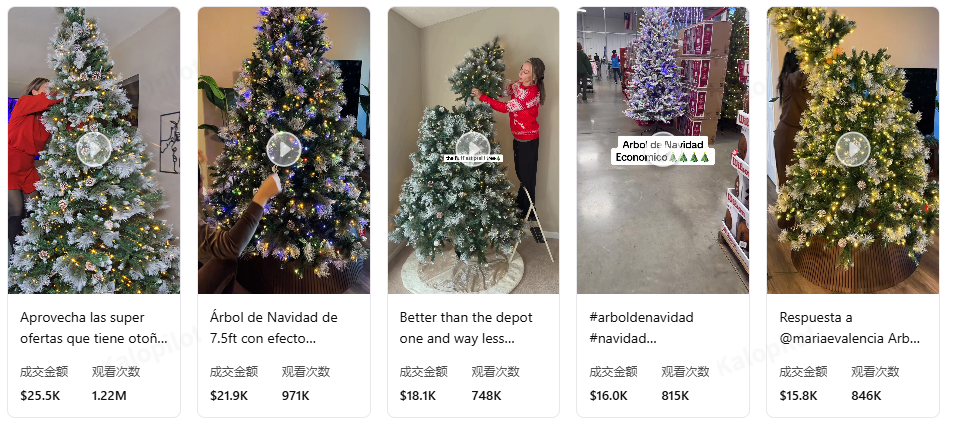
Image source: kalodata
Although the angles differ, these videos do not simply focus on product introductions; instead, through holiday scenes, actual results, or price comparisons, they help consumers quickly understand the product's purchase value.
For seasonal products like Christmas trees, this kind of content can both spark interest in holiday decorating and help consumers make purchase decisions faster.
What other approaches can Christmas marketing take?
From the YITAHOME case, holiday marketing is not simply about adding a Christmas label to a product; rather, it is about designing content around consumers' actual needs.
For sellers preparing for the year-end peak season, there are three things they can focus on.
Choose products that fit holiday scenarios:They can pay attention to niche needs such as gift wrapping, table setting, and party supplies.
Consider the seasonal nature of products when stocking up:Arrange inventory and logistics in advance, and leave time for receiving, installation, and decoration.
Let marketing content follow the shopping rhythm:As Christmas approaches, they can show more real-life scenarios such as home decorating, holiday gatherings, and gift preparation.
Christmas comes only once a year, but the consumer demand surrounding the holiday is very rich.
For cross-border sellers, what is truly worth focusing on is how to find the connection point between holiday demand and product selling points, and then use TikTok short videos and creator distribution to bring products to consumers.
This Christmas tree from YITAHOME is exactly a case worth observing.