 3233
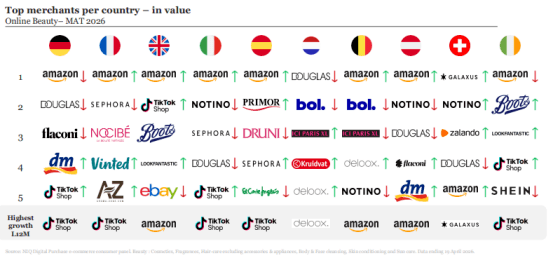
3233TikTok Shop has been running in Europe for over a year. The UK plus the five EU countries of Germany, France, Italy, and Spain are now among the few markets in the cross-border circle that can still capture incremental growth.
The platform's 2026 new merchant onboarding rules and key merchant benefits, when laid out, actually have a clear logic: stores are divided into six tiers based on entity type and shipping method. Different tiers correspond to different onboarding thresholds, compliance requirements, and available benefits.
Today's article will walk you through all of this content from start to finish.
Image source: Internet
First, figure out: what types of stores are there in the UK and EU respectively, and which one suits you?
Whether in the UK or EU, stores are divided into three types based on 'entity location + shipping origin.' The rules are symmetrical but the details differ:
✓ CCCU Cross-border Direct Mail Store: Mainland China or Hong Kong enterprise entity. Orders are shipped from China to the platform's transit warehouse, then distributed to consumers by the platform. No VAT required (on the EU side, GPSR/EPR and other compliance still needed).
✓ CCCU Local Delivery Store: Also a China/Hong Kong entity, but goods must be stored in a local overseas warehouse or FBA in the destination country (UK or any of Germany, France, Italy, Spain). Shipping from China is not supported; local VAT must be provided for onboarding.
✓ BCCU (UK) / ECCU (EU) Local Entity Store: Locally registered enterprise entity in the UK or EU. Local self-delivery; also subject to VAT and various EU regulations.
If you currently have no overseas entity or overseas warehouse, the cross-border direct mail store is the most straightforward entry point. If you already have a company or warehouse in Europe, you can consider the local delivery store, which will offer faster fulfillment times.

Image source: Internet
A review of the hard onboarding requirements
General entity-side requirements (applicable to both China-UK cross-border and local CCCU):
- Legal business license; individual businesses or sole proprietorships are not supported
- Business license must have more than 90 days until expiration
- Normal operating status, no regulatory penalties, not on any dishonesty list
- Legal representative ID document + facial recognition; related party relationships are determined according to external version qualification requirements.
Additional reminder for EU local entities (ECCU): If the legal representative is Chinese, after registering the phone number and email via the onboarding link, copy the 'shopcode' from the browser address bar to the AM for whitelisting; otherwise, you may get stuck at the passport onboarding step.
Deposit:
· UK: 400 GBP per store
· EU: 400 EUR per store
Store opening limit: The same entity can have a maximum of 5 stores in the same market, and they must pass the newbie stage one by one to open the next. With the six markets of UK/Germany/France/Italy/Spain/Japan taken together, the same entity can have a maximum of 30 stores globally.
Review timeline:
Cross-border direct mail tier: Invitation code 3-5 business days + official website 1 business day, minimum 4 business days.
Local/Domestic File: Official website review 1–2 business days
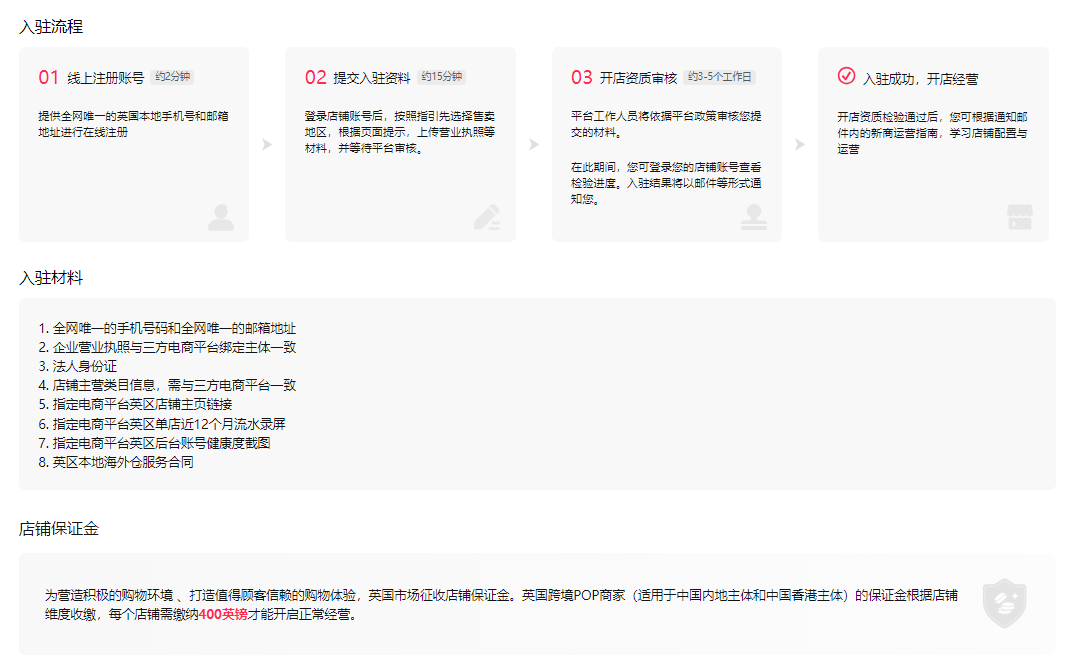
Image source: TikTok Shop
In terms of key benefits, this is the real 'hidden menu' for UK and EU 2026
All new cross-border stores must go through a newbie village probation period, with daily order volume and daily listing quantity limits. The following benefits require AM approval, but the thresholds are clearly stated; check them against your own situation.
Early exit application: New stores have a probation period (newbie village), with order and listing quantities limited. Applying for early exit can remove these restrictions. The threshold for the EU market is: the same entity or related entity of an on-site POP seller has passed the US newbie village, with SPS > 4, and monthly GMV exceeding $12,500.
Strategic key merchant application: For well-known brands and top sellers. Benefits include early exit, unlimited listing quantity, AM secondary confirmation before governance penalties, priority handling of appeals, automatic access to affiliate and marketing activities, eligibility to submit brand IP activities, and commission reduction for new merchants. The threshold for the EU market is: annual GMV on non-TTS online platforms exceeding $10 million, and brand followers on IG or TT exceeding 10,000; or annual GMV on non-TTS online platforms exceeding $2.5 million, and IG/TT account followers exceeding 500.
Strategic high-potential merchant application: For merchants with growth potential. Benefits include early exit, unlimited listing quantity, access to affiliate and marketing activities, and commission reduction for new merchants. The threshold for the EU market is: annual GMV on non-TTS online platforms exceeding $730,000 (approximately RMB 5 million), and TikTok Shop US store rating T3+ or Douyin e-commerce store performance S4+.
Other practical benefits include: channel ID expansion application, content sharing between US and UK, US to UK/EU account migration whitelisting, ECCU merchant 3PL shipping permission whitelisting, EU influencer outreach expansion, multi-category whitelisting, cross-border direct mail combined with overseas warehouse mixed shipping, overseas warehouse store presale, interoperability store opening (sharing global sales and reviews), ECCU entity whitelisting, store entity change, etc. Each has specific application conditions and paths. It is recommended to match based on your own actual situation.

Image source: Internet
Overall, the TikTok European market entry system is quite mature, and merchants of different types and sizes can find a suitable path for themselves.
The key is to base it on your own actual situation: whether you have an overseas entity, whether you have an overseas warehouse, and how your performance is on other platforms. Choose the right store type, then follow the corresponding process. If well prepared, from submitting materials to store launch, it can be done within a week at the fastest.