 1206
1206When domestic e-commerce growth slows, the global market landscape is becoming a new blue ocean for cross-border sellers.
According to the latest industry dynamics, TikTok e-commerce plans to open its doors to three major markets—Saudi Arabia, South Korea, and Australia—in the first quarter of 2027.
This is not a simple geographic expansion, but a precise positioning targeting a high-threshold, low-competition ecosystem. For practitioners expanding content overseas, understanding the vastly different underlying logic of these three markets is more urgent than blindly following the crowd.
Image source: Google
Saudi Arabia: Finding a content fulcrum between high net worth and strict compliance
The allure of the Saudi market is almost directly proportional to its challenge. Here, there are 28 million TikTok monthly active users, but e-commerce penetration is only about 10%, meaning the shopping habits of the vast majority of consumers have yet to be inspired by online content.
Taking Ramadan as an example, data showing a 300% month-on-month surge in beauty category sales reveals the strong explosive power in a religious and cultural context, but SASO certification and a 15% VAT rate constitute hard barriers.
For sellers, Saudi Arabia is by no means a place to make easy money by mass distribution. With high average order values and quality-sensitive consumers, fully managed or direct shipping models become the optimal solution at the product testing stage.
In terms of content strategy, simple translated subtitles are no longer effective. It is necessary to cultivate or cooperate with Arabic-speaking hosts, building trust through the strong interactivity of live streams; in terms of category selection, it is recommended to first enter lightly with standard products (such as 3C accessories and basic skincare), using high thresholds to block a large number of low-quality competitors, and concentrate content production at key nodes like Ramadan and White Friday, exchanging scarcity for high conversion rates.
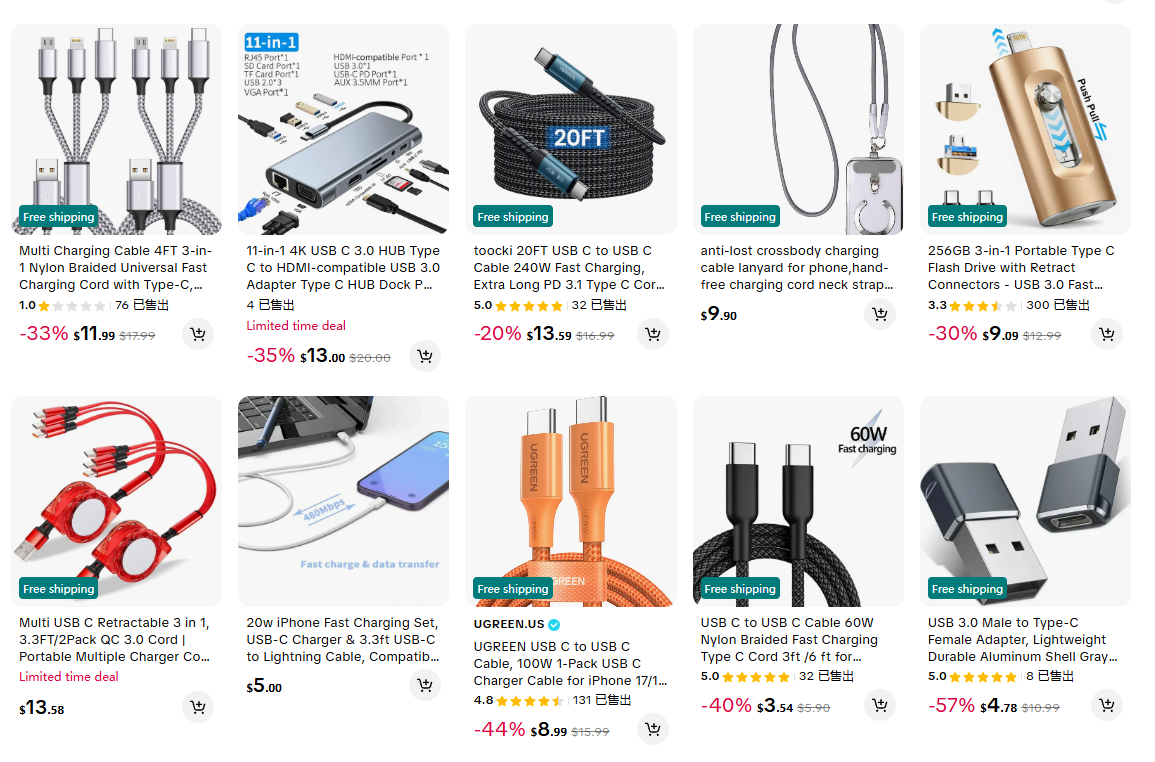
Image source: TikTok Shop
South Korea: Using branding to engage the mature K-pop cultural engine
South Korea's e-commerce market has an annual transaction value exceeding $150 billion, making it a typical mature red ocean. But TikTok's opportunity lies not in shelves but in topics.
Data shows that K-beauty achieved sales of $2 billion in the U.S. market within half a year, and TikTok's weekly views on Korean beauty topics reach 250 million, proving that Korean content itself has global penetration. Referring to the rollout pace of the Japan site, TikTok's South Korea site will most likely not support white-label distribution, because local brands' supply chains react extremely quickly.
The breakthrough for sellers lies in leveraging momentum rather than confronting head-on. On the one hand, they must take the branding route—even a micro-brand in a niche segment needs a complete visual system and ingredient story; on the other hand, content production must be fully localized, not translating Korean, but creating native short videos that align with the aesthetics of South Korea's MZ generation.
For example, combine K-pop dance, challenge campaigns, or scenes from Korean dramas. For sellers who have already validated brand strength in the U.S. or Japan markets, the South Korea site is a springboard to amplify brand voice, not a clearance channel. Establishing pure-commission connections with top local influencers is the most effective leverage during the cold-start period.

Image source: TikTok
Australia: An asset-light testing ground for reusing English content
Compared with the first two, the Australian market is more friendly to small and medium teams. TikTok ads can reach 10.9 million people, and the high-net-worth attribute from a per-capita GDP above $60,000 makes price sensitivity low here.
More importantly, the English content ecosystem highly overlaps with that of the U.S. and the UK, and the material reuse rate is extremely high, which greatly reduces content production costs. Data suggests that with a monthly budget of $50,000 to $100,000, one can enter the top tier here.
For sellers with limited budgets who want to test the waters in TikTok e-commerce, Australia is an ideal practice ground. Mid-to-high-end home furnishings, outdoor camping equipment, and natural health products have significant potential. Strategically, there is no need for drastic action; you can directly screen proven viral materials from the U.S. or UK regions, make fine adjustments for local Australian weather and seasons, and combine the pure-commission model with influencers to rapidly scale volume.
Competition pressure here is relatively low, and early entrants can take priority positions in keyword search and hashtag recommendations, establishing a niche leading advantage at an extremely low cost.
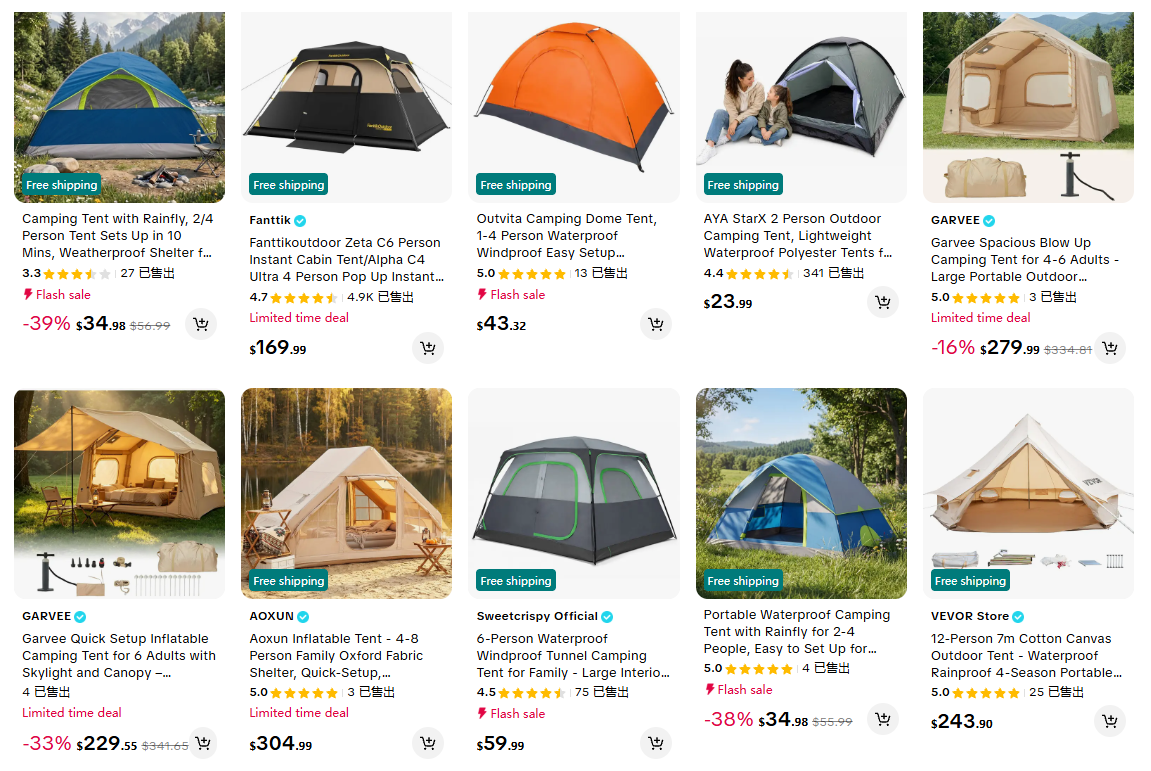
Image source: TikTok Shop
Conclusion
In fact, although Saudi Arabia, South Korea, and Australia differ in their ecosystems, they collectively point to one direction: the golden age of extensive distribution is over, and refined content operations and localized brand building are the main themes.
For practitioners venturing overseas, this is not only an expansion of geographic footprint, but also a major test of their supply chain flexibility and content innovation capabilities.
Rather than chasing trends, it is better to delve deep into the fundamentals. Use quality content to engage high-net-worth individuals, making new sites a powerful piece of the omnichannel operations puzzle.