 57
57I. Nearly a year after the policy took effect, what report card has Thai Customs delivered?
Since January 1, 2026, the Thai government has officially abolished the tariff exemption policy for imported goods valued below 1500 Thai baht. This means that many low-priced goods previously entering the Thai market through small-parcel direct mail no longer enjoy tax-exempt treatment.
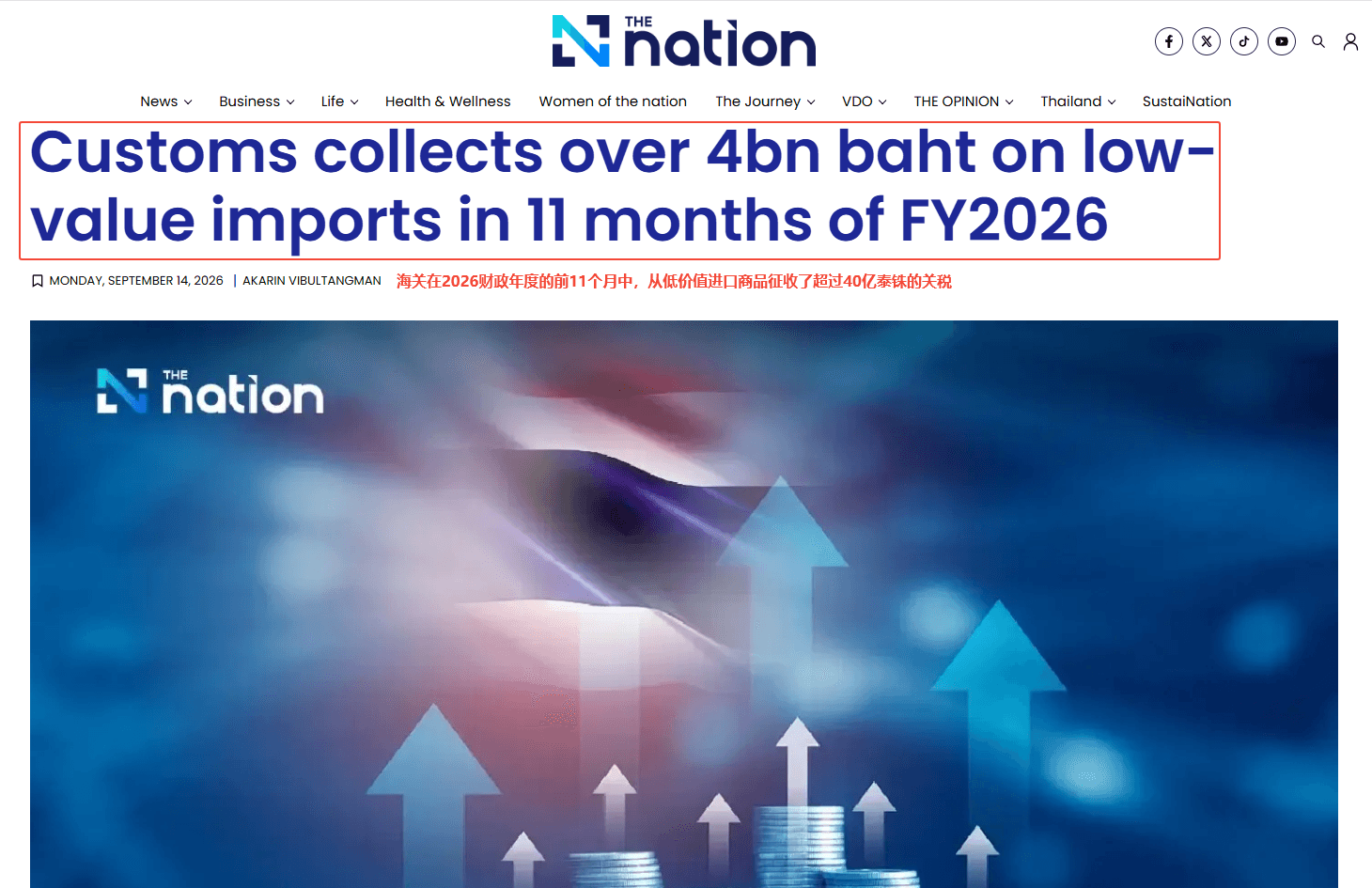
After the policy was implemented, Thai Customs released enforcement data for the first 11 months of fiscal year 2026:
About 225 million items entered the taxable scope, with a total import value of about 41 billion Thai baht, and import duties collected exceeding 4 billion Thai baht.
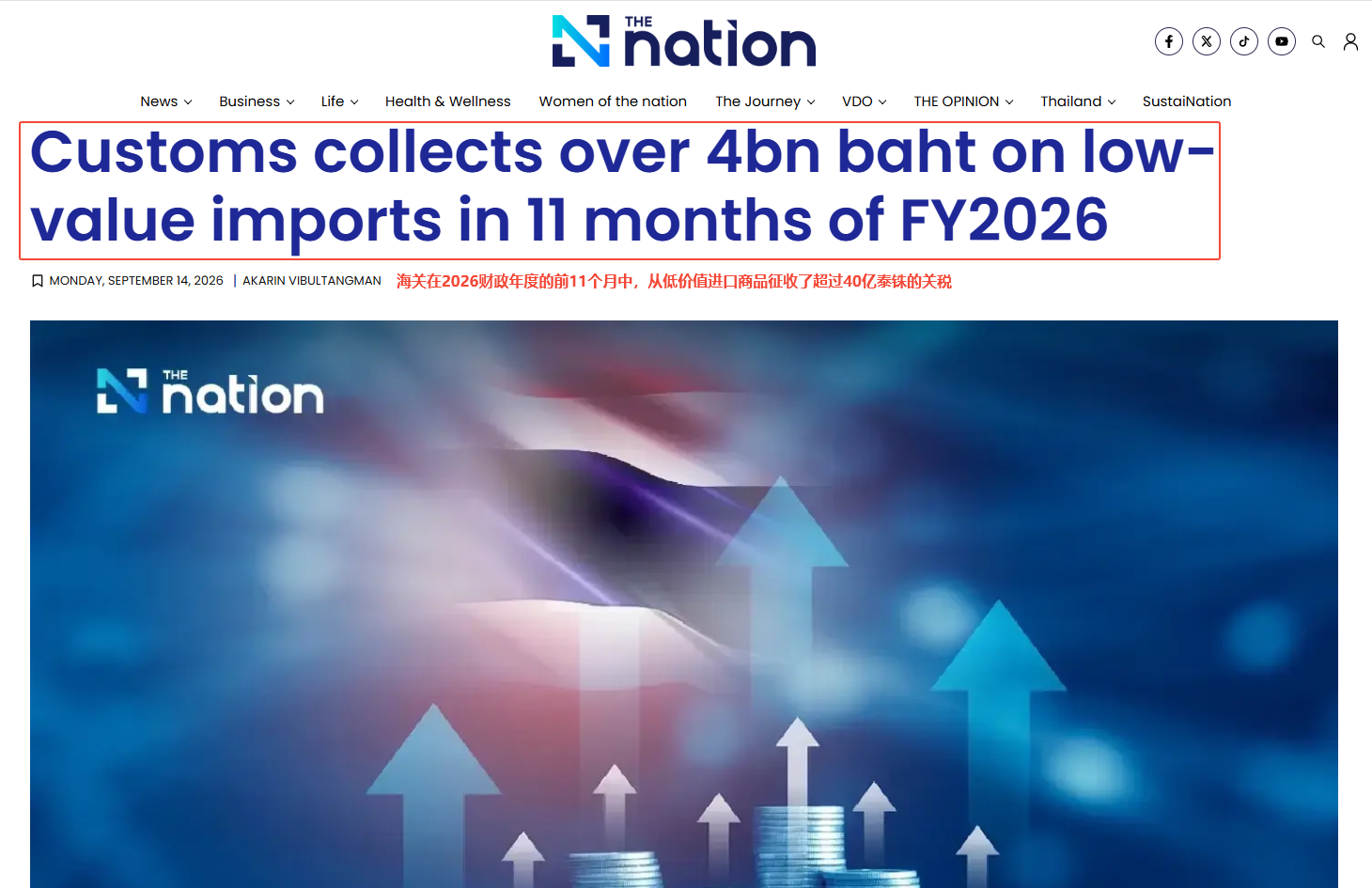
Image source: nationthailand
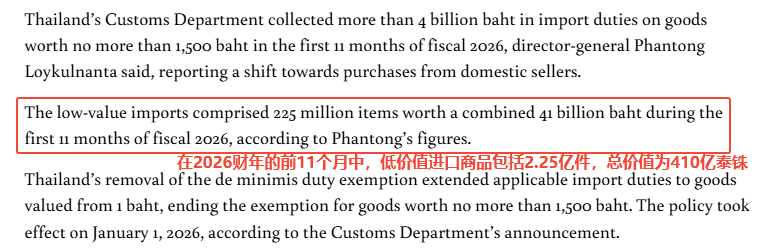
Image source: nationthailand
These figures directly show that low-priced cross-border parcels have been fully brought into the scope of tax supervision, and the room for manipulation that previously relied on tax-free quotas to split orders and understate declared values has been greatly reduced.
From the consumer side, the effects of the policy are also gradually emerging. The trend of Thai consumers purchasing small overseas goods has slowed, and some demand has begun shifting to Thai domestic stock.
This change is not hard to understand. When the price advantage of cross-border small parcels is weakened by tariffs, the advantages of local in-stock goods in timeliness and after-sales service are amplified, so consumers' choices naturally shift.
For cross-border sellers who have long relied on low-priced white-label goods and mainly use direct-mail small parcels for fulfillment, this is not just a cost increase, but a switch in market logic.
II. As the low-price white-label dividend recedes, sellers face threefold pressure
After the cancellation of the 1500 Thai baht exemption, the pressure cross-border sellers face in the Thai market is multi-dimensional. The most direct is the explicit cost of tariffs.
In the past, many sellers avoided taxes through low declaration, order splitting, and other methods. Now, with 225 million parcels taxed and over 4 billion Thai baht in tariffs collected, it shows that Customs' regulatory granularity has clearly improved. Continuing the old approach not only squeezes profit margins but also raises compliance risks.
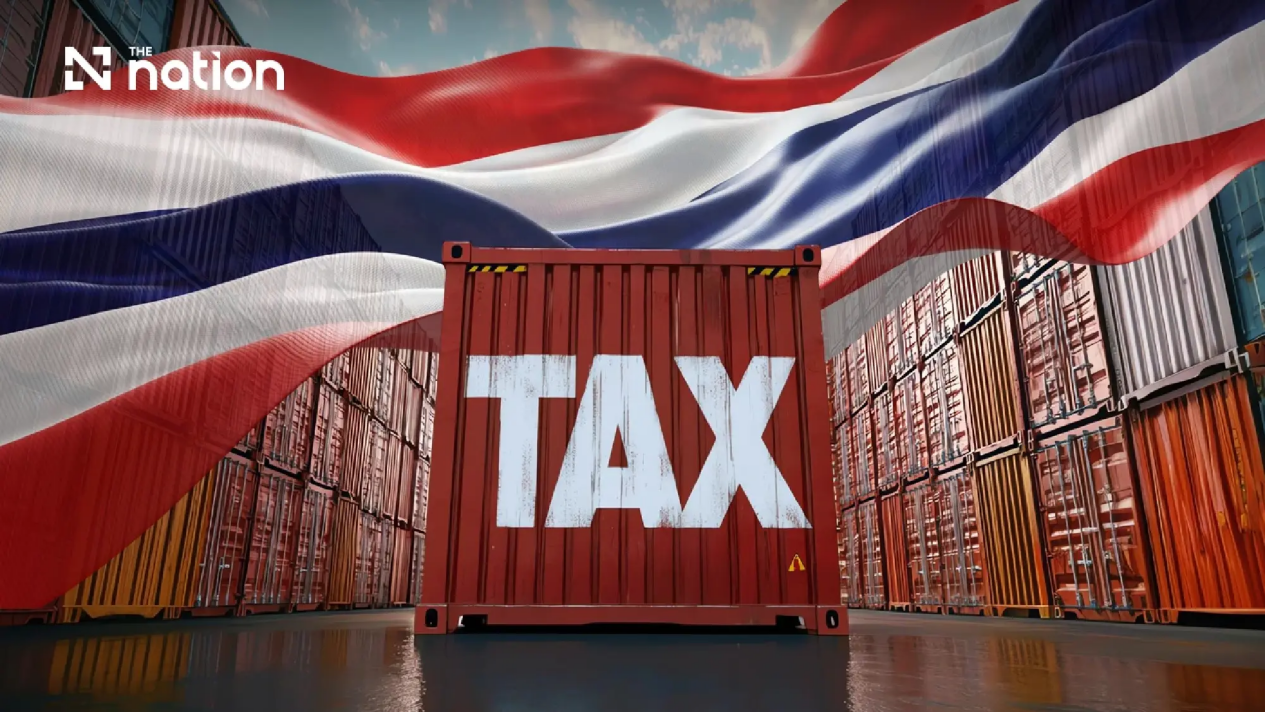
Image source: nationthailand
Next is the reconstruction of price competitiveness. The reason low-priced white-label goods could quickly gain scale in the Thai market largely depended on the tax-free price gap.
When this price gap is filled by tariffs, sellers either absorb the cost themselves and sacrifice profits, or raise prices and lose their price advantage. Whichever choice they make, the strategy of driving volume through tax-free price gaps is increasingly hard to implement.
The deeper impact lies in the change in market access logic. Thai Customs is working with the Foreign Trade Department of the Ministry of Commerce to verify Made in Thailand origin, and emphasizes that Thai manufacturing must be traceable and clearly defined.
This means that practices some sellers used in the past to bypass trade barriers through transshipment, labeling, and other methods are being systematically blocked.
III. Overseas warehouses and local stocking: from optional to mandatory
In the past, sellers chose overseas warehouses mainly to improve timeliness and optimize user experience; now, they are becoming key infrastructure for responding to tariff costs and maintaining price competitiveness.
By exporting in bulk to Thai overseas warehouses and then fulfilling orders through local delivery, sellers can to some extent reduce the tariff impact on individual parcels, while shortening delivery time and increasing repurchase rates.
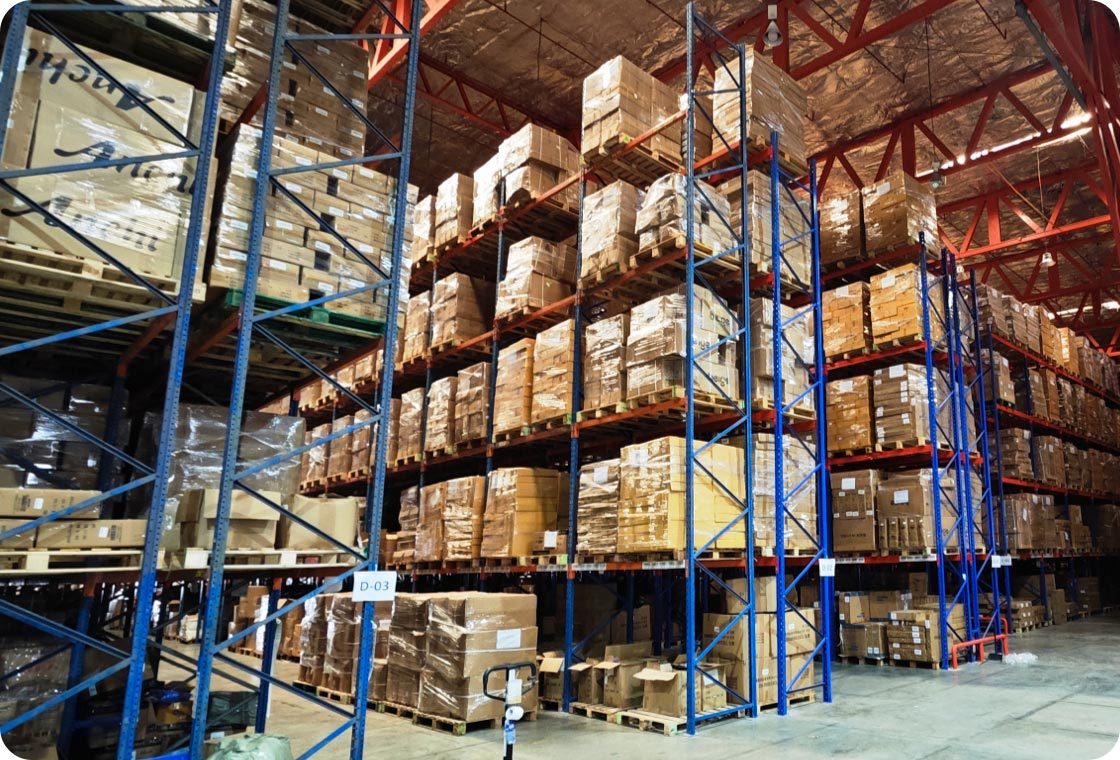
Image source: Google
But overseas warehouses are not a panacea. They require sellers to have stronger forecasting ability for inventory turnover, and also mean higher capital occupation and unsold inventory risk.
Therefore, a more prudent approach is to prioritize local stocking of core SKUs with stable sales and high repurchase rates, while retaining some direct-mail channels as a supplement, forming a hybrid fulfillment structure of overseas warehouse + direct mail.
This way, it can retain part of its price advantage under the tariff environment without letting inventory issues drag down cash flow.
IV. How Sellers Should Adjust Their Strategies and Find New Fulcrums Amid Changes
Facing changes in the Thai market, sellers need to adjust their strategies at multiple levels.
First, they must recalculate the cost structure and incorporate tariffs, logistics, warehousing, and compliance costs into the pricing model, abandoning the old rough approach of chasing volume first and doing the accounting later.
Second, they should optimize product selection logic, reduce dependence on products with extremely low unit prices and low repurchase rates, and shift toward products with differentiation and room for brand premium.
Third, they should build localized fulfillment capabilities, through overseas warehouses, local companies, or joint operations with local partners, to reduce the proportion of direct-mail small parcels and improve overall fulfillment stability.

Image source: Google
Conclusion
Thailand's elimination of the 1,500 Thai baht tax exemption is not an isolated tax adjustment, but a microcosm of the Southeast Asian cross-border market moving from extensive growth to standardized operations.
For cross-border sellers, the dividend period of low-price white-label goods is receding. In the future, those who can gain a firm foothold in the Thai market will not be players who continue to rely on tax-free price differences to drive volume, but those willing to make advance arrangements in compliance, localization, and branding.
In times of change, the faster you adjust, the greater the opportunity.