 1079
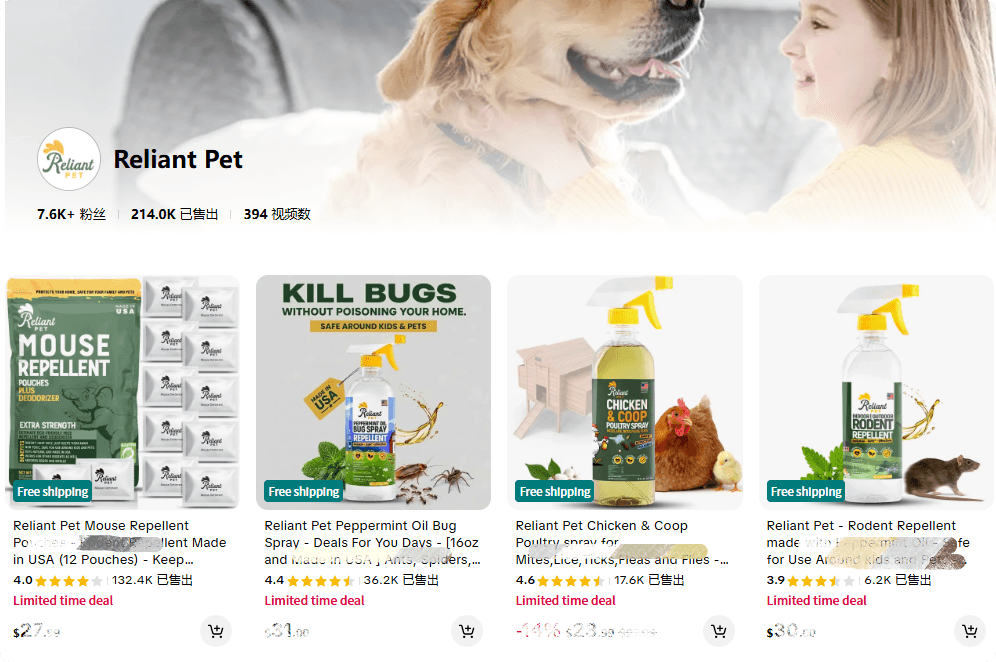
In China, rodent/pest repellent products can hardly be considered a popular e-commerce category. But in the United States, a brand called Reliant Pet has turned this inconspicuous business into a sizable one.
Data shows that as of October 2026, the store's cumulative GMV was about $5.14 million.
Everyone finds mice annoying, but why is it that rodent repellent, which in some markets is just an inconspicuous small product, can become a hot seller on TikTok in the United States?
Behind this are both the living needs of different markets and the know-how of products and content.
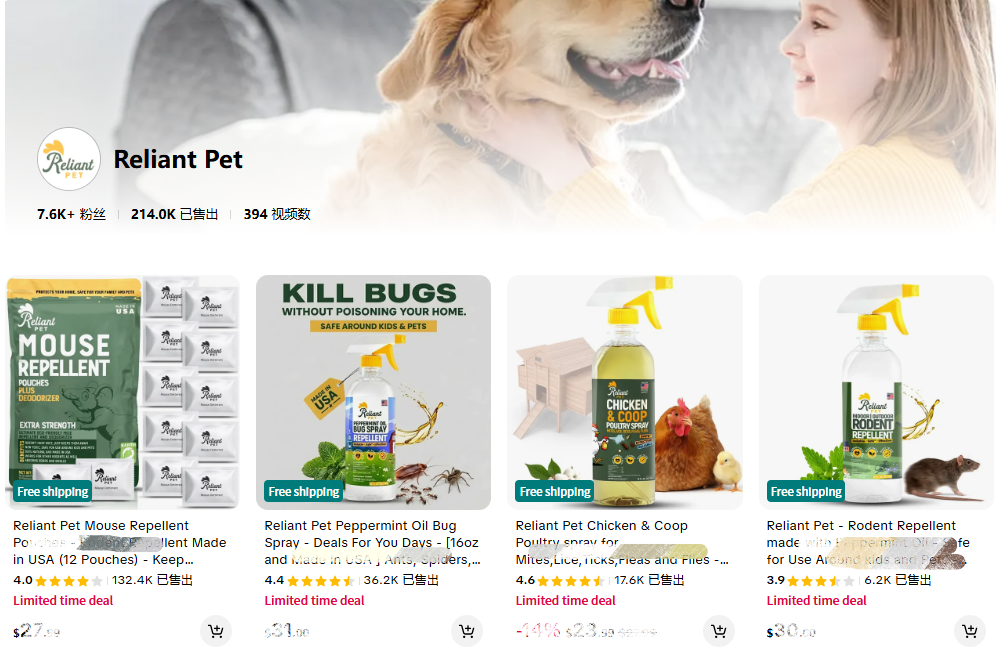
Image source: TikTok Shop
01
In the United States, knowing how to drive mice away is also a business.
First, let's look at what Reliant Pet sells.
Its current best-selling product on TikTok Shop is a 12-pack rodent repellent sachet priced at about $27.99. According to the brand, the product uses ingredients such as peppermint oil and cinnamon oil and mainly relies on scent to help repel mice.
It does not need to be plugged in, requires no equipment installation, and does not require frequently setting and checking mousetraps. For consumers, the method of use is simple enough.
As of late October 2026, this product's cumulative sales on its TikTok Shop U.S. page have exceeded 132,400 units, far higher than other products in the store.
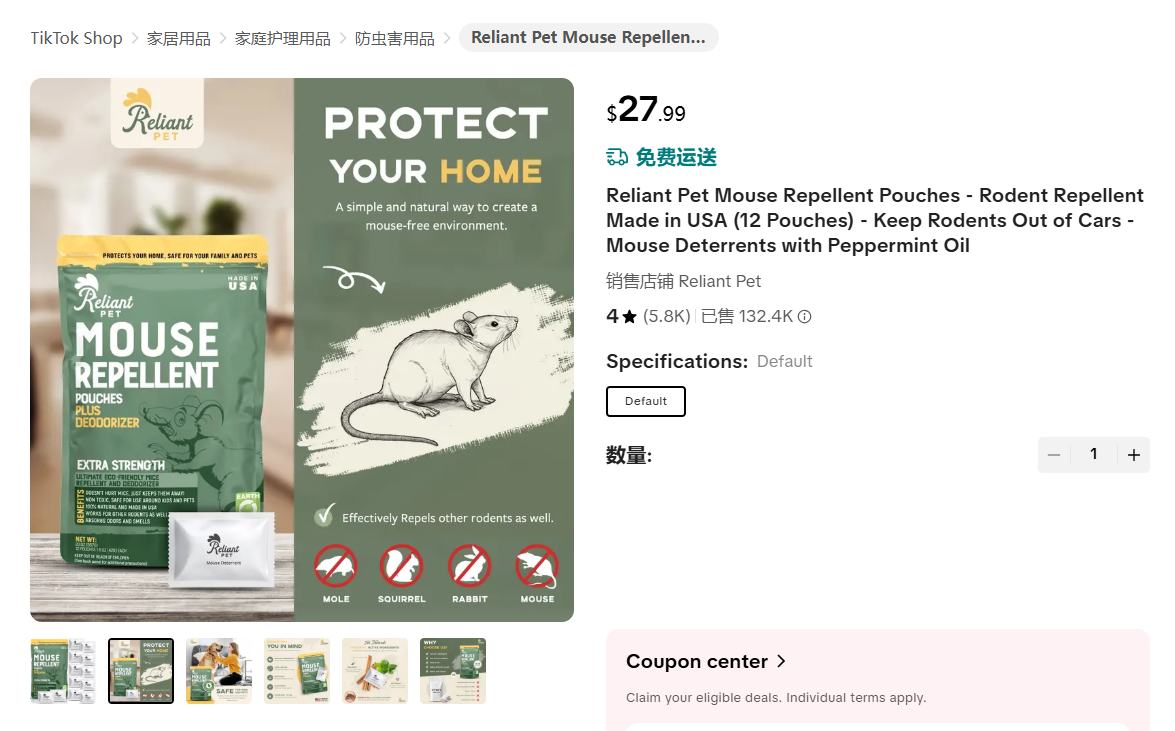
Image source: TikTok Shop
To Chinese consumers, this result may be somewhat surprising.
After all, on domestic e-commerce platforms, rodent repellent products usually do not enter the public eye as easily as phone accessories or home goods. As circumstances change, ordinary consumers may not often encounter situations where they need to specifically buy rodent repellent products.
But in the United States, related demand has broader real-life scenarios.
Many U.S. households have detached houses, garages, basements, attics, or yards; cars, storage spaces, and areas around the house can all become places where mice enter or hide.
A survey shows that 49% of surveyed homeowners have found or encountered rodent problems such as mice at home; among them, garages or sheds, basements, etc. are common locations where they are found.

Image source: Google
What Tuke wants to say here is:Awhat we considera category that is not considered popular, when it reaches another market, may correspond to a sizable group of consumers willing to pay to solve the problem。
What Reliant Pet found is exactly this kind of demand.
02
How to sell on TikTok? First put the mouse problem in front of the camera.
Unlike the categories we mentioned earlier that are easy for content e-commerce, rodent/pest repellent products face an inherent problem: they are unattractive and lack selling points.
If a short video only repeatedly films a pack of sachets and then introduces the ingredients, it is hard for consumers to stay interested in watching.
Therefore, this type of product is better approached from real problems.
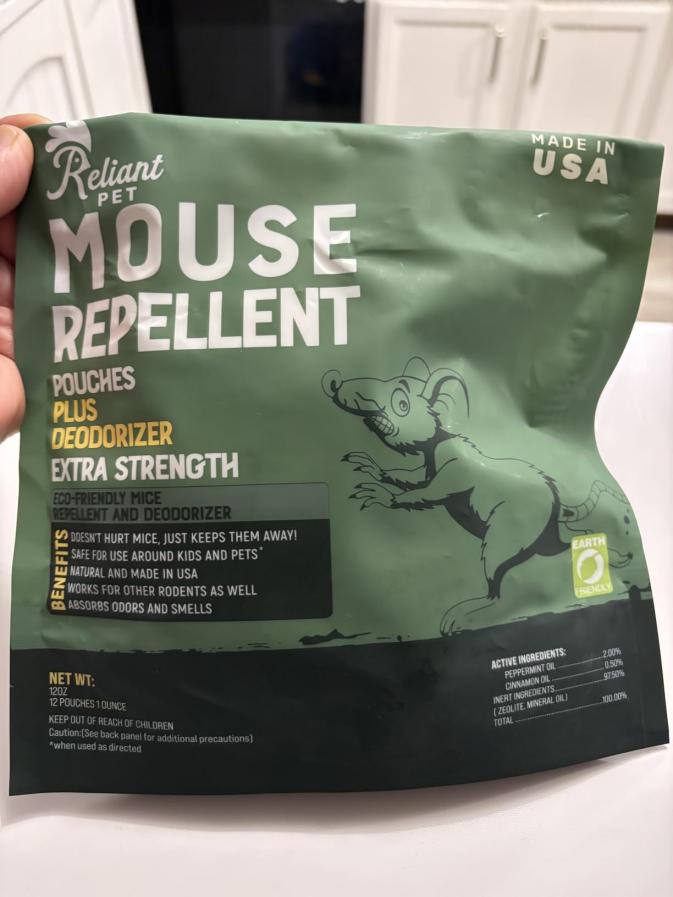
Image source: Reliant Pet
Just talking about how to do it may not be clear, so let's break down a video and analyze it specifically.
This video on TikTok'sviews are close to 2.77 million, and sales reached 5.32 ten thousand USD. Its content is actually very simple: it starts by posing a question—if you think your home is cleaned very thoroughly, why are there still mice?
Then, the video leads the reason to colder weather: mice also want to find a warm place, so scenes such as houses and garages become the entry point. Next, the mouse repellent sachet appears, and how to use the product and where it can be placed are explained naturally.
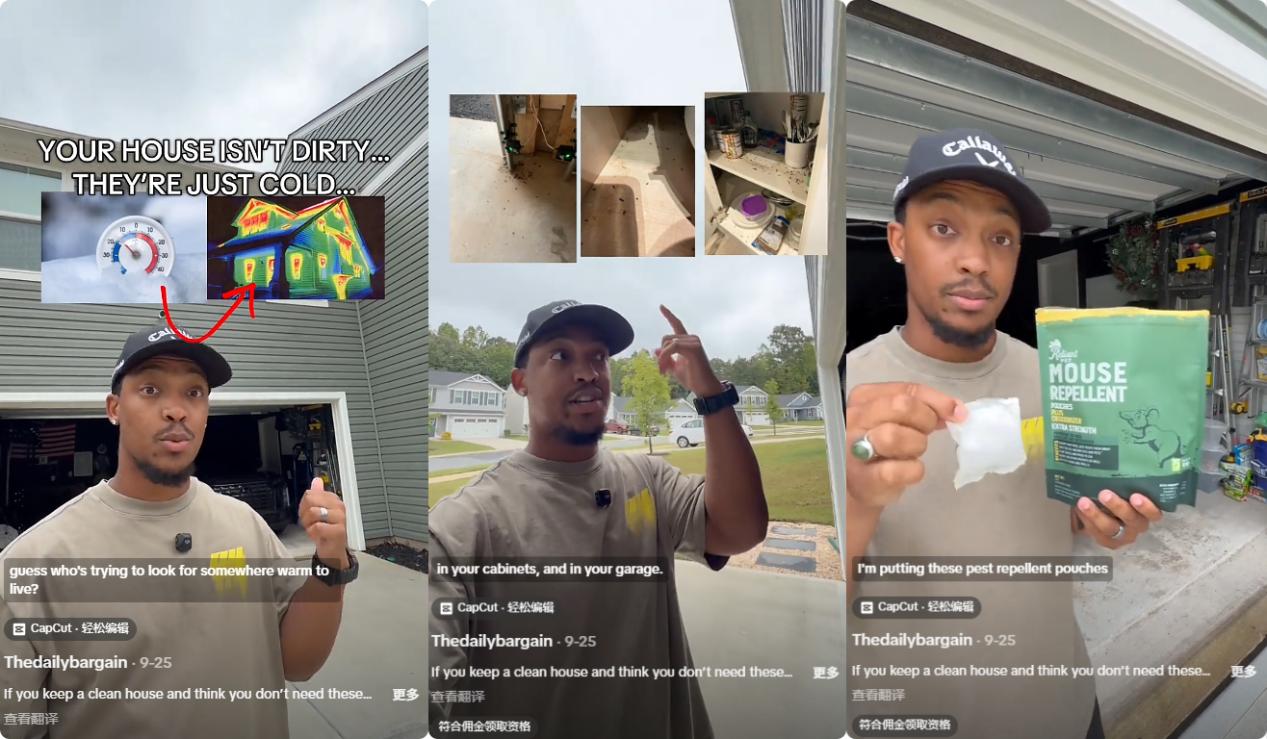
Image source: TikTok
Looking at other well-performing videos from Reliant Pet, most also unfold along similar lines: first start from daily issues such as weather changes and the home environment, then show the product and usage scenarios.
For this type of functional product, rather than repeatedly introducing the ingredients, it is better to first explain consumers' troubles clearly and then tell them what methods can help.
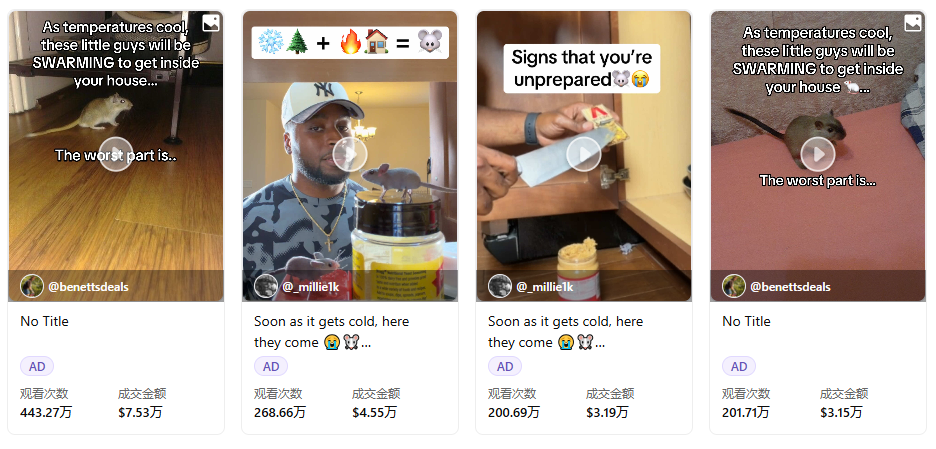
Image source: Kalodata
In addition, there is another type of user who does not need you to emphasize the problem at all, because they already have an urgent rigid need.
This type of person has one characteristic—prone to impulse buying.
At this point, the video does not need to take too many detours; just show the effect directly, and the more exaggerated, the better.
But for regular shooting, this type of content is not easy to produce: mice are hard to arrange, and the mouse-repellent effect is also hard to show intuitively in just a few dozen seconds. AI video provides another approach.
Under the #mouserepellent hashtag, you can see many contents that use AI to generate images of mice appearing, product displays, and so on; many merchants are adopting similar formats.
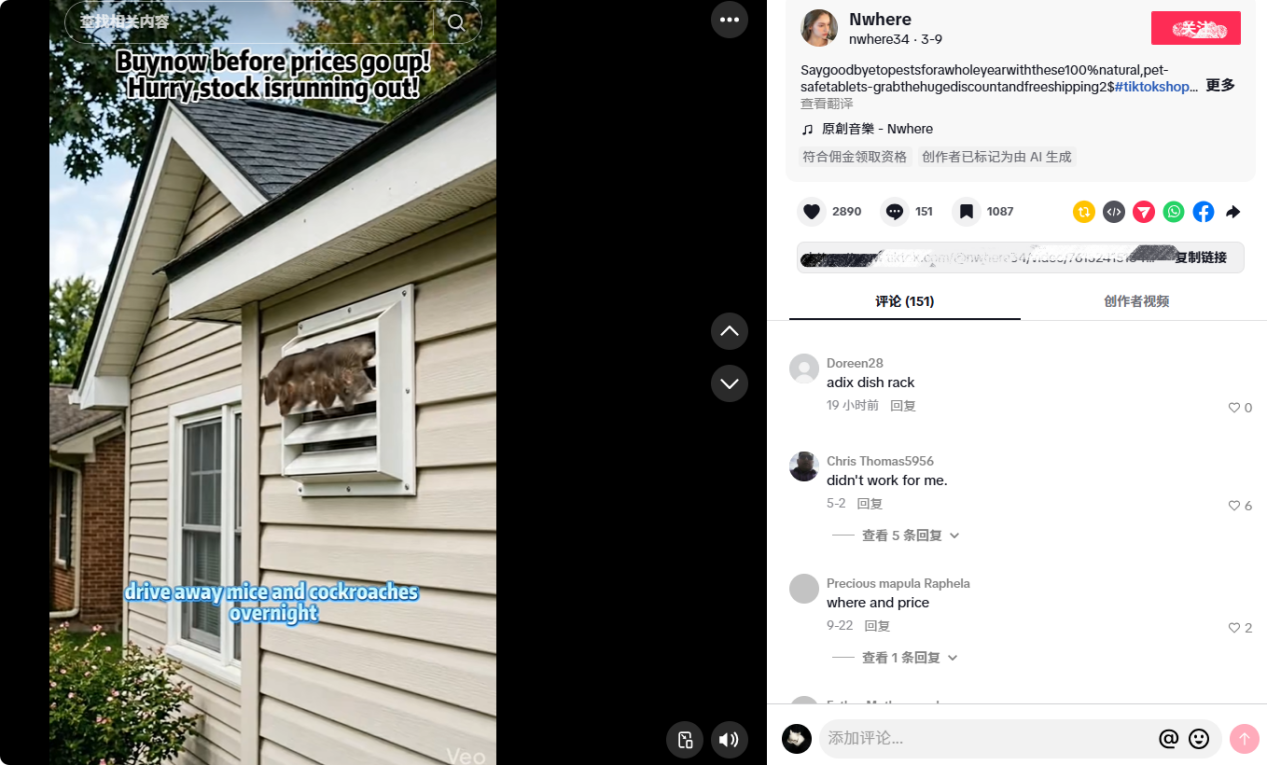
Image source: kalodata
Of course, AI can help present usage scenarios, but fictional mouse-repellent effects cannot be promoted as real effects.
The degree here still needs to be grasped by merchants themselves.
03
Niche categories can also produce hit products; the key is to find the right market
The Reliant Pet case does not mean that all niche products are suitable for TikTok, nor that just shooting a few videos can sell tens of thousands of units.
What is more worth learning from it is that three links have formed a connection.
First, the brand identified a real need. For some American households, rodent repellent for spaces such as cars, garages, basements, and yards has clear use cases.
Second, the product offers an easy-to-understand solution. Compared with mouse-catching tools that require setup and maintenance, the sachet focuses on a simple and convenient user experience.
Finally, TikTok content places the product in specific scenarios, making it easier for consumers to understand why they need it.
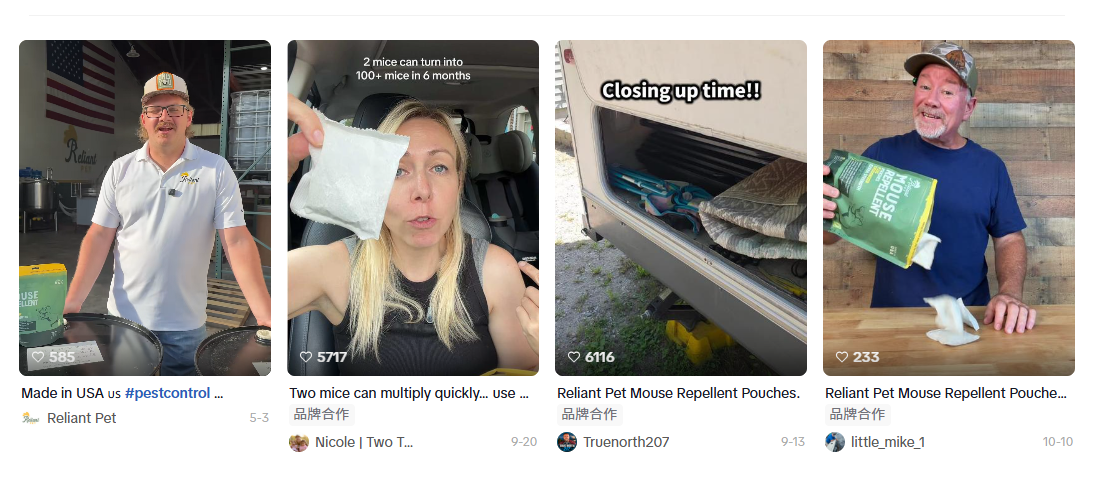
Image source: TikTok
In the end, the story of Reliant Pet is not that a packet of mint sachets suddenly won over all consumers, but that a seemingly ordinary functional product found clear use cases and reached people with corresponding needs through TikTok content.
When doing TikTok, you can certainly chase trends and look for novel products.
But for many brands that already have mature supply chains and product capabilities, the question more worth considering may be: Can those daily life problems that people encounter every day but that are not necessarily clearly explained become their own business opportunities?