 37
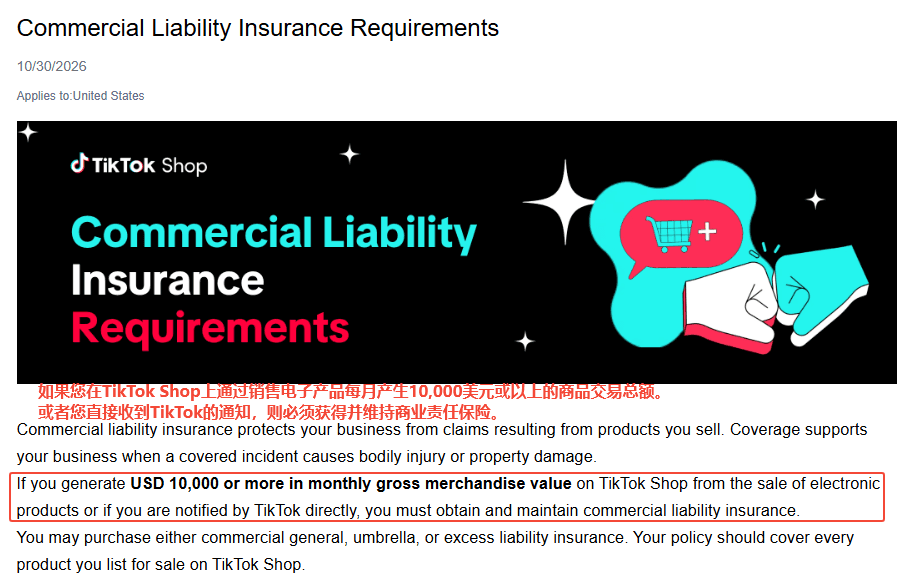
Recently, TikTok Shop US made a blockbuster announcement to sellers in the electronics category:
Sellers whose store monthly GMV reaches $10,000 or more, or who receive a separate notice from the platform, must purchase and continuously maintain commercial liability insurance that meets platform standards.
This means that doing business in the electronics category, merely selecting products well and performing fulfillment reliably is no longer enough; risk-bearing capacity has officially been included in the operating threshold.
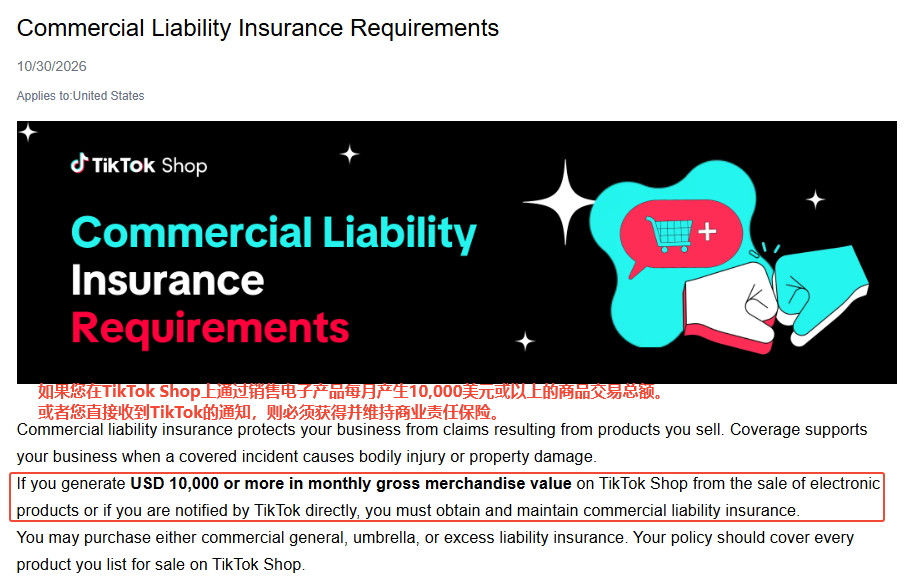
Image source: seller-us.tiktok
From selling well to withstanding pressure
In the past, the platform's assessment of electronics sellers mainly focused on product compliance and fulfillment timeliness: whether product certifications were complete, whether shipments were timely, and whether the return rate was controllable.
But this new rule pushes the red line a big step forward. You not only have to be able to sell, but also have the ability to cover potential product liability risks.
Electronics products inherently involve potential risk points such as battery safety, electrical performance, and compliance of usage instructions. Once consumer disputes or safety accidents occur in the US market, sellers without commercial liability insurance may very likely face huge claims or even legal lawsuits.
At this time, the platform's mandatory insurance requirement essentially moves part of the risk control responsibility forward to the seller side, filtering out small and medium-sized players operating without protection.
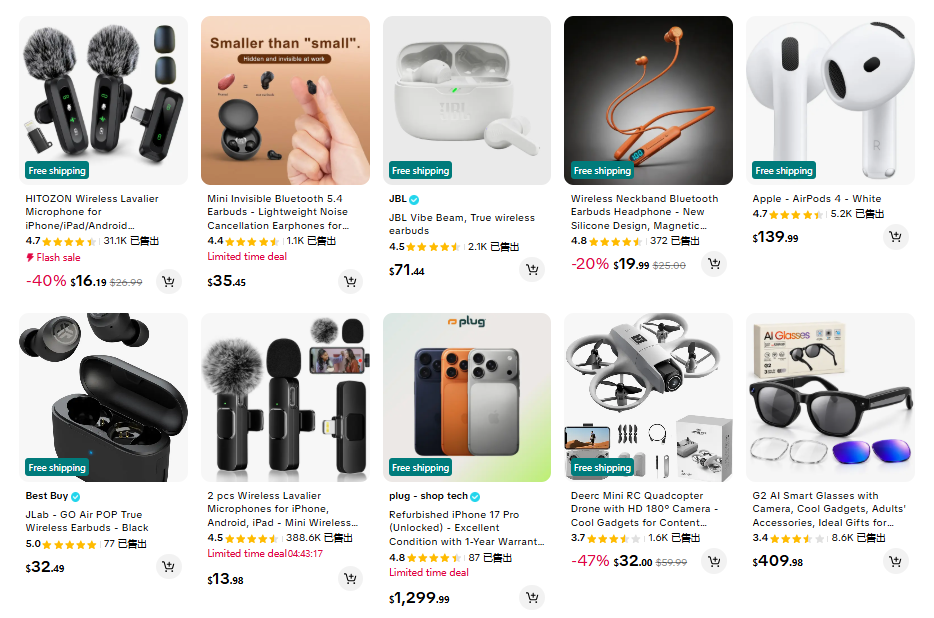
Image source: TikTok Shop
It is worth noting that the conditions that trigger insurance are not based only on GMV. Stores with monthly GMV below $10,000 but that receive a platform notice are also included in the scope, which means the actual affected scope is much broader than simply drawing a line by size.
The platform can, based on its own risk control judgment, impose separate requirements on specific stores. In other words, no one can confidently say, "I'm small, so it has nothing to do with me." As long as the platform believes your business activities need risk coverage, once the notice arrives, insurance must be arranged.
Confirm the policy first, then talk about sprinting
Facing the new rule, the most pragmatic action for sellers is to confirm policy status in advance. The platform explicitly requires continuously maintaining commercial liability insurance that meets standards, which shows that buying a policy at the last minute just to pass review is not safe; the policy's coverage scope, insured amount, and validity period all need to be checked item by item against platform standards.
Sellers are advised to handle insurance matters in advance before event registration and inventory preparation begin. Those already insured should check whether the policy covers liabilities related to the electronics category and whether it is within the validity period; those not yet insured should contact insurance service providers as soon as possible to confirm a plan, avoiding store permissions being blocked by insurance review during major promotions.
In addition, sellers need to incorporate insurance into their daily compliance management system rather than treating it as a one-time task. Platform rules may iterate, and policies also need to be continuously maintained. For stores with monthly GMV close to the $10,000 threshold, they should plan ahead even more.
Rather than waiting to receive a platform notice and then scrambling, it is better to proactively implement risk coverage and keep business certainty in your own hands.

Image source: Google
Conclusion
TikTok Shop US has written commercial liability insurance into the operating threshold for the electronics category, marking that the competitive dimension of cross-border e-commerce is extending from traffic and fulfillment to risk-bearing capacity.
For sellers, this is a ticket that must be obtained. Confirming policies as early as possible and including compliance costs in the business accounts are the only ways to stay steady under the dual tests of major promotion rhythms and platform rules.
In the future, as the US and European markets tighten regulation of product liability and consumer protection, insurance will likely become standard for more categories. Those who establish risk awareness first will stumble less in the long run of going global.