 2529
2529Dans le numéro de février de Cosmopolitan Korea, la tenue rétro en jupe en jean de Jang Won-young a encore une fois fait sensation, et les fans aux yeux de lynx ont rapidement découvert que cette jupe venait de la marque chinoiseCider.
Ce n’est pas la première fois qu’elle fait la promotion de Cider : du cardigan à nœud lors des séances de dédicaces à la robe bain de style ballet dans sa garde-robe quotidienne, cette « reine des jambes de Corée du Sud » intègre fréquemment cette marque fondée il y a seulement cinq ans.
De plus, des membres de Blackpink comme Jennie et des influenceuses occidentales comme Mia ont également été aperçues à plusieurs reprises portant des vêtements de cette marque.
Qu’est-ce qui rend cette marque, qualifiée de « prochain SHEIN » par le célèbre fonds de capital-risque de la Silicon Valley A16Z, si attrayante ?

Source : Scan de Cosmopolitan Korea
4 tours de financement en 1 an, valorisation dépassant le milliard
En mai 2020, la marque Cider est née à Hong Kong, en Chine. Selon les informations, son fondateur Wang Chen a travaillé auparavant sur la plateforme de garde-robe partagée « Yiyisan », maîtrisant parfaitement la chaîne d’approvisionnement et les besoins des jeunes consommateurs.
Ainsi, dès sa création, la marque a ciblé les femmes de la génération Z à l’étranger et a réussi à pénétrer le marché avec un style de design « audacieux et rétro ». En seulement un an, elle a réalisé 4 tours de financement pour un total de plus de 130 millions de dollars, avec des investisseurs incluant IDG Capital, DST Global, et A16Z, le célèbre fonds de capital-risque de la Silicon Valley qui a misé sur Facebook et Twitter. Cela a propulsé la marque parmi les entreprises les plus rapides à entrer dans le club des licornes dans le monde.
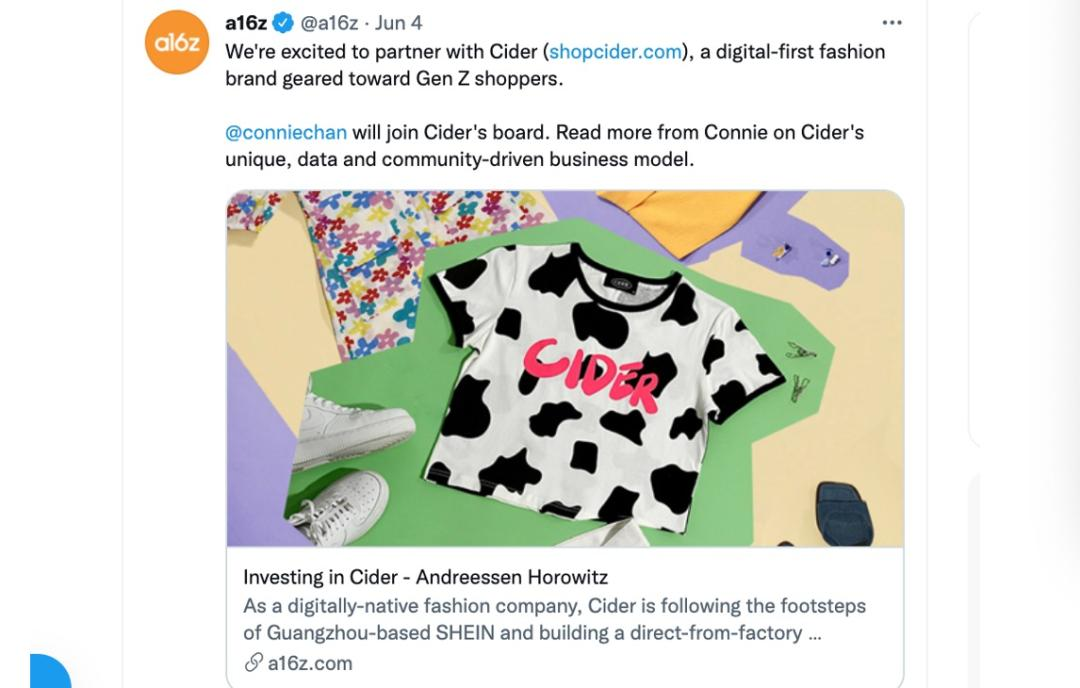
A16Z annonce son investissement dans Cider Source : A16Z
Après s’être imposée sur le marché occidental, la marque Cider a pénétré l’Asie du Sud-Est en 2023, en construisant 3 nouveaux entrepôts à l’étranger en Indonésie et en Thaïlande, avec une équipe locale représentant plus de 60 %. En 2024, la marque a été sélectionnée dans la liste des « Marques importantes » de Fast Company, aux côtés de marques emblématiques comme Crocs, Arc’teryx et Glossier.
Aujourd’hui, la marque Cider compte des millions de fans sur divers réseaux sociaux, et ses utilisateurs sont répartis dans plus de 130 pays et régions du monde.
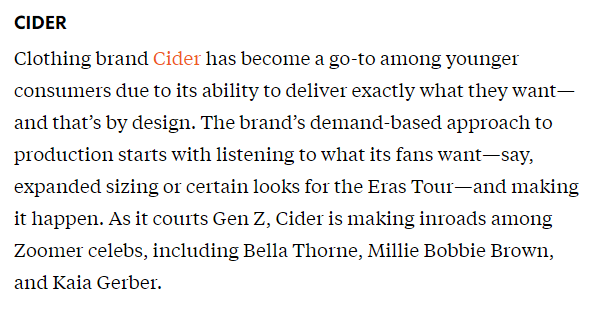
Source : Fast Company
Stratégie multi-plateformes : l’économie de la recommandation dans le bassin de trafic
Une perception aiguë des préférences des consommateurs et des tendances de la mode est essentielle pour créer des produits à succès. Grâce à une gestion continue sur des plateformes sociales comme TikTok et Instagram, la marque Cider a mis en place un système complet de surveillance des tendances et de marketing de contenu. Cette exploitation approfondie des médias sociaux est devenue un facteur clé de sa croissance rapide.
1. TikTok
Sur TikTok, la marque Cider a principalement adopté une stratégie de « matrice de médias sociaux + collaboration avec des influenceurs ». Bien sûr, il ne s’agit pas simplement de « déployer du contenu en masse », mais de réaliser une boucle fermée de « trafic - conversion - rétention d’utilisateurs » grâce à une gestion fine.
Pour différents scénarios et groupes cibles, la marque a ouvert 6 comptes sur TikTok pour une gestion ciblée, couvrant les utilisateurs aux préférences esthétiques variées via des comptes spécialisés comme « style académique rétro » ou « fille Y2K ». Actuellement, le nombre total de fans sur la plateforme approche le million.
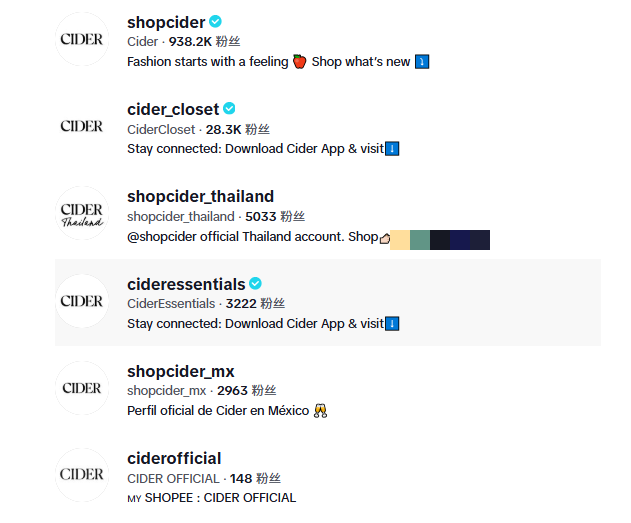
Source : TikTok
Au 2 avril, le compte principal @shopcider avait accumulé 938 200 fans, avec un trafic total d’environ 37,72 millions. Le style de ses vidéos se concentre sur des présentations de vêtements en situation, mettant en avant divers types de facteurs de mode. Cette approche correspond au style « audacieux et rétro » de la marque, permettant aux utilisateurs de renforcer leur impression de la marque de manière subtile.

Source : TikTok
Prenons l’exemple d’une vidéo virale de ce compte : en montrant des tenues féminines de différents styles des années 80, elle a pleinement mis en valeur l’esthétique des vêtements Cider. Dès sa publication, la vidéo a généré 7,8 millions de vues pour la marque.

Source : TikTok
Cependant, ce qui a vraiment permis à la marque Cider de s’imposer dans l’écosystème TikTok, c’est son lien profond avec les influenceurs.
Au cours des trente derniers jours, la marque a ajouté 164 nouveaux influenceurs partenaires, portant le nombre total d’influenceurs associés à plus de 15 200. Parmi ces influenceurs, elle mise principalement sur les influenceurs de milieu de gamme (plus de 60 %), avec lesquels elle a établi des collaborations à long terme.
Ce type de collaboration est un « filet large » : plus il y a de vidéos publiées, plus il est probable que certaines deviennent virales et stimulent les ventes de produits, ce qui est bien plus rentable que de faire appel à de grands influenceurs.
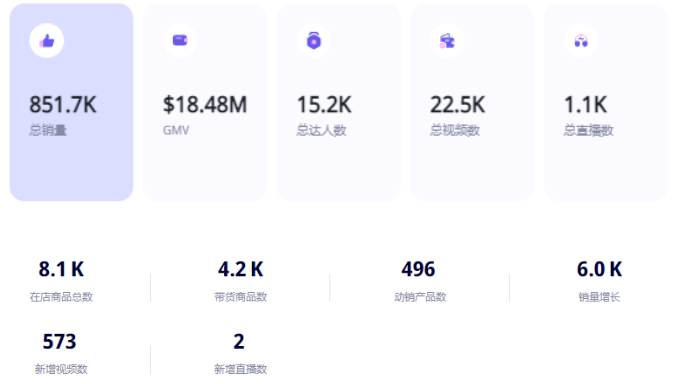
Source : Echotik
Par exemple, l’influenceuse @mandapaints (171 700 fans) a créé 29 vidéos promotionnelles en collaboration avec la marque Cider, dont une vidéo virale a généré 48,4 millions de vues, apportant un chiffre d’affaires estimé à 1,29 million de dollars pour la marque.

Source : TikTok
2. Instagram
Sur Instagram, la marque Cider a adopté une approche de « bibliothèque visuelle ». Dès ses débuts, elle a ciblé un style esthétique à la Pinterest. Ce langage visuel très cohérent a permis au compte d’accumuler rapidement 2,4 millions de fans en 15 mois, atteignant aujourd’hui 5,71 millions.

Source : Instagram
De plus, la marque Cider affiche sur son site web un mur de photos présentant les tenues réelles de certains utilisateurs d’Instagram. Cette initiative incite de nombreuses jeunes filles à partager spontanément leurs photos de tenues sur Instagram, en utilisant le hashtag de la marque, dans l’espoir que leurs photos soient également présentées sur le site officiel.
Cette interaction offre sans aucun doute une promotion gratuite pour la marque Cider.

Source : Mur de photos du site officiel de Cider
La « magie » du site indépendant : transformer le panier en journal d’émotions
Dans la création de son site indépendant à l’étranger, la marque Cider a suivi le style de la génération Z. Les utilisateurs peuvent filtrer les produits par scénario comme « tenue de rendez-vous » ou « look de festival de musique », et même choisir des articles en fonction de leur humeur.
Cette méthode de classification adaptée aux besoins personnalisés des jeunes permet à la marque d’attirer naturellement la participation et l’interaction des utilisateurs, contribuant ainsi à renforcer leur sentiment d’appartenance.
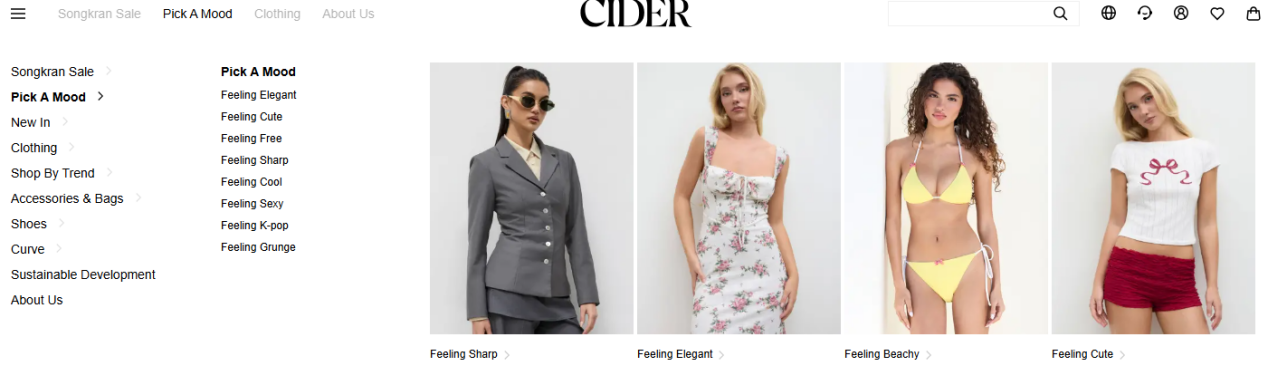
Source : Site indépendant de Cider
Selon des données tierces, le trafic total du site indépendant de la marque Cider à l’étranger dépasse les 22,2 millions, dont 44,06 % de trafic direct. Cela reflète la place qu’occupe la marque dans l’esprit des consommateurs : beaucoup peuvent s’en souvenir et y accéder directement, apportant un trafic stable à la marque.
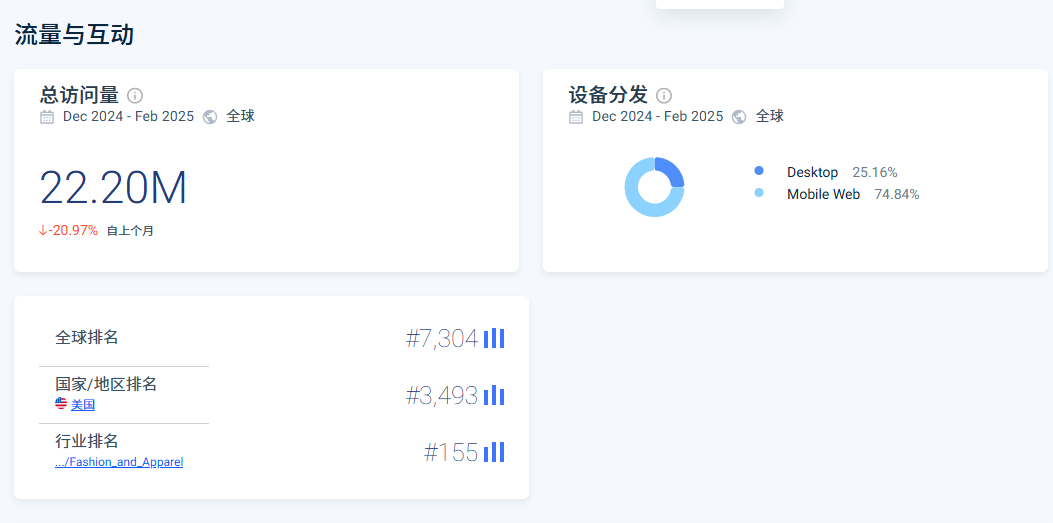
Source : similarweb
Les géants traditionnels se contractent, la demande de la génération Z restructure le marché
Bien sûr, en plus de son succès sur les réseaux sociaux, l’essor de la marque Cider est également dû à l’environnement actuel du marché et à son positionnement précis.
Les données montrent qu’en 2024, la taille du marché mondial de la fast fashion atteignait 136,19 milliards de dollars. À cette époque, les grandes marques traditionnelles étaient en phase de contraction stratégique, tandis que les marques émergentes prenaient leur essor.
Prenons l’exemple de la marque traditionnelle Inditex (maison mère de ZARA), qui a fermé massivement 1 831 magasins physiques en 2024. Bien que sa stratégie de « fermeture de magasins pour réduire les coûts » ait permis d’augmenter sa marge brute à 57 %, la croissance de son chiffre d’affaires reste nettement inférieure aux attentes du marché.
Cette stratégie conservatrice de « réduction des lignes pour protéger les bénéfices » est essentiellement un choix passif des géants traditionnels de la fast fashion face à l’impact du commerce électronique et au changement générationnel des consommateurs. Mais elle a précisément libéré de l’espace sur le marché pour des marques émergentes comme Cider. Il n’est donc pas difficile de comprendre pourquoi Cider a pu croître si rapidement.
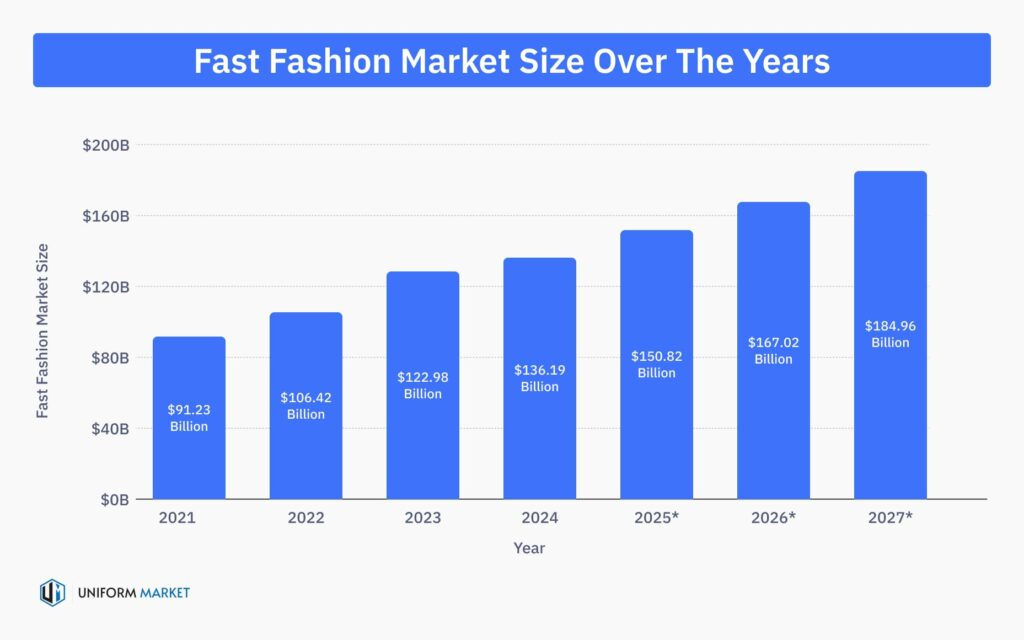
Source : uniformmarket
La prochaine étape pour les marques chinoises à l’étranger
Alors que les gens s’émerveillent de la vitesse de croissance de la marque Cider, ils devraient également voir la logique industrielle derrière : la mondialisation n’est plus une simple addition de « fabrication bon marché + dividendes de trafic ».
Actuellement, la croissance du commerce électronique en Asie du Sud-Est est trois fois supérieure à celle de l’Amérique du Nord, la demande de vêtements personnalisés en Amérique latine augmente de 21 % par an, et la volonté de payer pour la mode durable chez la génération Z occidentale a augmenté de 45 %. Dans ces secteurs, aucun véritable monopoleur n’a encore émergé.
Pour les entreprises chinoises, cela signifie que les opportunités de marché restent immenses. Plutôt que de se lancer dans une guerre des prix avec les entreprises établies, il vaut mieux chercher une voie différenciée sur les marchés étrangers pour se tailler une « réserve personnelle ».
(Note : Les informations de cet article proviennent toutes de rapports publics et de données de diverses plateformes. La situation réelle prévaut sur les informations officielles.)