
 2103
2103Sur TikTok, une plateforme où la résonance instantanée est essentielle, la fidélité des utilisateurs envers une marque commence souvent par une interaction où ils se sentent « vus » et se consolide grâce à un lien émotionnel durable.
Comment transformer l'attention passagère d'un inconnu en un suivi fidèle à long terme ? La réponse réside dans une stratégie de gestion émotionnelle, à travers la résonance émotionnelle, l'identification aux valeurs et les interactions personnalisées, faisant de la marque un compagnon dans la vie des utilisateurs.

Source : Google
Lien émotionnel : Créer un sentiment de dialogue
Les utilisateurs aspirent à être remarqués, et la section des commentaires sur TikTok est la fenêtre de dialogue la plus directe entre la marque et eux. Le cœur de la gestion émotionnelle est de faire ressentir aux utilisateurs que la marque les écoute attentivement.
Les marques peuvent montrer leur côté humain en répondant de manière personnalisée, en intégrant des émoticônes, des mèmes ou un langage propre à la marque en fonction du contenu des commentaires des utilisateurs.
Étude de cas : La marque Fenty Beauty
La marque de cosmétiques Fenty Beauty interagit fréquemment dans les commentaires sur TikTok. Non seulement elle répond rapidement aux questions des utilisateurs sur les techniques d'utilisation des produits ou le choix des teintes, mais elle publie aussi en premier des commentaires amusants pour attirer la participation et l'interaction des utilisateurs.
Cette communication proactive permet aux utilisateurs de se sentir écoutés et valorisés par la marque, renforçant ainsi leur sentiment d'identification et de fidélité, ce qui stimule la croissance des ventes de produits.
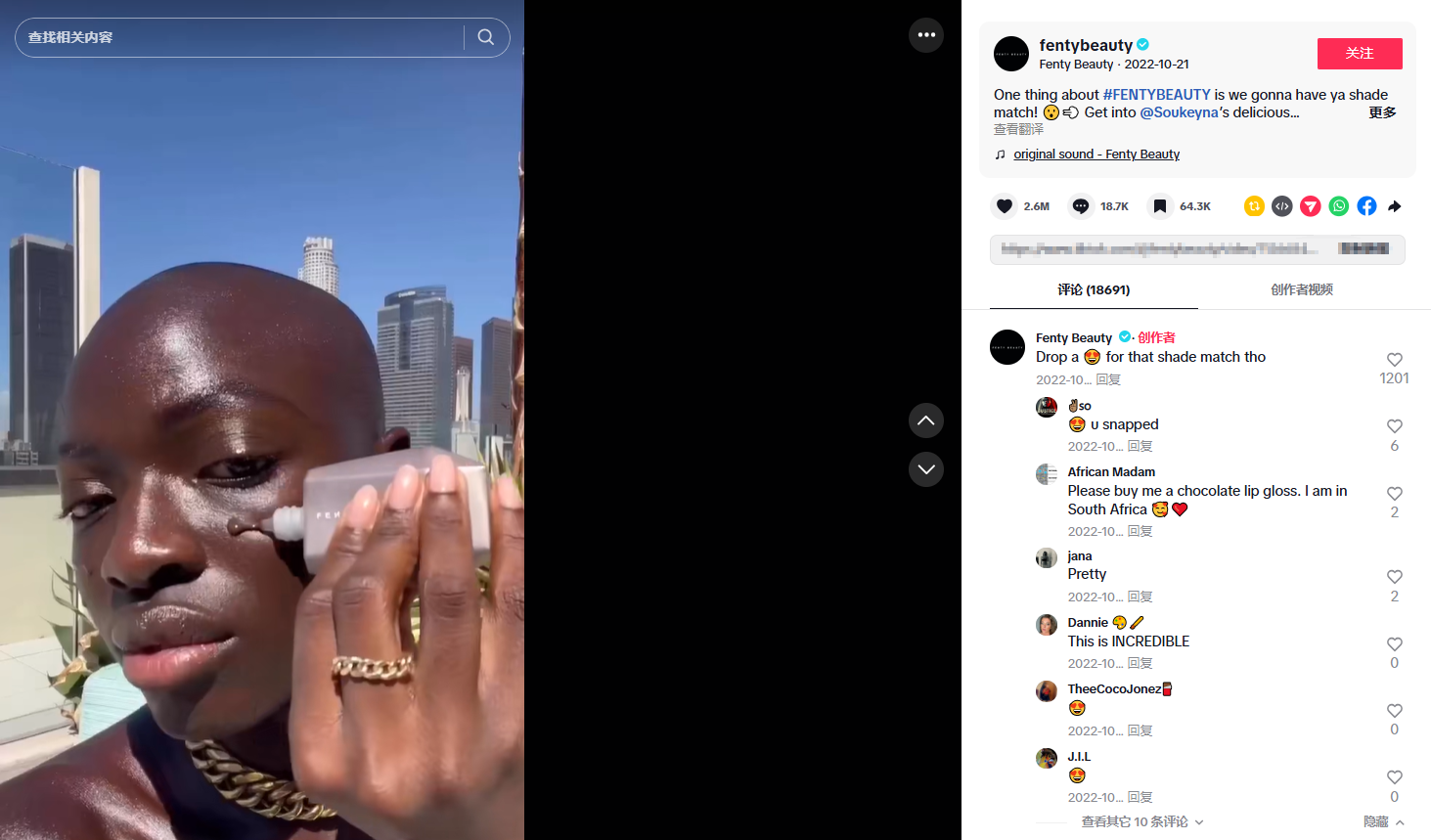
Source : TikTok
Construction d'un sentiment d'appartenance : Faire de l'utilisateur un initié
Un objectif plus avancé de la gestion émotionnelle est de créer un sentiment d'appartenance, où l'utilisateur se sent membre de la communauté de la marque. En établissant des symboles culturels exclusifs, comme des filtres spécifiques, des hashtags de défi ou des slogans, on renforce l'identification des utilisateurs.
Étude de cas : La marque Rael
La marque de soins de la peau Rael a lancé un défi thématique portant le même nom que la marque, encourageant les utilisateurs à partager leurs expériences personnelles d'utilisation, puis a sélectionné les meilleurs contenus pour créer des publicités de marque.
Non seulement la marque a intégré les histoires réelles de ses fans dans ses publicités officielles, mais elle a aussi approfondi la discussion sur le sens de la « beauté » dans les commentaires. Grâce à cette stratégie, la communauté de fans de Rael n'a cessé de croître, et les utilisateurs partagent spontanément le contenu.
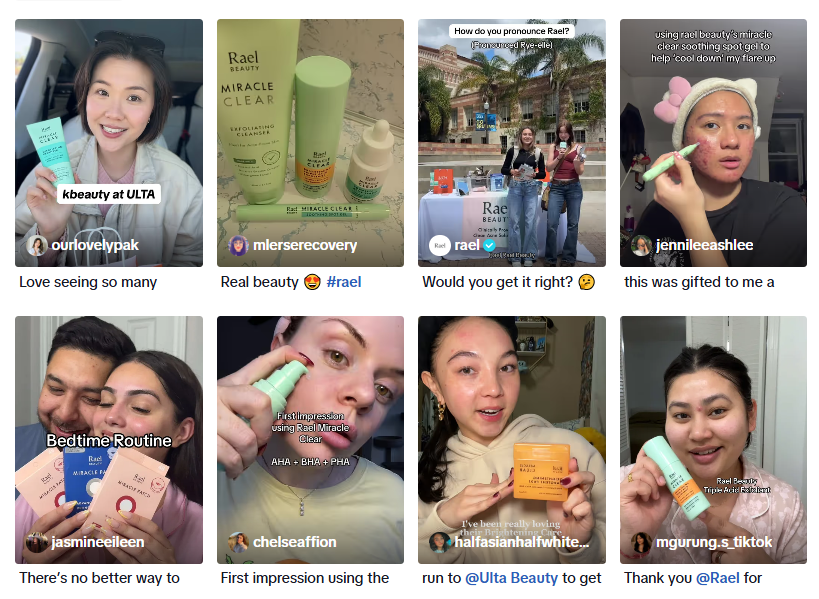
Source : TikTok
Identification aux valeurs : Transmettre la personnalité de la marque via un contenu à long terme
L'objectif ultime de la gestion émotionnelle est de parvenir à une résonance profonde entre les valeurs de l'utilisateur et celles de la marque. La marque ne doit pas se limiter à la promotion de produits, mais doit exprimer ses opinions et positions comme une « personne » avec des pensées et des émotions.
Par exemple, les marques peuvent participer activement à des sujets sociétaux, comme la protection de l'environnement ou les causes caritatives, en transmettant des énergies positives à travers ces actions pour susciter une résonance émotionnelle chez les utilisateurs.
De plus, remplacer la publicité traditionnelle par des histoires vivantes et des concepts amusants est également un moyen efficace de mieux transmettre des valeurs positives, de toucher le cœur des utilisateurs et de renforcer le lien émotionnel entre la marque et eux.
Étude de cas : L'application Duolingo
L'application d'apprentissage des langues Duolingo s'est imposée sur TikTok grâce à un personnage au charme contrasté : un hibou vert qui parle. Il enseigne sérieusement, mais se met aussi à danser de manière absurde et à faire des gaffes. La marque joue avec les mèmes dans les commentaires, par exemple, si un utilisateur dit « Je n'arrive pas à apprendre la conjugaison aujourd'hui », la marque répond « Le hibou pleurera à ta place », transformant ainsi la difficulté d'apprentissage en une expérience légère.
Cette expression émotionnelle de type compagnonnage a considérablement augmenté le nombre d'abonnés au compte TikTok de Duolingo, qui a atteint 1,7 million à ce jour.
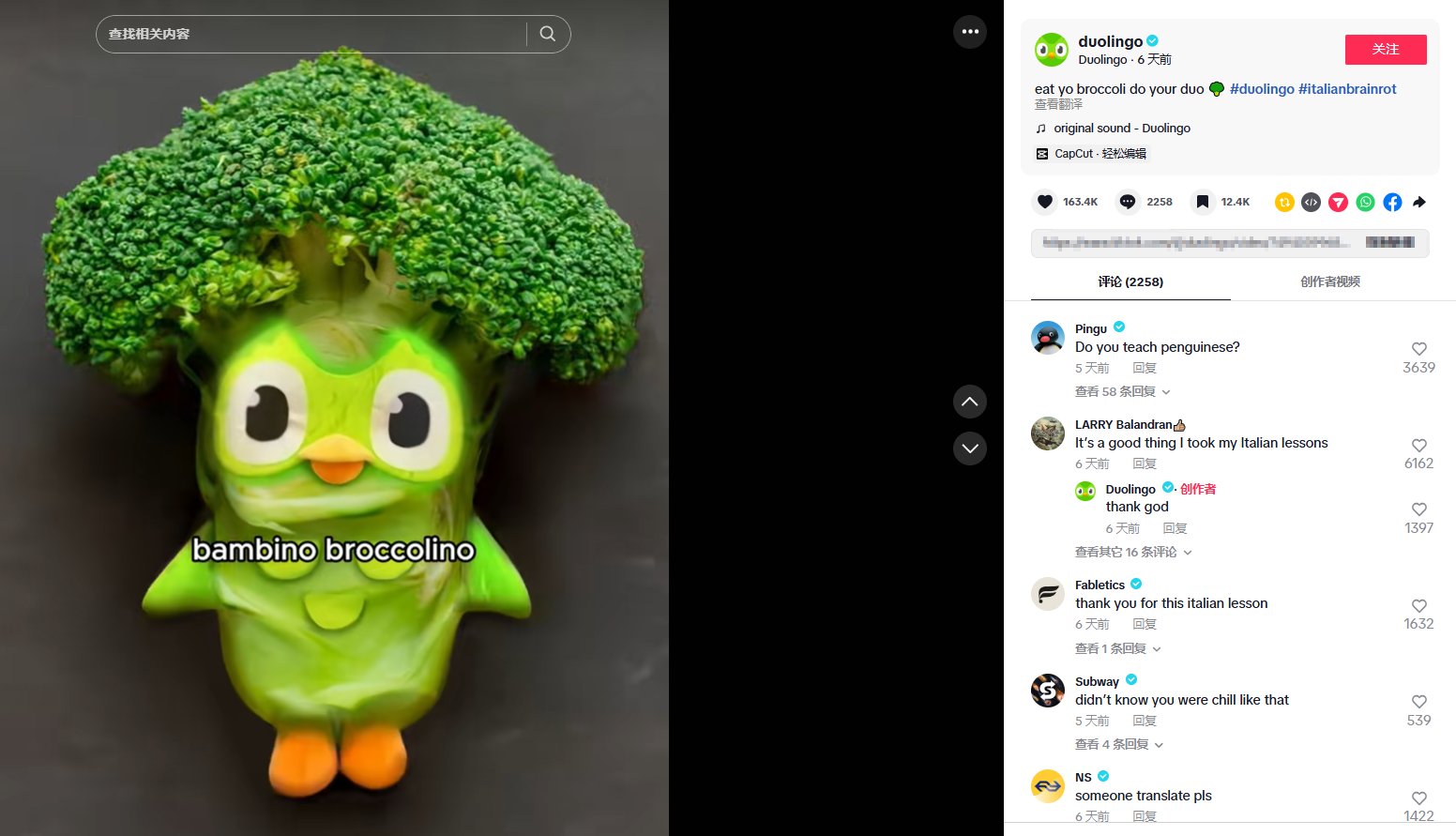
Source : TikTok
La gestion émotionnelle est un investissement à long terme
À l'ère des vidéos courtes où l'attention est rare, la gestion émotionnelle est en train de redéfinir la nature de la relation entre les marques et les utilisateurs. Alors que les techniciens courent après les algorithmes, la véritable clé du succès réside peut-être dans les besoins émotionnels non satisfaits de chaque utilisateur.
Dans le monde de TikTok, la gestion émotionnelle n'est pas un « code secret pour le trafic », mais un « algorithme du cœur humain ».