 2577
2577Regarder des vidéos courtes, suivre des lives, acheter des articles tendance… Les jeunes du monde entier dépensent sans compter sur TikTok, mais comment les marques chinoises parviennent-elles à se démarquer dans cet océan rouge ? Certaines vident leur stock grâce à une seule vidéo, d’autres gagnent un million de dollars en un seul live.
Aujourd’hui, Tuke vous dévoile comment les marques chinoises conquièrent les étrangers sur TikTok.
Source : TikTok
La magie du contenu qui attire les étrangers
Sur TikTok, le contenu n’est pas une publicité, mais un appât. Les marques chinoises le savent bien : elles transforment leurs produits en « histoires » grâce à des vidéos courtes, incitant les utilisateurs à « mordre à l’hameçon ».
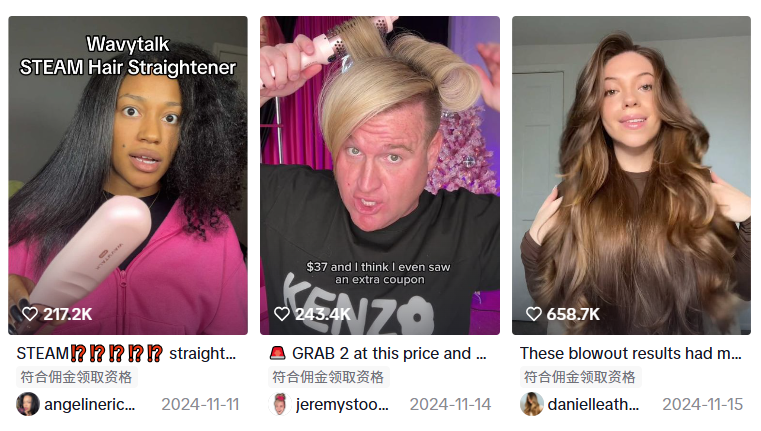
Par exemple, la marque chinoise d’outils de coiffure Wavytalk a fait sensation sur TikTok avec une série de vidéos présentant son « fer à friser 5-en-1 ». Dans ces vidéos, un mannequin passe facilement des boucles larges aux cheveux raides, en passant par les frisés, avec un seul outil, accompagné d’un effet visuel « avant-après » qui frappe directement le point sensible des consommateurs étrangers : « un appareil pour plusieurs usages ».
Source : TikTok
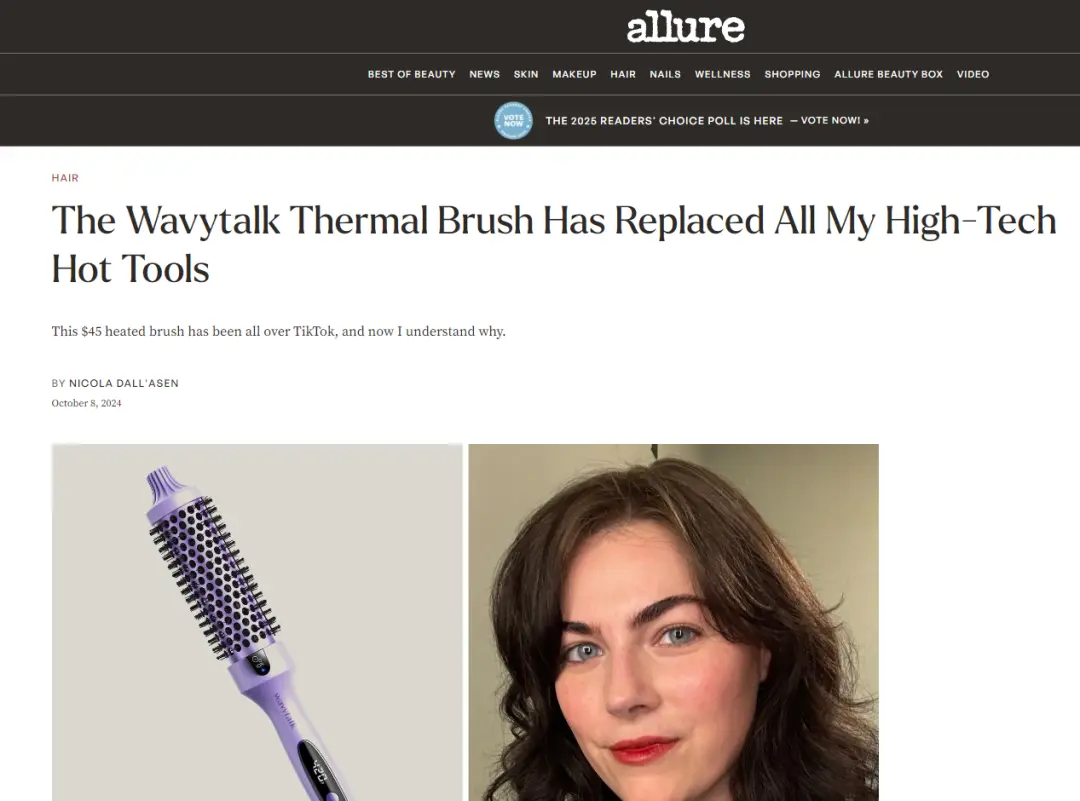
Ces vidéos ont non seulement propulsé le hashtag #wavytalk à plus de 100 millions de vues, mais ont également attiré des médias de mode occidentaux comme Allure et Stylecaster à faire des tests spontanés, ce qui a fait exploser les ventes, avec un chiffre d’affaires mensuel dépassant les 17 millions de RMB.
Source : Allure
Grâce au « live scénarisé », les étrangers « regardent et achètent »
Le live shopping n’est pas l’apanage du marché chinois. Sur TikTok, les marques chinoises le rendent encore plus « localisé ». Au lieu de présenter des paramètres techniques de manière ennuyeuse, elles transforment le studio en scène de vie, plongeant les étrangers dans l’ambiance.
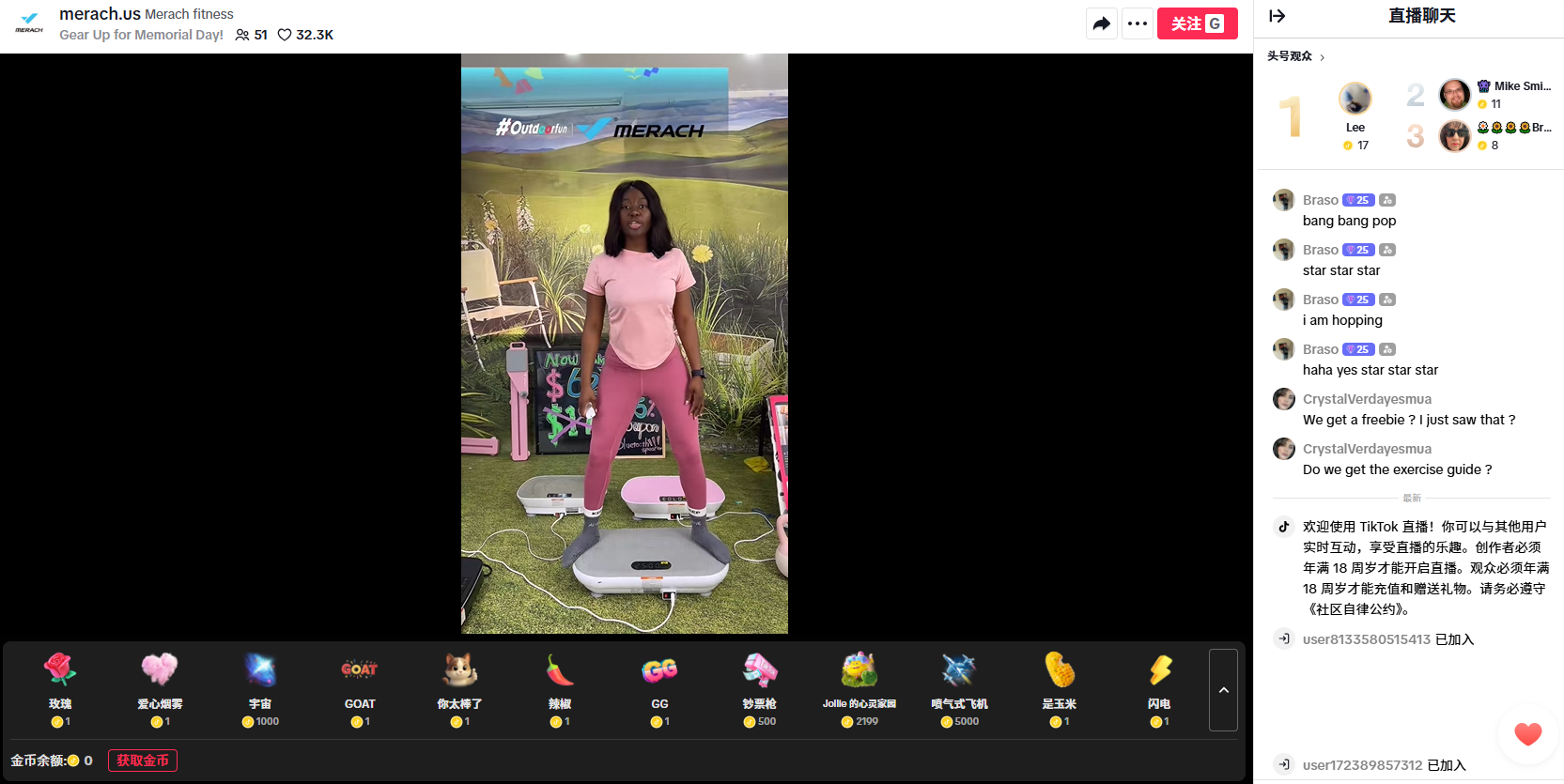
Prenons l’exemple de la marque d’équipement de fitness Merach Fitness. Dans leur studio, ils ont installé une salle de sport à domicile. Le présentateur démontre l’utilisation du rameur tout en criant : « Suivez-moi, perdez du ventre en 30 jours ! » Pour prolonger l’effet de diffusion, l’équipe a découpé les extraits du live en vidéos courtes et les a republiés sur le compte. Résultat : en un mois, le live a contribué à 90 % des ventes, avec un GMV dépassant les 16 millions de RMB.
Source : TikTok
Cibler précisément les besoins avec des « produits locaux à succès »
Sur TikTok, il ne faut surtout pas suivre aveuglément les tendances, mais plutôt cibler les « points sensibles » du marché local avec des produits au rapport qualité-prix imbattable.
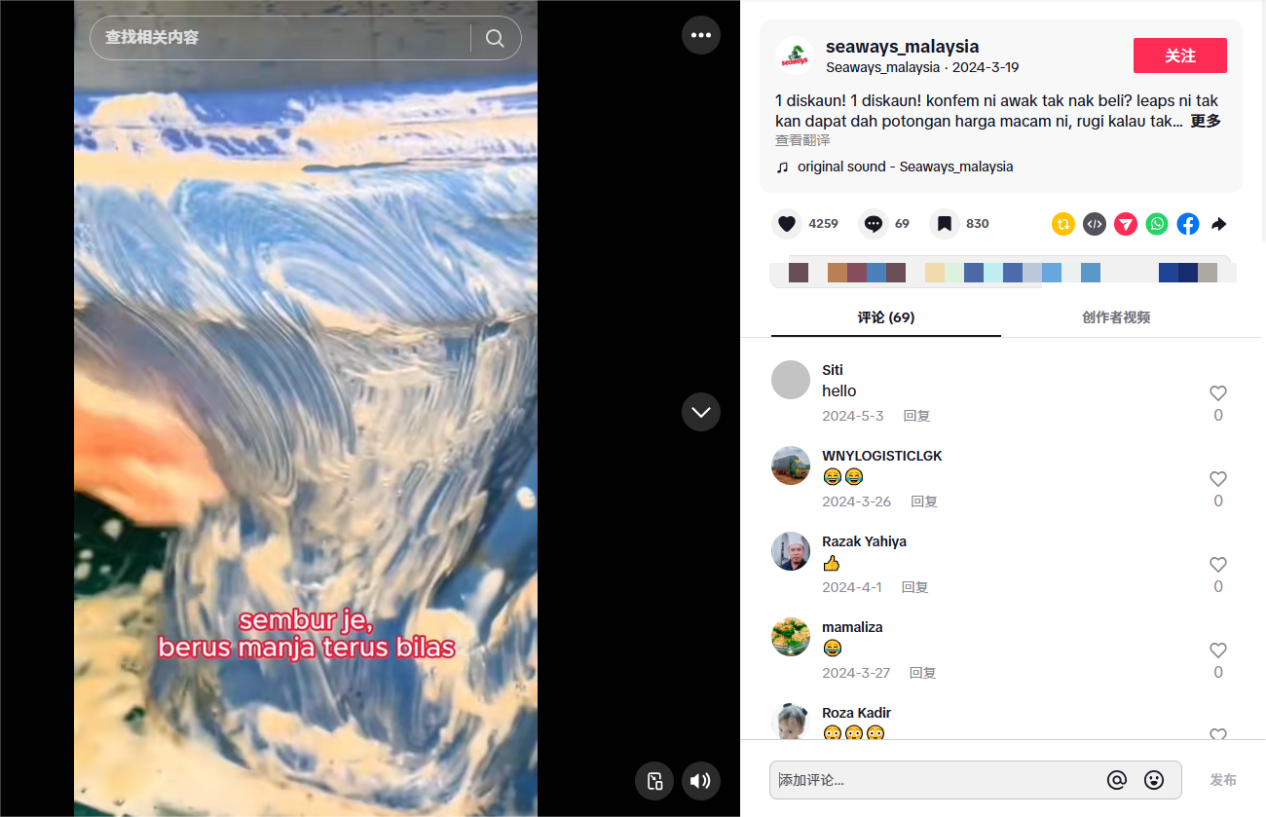
La marque de nettoyage Seaways en est un exemple typique. L’équipe a constaté que les consommateurs d’Asie du Sud-Est avaient un fort besoin de nettoyants pour salle de bain, mais que les produits locaux étaient inefficaces. Ils ont donc lancé un nettoyant « qui dissout le calcaire en un spray » et ont fait tourner des vidéos « avant-après » avec des influenceurs TikTok. Dans ces vidéos, les carreaux de salle de bain couverts de taches devenaient instantanément brillants après avoir été vaporisés. Cet impact visuel a propulsé le produit au sommet de la catégorie des produits ménagers en Malaisie, et en trois mois, il est entré dans le top 310 des ventes transfrontalières en Asie du Sud-Est.
Source : TikTok
Un exemple encore plus « simple et direct » est celui de la marque d’abreuvoirs intelligents pour animaux Petgravity. Grâce à l’analyse des données, ils ont découvert que les propriétaires d’animaux en Occident avaient un fort besoin de fonctions « silencieuses » et « de filtration automatique ». Ils ont donc réalisé des vidéos adorables d’animaux buvant activement, en mettant l’accent sur le « système de filtration à 3 couches, plus propre que votre robinet ». Le produit a atteint des ventes quotidiennes de plus de 1 000 unités en trois jours, avec un pic à 60 000 dollars par jour.
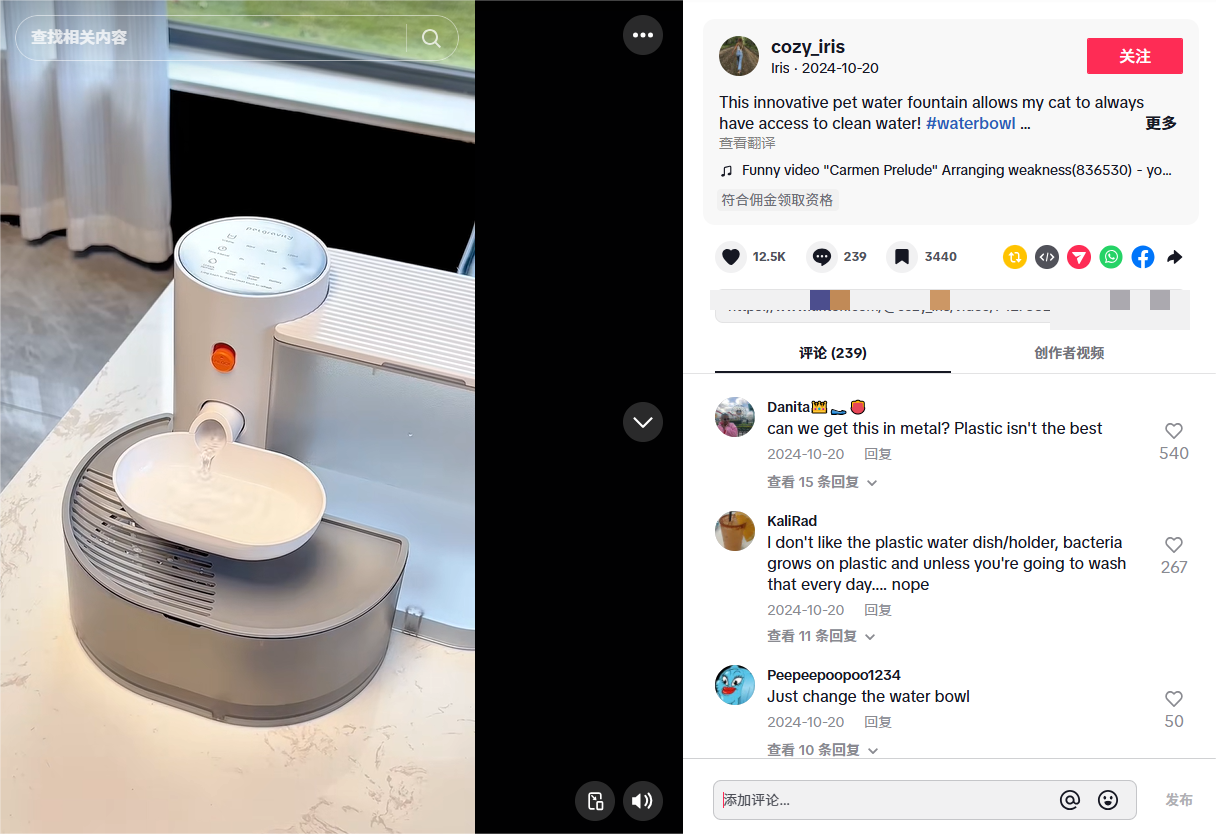
Source : TikTok
TikTok n’est pas un « raccourci », mais un amplificateur
Sur TikTok, une marque ne doit pas seulement être un vendeur, mais aussi un « voisin qui sait créer l’événement ». De Wavytalk à Merach Fitness, le succès des marques chinoises confirme une formule : contenu de qualité + efficacité maximale + analyse des données = ventes mondiales explosives.
Qu’il s’agisse de tongs, de cosmétiques ou d’électroménager, derrière chaque succès se trouve une compréhension des « gens » : les utilisateurs ne veulent pas de publicité, mais un sentiment de participation et une satisfaction immédiate. Si vous aussi vous voulez vous internationaliser, demandez-vous : quel problème concret mon produit résout-il ? Pourquoi les utilisateurs s’arrêteraient-ils sur ma vidéo ?