
 3696
3696Sur le marché des appareils portables intelligents, bien que la rivalité entre l'Apple Watch et Fitbit semble ne laisser aucune place, la profondeur verticale des segments spécialisés a ouvert des brèches inattendues pour les innovateurs.
Parmi eux, l'essor de la marque WHOOP est particulièrement remarquable. Ce bracelet, sans écran ni assistant vocal, est vendu à un prix supérieur à celui de l'Apple Watch, mais a généré un chiffre d'affaires annuel de plus de 260 millions de dollars, avec des utilisateurs dans 56 pays. De plus, après avoir bouclé un tour de financement de série F mené par SoftBank en 2021, sa valorisation a grimpé à 3,6 milliards de dollars, faisant de WHOOP l'entreprise d'appareils portables de sport la mieux valorisée aux États-Unis.


Source : WHOOP
Une marque valorisée à 3,6 milliards de dollars
Selon les informations, l'histoire de la marque WHOOP commence avec l'anxiété du fondateur Will Ahmed concernant sa santé physique. En tant que capitaine d'équipe universitaire, il souffrait depuis longtemps de surentraînement et de récupération insuffisante, mais a constaté que les appareils disponibles sur le marché ne pouvaient pas quantifier la « fatigue cachée ».
Après avoir passé plusieurs mois à étudier plus de 500 articles médicaux, il a ciblé l'indicateur clé de la variabilité de la fréquence cardiaque (HRV) et a lancé son entreprise avec deux camarades de classe au Harvard Innovation Lab, donnant ainsi naissance à la marque WHOOP.


Will Ahmed (à gauche) Source : harvard
À ses débuts, face à des géants comme Nike et Apple occupant le marché, la marque WHOOP a choisi de se concentrer sur les athlètes professionnels, en se spécialisant dans le domaine approfondi des données de récupération, de sommeil et d'entraînement.
En se concentrant sur ce domaine, la marque WHOOP a réussi à gagner la faveur d'athlètes de haut niveau tels que LeBron James et Michael Phelps. Leur utilisation a considérablement renforcé la crédibilité de la marque et a ouvert la voie à son développement ultérieur.


Source : Internet
Au début, la marque WHOOP utilisait un modèle d'achat unique, mais le coût matériel élevé (environ 500 dollars) a dissuadé de nombreux utilisateurs potentiels. En 2018, l'entreprise a donc décidé de passer à un modèle d'abonnement, où les utilisateurs paient des frais mensuels pour accéder à l'appareil et aux services de données.
Ce changement de modèle a réduit la pression financière sur les utilisateurs tout en offrant à l'entreprise un flux de trésorerie stable, une situation gagnant-gagnant.
Aujourd'hui, la marque WHOOP est vendue dans 56 pays, dont les États-Unis, le Royaume-Uni, le Qatar, l'Arabie saoudite et le Koweït, et est devenue une marque leader dans le secteur des technologies de santé haut de gamme.

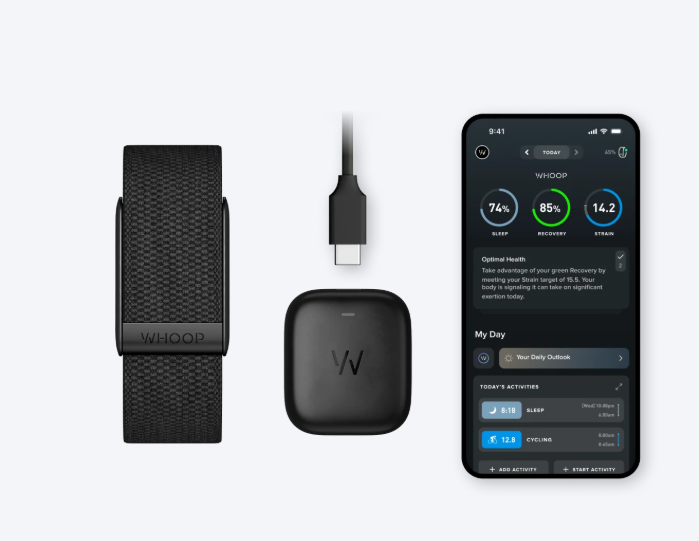
Source : WHOOP
Les avantages d'un marché spécialisé de 300 milliards de dollars
D'un point de vue commercial, l'explosion de WHOOP n'est pas un hasard. Que ce soit l'expansion continue du marché ou l'augmentation de la demande des utilisateurs pour la gestion de la santé, ces facteurs ont fourni un soutien considérable à la marque.
Selon les données, en 2023, la taille du marché mondial des appareils portables intelligents a atteint 109,34 milliards de dollars, et devrait croître à un taux de croissance annuel composé de 18,58 % pour dépasser 303,98 milliards de dollars d'ici 2029.
Dans ce contexte de marché, les besoins des consommateurs évoluent également. Ils ne se contentent plus de fonctions de base comme le comptage des pas, mais recherchent une surveillance physiologique approfondie et des conseils prédictifs.
Grâce à cela, le « design sans écran » de la marque WHOOP est devenu un symbole de professionnalisme, permettant à la marque de se démarquer face à des géants comme Apple et Samsung.

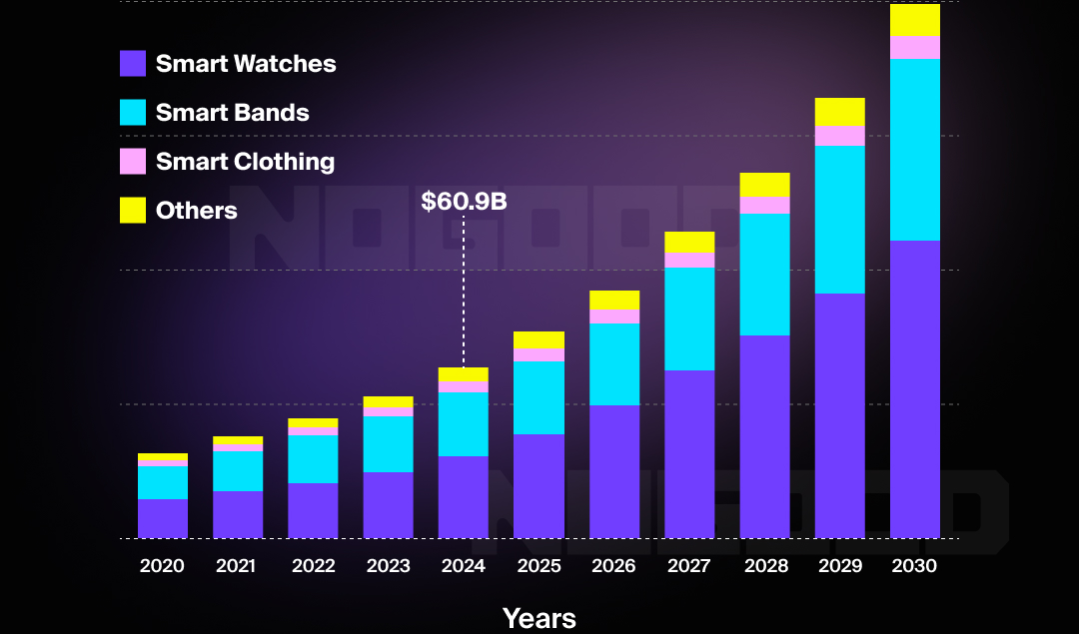
Source : Nogood
Pas de trafic, mais du professionnalisme : « l'art de la conversion de confiance » de la marque
En accord avec sa stratégie produit axée sur la spécialisation, la stratégie de distribution de la marque WHOOP a également abandonné la mentalité du « trafic avant tout », se concentrant sur la construction de la confiance des utilisateurs grâce à un contenu professionnel.
L'efficacité de cette stratégie se reflète dans les données du site indépendant. En avril 2025, en tant que point de vente final, le trafic de son site indépendant a grimpé à 3,6 millions de visites, dont 41,46 % de trafic direct et 37,48 % de recherche organique.
Ces données sont le résultat des efforts de la marque sur les plateformes de médias sociaux (notamment TikTok et YouTube) pour construire une crédibilité professionnelle :

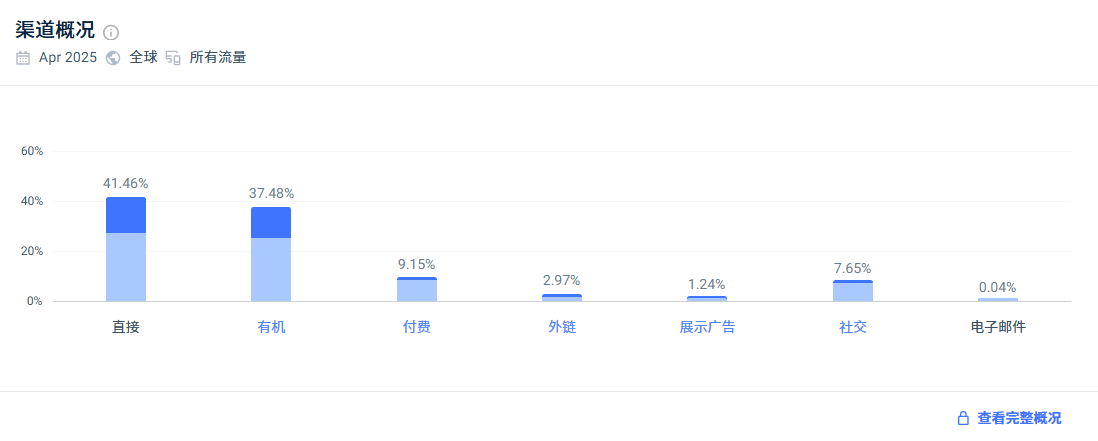
Source : similarweb
1. Construction d'une barrière de confiance
Sur la plateforme TikTok, la marque WHOOP s'associe à des influenceurs sportifs pour montrer comment le bracelet résout le problème concret du « surentraînement sans le savoir ». Ces contenus ne recherchent pas une diffusion massive, mais transmettent subtilement une valeur professionnelle grâce au suivi des données dans des scénarios réels.
Lorsque les utilisateurs voient des blogueurs fitness comparer la précision de la surveillance du sommeil profond entre la marque WHOOP et un bracelet ordinaire, ils comprennent naturellement la valeur du produit, réduisant ainsi l'inconfort lié à la prime de prix élevée.

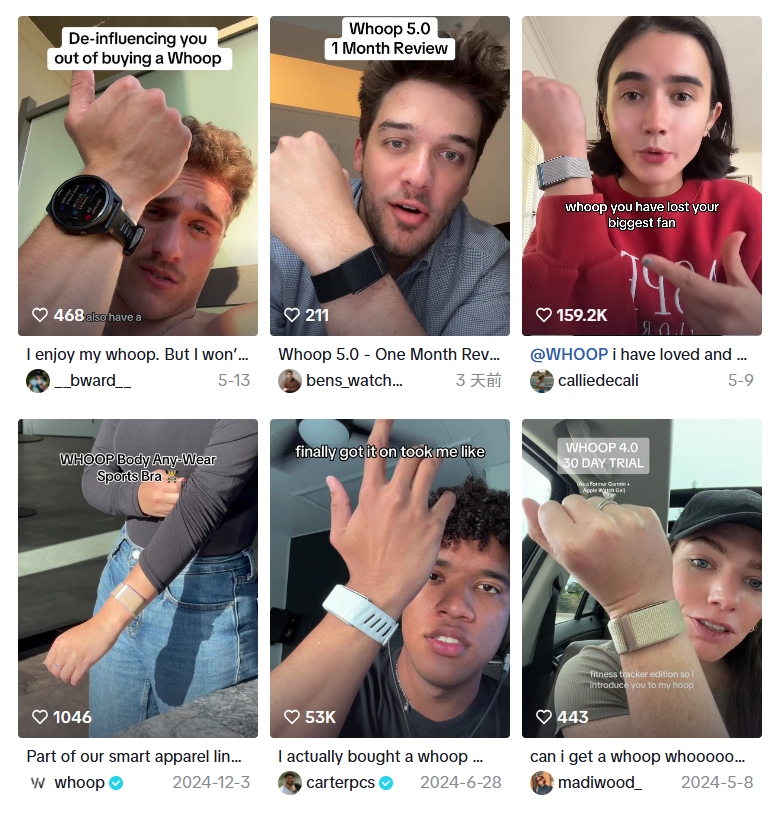
Source : TikTok
Par exemple, une vidéo publiée en juillet 2023 par la passionnée de fitness TikTok @maddycasssidy, intitulée « le bracelet l'a aidée à trouver un problème de santé », a attiré l'attention de nombreux utilisateurs grâce à une démonstration réelle, et a finalement obtenu 837 500 vues.

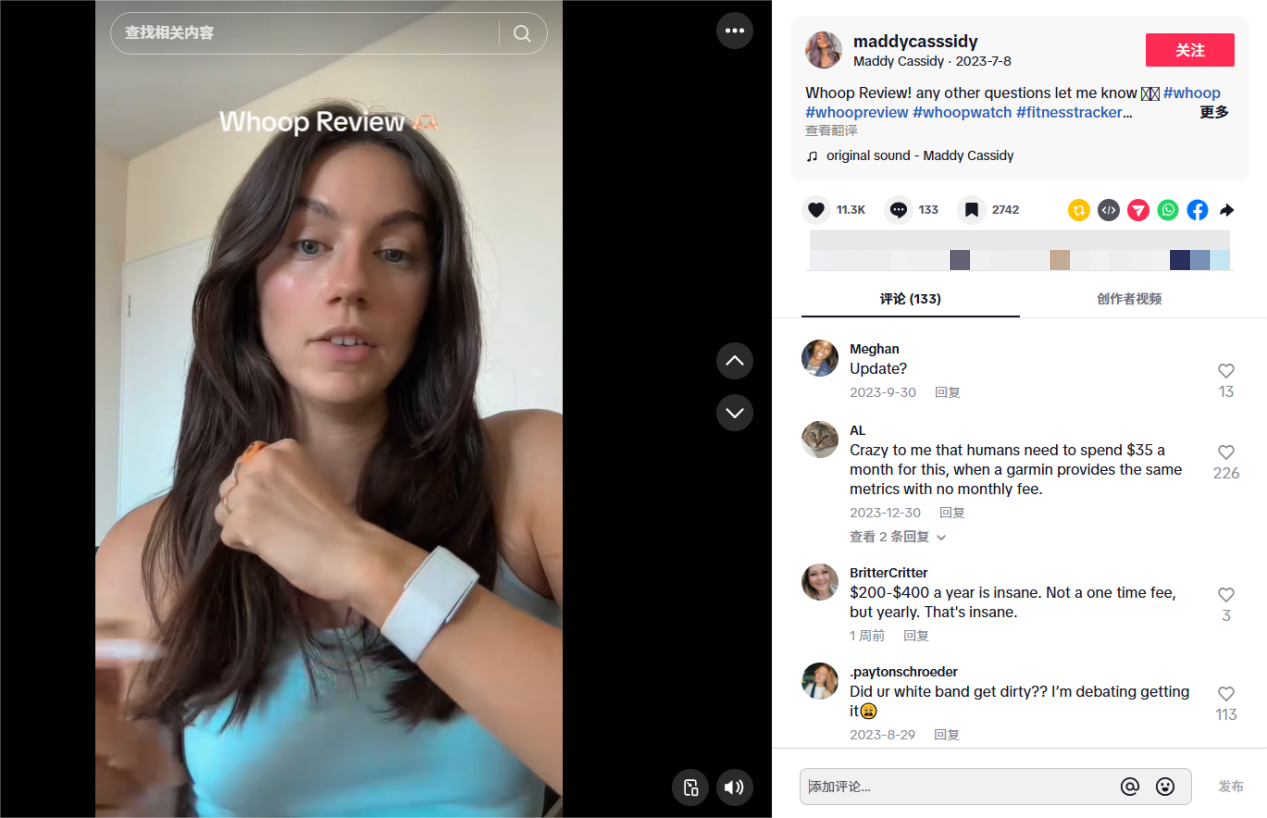
Source : TikTok
Si TikTok est un terrain de « sensation de réalité », YouTube est le champ de bataille principal pour la vulgarisation technique.
Le contenu publié par le compte officiel de la marque WHOOP, @WHOOP (112 000 abonnés), comprend des tests de fonctionnalités produits, des comparaisons horizontales avec d'autres appareils portables sur le marché, ainsi que des explications sur les nouvelles fonctionnalités.
Bien que ce type de contenu ait un public restreint, il attire solidement les utilisateurs de niche qui recherchent un entraînement scientifique, filtrant ainsi des utilisateurs de grande valeur et très fidèles, jouant un rôle clé dans la conversion du trafic ultérieur du compte.

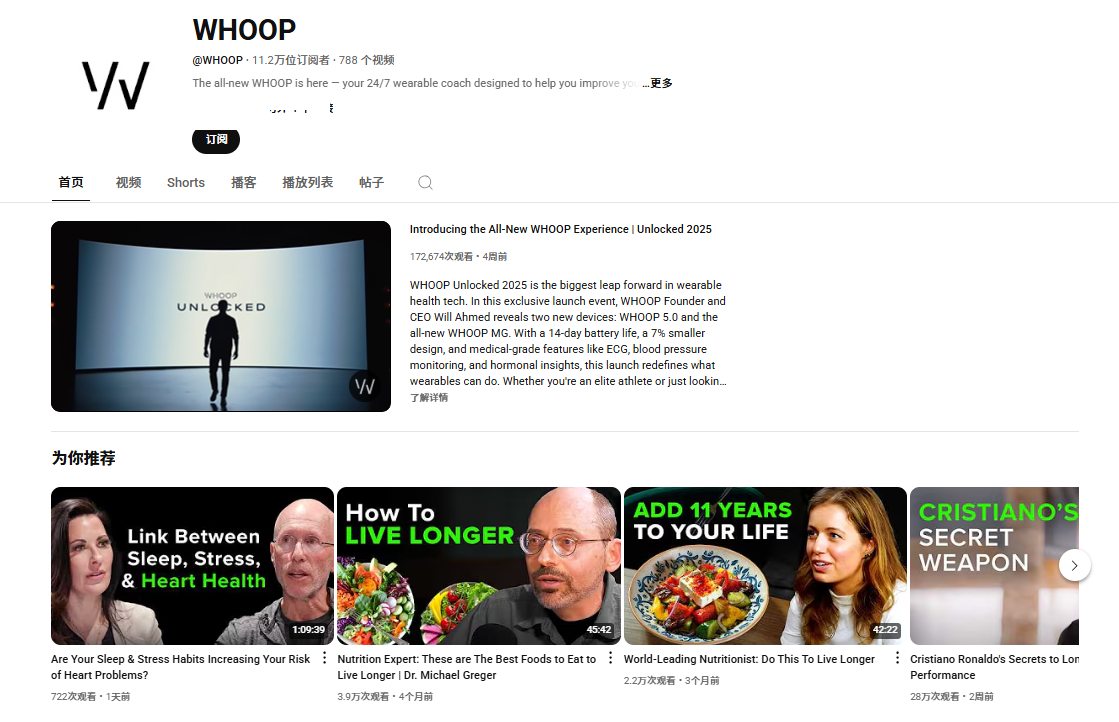
Source : YouTube
2. Moteur de conversion axé sur l'expérience
Si le site indépendant de la marque WHOOP a pu atteindre 3,6 millions de visites mensuelles, cela est dû non seulement au trafic des médias sociaux, mais aussi à l'opération méticuleuse du site lui-même.
Pour améliorer le taux de rétention des clients et favoriser la conversion du trafic en ventes, la marque WHOOP a lancé un programme « Essai gratuit de 30 jours » sur son site indépendant. Les utilisateurs attirés sur le site peuvent utiliser toutes les fonctionnalités sans condition pendant un mois.
Bien que cette conception transfère entièrement le risque de décision à la marque, un taux de rebond de 23,9 % et plus de trois millions de visites mensuelles prouvent l'efficacité de ce modèle.

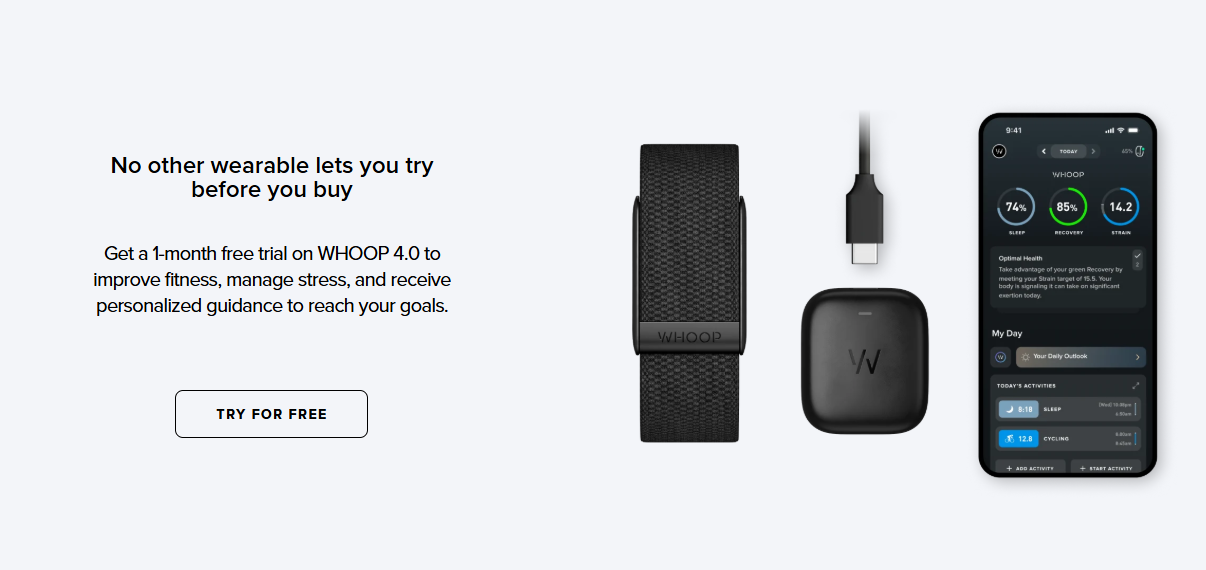
Offre « Essai gratuit de 30 jours » Source : WHOOP
Conclusion : Une réflexion froide pour les marques chinoises à l'international
Le parcours de la marque WHOOP montre clairement une chose : sur un marché étranger apparemment saturé, se concentrer sur la résolution d'un besoin professionnel réel et profond peut encore ouvrir un vaste horizon.
Ce point est crucial pour les entreprises qui souhaitent se lancer à l'international. Le marché étranger n'est pas monolithique ; la demande des consommateurs pour des solutions professionnelles et de niche persiste et s'accroît.
Comme le dit l'adage, « la clé de la victoire réside dans la concentration ». Pour percer sur ce marché, il faut trouver ce domaine vertical où vous pouvez aller plus loin et plus en profondeur, et gagner la confiance grâce à une puissance produit solide et une compréhension précise des besoins des utilisateurs.

![[marketing en mer] tiktok 6 grands formats de publicité, un article vous emmène en détail!](/_next/image?url=https%3A%2F%2Fadmin.tktk.com%2Fuploads%2Fallimg%2F250610%2F1-250610112J40-L.png&w=640&q=75)