
 2203
2203Les États-Unis, en tant que l'un des pays les plus développés au monde en matière de commerce électronique, recèlent un potentiel immense dans presque chaque segment de marché.


Selon le dernier rapport publié par la plateforme de surveillance des données de vente au détail Brick Meets Click, au troisième trimestre de cette année, le marché américain de l'épicerie en ligne a montré une croissance robuste, avec des ventes en hausse de 13,8 % sur un an, atteignant 27,4 milliards de dollars.

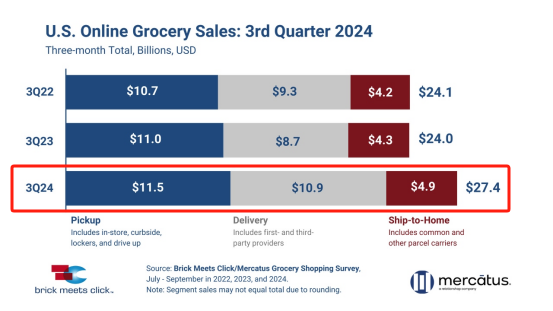
Les ventes du marché américain de l'épicerie en ligne grimpent en flèche Source : supermarketnews
La clé de cette croissance réside dans l'augmentation généralisée de tous les modes de livraison, en particulier la forte hausse de la demande de livraison à domicile, qui a stimulé l'augmentation globale des ventes. Les données montrent que les commandes de livraison à domicile ont augmenté de 15 %, tandis que les ventes ont bondi de 25 %. En revanche, au cours de la même période l'année dernière, les ventes dans ce secteur avaient chuté d'environ 6 %, un contraste frappant.
La croissance des différents modes de livraison a également intensifié la concurrence entre les plateformes. La part de Mars dans le secteur de la livraison à domicile est passée à 16,4 %, montrant une forte capacité d'expansion ; Amazon continue de dominer avec une part de marché de 50,1 %, mais en baisse de 1 % par rapport à l'année dernière. Dans le secteur du retrait en magasin, Mars reste en tête avec 56,1 % de parts de marché, en baisse de 0,7 % par rapport à l'année dernière, cette perte étant principalement due à la stratégie agressive d'adhésion de Walmart.
De plus, avec l'élargissement continu de la base de consommateurs, la demande sur le marché de l'épicerie en ligne s'est renforcée. Les données montrent que depuis le début de l'année, le nombre d'utilisateurs actifs mensuels pour tous les modes d'achat a augmenté de 2 %, atteignant 56 % ; parmi eux, la proportion de consommateurs consacrant plus de 25 % de leur budget d'épicerie a augmenté de 3 points de pourcentage, indiquant que l'épicerie en ligne est désormais très appréciée des consommateurs.

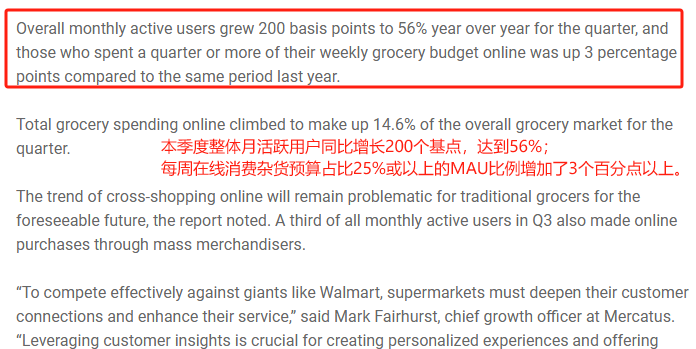
Élargissement de la base de consommateurs d'épicerie en ligne Source : supermarketnews
Mark Fairhurst, directeur de la croissance chez Mercatus, a déclaré : « La bonne performance du marché américain de l'épicerie en ligne est due à une exploration approfondie des besoins des consommateurs. Des leaders du secteur comme Mars et Walmart, en s'appuyant sur leur vaste réseau de magasins, stimulent le développement de l'ensemble du marché. »
Concurrence féroce : la bataille pour le marché entre géants s'intensifie
Avec l'expansion continue du marché de l'épicerie en ligne, le marché américain devient un champ de bataille incontournable pour les détaillants. Pour le géant du commerce électronique Amazon, bien qu'il dispose d'un avantage absolu dans le domaine global du e-commerce, les défis dans le secteur de l'épicerie restent considérables. Pour étendre son territoire dans l'épicerie, Amazon accélère activement ses investissements.
1. Amazon adopte une stratégie plus agressive en matière d'expansion de ses magasins. Depuis l'ouverture de son premier supermarché de produits frais en 2020, Amazon a ouvert 49 magasins dans 9 États américains, compensant ainsi le manque de couverture initiale en augmentant la présence de ses points de vente physiques.

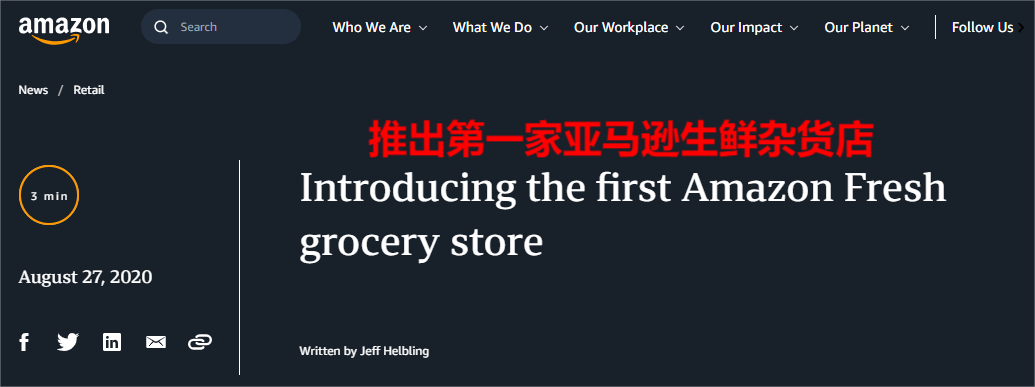
Amazon lance le supermarché de produits frais Amazon Fresh Source : aboutamazon
2. En s'appuyant sur son système de commerce électronique, Amazon accélère son expansion sur le marché de l'épicerie grâce à des promotions variées et à son service Prime. Par exemple, en août de cette année, Amazon a lancé un abonnement annuel à 99,99 $ pour les membres Prime, leur offrant la livraison gratuite illimitée sur Amazon Fresh et Whole Foods Market, renforçant ainsi la fidélité des utilisateurs.

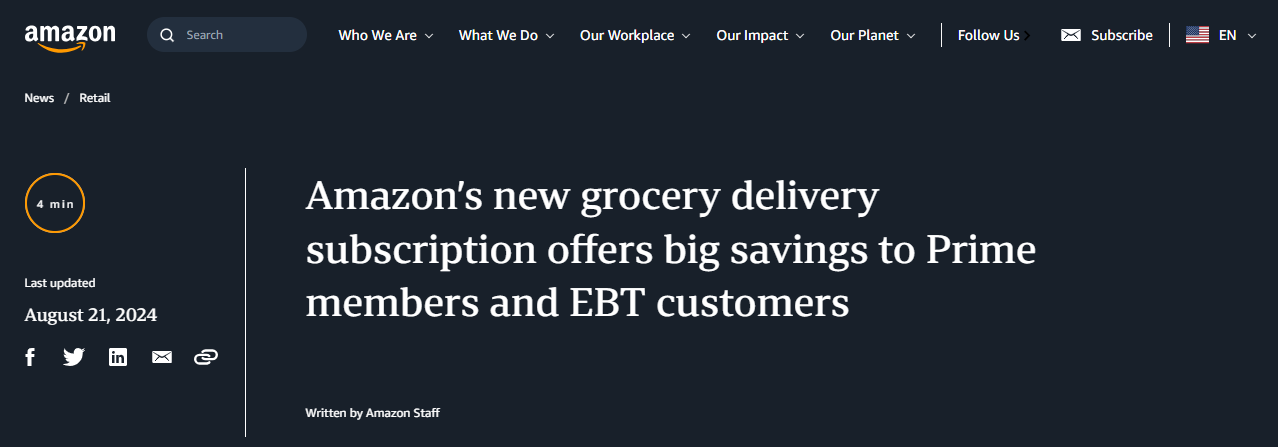
Amazon lance un abonnement annuel à l'épicerie Source : aboutamazon
Parallèlement, l'avantage de Walmart dans le secteur de l'épicerie se renforce. Grâce à son vaste réseau de magasins couvrant l'ensemble des États-Unis, Walmart domine dans les services de retrait et de livraison, et améliore son taux de conversion des utilisateurs en optimisant constamment sa stratégie d'adhésion, consolidant ainsi sa position sur le marché.

L'arrivée du nouveau joueur TikTok
Aujourd'hui, l'essor rapide de TikTok transforme profondément le paysage de la consommation aux États-Unis. Pour de nombreuses marques d'épicerie, TikTok n'est plus seulement une plateforme sociale, mais un outil puissant pour la promotion de marque et la stimulation des ventes. De nombreuses marques utilisent TikTok pour présenter leurs produits, publier des vidéos courtes amusantes et faciles à partager afin de promouvoir leurs services de livraison et leurs produits spéciaux, ce qui séduit particulièrement les jeunes consommateurs.


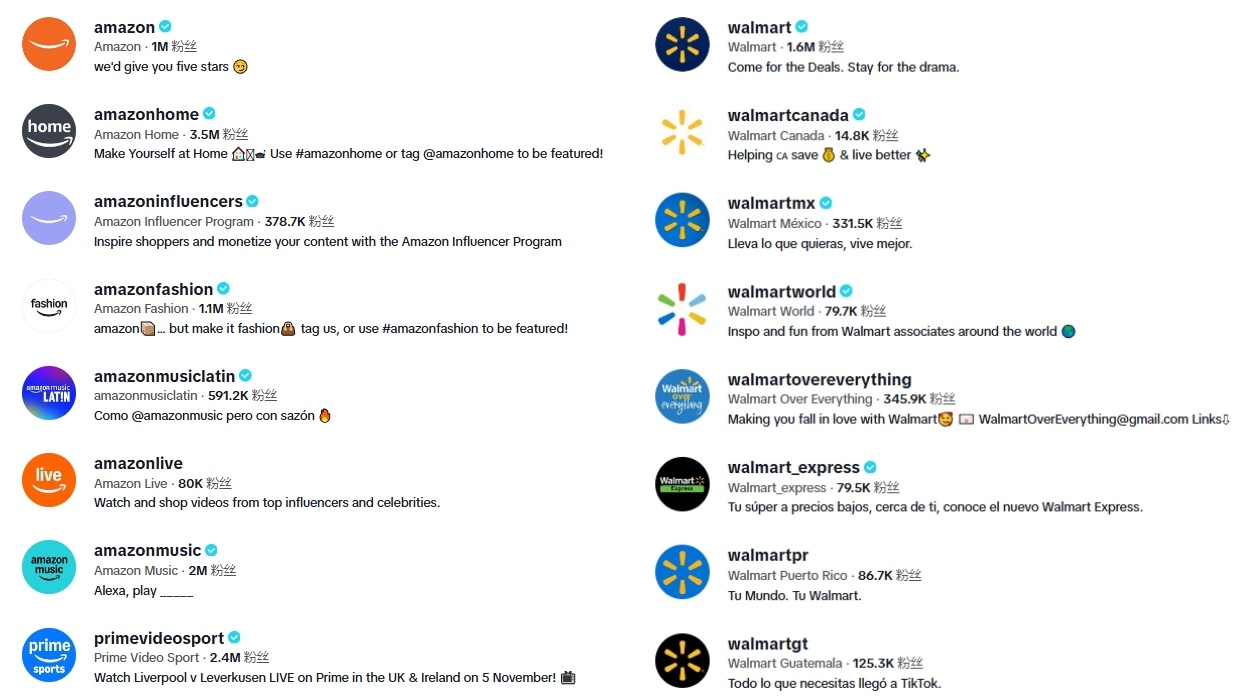
Amazon et Walmart investissent également massivement sur TikTok, utilisant l'effet de trafic unique de cette plateforme pour diriger les utilisateurs vers leurs propres plateformes ou magasins physiques. Par exemple, Walmart utilise la fonction de diffusion en direct de TikTok pour présenter une gamme de produits d'épicerie abordables aux jeunes, suscitant l'engagement et renforçant la fidélité des utilisateurs. Ce modèle de commerce social insuffle une nouvelle vitalité au marché traditionnel de l'épicerie, stimulant encore davantage l'engouement pour les achats en ligne.

Perspectives du marché : les synergies propulsent la croissance continue du secteur
À l'avenir, avec l'intégration profonde des médias sociaux et du commerce électronique, le paysage concurrentiel du marché américain de l'épicerie en ligne connaîtra un nouveau tournant. Il reste à voir qui parviendra à se démarquer sur ce marché très concurrentiel. Avec l'implication croissante de plateformes sociales comme TikTok, non seulement l'innovation du marché sera stimulée, mais l'évolution et la croissance de la demande des consommateurs seront également accélérées, ouvrant la voie à de nouvelles opportunités. On peut prévoir que le marché américain de l'épicerie en ligne continuera d'atteindre de nouveaux sommets sous l'impulsion de cette fusion et de cette concurrence.