 1603
1603Récemment, l’engouement pour le marché de l’épicerie en ligne est indéniable : les ventes explosent, les habitudes d’achat des consommateurs se transforment radicalement, et les géants du e-commerce mettent les bouchées doubles pour s’emparer de cette part du gâteau. Alors, comment se joue cette « bataille de débarquement » des achats en ligne ?
Source : Internet
Les ventes grimpent en flèche, les habitudes d’achat des consommateurs évoluent discrètement
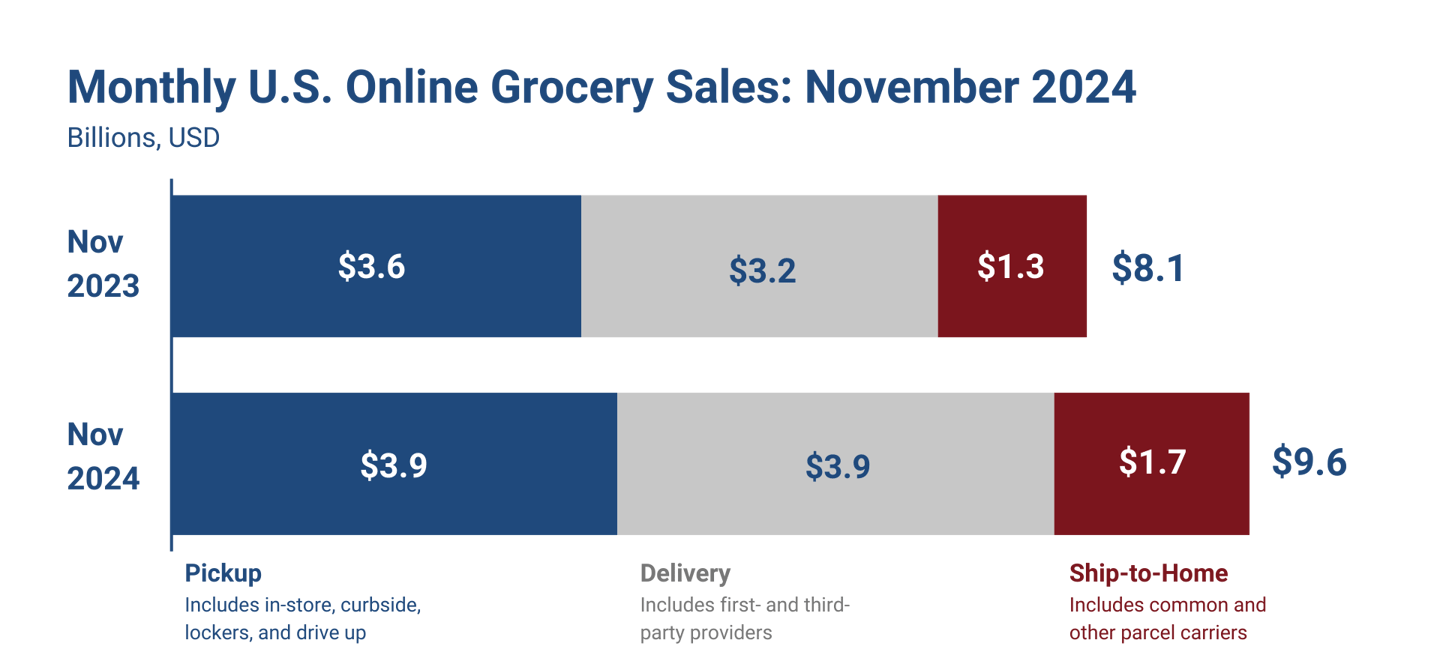
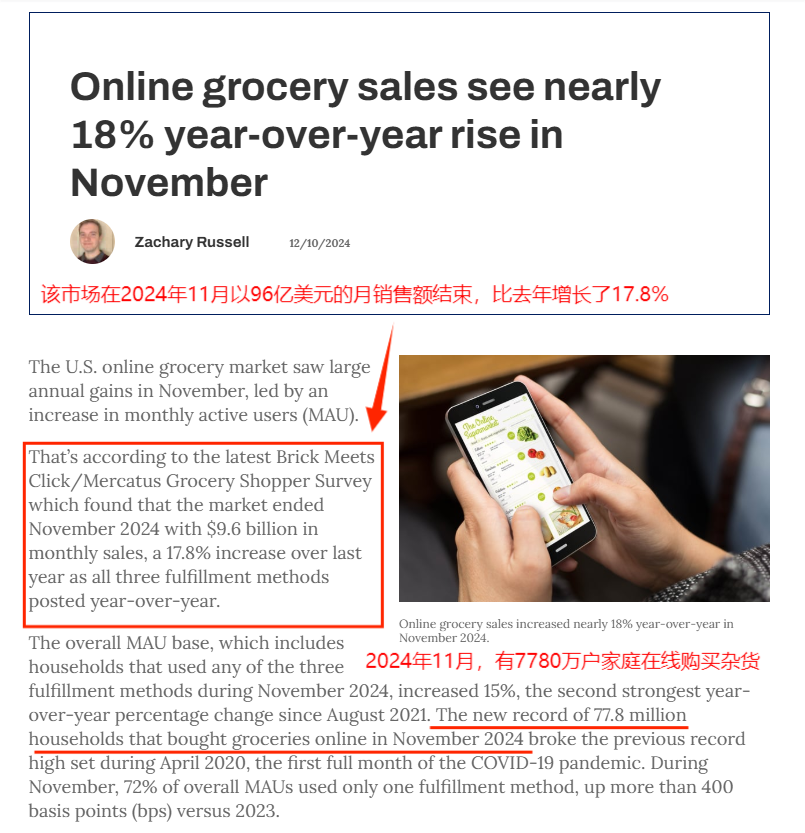
Selon les dernières données, en novembre 2024, les ventes du marché de l’épicerie en ligne aux États-Unis ont augmenté de 17,8 % sur un an, atteignant le chiffre impressionnant de 9,6 milliards de dollars par mois. Ce n’est pas seulement un chiffre colossal, il reflète aussi la préférence et la dépendance croissantes des consommateurs pour les achats en ligne.
Source : chainstoreage
D’après une enquête de Brick Meets Click et Mercatus, le nombre de foyers ayant choisi d’acheter des produits d’épicerie en ligne en novembre a atteint 77,8 millions, avec une croissance significative des ventes via les trois modes : livraison, retrait en magasin et livraison à domicile. Le nombre d’utilisateurs actifs mensuels a augmenté de 15 % sur un an, dont 72 % ne dépendaient que d’un seul mode de livraison, contre 68 % en 2023. On constate que les consommateurs exigent de plus en plus de commodité et d’immédiateté dans leurs achats.
De plus, la satisfaction des consommateurs est en hausse. Le taux d’intention de réutilisation le mois dernier a atteint son plus haut niveau en quatre ans, près de 65,2 %, ce qui montre qu’un nombre croissant de personnes considèrent l’épicerie en ligne comme une norme et sont prêtes à continuer d’utiliser ce service.
Source : chainstoreage
Les géants se bousculent pour prendre position, Amazon et Walmart en compétition acharnée
Quand on parle du marché de l’épicerie en ligne aux États-Unis, Walmart est incontournable. En tant que plus grand détaillant mondial, Walmart bénéficie d’un avantage inégalé dans la livraison du « dernier kilomètre » grâce à son réseau de magasins à travers tout le pays. Que ce soit pour le retrait ou la livraison à domicile, Walmart ne cesse d’optimiser l’expérience utilisateur pour garantir un service plus rapide aux consommateurs.
Cependant, le concurrent de Walmart, Amazon, accélère également son déploiement dans cette compétition. Fort de son système logistique mature et de son service Prime, Amazon est devenu la plateforme de prédilection pour les achats en ligne. De plus, l’attention d’Amazon pour le marché de l’épicerie en ligne ne doit pas être sous-estimée : il améliore constamment l’efficacité de la livraison grâce à l’analyse des données et élargit sa gamme de produits alimentaires pour attirer davantage de consommateurs.
Source : Internet
La vitesse de livraison, la variété des produits et l’innovation technologique deviennent des facteurs clés
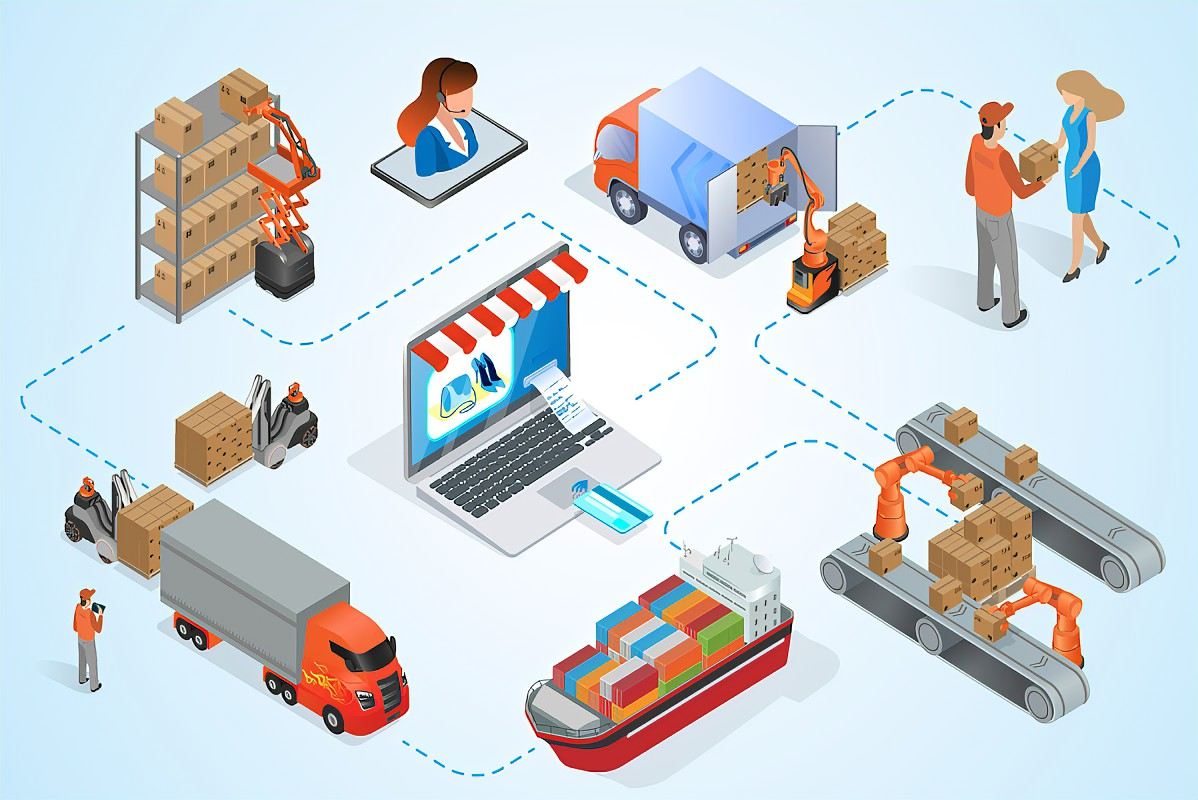
Outre le prix et l’image de marque, la vitesse de livraison et la commodité sont devenues des critères essentiels pour les consommateurs dans le choix de l’épicerie en ligne. Avec une demande croissante pour des livraisons rapides, la « livraison le jour même » et la « livraison en une heure » sont devenues des priorités pour les géants de la vente au détail. Celui qui offrira une livraison plus rapide et des options de livraison plus diversifiées prendra l’avantage dans la compétition.
Parallèlement, de plus en plus de jeunes entreprises en ligne profitent de cette tendance pour briser le monopole des géants traditionnels. De nombreuses plateformes émergentes se concentrent sur des catégories spécifiques (comme les aliments biologiques, les régimes sains, les fournitures pour animaux de compagnie, etc.) et, grâce à des services personnalisés et des modes de livraison flexibles, elles captent rapidement les lacunes du marché, exerçant une pression considérable sur les détaillants traditionnels.
Source : Internet
Une concurrence féroce, un avenir incertain
En résumé, avec la demande croissante des consommateurs pour des achats pratiques, le marché de l’épicerie en ligne aux États-Unis est sur une trajectoire de croissance rapide. Bien que des géants traditionnels comme Walmart et Amazon dominent le marché, l’émergence de nouvelles marques, l’innovation dans les modes de livraison et les progrès technologiques transforment profondément la structure du secteur.
Cette « guerre sans fumée » ne fait que commencer. Celui qui prendra l’avance en matière de technologie et d’expérience utilisateur détiendra la part de marché future. Pour les consommateurs, ils sont sans aucun doute les grands gagnants de cette compétition, profitant d’une expérience d’achat plus pratique, plus efficace et plus personnalisée. Quant aux détaillants, l’innovation et l’optimisation continues seront leurs atouts gagnants.