
 1962
1962Ces dernières années, avec l'intensification de la concurrence dans le commerce électronique mondial, Alibaba n'a cessé de chercher des débouchés sur de nouveaux marchés, en particulier à l'étranger. Le géant chinois du e-commerce Taobao est bien connu pour son succès sur le marché intérieur, mais face à la saturation progressive de ce dernier, Alibaba a accéléré son expansion mondiale.
Le Japon, en tant que composante majeure du marché mondial du e-commerce, est une cible incontournable.
Récemment, Alibaba a officiellement lancé TAO, une plateforme de e-commerce spécialement conçue pour les consommateurs japonais.
Alors, ce « Taobao version japonaise » pourra-t-il s'imposer sur le marché japonais ? Ses adaptations locales parviendront-elles à surmonter les habitudes de consommation locales ? Cet article vous invite à explorer la situation actuelle et l'avenir de TAO.

Source : Internet
TAO : Le « Projet Japon » d'Alibaba
Le lancement de TAO ressemble en apparence à une « copie » de Taobao, mais il a en réalité subi de nombreuses adaptations locales. Tout d'abord, le design de TAO est plus épuré que celui de Taobao, avec une interface qui privilégie l'esthétique des consommateurs japonais, mieux adaptée aux besoins du marché local. Ce design simplifié reflète une étude approfondie du marché japonais par Alibaba : les consommateurs japonais préfèrent généralement des interfaces simples et claires, tandis que le style complexe et varié de Taobao ne correspond pas à leurs goûts.
Les catégories de produits sur TAO diffèrent également de celles de Taobao. Bien qu'elles tournent toujours autour des biens de consommation courante comme les vêtements, la maison et les fournitures de bureau, elles mettent davantage l'accent sur la spécialisation et la localisation. Les produits sur TAO ont un design plus marqué, mettant en avant le raffinement et le caractère pratique à la japonaise. C'est l'une des stratégies de déploiement mondial d'Alibaba : conquérir le marché avec des produits adaptés à la culture et à l'esthétique locales.
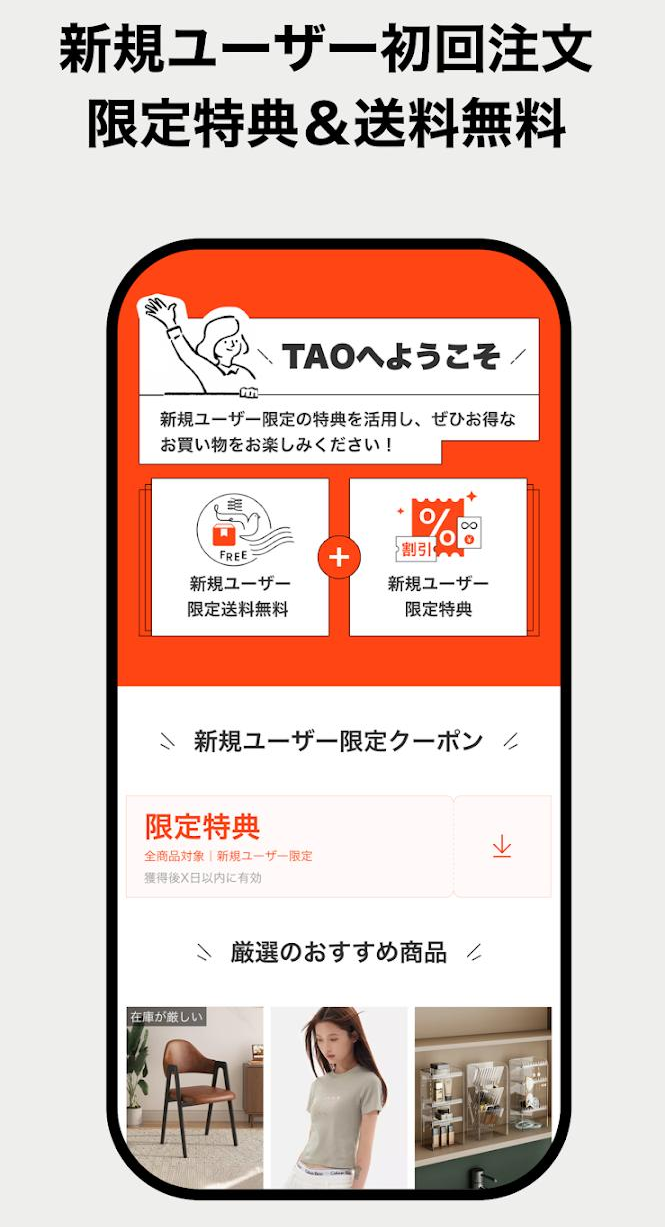
Offre exclusive pour les nouveaux utilisateurs récemment lancée Source : TAO
Ressources marchandes : De Taobao à TAO
En ce qui concerne les ressources marchandes, la plupart des vendeurs de TAO proviennent en réalité des plateformes Taobao et Tmall.
Cela signifie que la majorité des produits de TAO sont toujours expédiés de Chine. Contrairement aux plateformes de e-commerce transfrontalier traditionnelles, TAO cherche à introduire les produits chinois sur le marché japonais sous une forme plus localisée. Ce modèle « de la Chine au Japon », bien qu'il permette d'exploiter l'immense catalogue de produits d'Alibaba, est confronté au défi d'assurer la qualité des produits et le service après-vente. En particulier, la question des retours et échanges, courante dans le e-commerce transfrontalier, nécessite une attention accrue de la part de TAO.
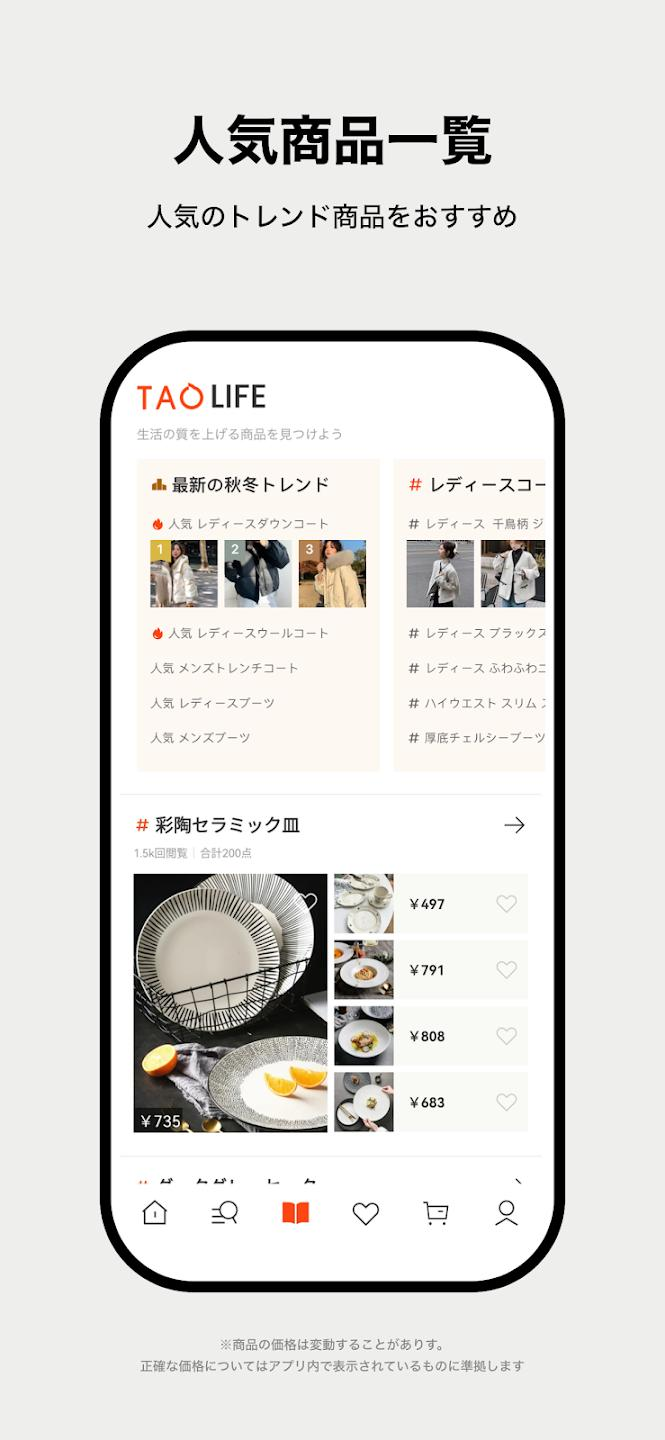
Page produit Source : TAO
Logistique et paiement : Adaptation aux habitudes de consommation japonaises
Pour mieux s'adapter au marché japonais, TAO a apporté de nombreux ajustements en matière de logistique et de modes de paiement.
Tout d'abord, TAO propose une politique de livraison gratuite pour les nouveaux utilisateurs : la première commande est offerte, tandis que les commandes suivantes doivent dépasser 3500 yens pour bénéficier de la livraison gratuite.
De plus, TAO s'aligne sur les habitudes de paiement des consommateurs japonais en acceptant les cartes de crédit, PayPay, ainsi que les paiements en convenience store. C'est sans doute l'une des stratégies clés d'Alibaba pour pénétrer le marché japonais, car les consommateurs japonais sont très exigeants en matière de choix et de commodité des modes de paiement.
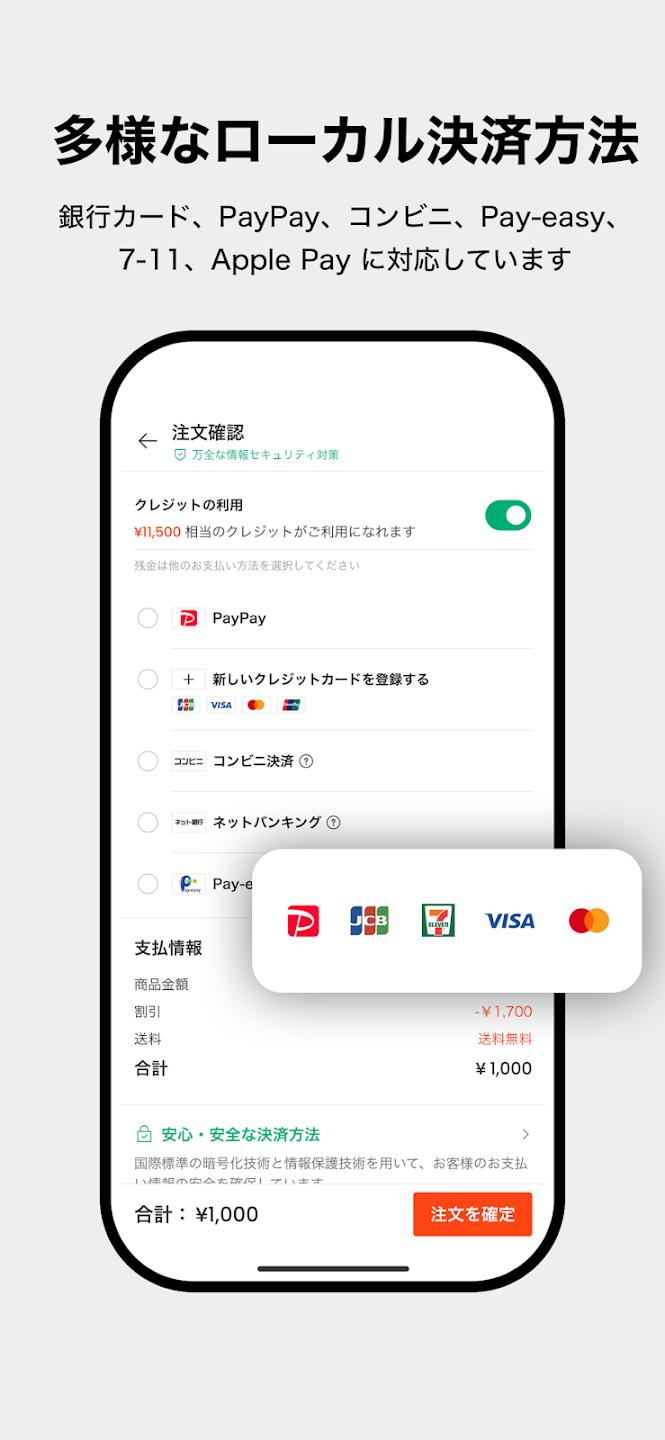
Divers modes de paiement Source : TAO
Service de retours et échanges : Défis et opportunités
Par ailleurs, TAO a également adapté sa politique de retours et échanges au contexte local.
La plateforme permet le retour gratuit des produits achetés dans un délai de 40 jours, ce qui constitue une politique très attractive pour les consommateurs japonais. Le Japon est un marché qui accorde une grande importance au service et à la protection des droits des consommateurs, et un service après-vente complet est essentiel pour gagner leur confiance.
Cependant, l'un des principaux points faibles du e-commerce transfrontalier reste la logistique, en particulier le traitement des retours et échanges. Bien que TAO propose une politique relativement complète, la complexité et le coût élevé des retours transfrontaliers pourraient poser des défis importants à la plateforme. Optimiser l'efficacité et les coûts de la logistique transfrontalière tout en garantissant une bonne expérience utilisateur sera un défi majeur pour TAO.
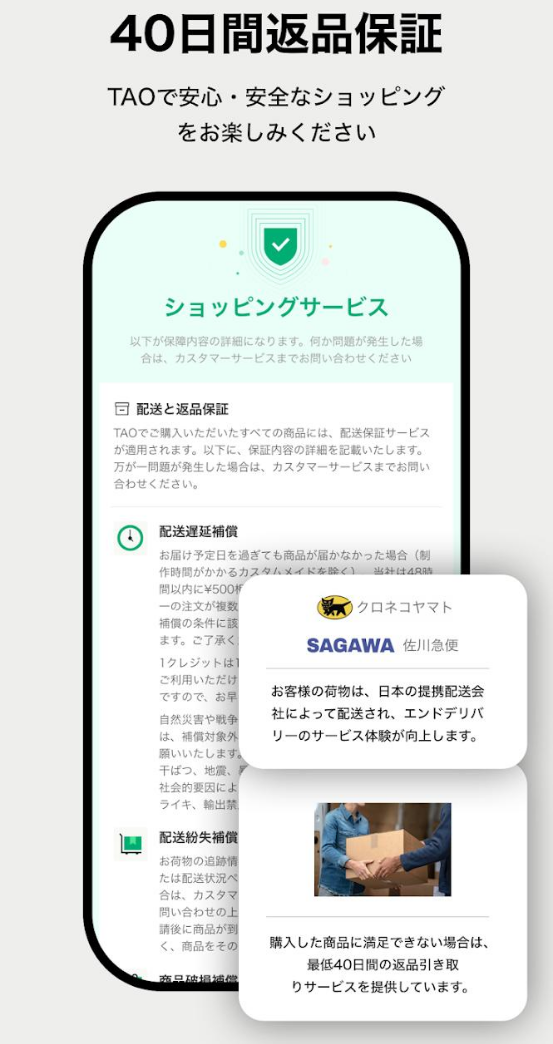
Retour gratuit sous 40 jours Source : TAO
La voie de la « localisation » d'Alibaba : Comment faire face aux spécificités du marché japonais ?
Malgré les nombreuses adaptations locales déjà effectuées par TAO, les spécificités du marché japonais restent l'un des plus grands défis pour Alibaba.
Les consommateurs japonais ont une culture et des habitudes de consommation uniques, accordant une grande importance à la qualité des produits, au design et à la réputation des marques. Par conséquent, en plus de s'appuyer sur les ressources de produits chinois, TAO doit renforcer la construction de sa marque et accroître la notoriété et la confiance des consommateurs envers la plateforme.
De plus, la concurrence sur le marché japonais du e-commerce est très féroce, avec des plateformes locales comme Rakuten et Yahoo Japan qui disposent déjà d'une solide base de marché. Pour se démarquer, TAO devra non seulement tirer parti des avantages de la chaîne d'approvisionnement mondiale d'Alibaba, mais aussi continuer à améliorer l'expérience utilisateur, la qualité des produits et le service après-vente, afin de créer une plateforme capable de rivaliser avec les concurrents locaux.

Source : Internet
Alibaba pourra-t-il reproduire le succès de Taobao sur le marché japonais ?
Actuellement, TAO en est encore à ses débuts, avec un nombre d'utilisateurs et une réaction du marché relativement stables. Mais il reste à voir s'il pourra connaître une croissance aussi rapide que Taobao en Chine. Bien que le marché japonais du e-commerce ait un potentiel énorme, la concurrence y est extrêmement rude. Le succès de TAO ne dépendra pas seulement de l'expérience réussie d'Alibaba en Chine, mais nécessitera également un approfondissement et une amélioration continus de ses opérations locales.
En entrant sur le marché japonais via TAO, Alibaba espère manifestement reproduire son modèle de succès chinois, en utilisant son vaste catalogue de produits et son système de chaîne d'approvisionnement mature pour conquérir rapidement des parts de marché. Cependant, pour y parvenir, la plateforme devra faire preuve de flexibilité et d'adaptation face aux défis liés à la culture de consommation locale, à l'expérience utilisateur et à l'innovation en matière de services.