 2477
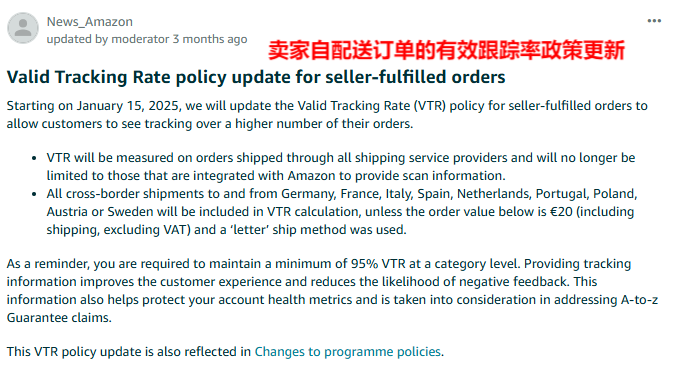
2477En ce début d'année 2025, Amazon a frappé fort ! À partir du 15 janvier, la plateforme mettra en œuvre une nouvelle politique de taux de traçabilité effective (VTR) pour les commandes expédiées par les vendeurs. Que vous soyez vendeur sur la place européenne ou américaine, cette fois-ci, il faudra prendre cela au sérieux. Quels changements cette révision apportera-t-elle ? En apparence contraignante, quelles opportunités cachées recèle-t-elle ? Aujourd'hui, Tuke vous en parle !
Source : Amazon
1. La nouvelle politique d'Amazon, pour une meilleure expérience acheteur
Cette mise à jour de la politique VTR par Amazon a pour objectif central de permettre aux acheteurs de suivre en temps réel l'état de leurs commandes, améliorant ainsi leur expérience d'achat. En tant que plateforme de commerce électronique leader mondial, cette philosophie « client d'abord » a toujours été de mise.
Nouvelles exigences pour la place européenne :
(1) Pour les commandes expédiées par le vendeur, les envois nationaux de plus de 15 euros doivent inclure un numéro de suivi valide.
(2) Les envois transfrontaliers vers des pays européens comme le Royaume-Uni, la France et l'Espagne sont également soumis à cette exigence, sauf si la valeur du colis est inférieure à 20 euros et qu'il est expédié par courrier.
(3) Les vendeurs doivent maintenir un taux de traçabilité effective d'au moins 95 % dans différentes catégories pour répondre aux exigences de la plateforme.
Nouvelles règles pour la place américaine :
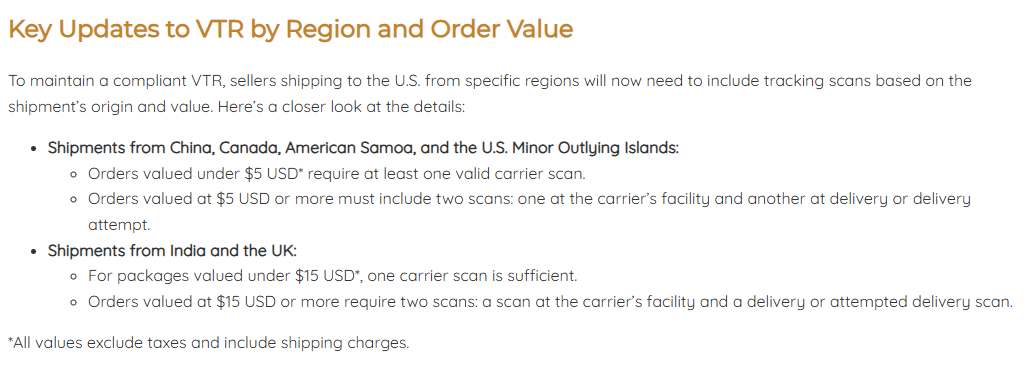
(1) Les colis expédiés vers les États-Unis depuis la Chine, le Canada et d'autres pays doivent fournir des informations de suivi.
(2) Colis d'une valeur inférieure à 5 dollars ? Au moins un scan par le transporteur est requis ; pour les colis de plus de 5 dollars, deux scans sont nécessaires, un dans les installations du transporteur et un autre à la livraison.
Cette révision est plus large et plus stricte. Bien qu'en apparence elle impose des exigences plus élevées au travail de livraison des vendeurs, à long terme, elle contribue à établir un pont de confiance entre les vendeurs et les acheteurs.
Source : Amazon
2. La réponse positive d'Amazon : réduire les tracas inutiles pour vous
Face aux préoccupations de certains vendeurs, comme l'augmentation des coûts logistiques ou le manque de rentabilité du transport de produits à bas prix, Amazon a également fourni des explications officielles :
(1) Améliorer la satisfaction des acheteurs et réduire les taux de remboursement : Les acheteurs peuvent suivre clairement le mouvement de leurs colis et trouver plus rapidement des solutions en cas de problème. Cela réduit non seulement les plaintes pour « colis perdus », mais aussi les avis négatifs ou les remboursements dus à des problèmes logistiques.
(2) Protéger les données et les droits des vendeurs : Face à une réclamation au titre de la garantie A-Z, fournir des informations de suivi précises peut également aider les vendeurs à obtenir un meilleur résultat et à réduire les pertes inutiles.
En fin de compte, cette politique n'est pas seulement favorable aux acheteurs, elle aide aussi les vendeurs à éviter les risques potentiels dans leurs opérations.
Source : Internet
3. Ce qui change, ce ne sont pas seulement les règles, mais aussi les opportunités !
Bien que cette nouvelle réglementation élève effectivement les normes logistiques, derrière les défis se cachent aussi de nouvelles opportunités. Analysons comment transformer ce changement de politique en avantage opérationnel.
(1) Optimiser la chaîne logistique :
Choisissez des partenaires logistiques avec un historique de scans complet et une haute qualité de service. Bien que le coût puisse être légèrement plus élevé, un service logistique fiable améliorera l'expérience client et réduira les problèmes imprévus.
(2) Ajuster la stratégie produit :
Pour les vendeurs de produits à bas prix, envisagez d'augmenter la valeur de chaque commande via des « ventes groupées », par exemple en emballant plusieurs articles à bas prix ensemble. Cela peut optimiser les coûts logistiques et améliorer les marges bénéficiaires.
(3) Bâtir la confiance des acheteurs :
La transparence des informations de suivi logistique rassure les acheteurs sur votre boutique, ce qui contribue significativement à augmenter le taux de réachat et la réputation de la marque.
(4) Utiliser les clauses d'exemption pour réduire les coûts :
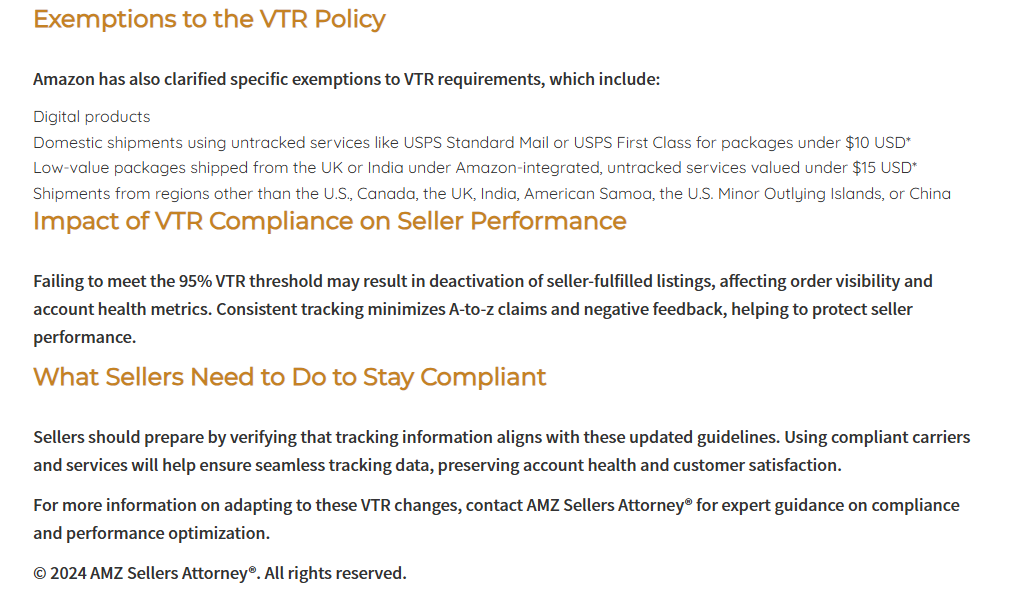
Certains colis à bas prix ou commandes via des modes d'expédition spécifiques sur la place américaine peuvent bénéficier de politiques d'exemption. Les vendeurs peuvent étudier ces clauses en profondeur pour choisir la solution optimale et réduire les coûts opérationnels.
Source : Amazon
4. À long terme, c'est une situation gagnant-gagnant
Cette révision de politique par Amazon semble en apparence alourdir la charge logistique des vendeurs, mais en réalité, elle améliore la qualité globale du service de la plateforme. L'amélioration de l'expérience acheteur attirera plus de trafic de qualité, tandis que les vendeurs, en se conformant aux règles, verront leur classement de boutique et leurs performances de données augmenter régulièrement.
Comme le dit Amazon, cette mise à jour de politique ne vise pas seulement à réguler, mais aussi à aider les vendeurs à établir une chaîne de confiance plus solide avec les acheteurs. Les informations de suivi d'une commande pourraient bien être le début d'un avis positif sur votre boutique.

Conclusion :
Bien que chaque ajustement de règle entraîne une période d'adaptation à court terme, chaque changement d'Amazon pousse l'écosystème du commerce électronique vers plus de normes et de transparence. En tant que vendeur, plutôt que de résister aux règles, il vaut mieux s'y adapter activement. Tant que nous ajustons notre état d'esprit et planifions bien, nous trouverons sûrement notre propre percée dans ce changement !
Cette nouvelle politique logistique, en apparence difficile à gérer, n'est pas forcément une mauvaise chose. Qui sait, peut-être que votre activité en 2025 connaîtra un nouveau point de croissance grâce à ce changement ?