
 1973
1973Récemment, une enquête menée par Smarty, une application de récompenses pour achats en ligne, a suscité beaucoup d'attention.
Cette enquête révèle que près de la moitié des consommateurs américains déclarent prévoir de réduire leurs achats, tandis que 40 % d'entre eux ont l'intention de choisir des marques moins chères.
Cette nouvelle a immédiatement mis en lumière l'attitude des consommateurs américains, qui deviennent de plus en plus économes et semblent ne plus acheter aussi facilement qu'avant.
Alors, que s'est-il passé pour que les Américains soient si prudents ?

Les consommateurs réduiront leurs achats Source : newsbreak
Des droits de douane en constante évolution
L'origine de cette situation remonte à la politique tarifaire américaine.
Il y a quelques mois, Trump a annoncé la suppression de la franchise de 800 dollars, ce qui signifie que les petits colis importés de l'étranger seront taxés, entraînant une hausse des prix des marchandises.
Ce changement a directement refroidi le marché de la consommation américain, semant la panique chez de nombreux commerçants et consommateurs.
Cependant, la politique tarifaire de Trump n'est pas définitive. Alors que tout le monde commençait à s'adapter à ce changement, Trump a émis une nouvelle directive suspendant temporairement la taxation des petits colis. Ces fluctuations sont comparables à des montagnes russes, personne ne sait ce qui se passera l'instant d'après, et les plans d'achat sont naturellement perturbés.
En conséquence, de nombreuses personnes choisissent de réduire leurs achats, en particulier pour les biens de grande valeur comme les voitures, les appareils électroménagers et les meubles. Les consommateurs préfèrent reporter leurs achats, voire ne pas acheter du tout, en attendant de voir si les prix baisseront à l'avenir.
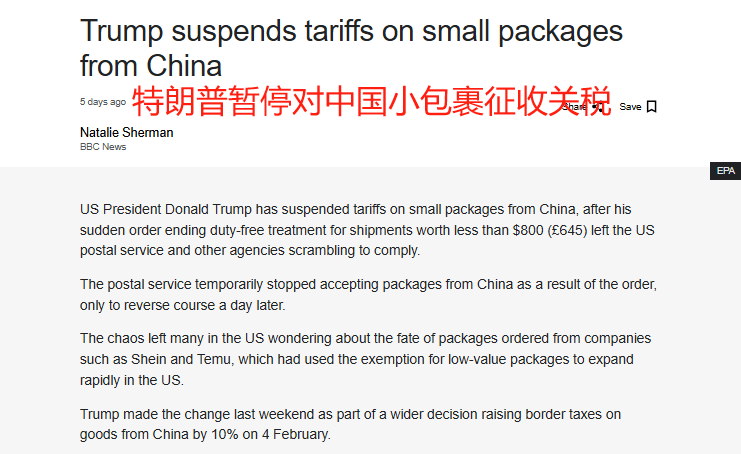
Trump annonce la suspension temporaire de la taxation des petits colis Source : BBC
Devenir économe devient la nouvelle norme
En raison de la hausse des prix, de plus en plus de consommateurs américains se tournent vers les produits d'occasion. L'enquête de Smarty montre qu'environ la moitié des répondants sont plus enclins à envisager l'achat de produits d'occasion, et cette proportion atteint 59 % chez les millennials. Cette tendance n'est pas un phénomène à court terme ; les données montrent également que le marché de l'occasion aux États-Unis connaît une croissance rapide, et les dépenses sur le marché de la revente devraient dépasser celles du commerce de détail traditionnel d'ici 2024.
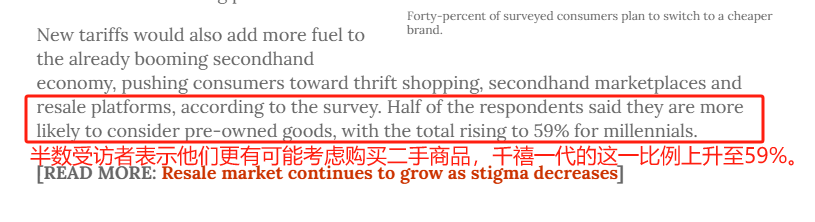
Les Américains sont plus enclins à envisager l'achat de produits d'occasion Source : chainstoreage
C'est un avertissement pour les commerçants : le marché de l'occasion devient une tendance de consommation à ne pas négliger à l'avenir. Surtout chez les jeunes, les produits d'occasion ne sont plus considérés comme de "mauvaise qualité", mais plutôt comme un choix "intelligent". Non seulement on économise de l'argent, mais on est aussi plus respectueux de l'environnement, pourquoi s'en priver ?
Non seulement aux États-Unis, mais le marché mondial de l'occasion accélère également son développement. Selon les prévisions de The Business Research Company, la taille du marché mondial de l'occasion atteindra 424,1 milliards de dollars d'ici 2024, avec un taux de croissance annuel composé impressionnant de 12,7 % au cours des prochaines années. C'est un marché énorme à ne pas ignorer.
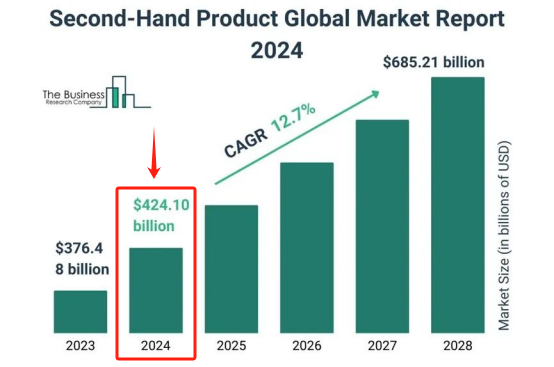
Le marché de l'occasion connaît une croissance rapide Source : The Business Research Company
Ralentissement de la consommation de biens de grande valeur, comment les marques doivent-elles réagir ?
Bien que de nombreux Américains se tournent vers les produits d'occasion, la consommation de biens de grande valeur persiste.
Le problème est que les consommateurs sont désormais moins intéressés par les biens de grande valeur, et le report des achats devient courant.
Par conséquent, pour attirer ces consommateurs, les commerçants doivent ajuster leurs stratégies de manière flexible. Par exemple, en offrant plus d'offres promotionnelles, des options de paiement échelonné, etc., pour abaisser le seuil psychologique d'achat des consommateurs et les inciter à passer commande rapidement. Parallèlement, face à l'instabilité des droits de douane, les commerçants doivent également mettre en place une stratégie de localisation pour réduire la pression des coûts liés aux tarifs.

Source : Internet
Changement majeur des tendances de consommation, quel avenir ?
Actuellement, les fluctuations des droits de douane rendent les consommateurs américains plus prudents, et leurs habitudes de consommation sont en train de changer discrètement.
Alors, face à ce défi, les commerçants pourront-ils saisir l'opportunité et tirer parti de ces changements ?
La réponse est oui. Tant que les commerçants sauront capter les tendances de consommation avec acuité et ajuster leurs stratégies de manière flexible, que ce soit par une implantation locale ou en adoptant le marché de l'occasion, ils pourront se maintenir dans cette transformation de la consommation.
Dans cette tempête tarifaire, qui parviendra à briser le cadre du commerce de détail traditionnel et à mener la nouvelle vague de consommation ?
Nous attendons de voir !