 2173
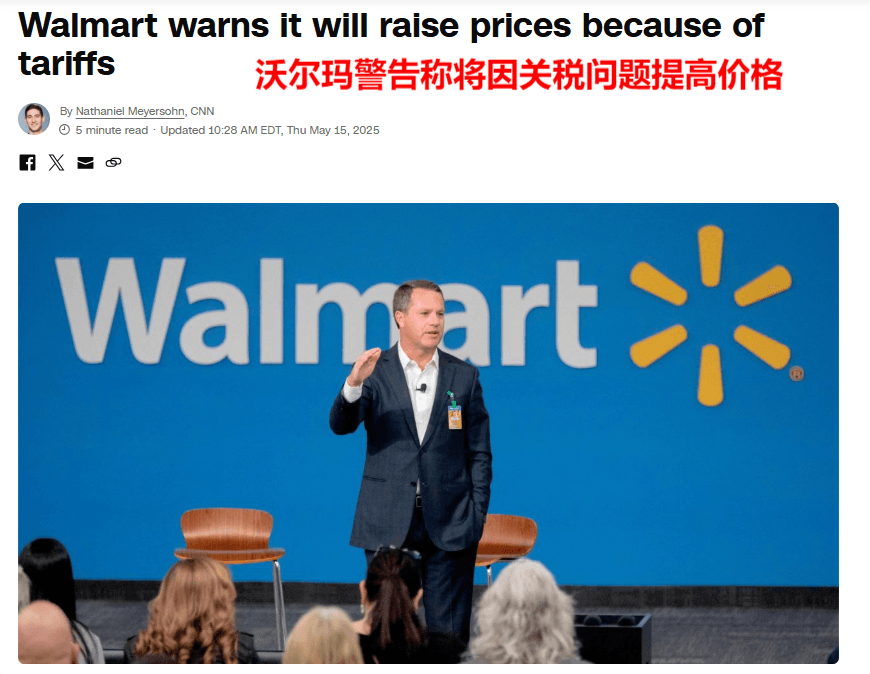
2173Le secteur de la vente au détail aux États-Unis est le théâtre d'un « jeu de tarifs douaniers » sans précédent. Le 17 mai, Doug McMillon, PDG de Walmart, a révélé lors de la conférence sur les résultats trimestriels que, sous la pression continue de la politique tarifaire envers la Chine, ce géant de la distribution pourrait lancer une vaste révision des prix fin mai.
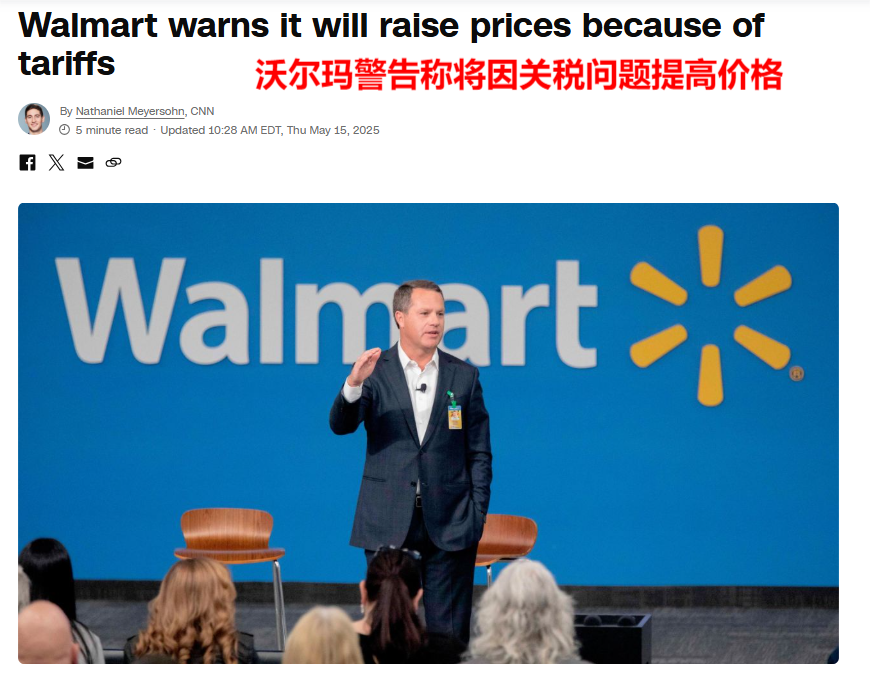
Source : CNN Business
À peine 12 heures après l'annonce, Donald Trump a immédiatement publié un message sur son réseau social Truth Social, ciblant directement le géant de la distribution Walmart : « Vous avez gagné des dizaines de milliards de dollars l'année dernière, bien au-delà des prévisions. Vous devez maintenant absorber vous-mêmes les coûts des tarifs douaniers, ne les répercutez pas sur les consommateurs ! »
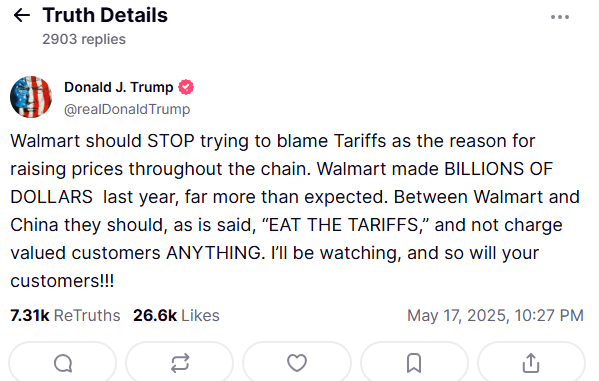
Source : Truth Social
Face aux pressions de Trump, Walmart a rarement exprimé publiquement ses difficultés. Les résultats financiers publiés le 15 mai montrent que le bénéfice net du premier trimestre fiscal a chuté de 12,1 % sur un an, à 4,49 milliards de dollars, tandis que le chiffre d'affaires a augmenté de 2,5 % pour atteindre 165,61 milliards de dollars, tous deux inférieurs aux attentes du marché.
En réalité, Walmart a déjà changé de position à plusieurs reprises dans ce jeu tarifaire. Début avril, alors que les droits de douane américains sur la Chine atteignaient 145 %, Walmart avait exigé une baisse de 10 % des prix de ses fournisseurs chinois pour partager les coûts, mais a dû faire marche arrière face au risque de rupture de la chaîne d'approvisionnement, reprenant finalement les commandes et acceptant que les États-Unis assument les tarifs.
Malgré cela, le coût à l'arrivée d'une guirlande lumineuse LED fabriquée en Chine est passé de 9,9 dollars à 26,3 dollars, forçant le prix de détail à 28,5 dollars. Le directeur financier John David Rainey a déclaré sans détour : « Même si les tarifs ont été réduits, les droits spéciaux sur les produits chinois restent insupportables. »
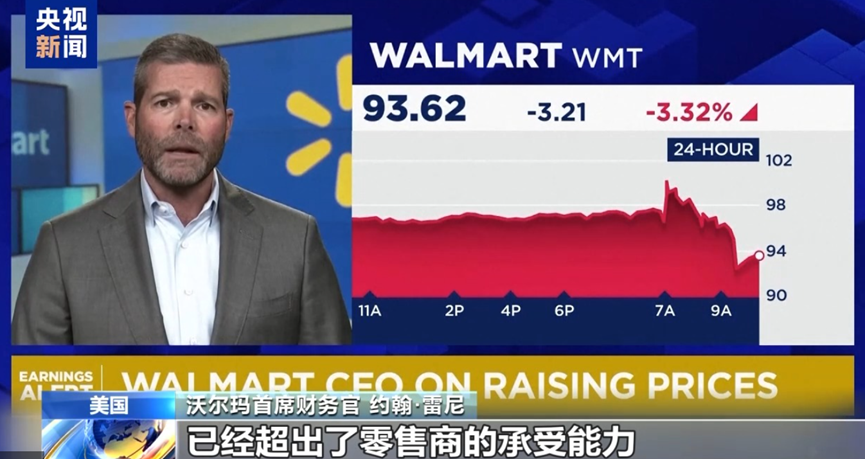
Source : CCTV News
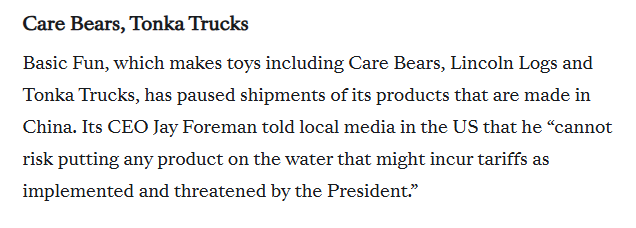
Les difficultés de Walmart ne sont que la partie émergée de l'iceberg. Dès début avril, la marque de jouets floridienne Basic Fun avait annoncé la suspension des importations de produits populaires comme les camions Tonka en provenance de Chine.
Son PDG, Jay Foreman, a révélé que les tarifs avaient considérablement augmenté les coûts globaux des produits, ajoutant : « Si la politique persiste, ces jouets classiques pourraient disparaître du marché américain. »
Source : brandequity
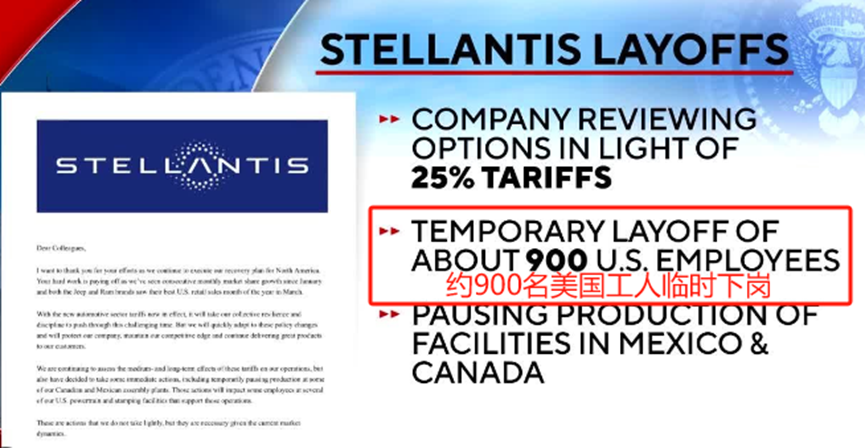
Des répercussions plus graves se font sentir dans le secteur manufacturier. Le constructeur automobile multinational Stellantis a annoncé le 8 mai le licenciement temporaire de 900 employés dans cinq de ses usines du Michigan en raison de la flambée des droits de douane sur les pièces détachées. Le secteur des vêtements de sport est également en alerte : les résultats du premier trimestre 2024 de Nike, Adidas et Lululemon montrent une baisse respective de 19 %, 24 % et 31 % de leurs commandes auprès de la Chine.
Source : YouTube
L'ombre d'une rupture de la chaîne d'approvisionnement rend les détaillants encore plus nerveux. Pendant la suspension des expéditions par les fournisseurs chinois, le taux de rayons vides dans les supermarchés américains a atteint 30 %, et le nombre de navires chinois au port de Los Angeles a chuté de 33 %. Le PDG de Walmart a même averti que si l'approvisionnement n'était pas rétabli dans les deux semaines, la flambée des prix pourrait affecter les élections de mi-mandat.
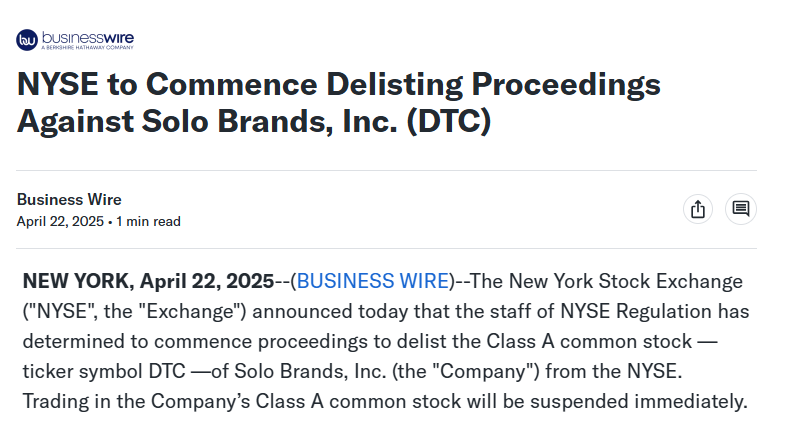
Bien que les « pourparlers économiques et commerciaux de Genève entre la Chine et les États-Unis » du 12 mai aient conduit à l'annulation de 91 % des tarifs américains sur la Chine et à la réduction du taux de taxation du courrier international de 120 % à 54 %, les revirements politiques ont déjà gravement affecté les entreprises. Solo Brands, une marque de plein air majeure sur Amazon, dépendante de la production chinoise, a directement été radiée de la cote sous l'impact des tarifs, devenant une victime de cette « guerre commerciale ».
Source : Businesswire
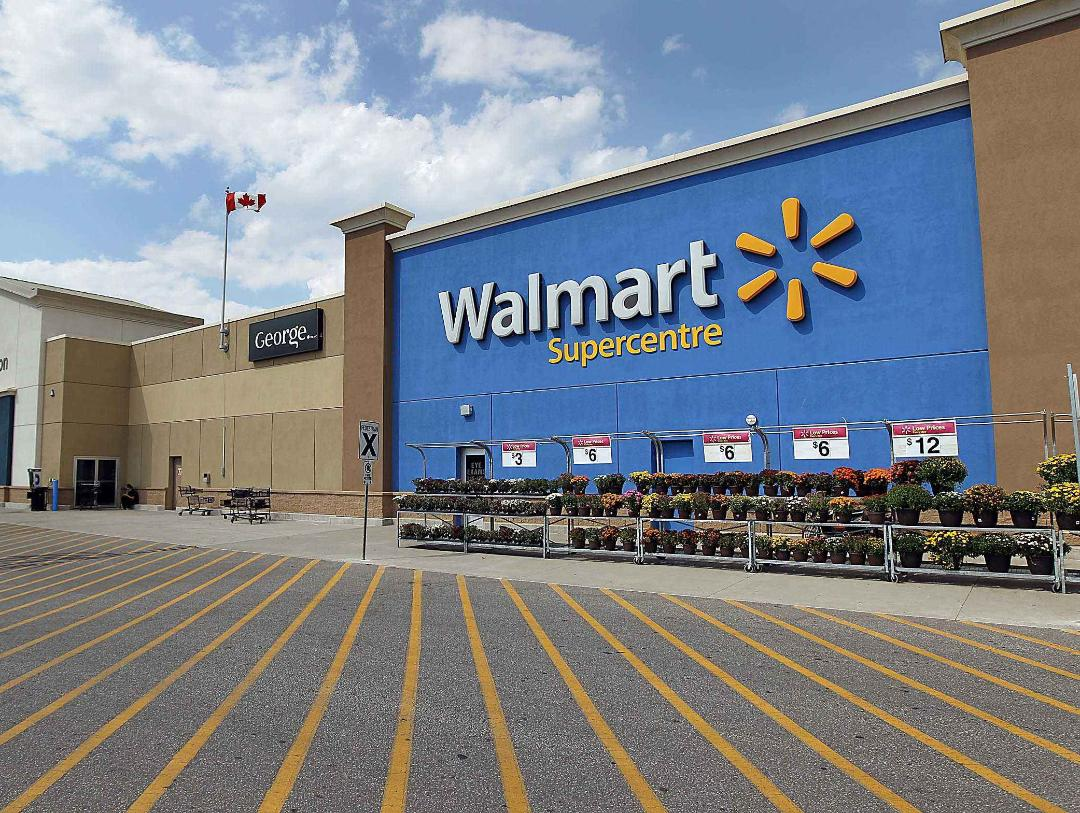
Il est clair que le gouvernement américain pousse constamment au rapatriement de la production, mais la réalité est bien différente. Une usine de jouets du New Jersey a tenté de remplacer la chaîne d'approvisionnement chinoise par l'impression 3D, mais le taux de produits conformes n'était que de 37 %. Le taux de conformité des contrôles qualité dans les usines vietnamiennes a chuté de 8 %, et l'Inde ne peut satisfaire que 15 % des besoins de Walmart en articles de fête. Au cours de l'exercice 2025, Walmart a importé pour 30 milliards de dollars de marchandises de Chine, représentant 40 % de sa chaîne d'approvisionnement mondiale, notamment dans les vêtements abordables et les articles ménagers, où la Chine est presque irremplaçable.
La rapidité de réponse des fournisseurs chinois, capables de fournir des échantillons en 72 heures, rend leur remplacement difficile pour les détaillants américains.
Source : Internet
Ce jeu démontre les limites des tarifs douaniers unilatéraux... Lorsque les slogans politiques se heurtent à la réalité économique, même Walmart doit s'incliner devant la chaîne d'approvisionnement chinoise. Cependant, un compromis temporaire ne résout pas le problème fondamental. Si les États-Unis n'abandonnent pas leur stratégie de containment, la crise de la chaîne d'approvisionnement pourrait se reproduire périodiquement. Quant aux consommateurs ordinaires, la facture de cette « guerre des tarifs » s'est déjà glissée discrètement dans leur panier d'achat.


