
 7544
7544Le marché du commerce électronique russe connaît un bouleversement majeur. Deux géants, Ozon et Wildberries, ont successivement annoncé une augmentation de plusieurs frais pour les vendeurs, les nouvelles règles devant entrer en vigueur en juin 2025, suscitant une vive attention parmi les vendeurs transfrontaliers.

Source : Internet
Hausse des frais de plateforme, logistique et commissions au cœur des préoccupations
Ozon a annoncé en premier un nouveau système de tarifs à compter du 13 juin. Côté logistique, en mode FBO (livraison par la plateforme), les frais de livraison pour les articles de moins d’un litre passent de 43 à 46 roubles ; en mode FBS (stockage par le vendeur, livraison par la plateforme), le tarif distinct pour les articles de moins de 0,4 litre est supprimé, et les frais pour les articles de moins d’un litre sont unifiés, passant de 76 à 80 roubles. Les commissions de vente augmentent également de manière générale : en mode FBS, les commissions pour la plupart des catégories grimpent de 3 à 4,5 points de pourcentage ; en mode FBO, elles augmentent globalement de 4,5 points, avec une hausse de 5 points pour la mode ; en mode realFBS (logistique entièrement gérée par le vendeur), la commission moyenne augmente de 5 points.
Source : VC.ru
Il est à noter qu’Ozon a mis en place un mécanisme de transition pour ces nouvelles règles. Les nouveaux tarifs logistiques entreront en vigueur 60 jours après la création de la demande d’approvisionnement par le vendeur. Par exemple, pour une demande créée début mai, l’ancien tarif s’appliquera jusqu’en juillet. Les vendeurs de chaussures, vêtements et accessoires qui soumettent une demande de livraison avant le 24 juin peuvent verrouiller leur commission de vente à 13 % pour ces marchandises jusqu’à la fin de l’année.
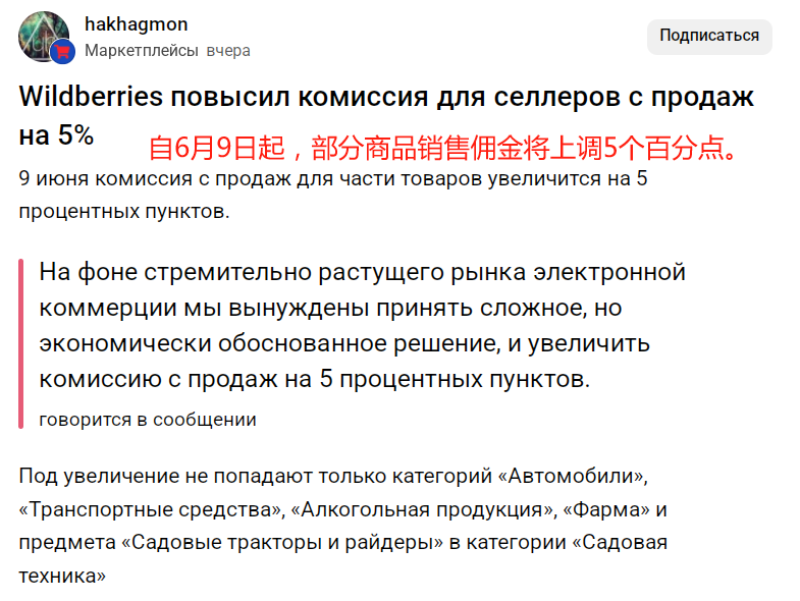
Peu après, Wildberries a annoncé une augmentation de 5 points de pourcentage des commissions de vente pour certains produits à compter du 9 juin. Actuellement, les commissions de la plateforme fluctuent entre 3 % et 25 %, et cette hausse réduira considérablement les marges des vendeurs concernés. Dans son communiqué, la plateforme a déclaré que cette augmentation visait à faire face à « une charge de coûts croissante ». Ces dernières années, le commerce électronique russe a connu un essor explosif, avec plus de la moitié de la population effectuant des achats réguliers sur Wildberries, ce qui exerce une pression énorme sur les infrastructures logistiques.

Source : YouTube
Stratégie d’expansion moteur des ajustements tarifaires, les vendeurs comme soutien clé
Ce sont ces ajustements tarifaires qui fournissent les flux de trésorerie nécessaires à l’expansion continue des deux géants. Les frais des vendeurs, en tant que source de revenus principale des plateformes, sont devenus un « carburant » essentiel pour leur avancée stratégique.
L’expansion d’Ozon est particulièrement rapide. Début 2025, elle a ouvert son premier centre logistique douanier de commerce électronique en Russie, dédié au dédouanement et au stockage des marchandises importées. Dans l’année, elle prévoit de construire six nouveaux centres de stockage dans l’est et le sud de la Chine pour accélérer l’exécution des commandes des vendeurs chinois. Fin 2024, elle avait déjà installé près de 3 500 points de retrait dans les petites villes russes. Son empreinte géographique s’élargit également rapidement : en février, elle a ouvert aux vendeurs chinois les marchés de l’Arménie, du Kirghizistan et de l’Azerbaïdjan ; en mars, elle a franchi les limites de catégories en introduisant la vente de voitures d’occasion pour trouver de nouveaux relais de croissance. Pour soutenir ces investissements, Ozon a enregistré un programme d’obligations de 50 milliards de roubles à la Bourse de Moscou.

Source : Ozon
Bien sûr, Wildberries n’est pas en reste en matière d’ambition. La PDG Tatyana Kim a révélé qu’en 2024, 18 installations logistiques d’une superficie totale de 2,5 millions de mètres carrés seront ouvertes, avec plusieurs projets d’entrepôts en cours. Côté innovation, en mars, la plateforme aurait prévu de lancer une plateforme de revente « Wildberries Resale » pour créer un écosystème de revente en boucle fermée, tout en dévoilant l’application de shopping vidéo « Wibes », exploitant le commerce électronique de contenu à la TikTok pour générer de nouvelles croissances.

Source : iguides.ru
Défis et opportunités pour les vendeurs
La hausse simultanée des prix par les deux plateformes augmentera considérablement les coûts d’exploitation des vendeurs à court terme. En particulier, les vendeurs de petits articles, de produits à faible valeur unitaire ou de catégories à forte commission (comme la mode) verront leurs marges directement comprimées. La « pression sur les coûts » soulignée par Wildberries révèle également les défis réels posés par la croissance explosive du commerce électronique russe aux infrastructures des plateformes.
La machine d’expansion des plateformes a besoin d’un carburant continu, et les frais des vendeurs en sont devenus le moteur clé. Face à la hausse des coûts, les vendeurs doivent d’urgence recalculer leurs modèles de rentabilité, utiliser de manière flexible les fenêtres tarifaires et s’ancrer profondément dans les infrastructures des plateformes et les dividendes de l’expansion du marché. Ceux qui parviennent à optimiser leur chaîne d’approvisionnement et à explorer de nouveaux marchés pourront transformer les défis immédiats en avantages concurrentiels à long terme.