In the global consumer market dominated by Generation Z, many overseas brands are breaking into the European and American markets with the "novelty and uniqueness" strategy.
Now, Rabbitke analyzes how overseas brands leverage innovative products, differentiated marketing, and precise content to tap into the young overseas consumer market through three typical cases.
Generation Z Consumption Code: Novelty, Sense of Participation, and Social Currency
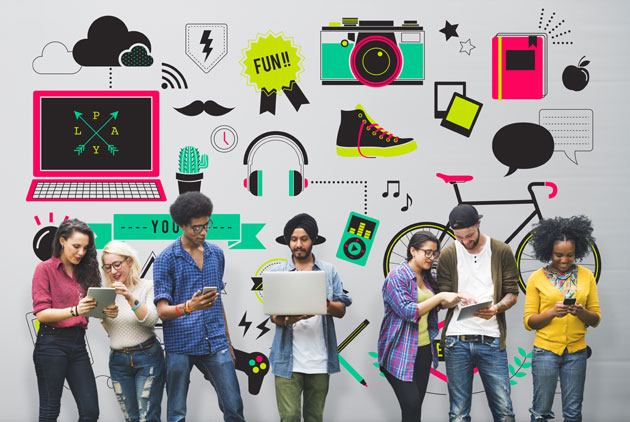
Generation Z (born between 1996-2010) are digital natives, and their consumption behaviors show three major characteristics: pursuit of novel experiences, desire for co-creation, and enthusiasm for social sharing.
According to the "2024 Global Generation Z Consumption Report," 73% of young people in Europe and America are willing to pay for "social currency," that is, products that highlight individuality and spark discussion. If overseas brands want to stand out, they need to integrate the genes of "novelty and uniqueness" into product design, marketing scenarios, and content dissemination.
Image source: Google
TikTok Viral Formula: Three Practical Paths of the Novelty and Uniqueness Strategy
1. Product Innovation: Disrupting Traditional Perceptions with Invisible Technology
Case: FeelinGirl Shapewear
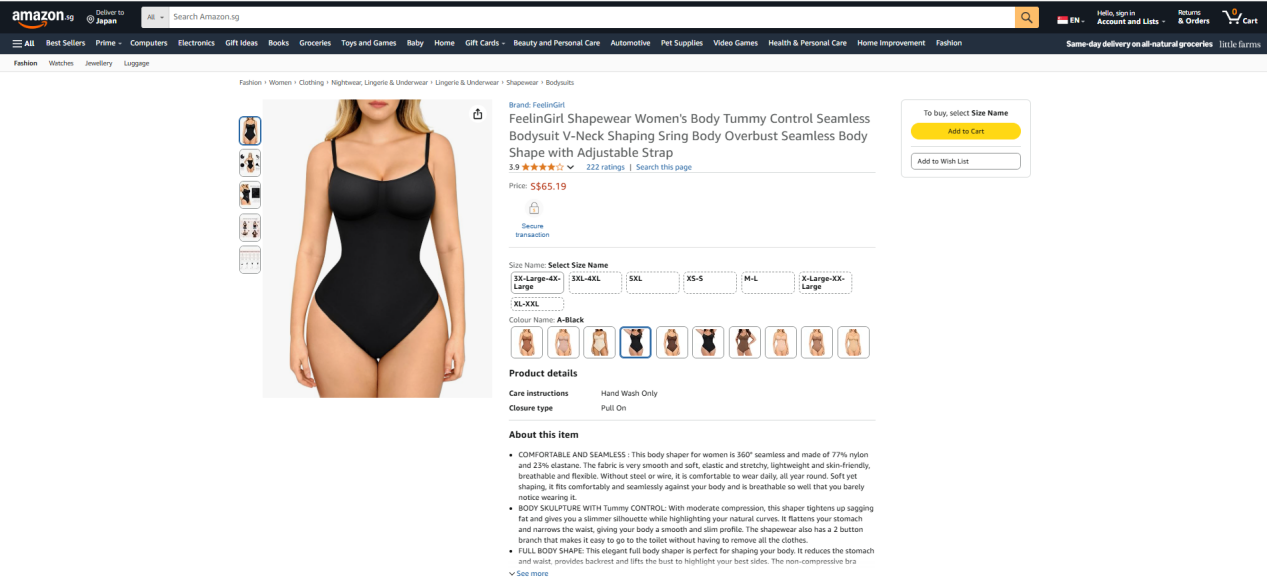
FeelinGirl, a brand under Xiamen Hexin Technology Co., Ltd., has redefined the traditional shapewear market by introducing the concept of invisible shaping. The brand's thong bodysuit shapewear uses a fabric blend of 77% nylon and 23% spandex, achieving 360-degree all-around shaping without a sense of restraint, and offers 13 solid color options to meet the strong demand for invisible underwear among European and American consumers.
In addition, the brand has launched a variety of products such as waist belts and wireless bodysuits, covering sports, daily wear, and other scenarios, further strengthening consumers' perception of shapewear as a fashion item.
In terms of market performance, FeelinGirl's daily sales on TikTok have exceeded 3,000 orders, and it has ranked among the top three in its category on Amazon's BSR (Best Sellers Rank).
Image source: Amazon
2. Content Breakthrough: Building Trust Momentum with Professional Endorsements
Case: The Ordinary Toner
The Ordinary, a budget skincare brand under Estée Lauder, stands out in the TikTok beauty sector with its ingredient marketing strategy.
One of the brand's products, the 7% glycolic acid toner, not only has authoritative endorsements from medical experts, such as test videos by Yale University dermatologists, which increase the product's credibility, but also uses comparative experiments, such as showing cases of male back acne improvement, to intuitively demonstrate product effectiveness.
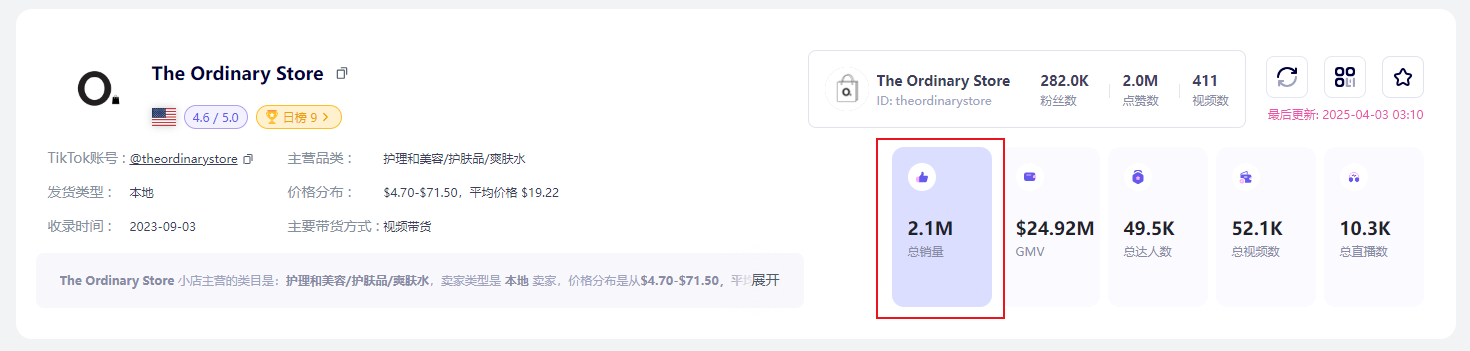
Furthermore, The Ordinary has collaborated with over 4,100 KOLs, spreading its high cost-performance skincare philosophy through a KOL matrix. The implementation of these strategies has led to significant market results, with single-day sales exceeding 12,000 units and total brand sales surpassing 2.1 million units.
Image source: EchoTik
3. Cultural Grafting: Leveraging Contrasting Cuteness to Drive Social Spread
Case: Guowei Electric Tricycle
The Chinese electric tricycle brand Guowei has successfully entered the US market through innovative marketing strategies.
A creative short video posted by blogger "Bobo in America" showed an American father-in-law riding a Guowei electric tricycle, with the tricycle featuring the Chinese phrase "Please pay attention when reversing," creating a strong cultural contrast that attracted widespread attention and discussion among American netizens.
This "contrasting cuteness" promotional method went viral and achieved great results, prompting many Americans with needs to place orders. Currently, Guowei's products are exported to more than 70 countries and regions worldwide, and are especially popular in Europe, Southeast Asia, and Africa. The company's annual revenue has reached $50 million to $100 million.
Image source: Red Star News
Conclusion
In the European and American Generation Z market, overseas brands may not need to blindly cater, but rather use "novelty and uniqueness" as a hook to attract the attention of young consumers.
When a brand becomes part of young people's social lives, "viral hits" are no longer accidental, but a sustainable global capability.