Recently, TikTok has once again become the focus of public opinion.Mike Moolenaar, Chairman of the House Select Committee on the Chinese Communist Party, publicly stated that the forced sale plan for TikTok proposed by Trump in 2020 is the "perfect leadership solution" to resolve security disputes. At the same time, the latest reports indicate that the newly elected U.S. President Trump has taken swift action by submitting an application to the Supreme Court, aiming to temporarily halt the decision on the forced sale of TikTok.

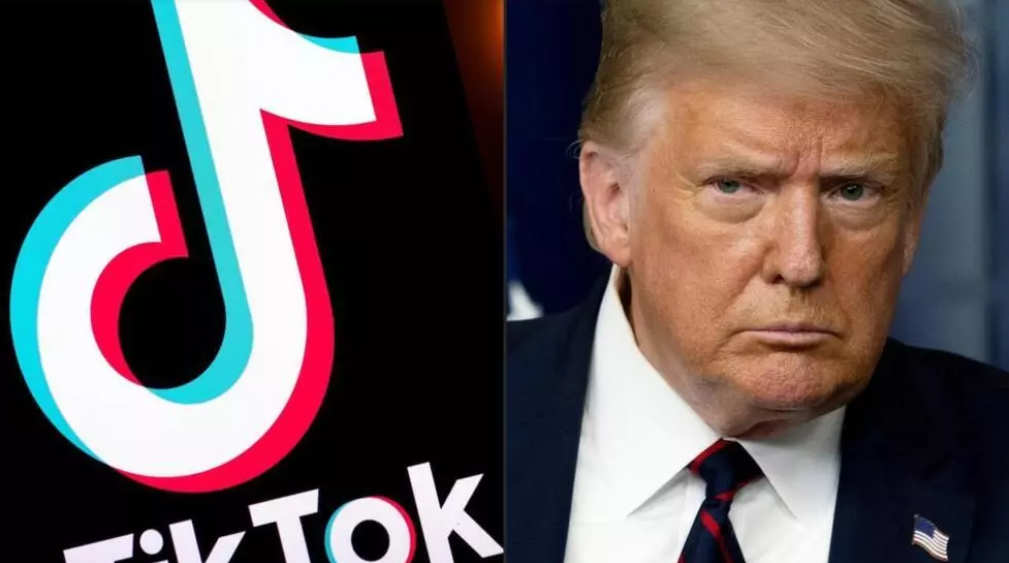
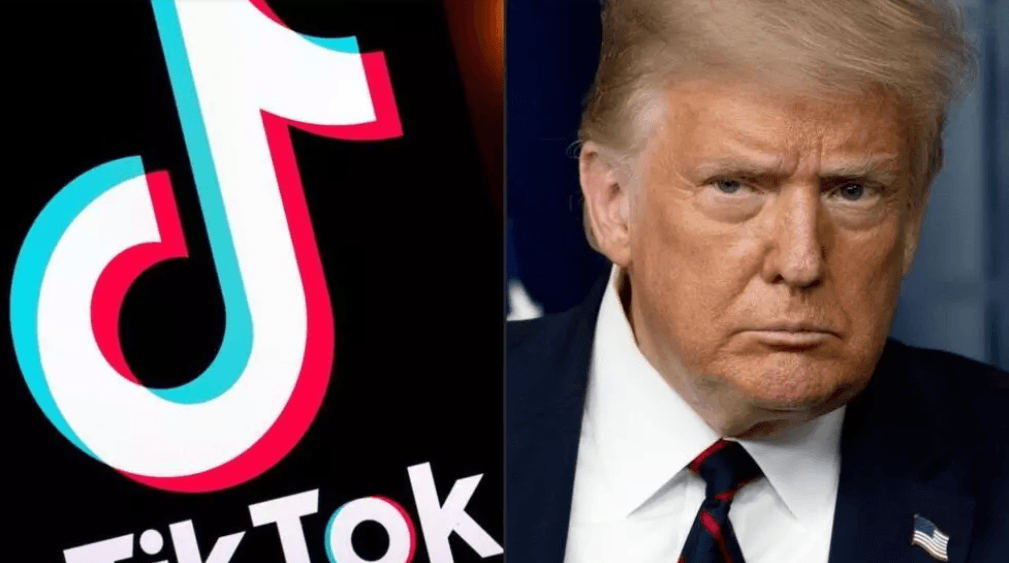
TikTok logo and illustration of U.S. President-elect Trump Source: AFP

Trump's Emergency Move

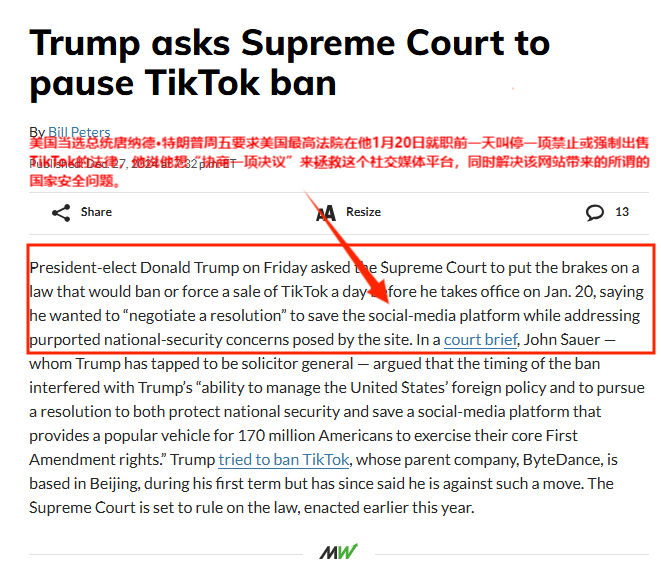
On December 27, Trump directly submitted a request to the Supreme Court, asking to suspend the divestiture order against TikTok. His reason was clear: he hopes to resolve the dispute through political means after he is officially inaugurated on January 20 next year. By doing this, he is trying to buy TikTok a little more time.

According to the current arrangement,The divestiture order for TikTok will take effect on January 19, 2025, and the U.S. government requires ByteDance to divest TikTok's U.S. operations, or face a direct ban. Trump's move this time is undoubtedly giving TikTok a chance to catch its breath.

Trump requests Supreme Court to suspend TikTok ban Source: The Wall Street Journal

Moolenaar (John Moolenaar): Sale is the "Perfect Solution"

On the other hand,Moolenaar once again brought up Trump's 2020 "forced sale plan". He said that forcing TikTok to sell is the "perfect leadership solution," which can both protect U.S. national security and retain this social platform loved by young people.

Moolenaar's remarks remind us of the "hardcore move" by the Trump administration in 2020. At that time, Trump believed that TikTok might hand over U.S. user data to the Chinese government, so he proposed that TikTok's parent company ByteDance sell its U.S. operations. This was seen as a "tough move" at the time, but it ultimately failed due to legal issues.

However, Moolenaar has now brought this matter back to the table, believing thatforced sale is a "safe and realistic" solution. In other words, selling is better than banning, as it can keep the platform while addressing national security concerns.

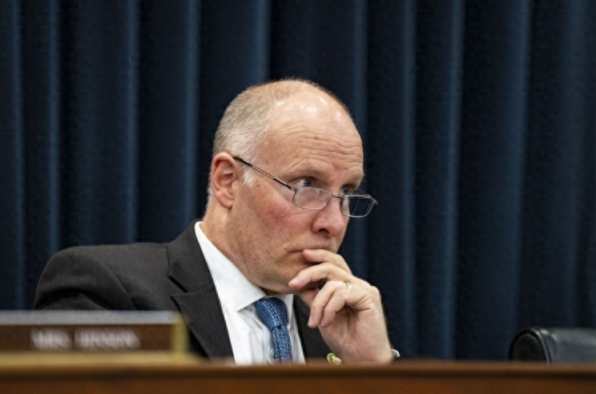
Speaker of the U.S. House of Representatives Moolenaar Source: Internet

TikTok's Response and Controversy

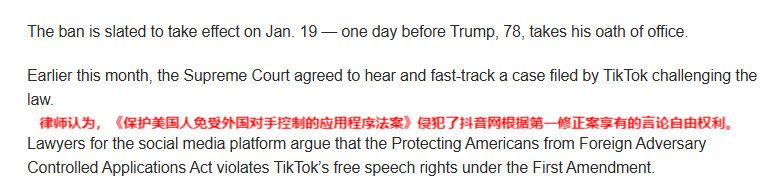
Facing the divestiture order, TikTok and its parent company ByteDance have made it clear that theywill not accept the forced sale plan, and have appealed the case to the U.S. Supreme Court. TikTok's legal counsel pointed out that the order not only infringes on the company's legitimate rights and interests, but also adversely affects the interests of 170 million American users. Meanwhile, TikTok has already launched the "Texas Plan," cooperating with Oracle to store U.S. user data locally and investing $1.5 billion to strengthen data security. However, these efforts have still not completely dispelled the concerns of the U.S. government.

Source: New York Post

Why is the "Perfect Solution" Being Raised Again?

Moolenaar's statement and Trump's latest application show the practical significance of the forced sale plan in the current environment.As U.S.-China relations remain tense, the TikTok issue is no longer just a business matter, but a core topic involving national security, technological competition, and international rivalry. Compared to a direct ban, a forced sale is seen as a relatively moderate and operable option. However, ByteDance has made it clear that it will not sell its core algorithm, which poses significant technical and legal obstacles to any deal.

Conclusion

The fate of TikTok will depend on several key milestones. On January 10, the U.S. Supreme Court will hear arguments from both sides and may make a final ruling on the divestiture order. If Trump's application is approved, TikTok will have more time to seek a compromise; but if the ruling upholds the divestiture order, ByteDance will face a tough choice.

From Moolenaar's strong support to Trump's emergency application, this storm is not only about the fate of an app, but also reflects the complex intertwining of U.S.-China relations and national security. The coming weeks may determine the life or death of TikTok in the U.S. market.