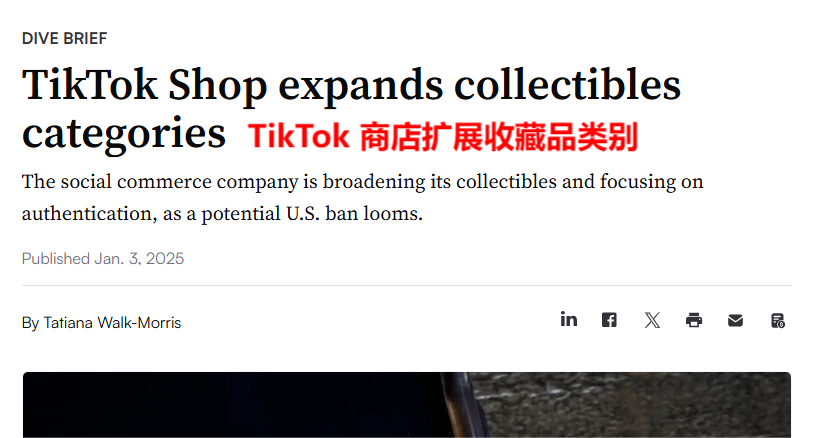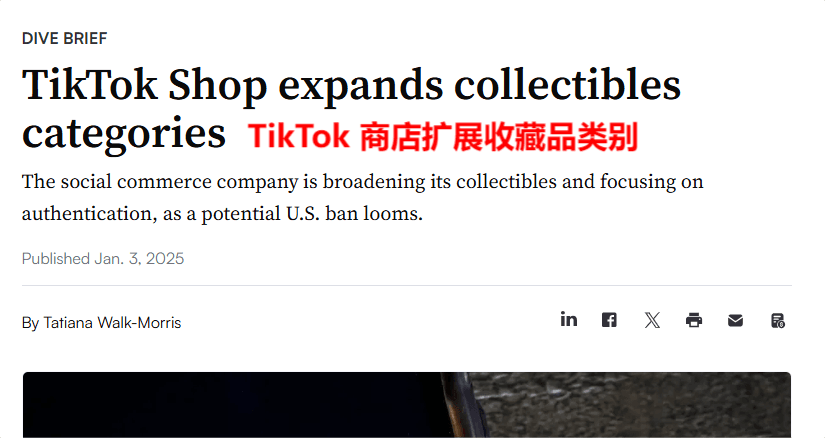
Recently, TikTok Shop has made a new move in the US market by adding 10 new collectibles categories, including comic books, fan magazines, art books, as well as signed jerseys, sports memorabilia, and more. From traditional collectibles to personalized limited-edition items, the introduction of these new categories aims to capture American consumers’ passion for collectibles and also highlights the platform’s focus on the development of the second-hand market.

Image source: retaildive

Why is the collectibles market so attractive? The answer is simple: it’s not just about “buying things,” but also about emotional connection and identity.

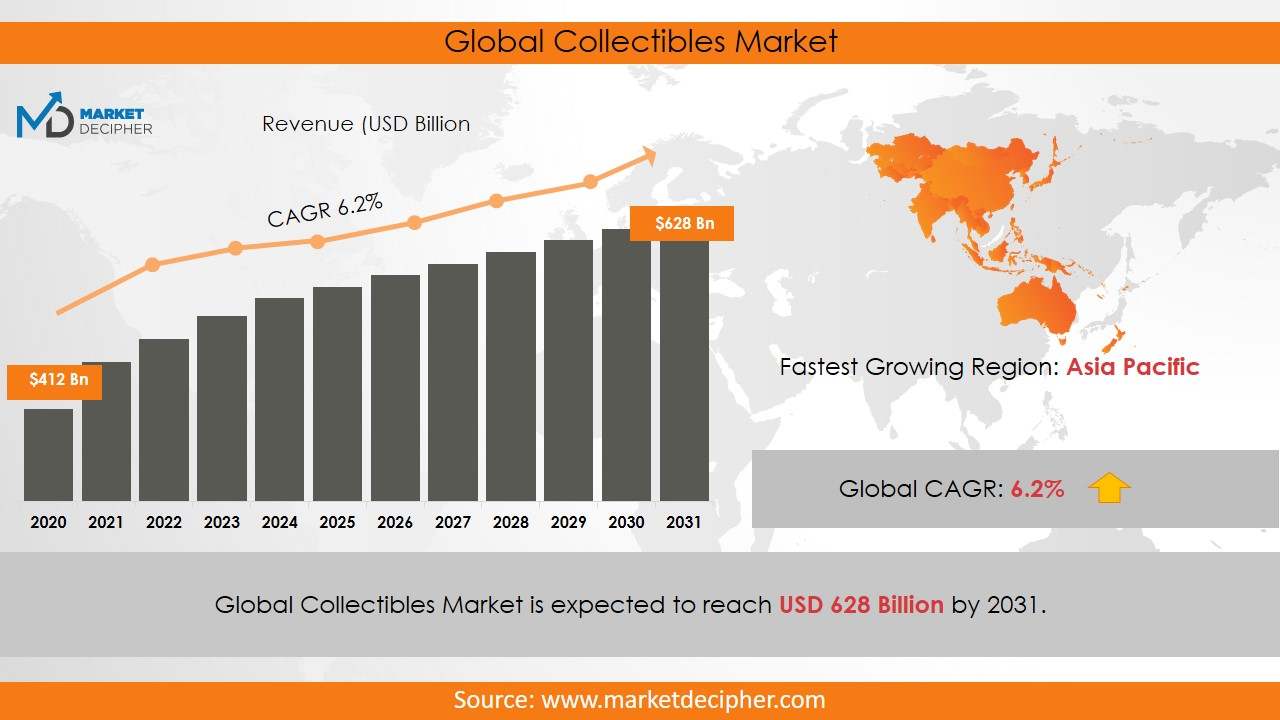
Many collectibles have unique stories behind them. For example, a limited-edition sports card may be a witness to a historic game; a rare comic book may carry childhood memories for generations. These added values have kept the collectibles market heating up over the past few years. According to research data, the global collectibles market reached $458 billion in 2022 and is expected to surpass $1 trillion by 2033.

Image source: marketdecipher

Faced with such huge market potential, TikTok Shop certainly doesn’t want to miss the opportunity.

However, entering the collectibles track does not mean resting easy; the intensity of market competition is far beyond imagination. eBay is recognized as the industry benchmark, with a wide range of categories and a highly engaged user base, generating over $10 billion in annual collectibles transactions.

In addition, Walmart launched its “Collector’s Store” last year, attracting sellers to join and significantly reducing their operating costs through a zero-commission policy.

Image source: Internet

So, as a “new player,” where does TikTok Shop’s chance of success lie? The answer is in its content-driven capability. Compared to traditional e-commerce platforms, TikTok’s short video format allows products to be presented in a more attractive way. For example, a video documenting the appraisal process of a collectible, or an explanation of the history of a rare comic book, can not only satisfy users’ interests but also build their trust in the authenticity of the items.

This model is very suitable for the collectibles market because it allows the value of the items to be fully conveyed through content.

Of course, TikTok Shop has also taken many measures to enhance consumer trust as it expands into collectibles.

For example, the platform requires sellers to provide detailed information about the condition and authenticity of items, and verifies the identity of high-value products. These strict rules not only provide buyers with a safer shopping environment but also help the platform establish a reliable image in a market where credibility is paramount.

Image source: Internet

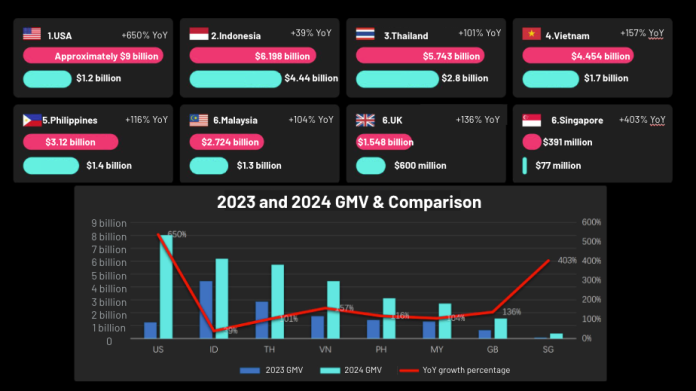
Why does TikTok Shop value the US market so much? From the data, the answer is clear. In 2024, TikTok Shop reached a total transaction volume of $32.6 billion, with the US market contributing about $9 billion, accounting for nearly one-third.

Even more impressive, the average order value in the US market is $19.64, four times that of the Southeast Asian market. This means American consumers not only have greater purchasing power but are also willing to pay for quality products.

Image source: thelowdown

However, all of this will take time to prove. Although the collectibles market has huge potential, it also faces a complex competitive environment. In the future, whether TikTok Shop can find its own advantages in competition with giants like eBay and Walmart may depend on whether it can continue to leverage its strengths in content-driven e-commerce, attract more young consumers, and continuously optimize the user experience.

Overall, TikTok Shop’s expansion into collectibles is not only a supplement to its product line but also a strategic attempt to capture the second-hand market. Whether this move will pay off in the future may require more exploration. But regardless of the outcome, this initiative undoubtedly marks another noteworthy step for TikTok Shop in the global e-commerce landscape.