In recent years, Vietnam has attracted a large number of cross-border e-commerce enterprises thanks to its rapidly growing e-commerce market and relatively relaxed import policies. However, as the Vietnamese government plans to tighten its tax exemption policy for small parcels, cross-border sellers will face new challenges.

Meanwhile, Vietnam is also vigorously supporting local private enterprises, trying to find a balance between protecting the domestic economy and attracting foreign investment. This series of policy changes will have a significant impact on the cross-border e-commerce industry.  

Image source: theinvestor

Policy Adjustment: Vietnam "Encircles" Cross-border Small Parcels

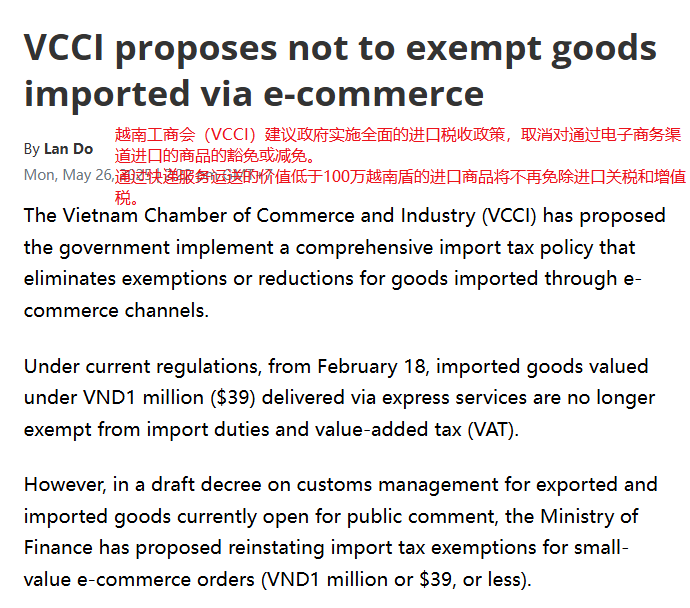
Recently, the Vietnam Chamber of Commerce and Industry (VCCI) proposed to the Ministry of Finance to abolish the tax exemption policy for imported goods valued below 1 million VND (about RMB 436). This move mainly targets cross-border e-commerce, especially small parcel goods from China.

For a long time, low-priced cross-border goods have occupied a certain share in the Vietnamese market thanks to tax exemption advantages, while local enterprises have found it difficult to compete due to higher tax and compliance costs. VCCI believes that abolishing the tax exemption policy will help create a fairer market environment.  

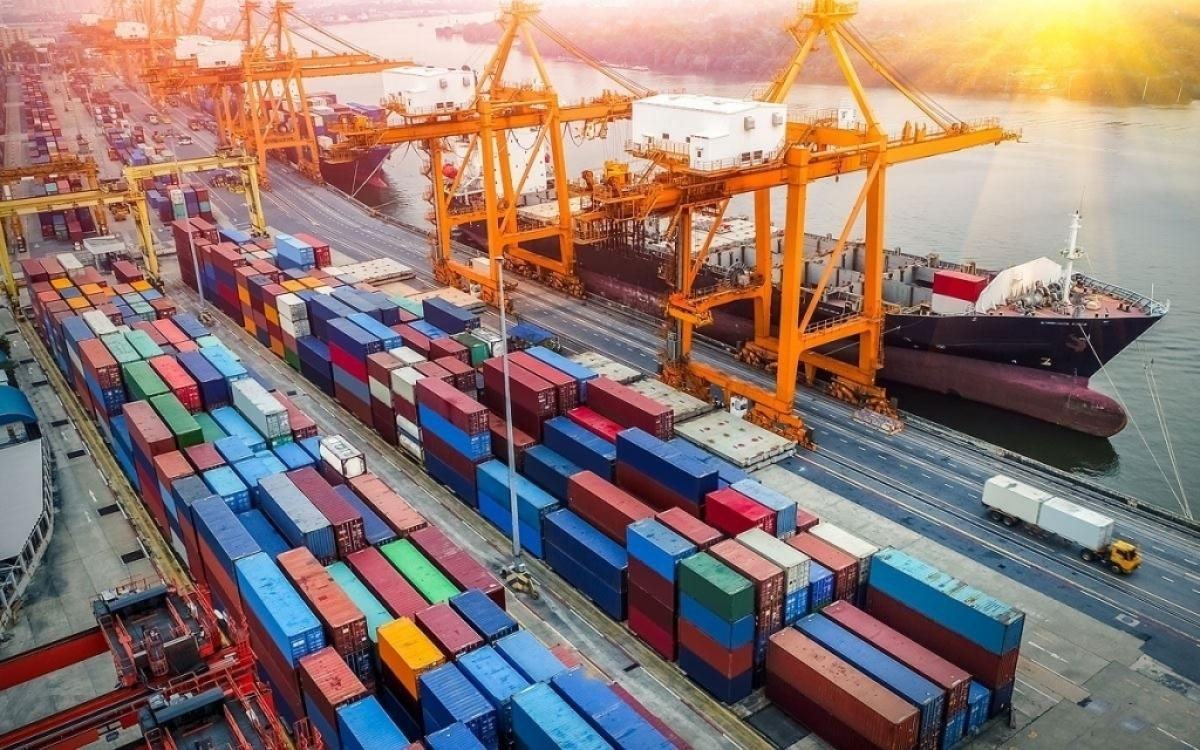
Moreover, the Vietnamese government is also strengthening origin management to prevent Chinese goods from being transshipped through Vietnam to the US to evade tariffs. According to the consensus reached in Vietnam-US trade negotiations, Vietnam plans to pilot a "Chinese Goods Transshipment Monitoring System" in the third quarter of 2025 to further regulate cross-border trade. These policies indicate that Vietnam is gradually tightening its supervision of cross-border goods to reduce tax loss and protect domestic industries.  

Image source: theinvestor

Impact on Cross-border Sellers

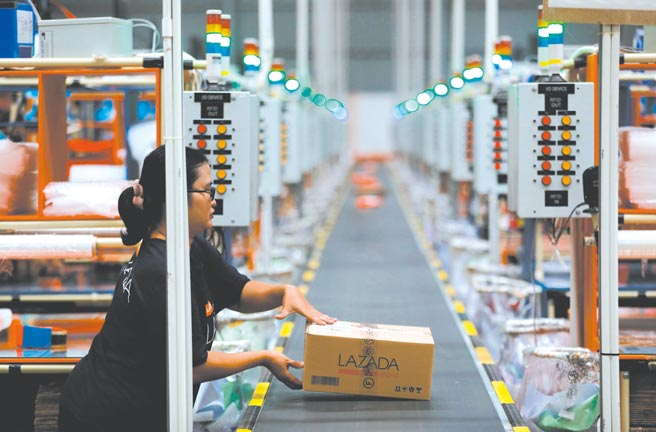
Many sellers rely on the low-priced small parcel model to enter the Vietnamese market. Once tax incentives are removed, product prices will rise and competitiveness may decline. Especially for small and medium-sized sellers, profit margins are already limited, and increased taxes may force them to adjust pricing strategies or even exit the Vietnamese market.  

In addition, after Vietnam strengthens origin management, some goods attempting to be transshipped to the US via Vietnam may face stricter scrutiny or even interception. This undoubtedly increases operational risks and compliance costs for sellers who rely on the Vietnam transshipment model.  

Image source: Google

Seller Response Strategies

1. Compliance Operations

In the future, the Vietnamese market will have increasingly higher requirements for compliance. Sellers should learn about Vietnam's tax policies and import regulations as early as possible, ensure that customs declaration and tax payment processes are legal and compliant, and avoid goods being detained or fined due to policy changes.  

2. Adjust Product Positioning  

The low-priced small parcel model may no longer be applicable. Sellers can consider increasing product added value and shifting to the mid-to-high-end market to offset the cost pressure brought by increased taxes. For example, optimize product quality, provide better after-sales service, or build brand operations to enhance competitiveness.  

3. Explore Localized Cooperation

The Vietnamese government is vigorously supporting local private enterprises. Cross-border sellers can consider cooperating with local Vietnamese companies, such as setting up local warehouses, registering Vietnamese companies, or cooperating with local distributors to reduce tax and logistics costs.  

4. Pay Attention to Policy Developments

Vietnam's policies are still being adjusted. Sellers need to closely follow subsequent details, especially specific regulations such as tax thresholds and customs clearance procedures, so as to adjust business strategies in a timely manner.  

Image source: Google

Conclusion

Vietnam's tax policy adjustment is both a challenge and an opportunity.

For cross-border sellers, there may be short-term pressure from rising costs, but in the long run, this change will drive the market towards a more regulated and healthier direction. Sellers need to adjust their strategies in a timely manner, strengthen compliance and localized operations, in order to gain an edge in this transformation.