 1686
1686Viele Leute denken, dassTikTok-Commerce bedeutet einfach, willkürlich Produkte zu filmen und dann auf den Durchbruch zu warten. Aber diejenigen, die es wirklich gemacht haben, wissen: Nicht du filmst und bekommst Traffic, sondern wenn der Traffic kommt, kannst du die Leute nicht halten.
Heute,Tuke,zeigt dir Schritt für Schritt, wie du einen replizierbaren„Skriptformel“ und „Testrhythmus“ – auf einmal erklärt, sodass auch Anfänger stabil Bestellungen generieren können.
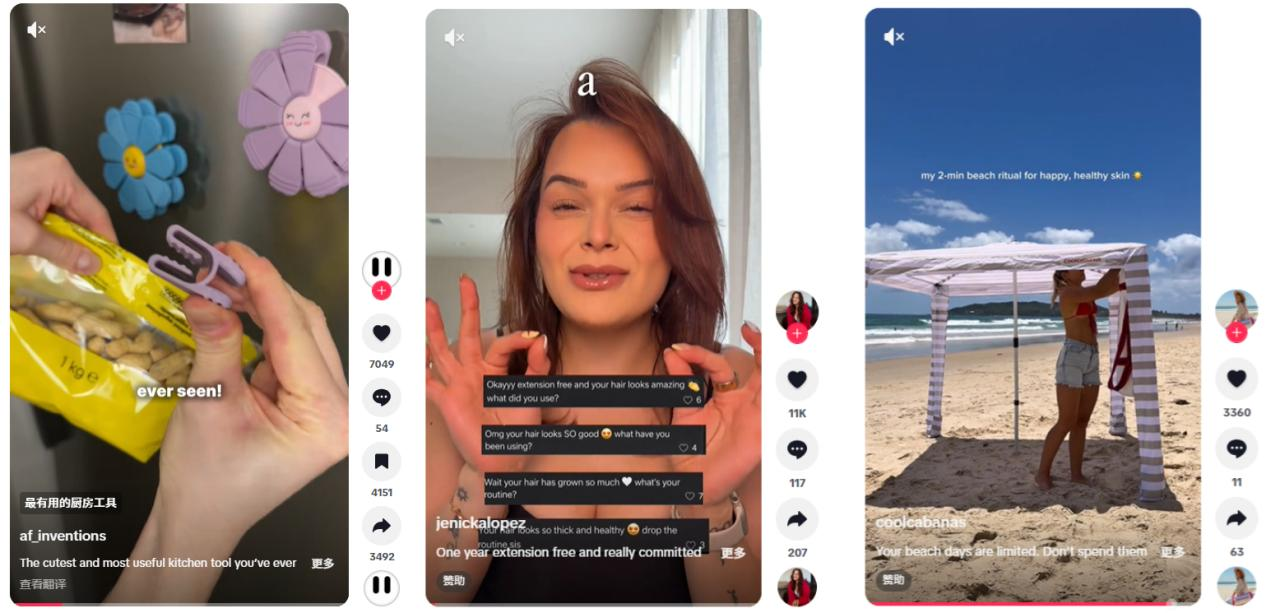
Bildquelle:TikTok
1. Skriptformel: Den Nutzer dazu bringen,die zugrunde liegende Logik von „beim Scrollen kaufen wollen“
Die Aufmerksamkeit der TikTok-Nutzer beträgt nur die goldenen 3 Sekunden – Daten zeigen, dass wenn die Absprungrate in den ersten 3 Sekunden extrem hoch ist, die Wiedergabequote drastisch sinkt. Sobald du diese 3 Sekunden erwischt, steigt die Verweilneigung sofort um ein Vielfaches.
Daher ist der Kern des Skripts nicht„Ich habe ein gutes Produkt“, sondern „Was hat dieses Video mit mir zu tun?”。
Tukeempfiehlt eine praxisgeprüfte„Dreiteilige“ Universalformel: Hook (Haken) + Meat (Wertdarstellung) + CTA (Handlungsaufforderung), gleichzeitig integriert die PAS-Emotionsstruktur, sodass Nutzer nach dem Ansehen kaufen wollen.
Erster Schritt: Der Haken muss schnell, präzise und scharf sein.
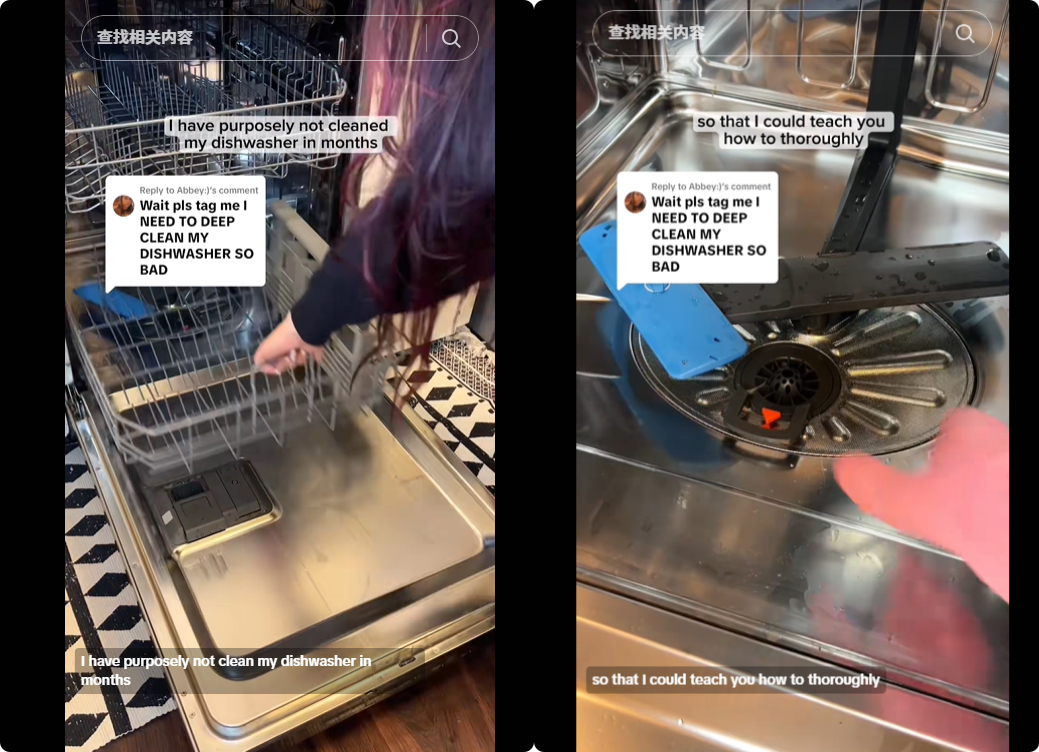
Es gibt drei Arten von Haken, die direkt verwendet werden können. Schmerzpunkt-Treffertyp, z.B.„Wenn du beim Geschirrspülen immer noch Kalkflecken hast, musst du dieses Video sehen!“; Kontrasttyp, z.B. „Auch beim Aufräumen: links ein Chaos, rechts in 3 Sekunden erledigt!“; Ergebnistyp, z.B. „Mit diesem Ding den Kleiderschrank organisieren, der Platz wird direkt doppelt so groß!“.
Die Kernregel ist„Mündliche Präsentation + Untertitel + Bild“ dreifach konsistent, sodass der Nutzer auf einen Blick versteht, dass dieses Video mit ihm zu tun hat.
Bildquelle:TikTok
Zweiter Schritt: Wertdarstellung.
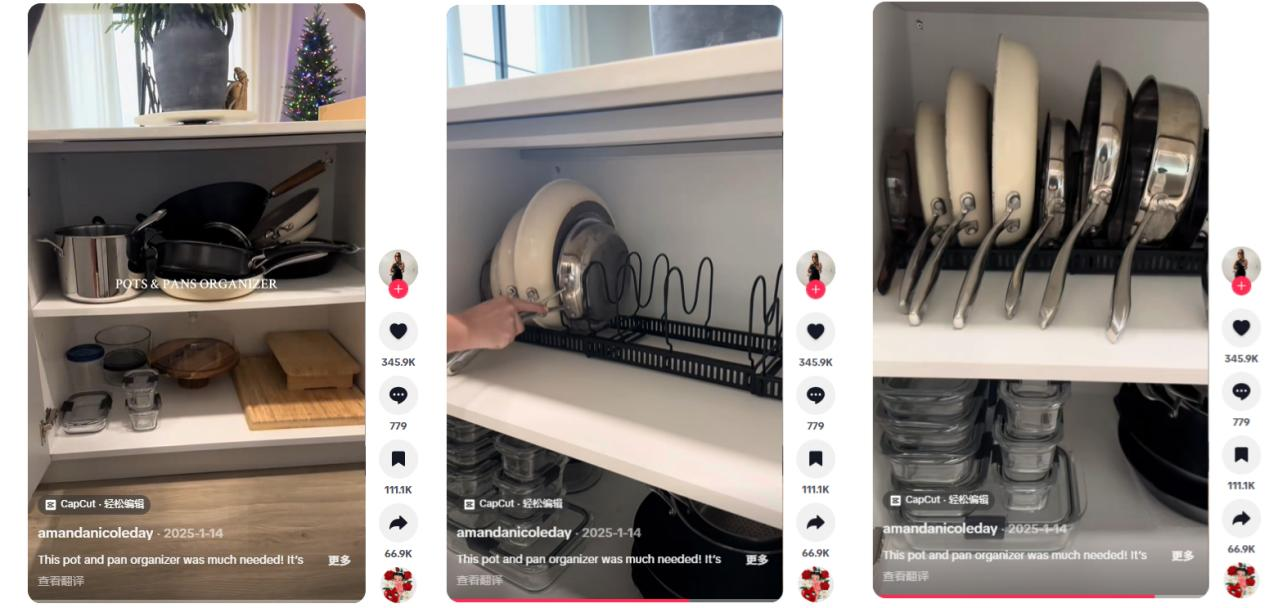
Der Haken hat die Leute gehalten, in der Mitte muss man mit echten Aufnahmen beweisen, dass man nicht blufft. Zum Beispiel, wenn ich eine Küchenaufbewahrung verkaufen möchteRegal, dann die Kamera direkt in den unordentlichen Schrank halten und filmenKatastrophenortProduktVollständige Aufnahme, Erklärung der gesteigerten Raumnutzung und Aufzeichnung des gesamten Belastungsvorgangs mit schweren Gegenständen zum Beweis der Tragfähigkeit. Nicht nur mit Worten.meinsProduktextrem robust”,um hieb- und stichfeste Beweise direkt zu liefern.
Schritt 3:CTA-Handlungsaufforderung
Lassen Sie den Benutzer nicht einfach wegwischen, nachdem er es gesehen hat. Geben Sie unbedingt direkte, konkrete und seltene Kaufgründe: Entweder nutzen Sie den gelben Warenkorb sofort mit zeitlich begrenztem Rabatt, um Dringlichkeit zu schaffen („Nur heute die ersten 100 zum halben Preis“) oder durch Zugabe von Geschenken („Kostenloser passender Bürstenkopf, solange der Vorrat reicht“) die Kauflust steigern. Die Wirkung von Kaufanreizen in hochwertigen Videos ist erstaunlich gut. Ein klarer, guter Hook ist ganz klar der Wendepunkt für die Conversion-Rate.
Bildquelle:TikTok
2. WissenschaftDer Dreischritt des Produkttest-Rhythmus
Mit einem guten Skript, kann man dann direkt Geld ausgeben, um Waren zu lagern? Bloß nicht! Viele Anfänger sterben genau daran,In der selbstgefälligen Haltung von „Ich denke, dieser Artikel wird ein Hit“ vertrauen echte Profis auf den Testrhythmus: „Den Markt mit minimalen Kosten validieren“.
Wir erklären kurz diesWie man Wissenschaft anwendetSOP produziert Bestseller:
Phase 1: Natürlicher Kaltstart (0-3 Tage, Überlebenskampf)
Aktion: Jede Woche aus dem Produktpool auswählen20-50 Produkte, jedes mit 3-5 Kurzvideos unterschiedlicher Logik (Mischschnitt oder einfache Aufnahmen), auf 1-2 neue Konten posten und mit Warenkorb verknüpfen.
Bewertungskriterium: In dieser Phase nicht auf den Gewinn schauen, sondern nur auf„Interaktionsrate“ und „vollständige Wiedergaberate“. Wenn ein Video innerhalb von 3 Tagen bei organischem Traffic stabile Klicks auf den Warenkorb und sogar vereinzelte Bestellungen erzielt, herzlichen Glückwunsch, das ist ein A-Potenzial.
Phase 2: Kleine Budgets für Datenmessung (3-7 Tage, Effizienz maximieren)
Aktion: Für diejenigen, die den Kaltstart bestanden habenA-Potenziale, ihnen täglich ein kleines Budget (z.B. 10-30 USD) zuweisen, mit dem Ziel „Video-Interaktion steigern“ oder „Warenkorb-Klicks erhöhen“.
Bewertungskriterium: Ständig zwei harte Kennzahlen im Auge behalten—— Klickrate (CTR > 3%) und Konversionsrate (CVR > 1%). Solange die Daten die Anforderungen erfüllen, auch wenn noch kein Geld verdient wird, entschlossen in die nächste Phase eintreten.
Phase 3: Sättigungsangriff (Nach 7 Tagen, Mut beweisen)
Aktion: Sobaldder ROI die Gewinnschwelle erreicht (z.B. 1:1,2 oder 1:1,5), sofort die Feuerkraft konzentrieren. Winning-Pläne kopieren, auf mehrere Links und Konten ausweiten, gleichzeitig den Anteil des Influencer-Marketings erhöhen.

Bildquelle: Internet
Insgesamt ist Cross-Border-Dropshipping keine Zauberei, sondern eher eine organisierte, systematisierte Operation.
Hervorragende Skripte dienen dazu, das Problem zu lösen,ob man die Leute halten kann, während wissenschaftliches Testen dazu dient, das Problem zu lösen, ob man das richtige Produkt auswählt.
Solange man diese beiden Systeme erfolgreich umsetzt und ein eigenes, von„Materialproduktion“ bis „Produkt-Hunting“ standardisiertes Verfahren (SOP) aufbaut und mit dem Modell „kleine Bestellungen, schnelle Reaktion“ den positiven Kreislauf des Cross-Border-Geschäfts in Gang setzt, hast du bereits mindestens 70% der Händler überholt, die sich noch in der Phase „Lager voller überbeständiger Ware, überall im Internet nach Tutorials suchen“ befinden.