 255
For cross-border sellers doing business in the European market, low-priced direct shipping used to be a relatively flexible operating model. Orders are received and shipped domestically, with no need to stock goods overseas in advance, which both reduces inventory pressure and makes it easier to test new products.
But since July this year, the cost of this model has been changing.
Starting November 1, the EU introduced an additional €2 handling fee. Combined with the €3 temporary tariff already in effect, eligible low-value parcels may have to bear a €5 fee for each declared product category. For small items priced at only a few euros, this expense can no longer be ignored.
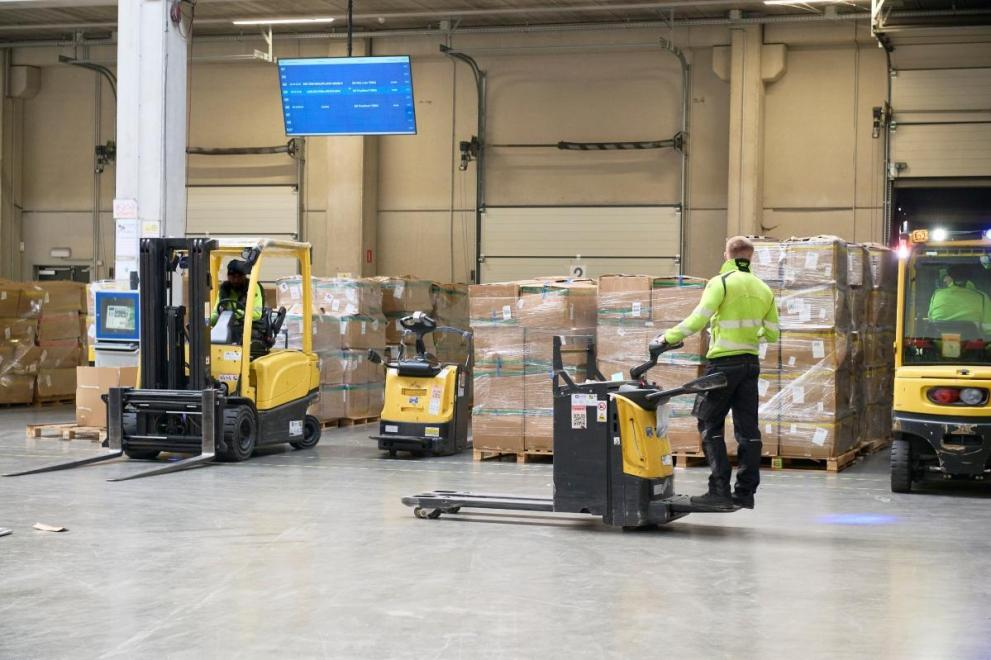
Image source: Google
Small parcels are being charged one after another, raising the cost of low-priced direct shipping
Let's first look at what rules the EU has actually adjusted.
On July 1 this year, the EU began imposing a €3 temporary tariff on imported small parcels valued at no more than €150, ending the tariff exemption such goods had previously enjoyed.
On November 1, the EU formally implemented a €2 handling fee. This fee is different from the €3 tariff; it is mainly used to cover the costs of customs processing and inspection of small parcels, and its scope is not limited to goods under €150. For eligible low-value parcels, the two fees can be incurred at the same time.
That is to say, if a parcel involves three different declared product categories, then when it meets the conditions for both charges, the tariff and handling fee combined may reach €15.
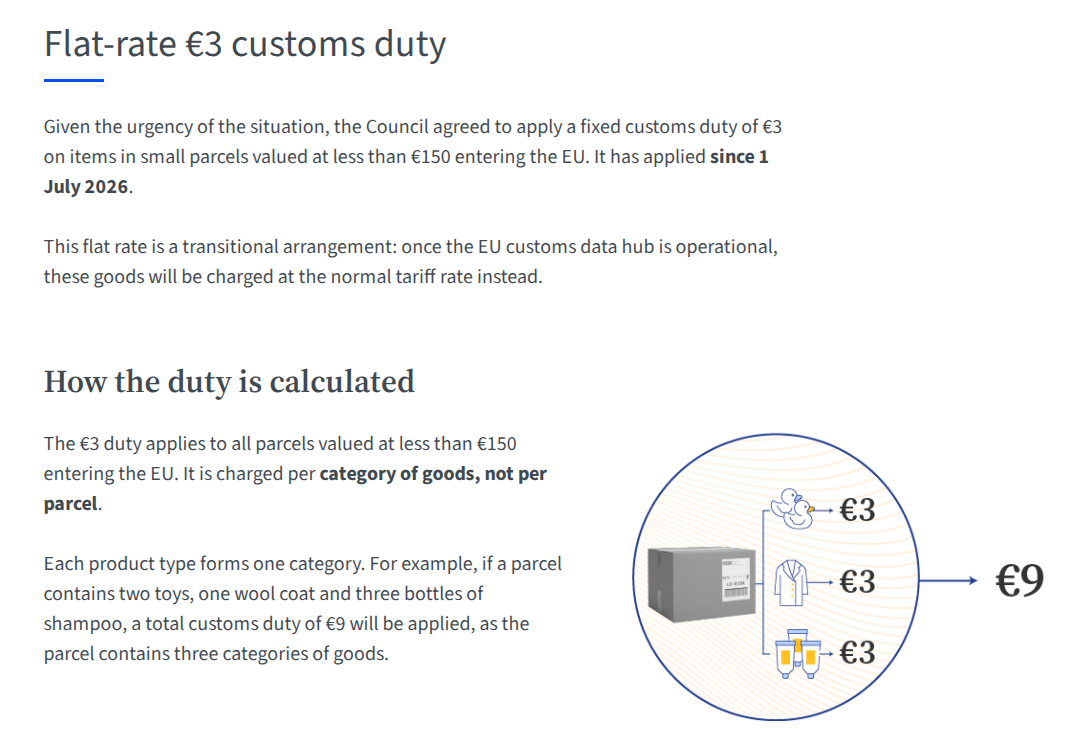
Image source: consilium
This has a particularly obvious impact on low-priced goods. If sellers choose to bear it themselves, it will further squeeze profits; if they pass it on to consumers, the original price advantage of the goods may be affected.
Reuters reported on October 30 that, according to European Commission documents it had seen, the relevant charges may bring the EU about €6 billion in revenue each year between 2028 and 2034.
It can be seen that this policy adjustment is not just about adding a fee; it also involves customs supervision, fair market competition, and re-regulation of the cross-border e-commerce import model.
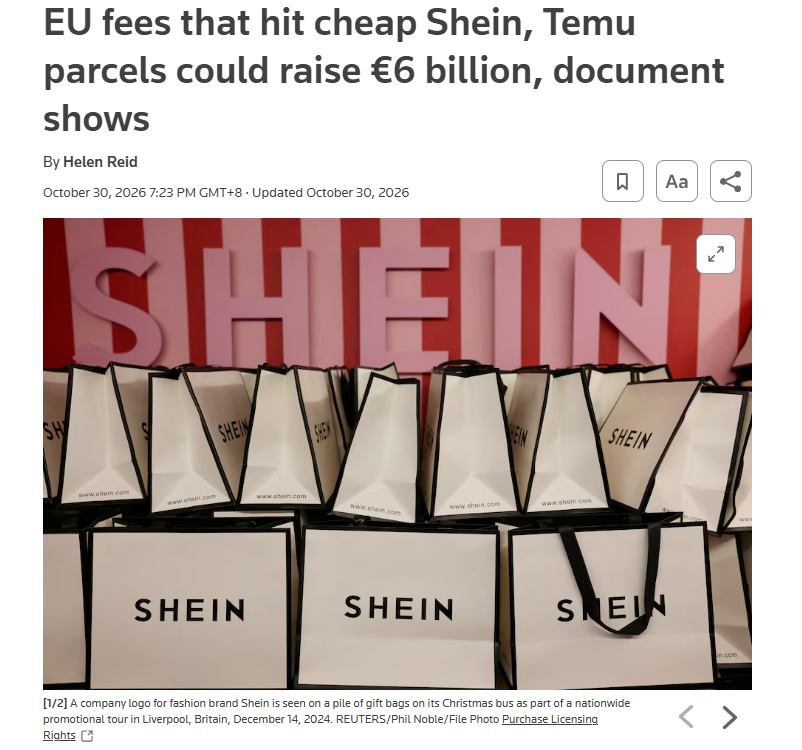
Image source: Reuters
From domestic direct shipping to stocking in Europe, platforms begin to adjust their layouts
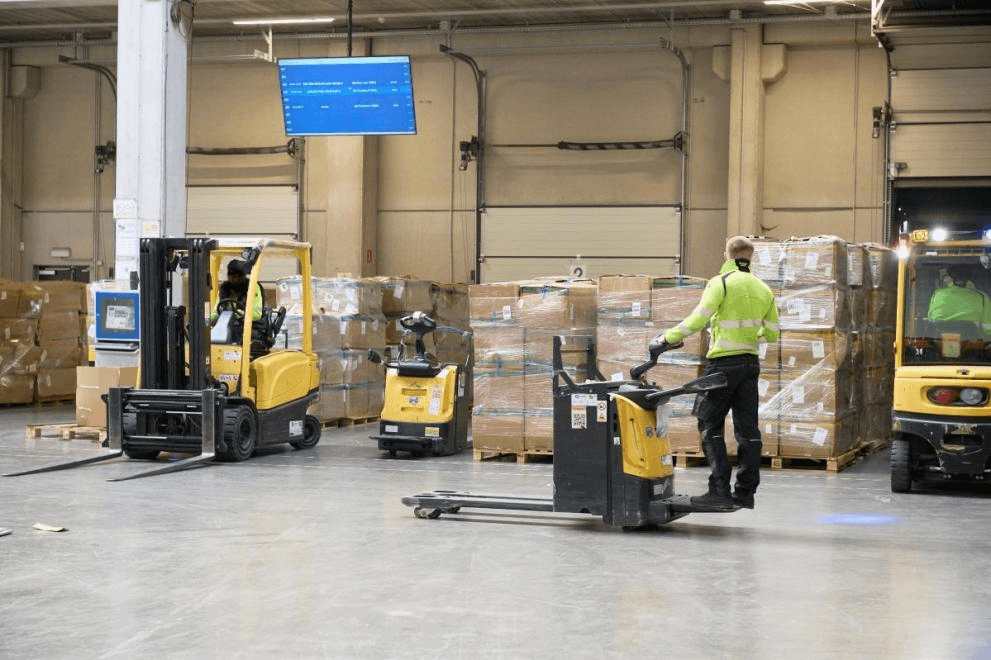
After the new rules took effect, cross-border platforms are also accelerating adjustments to their logistics layouts. One obvious change is increasing local warehousing and fulfillment capacity in Europe.
SHEIN is a relatively representative example. As early as 2022, SHEIN began building its European logistics business in Poland. In December 2025, its European logistics hub in Wrocław, Poland, was officially put into operation, introducing robotic picking systems and automated sorting equipment to handle major European logistics operations and provide fulfillment support to local and European sellers. On November 4, SHEIN also announced plans to invest €500 million to further expand this logistics hub.
AliExpress is likewise strengthening its local warehouse layout in Europe. Compared with relying entirely on cross-border direct shipping, shipping from local warehouses can reduce the cross-border transportation steps for goods and also help shorten consumer waiting times.
These moves do not mean that platforms will completely abandon domestic direct shipping, but rather that local fulfillment in Europe is becoming an increasingly important business option.
Image source: SHEIN
Should small and medium-sized sellers stock goods in Europe in advance?
For small and medium-sized sellers, seeing platforms laying out overseas warehouses does not mean they should immediately move their goods there too.
Overseas warehouses can indeed reduce some of the cost pressure brought by cross-border direct shipping steps, but at the same time they also increase storage fees, first-leg transportation costs, customs clearance costs, and inventory management difficulties. If product sales are unstable, stocking in advance may also lead to inventory buildup and tie up capital.
Ultimately, this EU adjustment has changed the cost structure for cross-border goods entering the European market. In the past, sellers relied more on domestic supply chains and small-parcel direct shipping to gain price advantages; now, in addition to the products themselves, logistics layout, inventory turnover, and tax and fee accounting will also become important factors affecting operating efficiency.
Demand still exists in the European market, but sellers need to recalculate the cost equation of this business. Whether they can find a balance among price, fulfillment efficiency, and inventory risk will become a business issue worth watching going forward.