 36
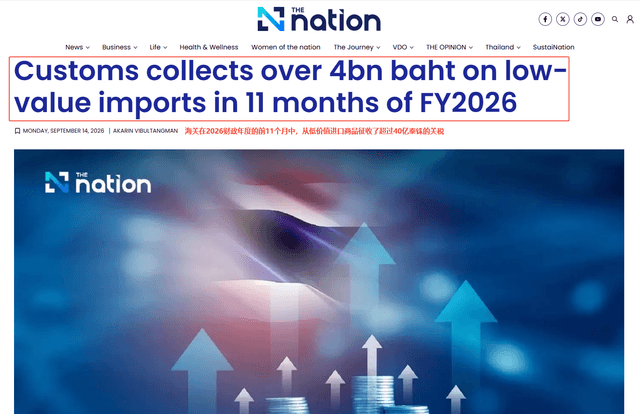
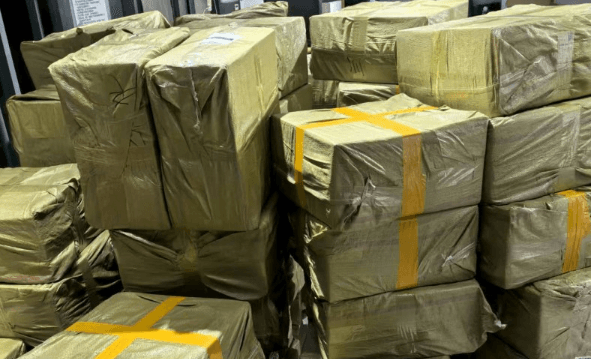
36The most frustrating part of cross-border online shopping has never been choosing products, but waiting for packages. Once logistics information gets stuck in customs clearance, neither consumers nor sellers know when it will move again. So many people would rather give up the richer selection of overseas goods and look for in-stock items locally.
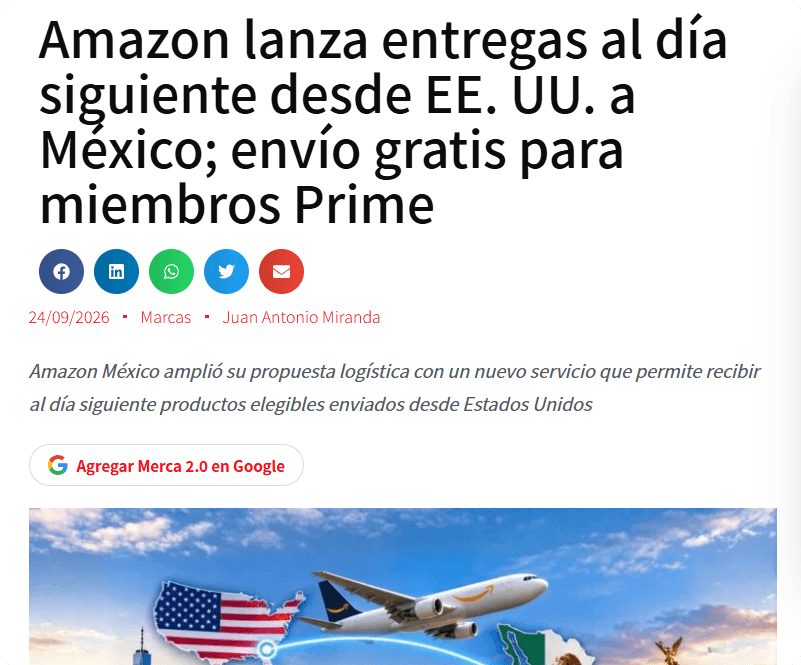
This situation is being changed by Amazon. On September 24, 2026, Amazon Mexico officially launched a cross-border next-day delivery service shipping from the United States, initially covering three metro areas: Mexico City, Puebla, and Toluca.
After eligible products are shipped from US fulfillment centers, they can reach consumers as soon as the next day. Hundreds of thousands of products in categories such as electronics, home, beauty, apparel, and toys are included in the scope. Prime members can enjoy free international delivery when buying eligible products, and non-members can also buy, only paying standard shipping fees.
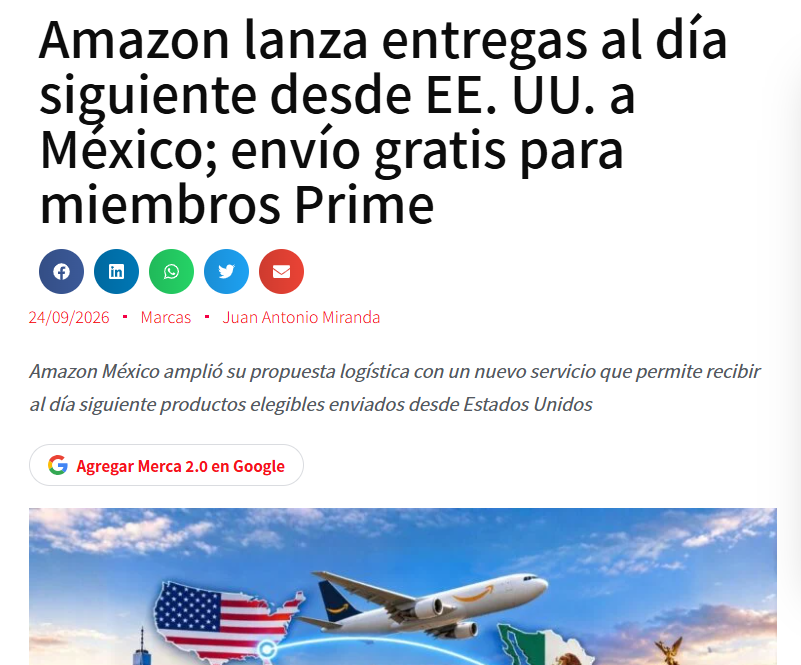
Image source: merca20
What consumers see is the phrase “arrives the next day,” but the problem that needs to be solved behind it is not simple. How can US products be delivered to Mexico within one day?
Amazon’s approach was to build a dedicated logistics channel, directly connecting its US distribution center network to central Mexico.
Cross-border transportation runs daily. After packages enter Mexico, they connect to Amazon’s local last-mile delivery network to complete last-mile delivery. Put simply, it twists customs clearance, cross-border transportation, and last-mile delivery into one assembly line, making the timeliness of cross-border orders comparable to domestic orders.
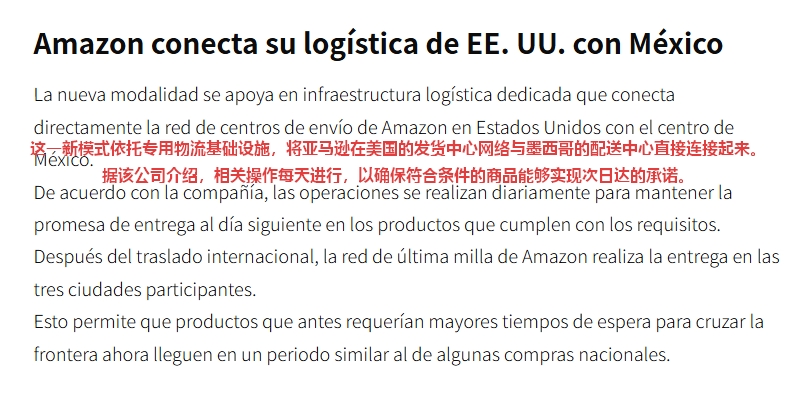
Image source: merca20
This is also not Amazon’s first speed upgrade in Mexico this year.
In March, it lowered the free shipping threshold for many eligible products to 299 pesos, with product sources covering Mexico, the United States, Japan, and Europe. In June, it also launched delivery within hours for some daily necessities in Mexico City, Monterrey, and Guadalajara. From lowering thresholds to compressing delivery times, Amazon’s strategy in the Mexican market is very clear: make consumers wait less and less after placing an order.
For cross-border sellers, the significance of this is not just an improvement in consumer experience; a more practical question surfaces: can goods placed in US warehouses also be conveniently sold to Mexico?
This path has actually existed for a long time. Amazon’s FBA Remote Fulfillment program allows eligible US marketplace sellers to use US FBA inventory to sell products directly on the Mexico marketplace, without sending goods to Mexican warehouses in advance.
When Mexican buyers place an order, Amazon ships directly from US operations centers for cross-border delivery. Now that some US products have entered the scope of cross-border next-day delivery, the appeal of “one set of US inventory serving two markets” has gained another layer.
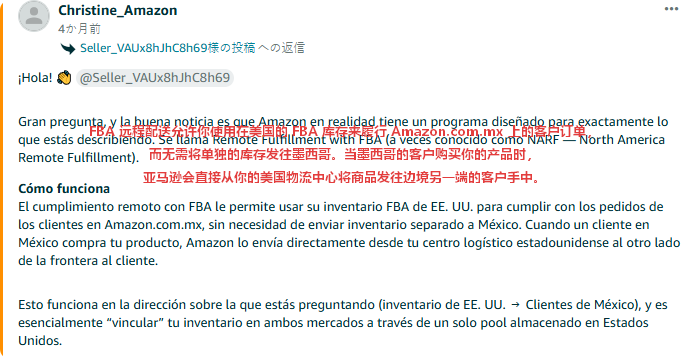
Image source: Amazon
But the account cannot be calculated from only one side. The Prime delivery time for Remote Fulfillment is currently 5 to 9 business days, much longer than the next-day delivery launched this time, and the corresponding product scope and fulfillment costs are not exactly the same either.
Cross-border delivery fees, import duties, and product restrictions still exist. Import duties are paid by buyers at checkout, and sellers do not need to handle tax filing in Mexico. In other words, sellers save the upfront investment of building inventory in Mexico, but the fulfillment cost per order will be higher than local shipping.
If a product gradually achieves stable sales in Mexico, sellers need to recalculate: continue shipping from the United States, or stock part of the inventory in local Mexican warehouses?
Local stocking requires upfront investment in inventory and warehousing costs, but delivery is faster, and there is no need to bear cross-border fees order by order. The flexibility of Remote Fulfillment lies in that sellers can first observe order data before deciding whether to increase investment.
Image source: Google
The two biggest thresholds in cross-border e-commerce used to be trust and timeliness. Amazon uses dedicated channels and daily customs clearance to compress the distance between countries into a one-day journey. For sellers, North America is gradually becoming a network that can be covered collaboratively with one set of inventory and one set of fulfillment capabilities. Whoever can earlier reposition inventory, customs clearance, and supply chains according to this network may be able to secure a more favorable position in growth in Mexico and even across North America.