
 1001
In the few years I've been involved in cross-border e-commerce, I've seen too many brands understand going global as pouring money into paid traffic, as if the more aggressively the budget burns, the bigger the market becomes.
But the players who truly break through are often not the ones most willing to spend, but the ones best at spending money where it counts.
What I want to talk about todayEmma Mattress, is exactly such a sample worth taking apart. With a closed-loop playbook, without relying on heavy hard-ad bombardment,it built a big business with annual revenue exceeding 4.8 billion.
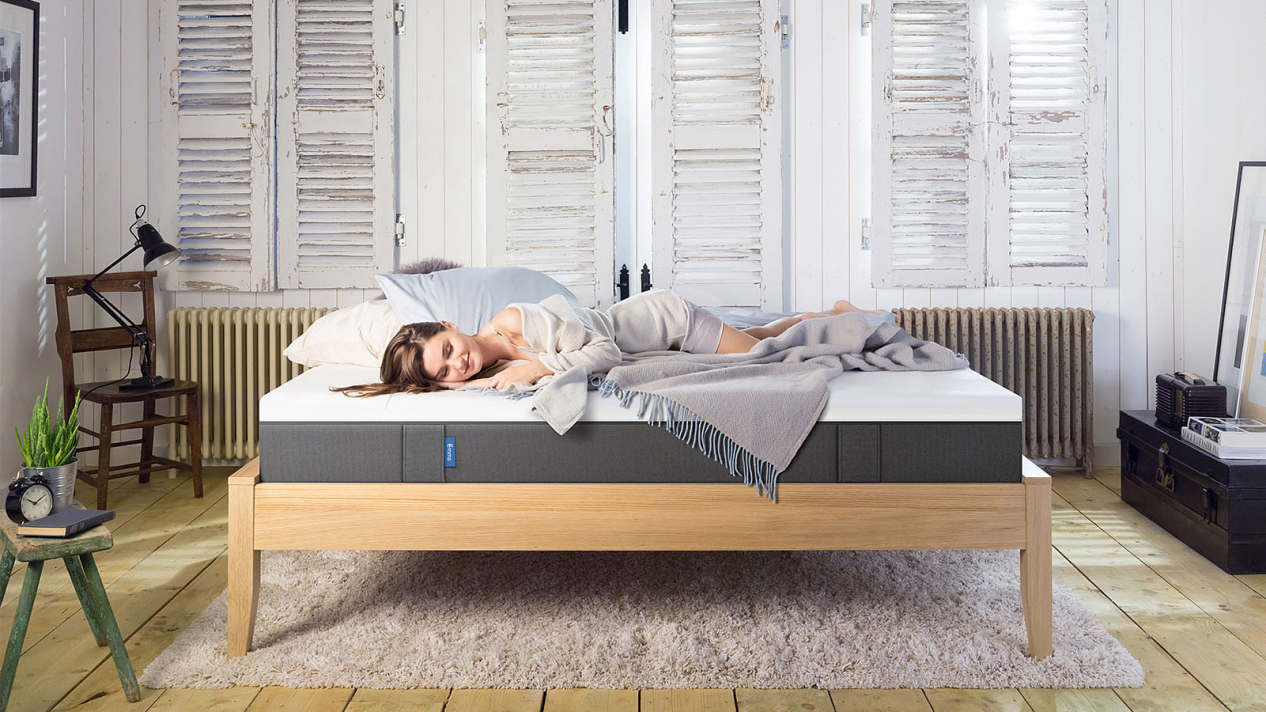
Image source: Google
Three killer moves that won consumers over
The starting point of Emma Mattress's story was very simple.
The two founders were initially just ordinary consumers, and they hit plenty of pitfalls when buying mattresses offline—inflated prices, a complicated purchasing process, troublesome transportation of large items, and wanting to return or exchange it after an unsuitable trial was even more fraught with hurdles.
The poor experience showed them an industry opportunity and sparked a bold idea:to move the mattress, a low-frequency large-item category, online for sale.
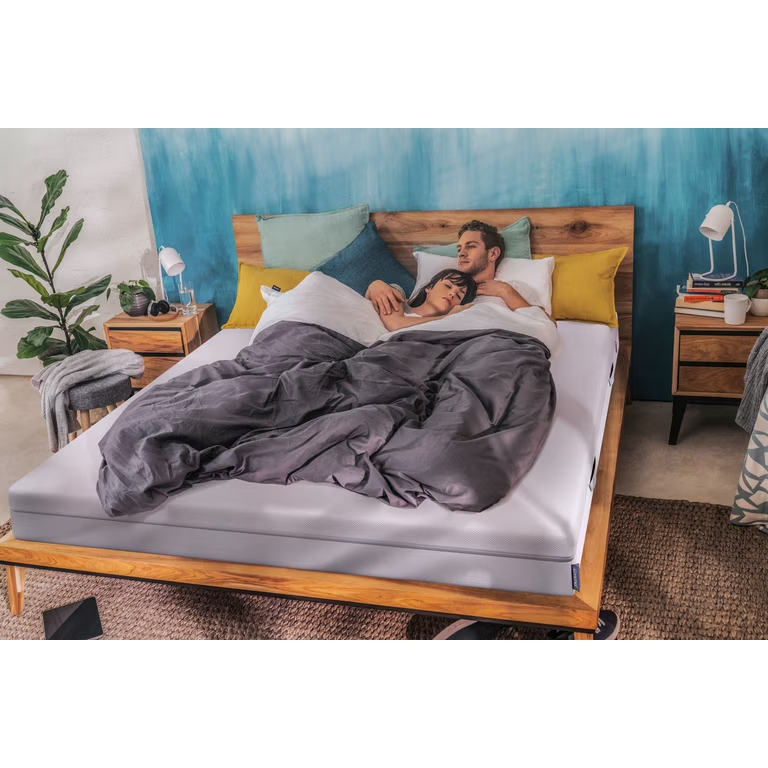
Image source: Google
This idea was not favored at the time. After all, mattresses cannot be seen or touched, and online sales naturally have a trust gap.
But the two founders did not back down; instead, they came up with three ways to crack it:
Method one: use a rolled, compressed boxed design to greatly reduce mattress volume and solve the large-item transportation problem;
Method two: launch a 100-night free trial, giving consumers a sufficient at-home experience period; if unsatisfied within 100 days, they can apply for a return or exchange;
Method three: provide a ten-year warranty, using a long-term commitment to eliminate everyone's worries about product durability.
In this way, layer upon layer of concerns were resolved one by one. Selling mattresses online was half done.
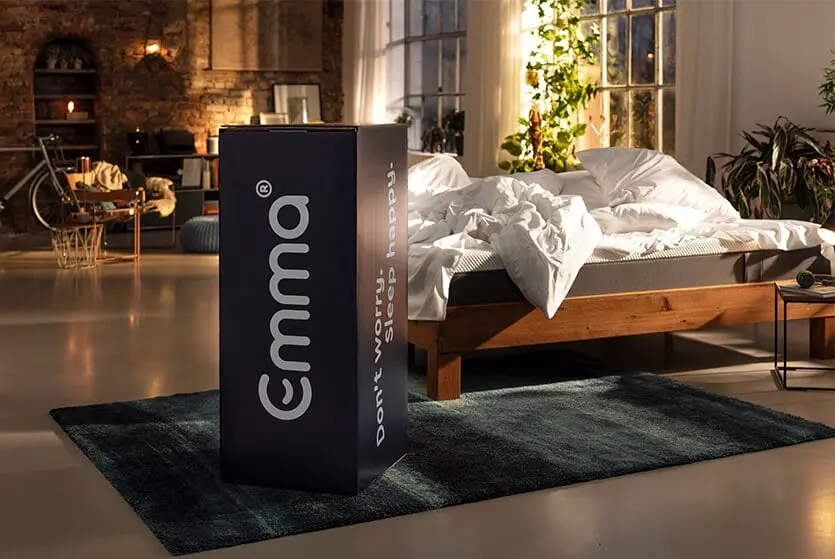
Image source: Google
OnlineDTC model, canwork
In 2015, the two founders officially launched the Emma Mattress brand in Cologne, Germany, starting with a pure DTC online model.
In the following years, in addition to building an in-house team of sleep scientists and materials engineers, independently developing foam, temperature control, and support structures to continuously refine the mattress sleep experience, it also launched global overseas expansion, radiating outward from core markets such as Germany and the UK.
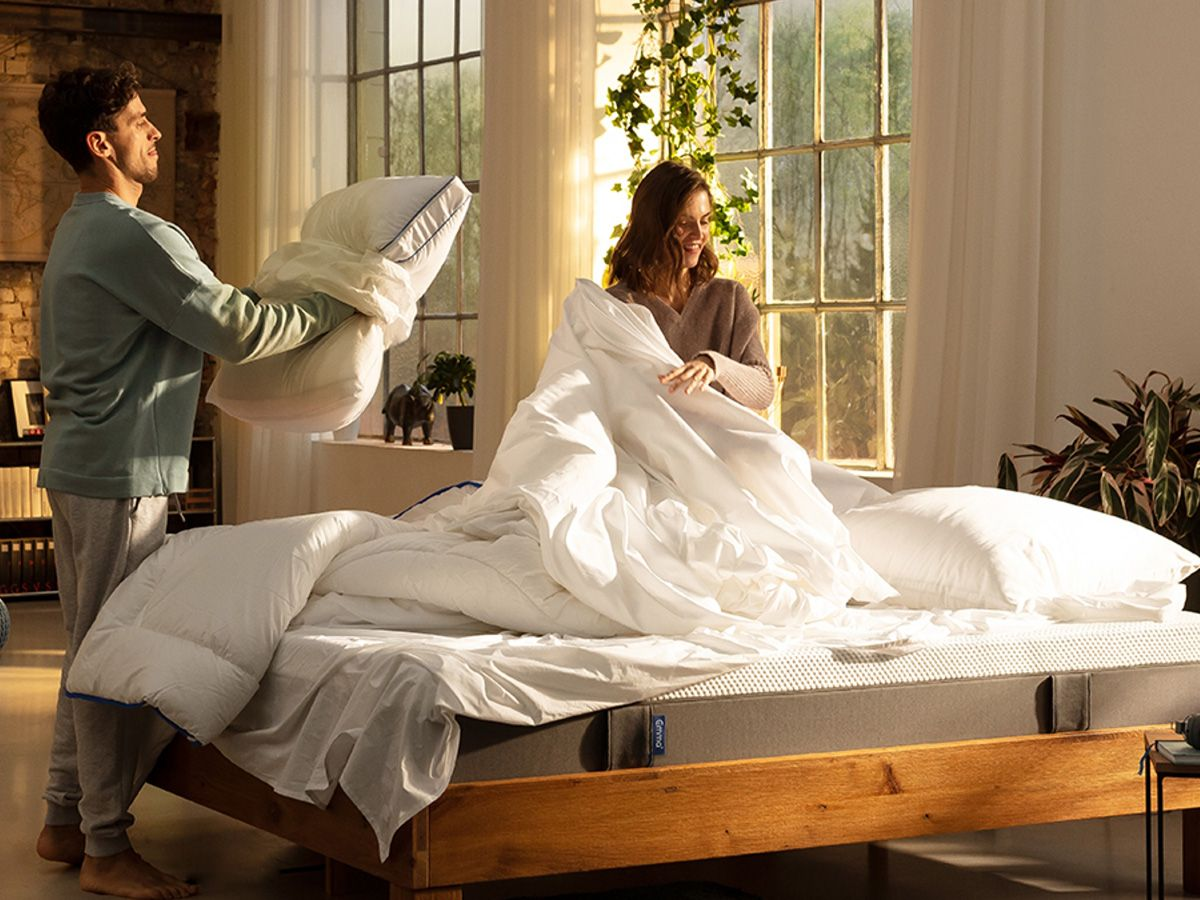
Image source: Google
By 2021, Emma Mattress's annual mattress sales had exceeded 1.5 million units.
According to the official financial report, the brand achieved revenue of $733 million (equivalent to more than RMB 4.89 billion) that year with a growth rate of 59%, and its online business model was validated by the market.
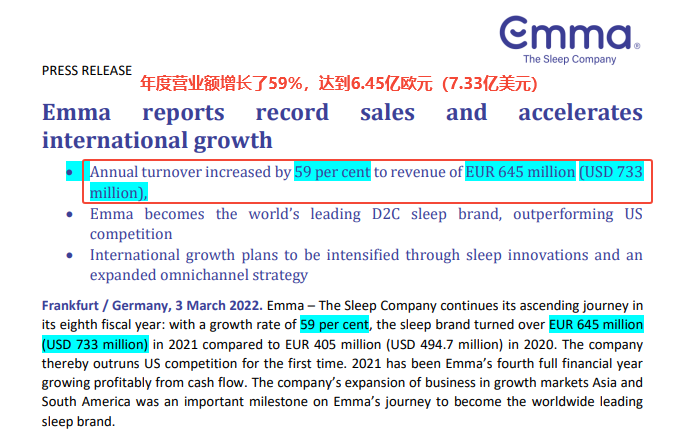
Image source: Emma Mattress financial report
Every road is a money-making road
Although Emma Mattress's overseas expansion logic was to first penetrate the market with its independent site, continuously accumulating reputation, materials, and data.
This is indeed a very reliable starting path for a DTC brand, but it also has obvious shortcomings:
Many overseas users' shopping habits have already become fixed, and they prefer to place orders on e-commerce platforms. Even if the services provided on the independent site are more complete, they will not easily switch channels.
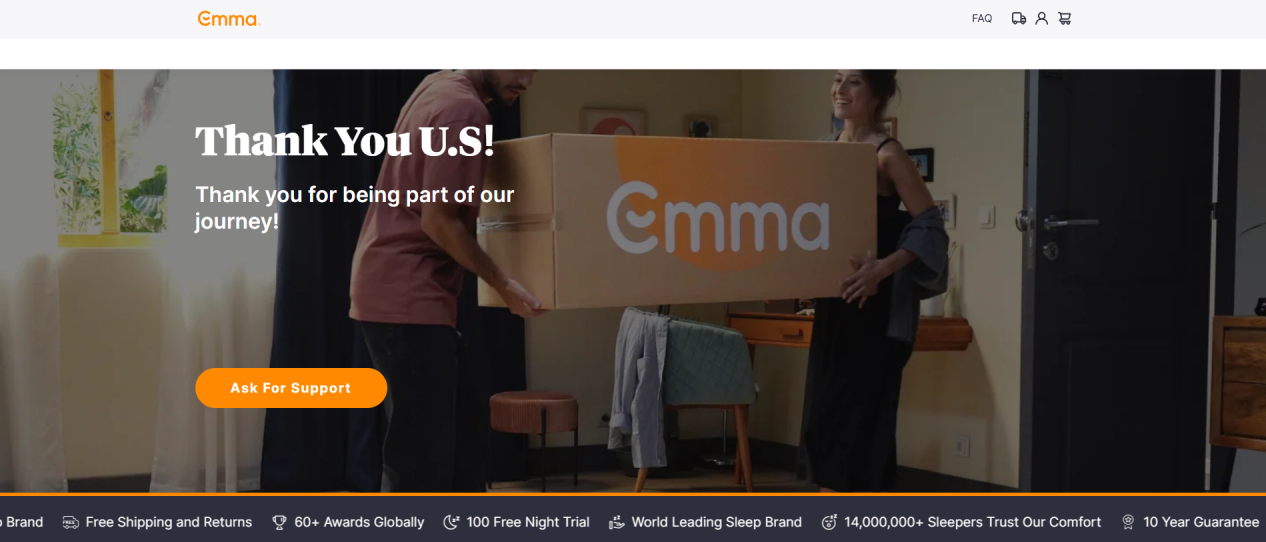
Image source: Emma Mattress
Every road is a money-making road. Emma Mattress naturally did not let any money-making opportunity slip.
In addition to making the independent site the brand's core main battleground, it also entered multiple Amazon marketplaces including Germany, the UK, France, Italy, Spain, the US, India, and Australia, using third-party platforms to reach users who are reluctant to visit DTC websites and prefer to order on e-commerce platforms;
At the same time, it entered leading online platforms and high-end department stores in Germany, the US, and the UK such as OTTO, Wayfair, and John Lewis, relying on the platforms' own credibility to elevate brand positioning and drive sales;
In addition, Emma Mattress also established a presence on UK group-buying platforms such as Wowcher, LivingSocial, and DOCK86 and US furniture discount platforms, focusing on special-offer and refurbished models, acquiring new customers through promotional volume sales.
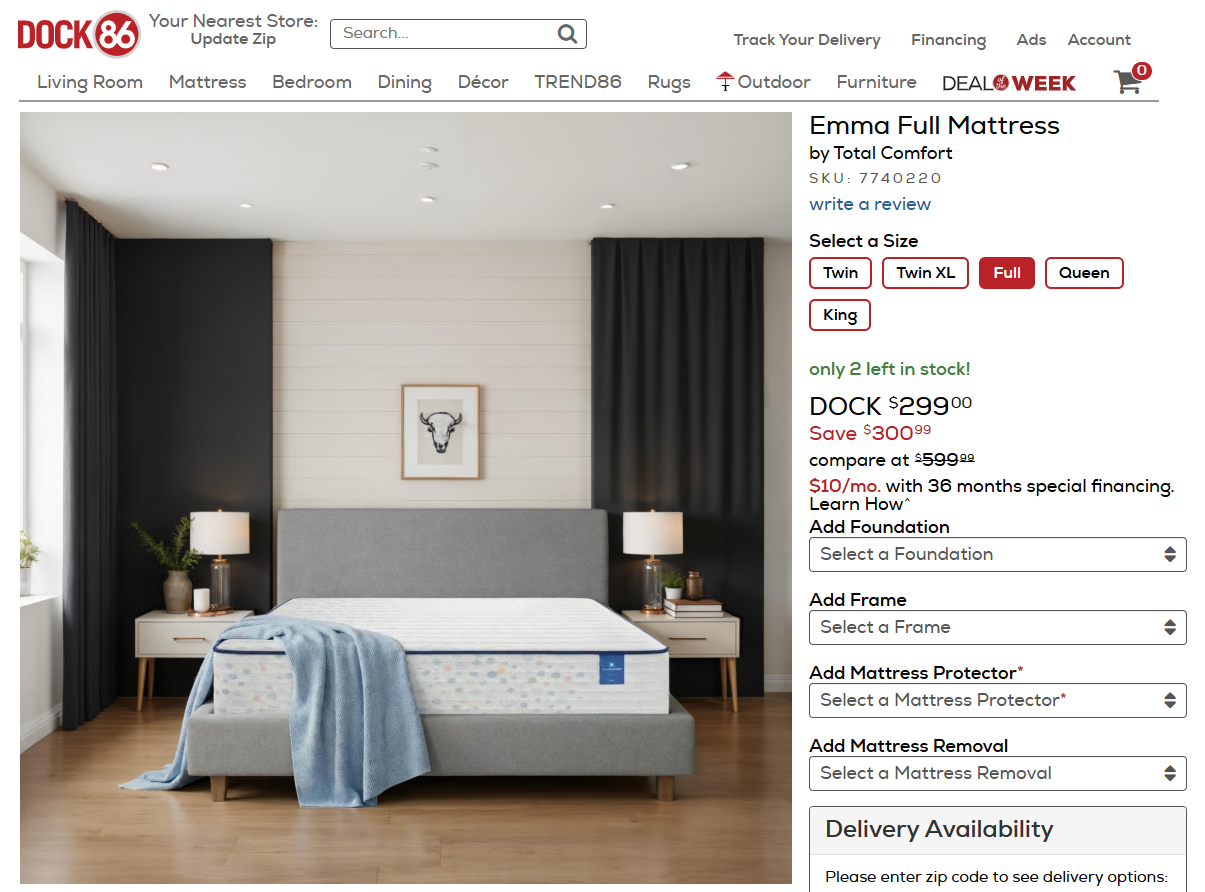
Image source: DOCK86
With this combination of moves, online channels were basically fully covered.
As of 2023, Emma Mattress officially announced that cumulative total mattress sales had exceeded 7 million units. The impressive market feedback also confirmed the feasibility of this multi-channel approach.
Targeting Gen Z, breaking out with viral content
Products and channels are the foundation, but to continuously expand customer acquisition and growth, front-end exposure and seeding cannot be relaxed either, and social platforms like TikTok happen to be an excellent battleground.
On TikTok, Emma Mattress's marketing approach is very flexible.
Given that overseas Gen Z is easily moved by viral content, compared with brand-made ads, authentic user-initiated sharing has stronger conversion effects. The brand therefore encourages buyers to share short videos of unboxing and trying out mattresses.
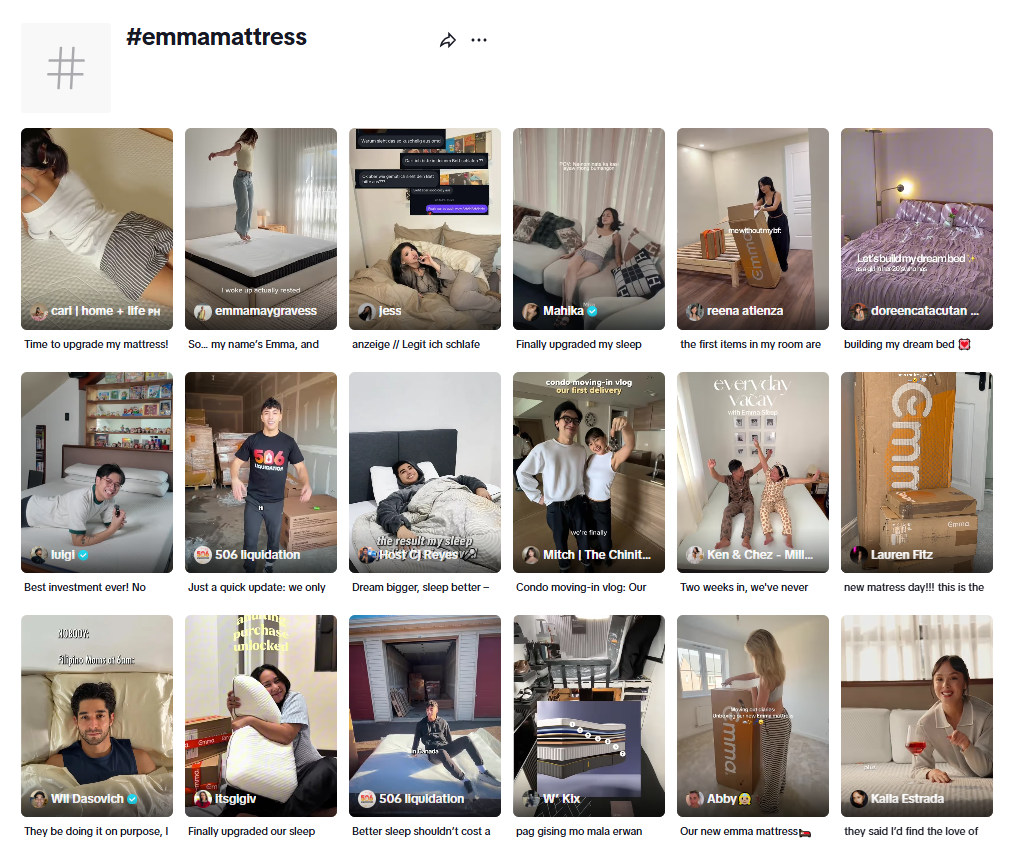
Image source: TikTok
This type of UGC content may not be beautifully shot, but its strength lies in being authentic enough. A massive volume of similar recommendation videos continues to gain traction, making it easier for platform algorithms to push them to potential buyers who are choosing mattresses.
In life-oriented scenarios such as setting up a new home and improving sleep in daily life, the happiness conveyed by the videos is an infectious quality that polished commercial advertisements can hardly replicate.
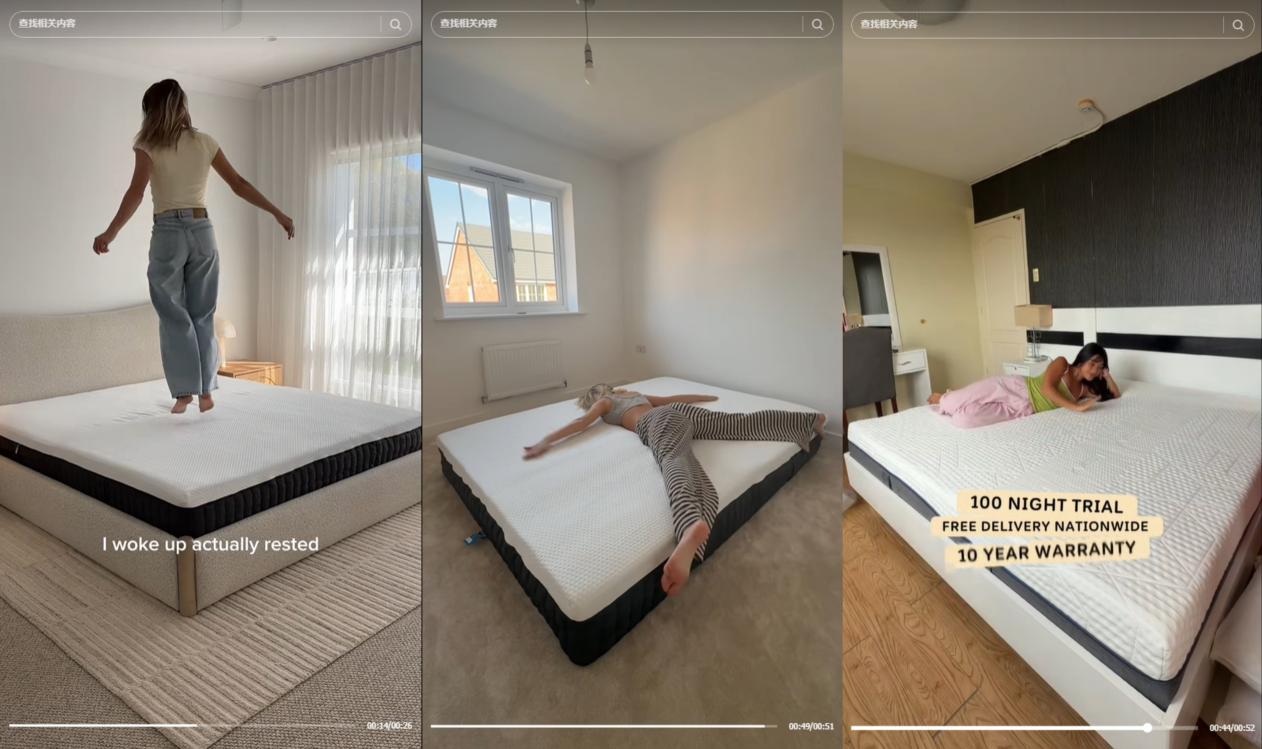
Image source: TikTok
Of course, Emma Mattress's marketing does not rely only on spontaneous sharing by ordinary users; collaborating with vertical niche creators on TikTok is also a very important strategy.
It is often said that using it a lot is not as good as using it the right way. The key to marketing is not how many followers a creator has, but the fit.
For example, the home vlog couple creator @@Ken & Chez - Millennial Couple, with 497,200 followers, has shot a sales video for Emma Mattress.
Although this creator's follower size is not particularly outstanding, her video content is all filmed around everyday home life fragments.
This slow-paced, orderly life scene, paired with a cream-style home decor style, is full of healing vibes and perfectly matches current public browsing preferences.
Therefore, the creator's short video content has received multiple videos with over one million views, with total likes as high as 10.7 million.
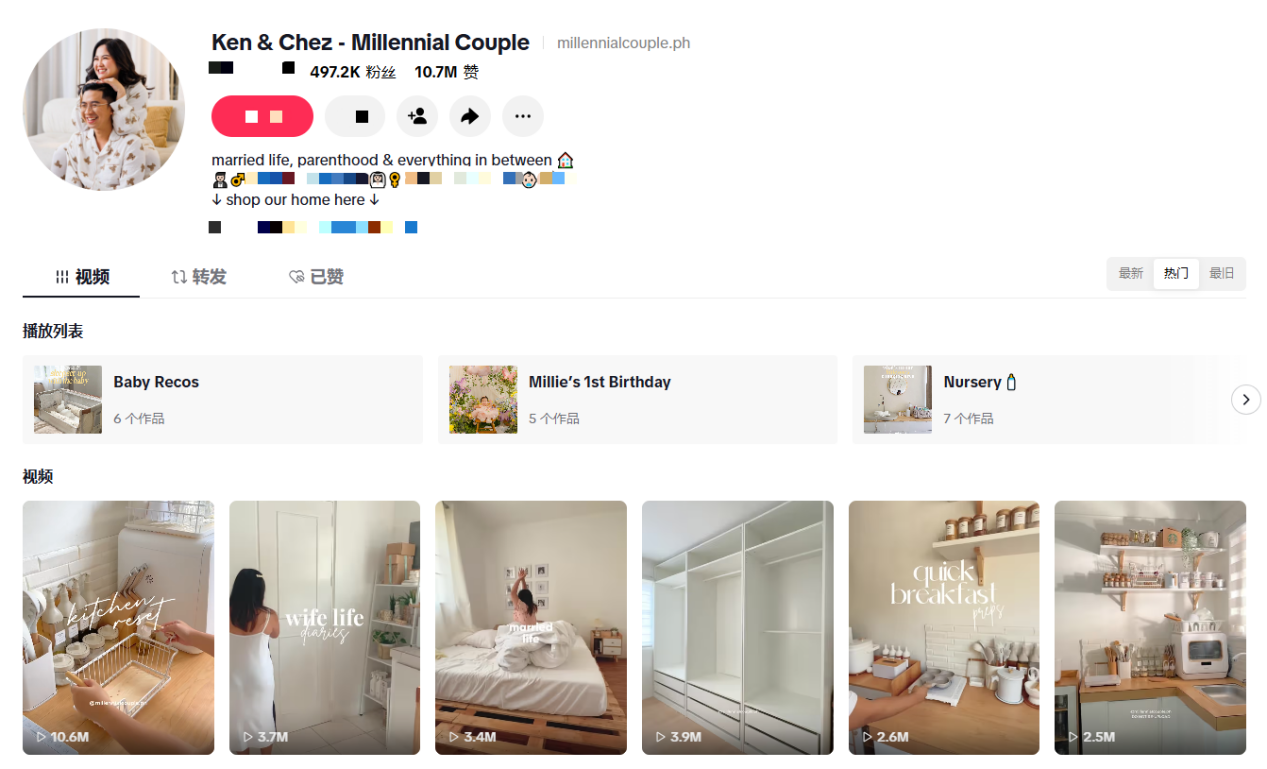
Image source: TikTok
In the video collaborating with Emma Mattress, the couple fully recorded the entire process of unboxing and laying out the mattress.
They did not stiffly pile up selling points, but used intuitive visuals such as placing a water cup steadily and jumping on the bed to show the mattress's support and stability.
This expression with less scripted talk and more demonstration is instead more likely to move viewers and drive them to make purchase decisions.
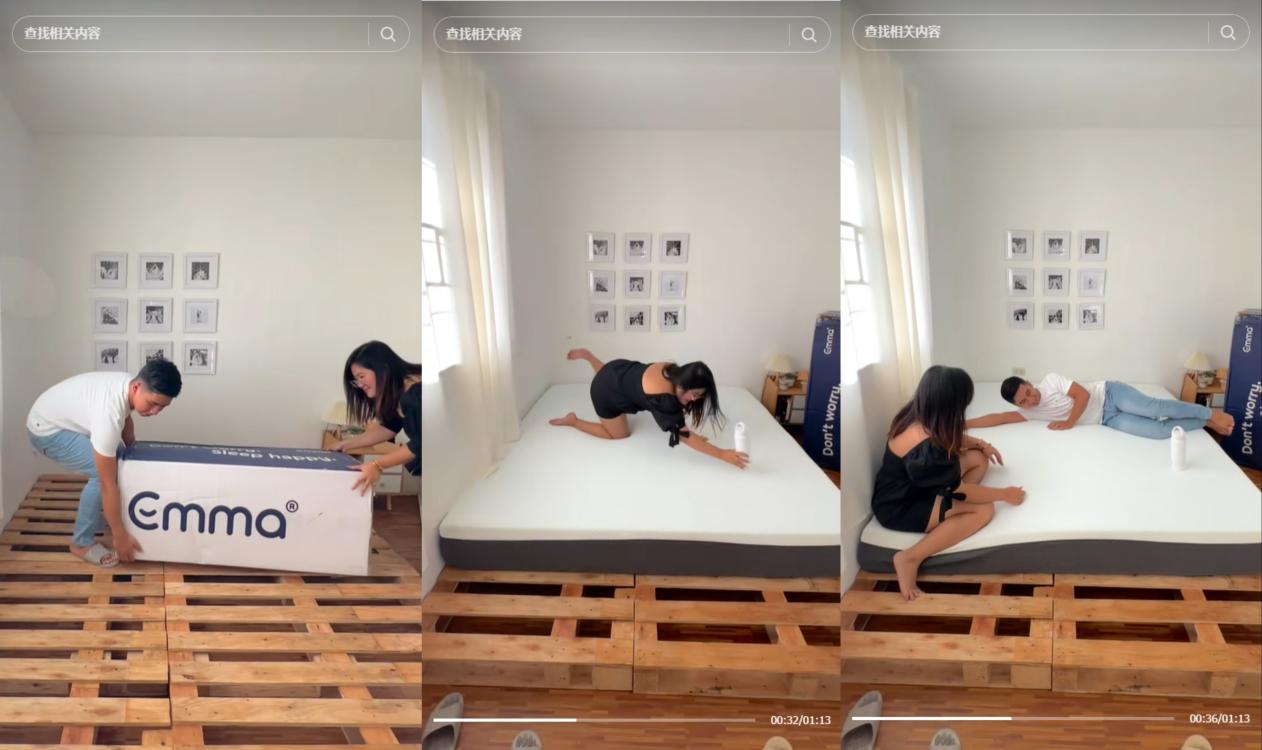
Image source: TikTok
Final thoughts
Emma Mattress's development path is actually not mysterious:Identify pain points, polish the product, cover multiple channels, and use authentic content to drive spread—every step is grounded in reality.
For domestic companies, the reference value of this logic is not in copying a certain platform or a certain tactic, but in understanding the word "closed loop."
Channels need to support each other, and content and conversion need to connect with each other, rather than each fighting its own battle.
Traffic is temporary, but trust is the most stable foundation for a brand to go through cycles. Grasping user pain points and building your own business closed loop is the simplest and most powerful answer for going global.